

Lesson 321: Understanding the Nature of "Prolonged Decline"
Duration:70 minutes
Topic Introduction:Chronic depression isn't just about constant mood swings; it's often accompanied by cognitive dulling, circadian imbalances, and a stagnation of our inner hope system. This course will help you understand this state from a physical, cognitive, and symbolic perspective, and gradually reawaken your "microsensory" abilities.
○ Three psychological mechanisms of long-term depression
- Loss of kinetic energy:It's not just that you "don't want to do it", but the body's internal energy mobilization system has been suspended.
- Cognitive Involution:Persistent repetition of negative thoughts and difficulty detaching and observing them.
- Perception Off:I lose my feeling for the things I used to like, and the world becomes gray and flat.
Lesson 321: Understanding the Nature of Prolonged Depression (Click to listen, read/view content)
Many people, after experiencing a period of depression or recovery, find that their emotions don't fluctuate dramatically, yet they remain in a state of prolonged low mood, fatigue, and a lack of distinct feelings. This state is often misunderstood as a lack of effort, hopelessness, or even a personality problem. However, so-called prolonged low mood is not the same as failure or stagnation; rather, it's a manifestation of the nervous system still being in repair and energy-saving mode. Long-term stress, repeated depletion, and emotional load cause the brain to reduce emotional amplitude to minimize further damage. This isn't you becoming numb or degenerating; it's the system trying to protect itself. Recognizing this is the first step to getting rid of self-blame. The second step is to distinguish between low mood and despair. Low mood means insufficient energy and diminished interest, but there is still a possibility of recovery; despair, on the other hand, is a state of complete closure to the future. Many people in a prolonged low mood are actually still living, coping, and persevering; they just lack emotional feedback. The third step is to stop judging recovery progress by feelings. Recovery isn't always accompanied by obvious ease or pleasure; many changes occur before you even feel them, such as faster reaction time, shorter time to emotional stabilization, and increased tolerance to stimuli. The fourth step is to shift your focus from emotional state to function and rhythm. Recovery is ongoing when you can maintain your basic routine, fulfill your daily responsibilities, and still choose to take care of yourself even during periods of low mood. Remember, prolonged low mood is not the end, but a phase of system recalibration. When you stop trying to get rid of it and instead understand and cooperate with this phase, energy will gradually flow back.
▲ AI interaction: How long has it been since you truly “felt” something?
Being depressed for a long time does not mean that you are worthless, but it is a sign of long-term mental and physical fatigue.
Gently tell yourself, “These are symptoms, not all of me.”
Record your state today, acknowledge the existence of emotions, and don't rush to change them.
Even just standing up to pour a glass of water is an action.
Take it slow, you're already learning how to make peace with the lows.
Click the button below to work with AI to explore where your "inner system" is shutting down and develop a small-step recovery plan.
○ Recognize the nature of “long-term depression” · Music guidance
Depression is like a persistent bass line, it's not your fault. Please acknowledge its existence first.
Play a minimalist piano piece and let the melody lay a soft foundation for the emotions.
Breathe slowly to the beat: four in, four out, allowing yourself to slow down.
Write down a small thing you accomplished today and let the notes light a little light for it.
Say to yourself: I am experiencing it and am being gently supported by the music.
○ Herbal Healing Tea
Recommended drinks:ginger tea
Recommended reasons:It warms the middle and dispels cold, activates the internal energy circulation, and is suitable for drinking in the morning to start the power system.
usage:3 slices of ginger or 5g of dried ginger, brew with hot water for 5 minutes, and add brown sugar or lemon to taste.
○ Stable Dietary Therapy: Longan and Lotus Seed Porridge (ID321)
During a prolonged period of low spirits, the body needs gentle and continuous nourishment. Longan nourishes the heart and spleen, while lotus seeds stabilize the body's internal rhythms. This porridge is suitable for consumption when emotions are low or energy is insufficient, helping the body to slowly recover in a stable state, symbolizing that low spirits are not stagnant, but rather a slow accumulation.
Rhythm Repair
Gentle support
Open Recipe
◉ Traditional Chinese Medicine Dietary Therapy · Longan and Lotus Seed Porridge
Longan nourishes the heart and spleen, while lotus seeds soothe the mind. Cooked with rice, they create a soft and mellow texture, perfect for those experiencing restlessness, insomnia, forgetfulness, or mental overwork.
Nourishing the heart and calming the mind Improve insomnia Warming and nourishing
1. Recommended porridge and reasons
Recommended porridge:Longan and Lotus Seed Porridge
Recommended reasons:Nourish the heart and calm the mind, replenish the heart and spleen, relieve anxiety and aid sleep.
2. Recipe and Method
Recipe (Serves 2–3):
- 20–25 g longan pulp
- 40 g lotus seeds (remove the core for a gentler look)
- 90g rice
- 1.4–1.6 L of clean water
- 3–4 red dates (optional)
practice:
- Soak lotus seeds for 1 hour in advance; wash rice.
- Add water, rice and lotus seeds to the pot, boil and simmer for 30 minutes.
- Add longan meat and red dates and cook for another 8-10 minutes until the porridge is smooth.
- Turn off the heat and simmer for 5 minutes, then serve warm.
3. Small rituals for body and mind
Take half a bowl warm 1-2 hours before bedtime.
Put down your electronics and do 5 minutes of breathing and relaxation.
Record the duration of sleep and sleep quality that night.
4. Dietary Therapy Experience Record
- How you feel at this moment (warm/relaxed/full).
- Mental and emotional (stability/peace/focus).
- Record the amount of porridge and the ratio of other staple foods on that day.
5. Tutorial Video (approximately 4–6 minutes)
◉ Video Title:Longan and lotus seed porridge · Soothes the mind and helps you sleep
6. Precautions
- People with diabetes or those controlling their sugar intake should reduce the amount of longan they consume.
- People with damp heat and sticky mouth should not eat too sweet food.
- Take in moderation during pregnancy and follow doctor's advice.
hint:Diet therapy is part of daily care and cannot replace individualized medical treatment. If you have underlying diseases or long-term medication, please consult a doctor first.
○ Chinese Calligraphy - Clerical Script - Lesson 321 Writing Practice Suggestions
Written words:Qingning Antai
In-depth analysis:
The lines of clerical script are steady and weighty, with a slow and clear rhythm, making it very suitable for conveying the psychological experience of a prolonged period of depression. Writing in a state of tranquility and peace is not about pursuing emotional highs, but about practicing allowing the inner self to return to a state of non-excess and non-tension. Through repetitive and stable strokes, the body experiences stability from continuity, rather than stimulation.
Key points for writing:
- Horizontal strokes should be straight.Keeping the horizontal strokes even symbolizes emotional stability.
- A composed transition:At turning points, remain calm and composed, helping your inner self to slow down.
- Stable structure:Pay attention to the center of gravity of the characters to enhance a sense of security.
- Rhythmic consistency:Maintain a steady writing speed and avoid sudden changes in speed.
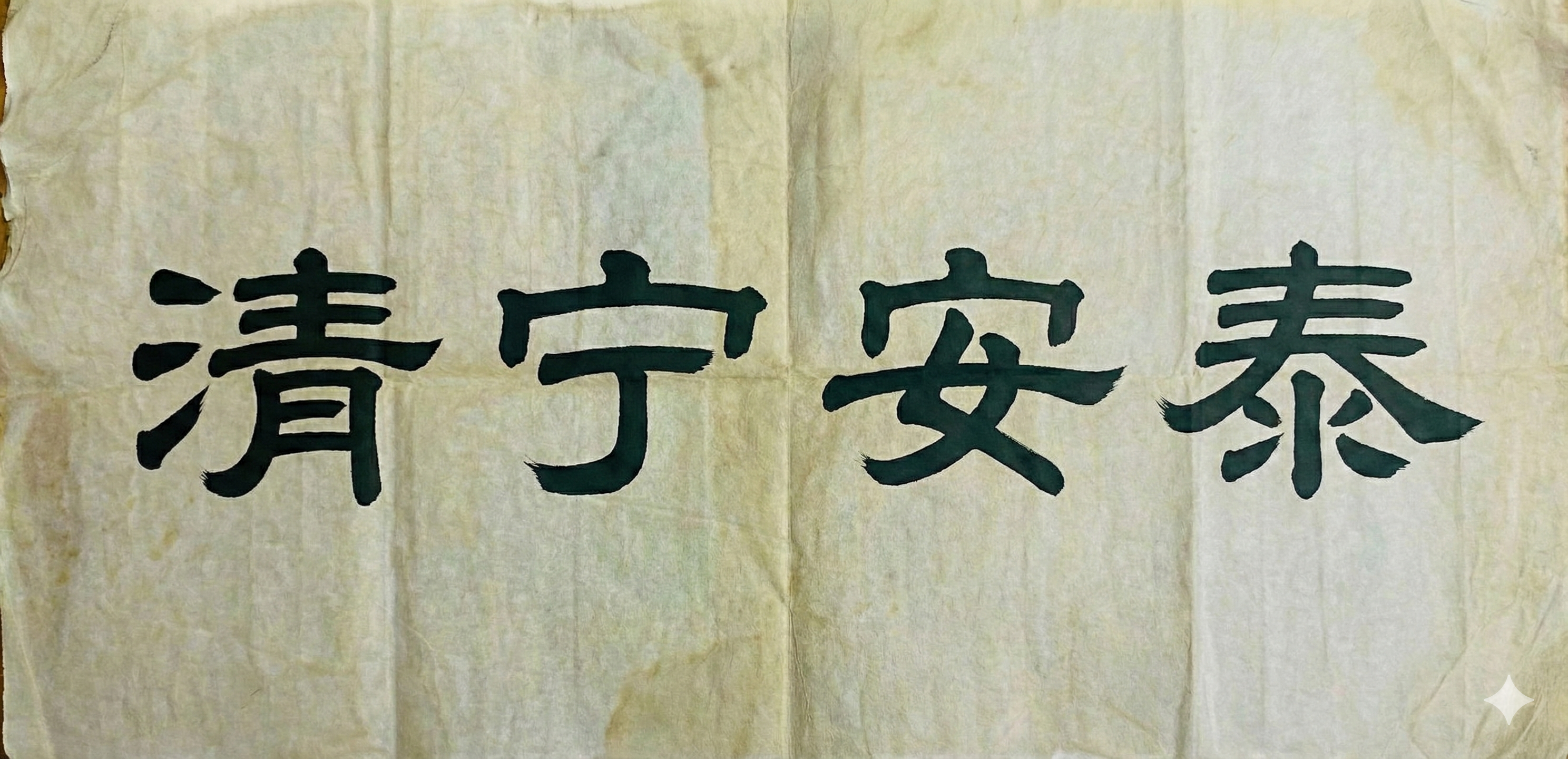
Image Healing: Guided Mandala Viewing 321
Please choose a set of mandala images with stable structure and soft colors to view. First, gaze at the center and feel a sense of quiet presence, then slowly expand your vision outward. Let this stability remind you that feeling down is not dangerous; it is simply a rhythm in the recovery process.
The symmetrical and repetitive structure of mandalas helps the brain understand stability and continuity, reducing fear and misunderstanding of prolonged depression.
◉ Gaze at the mandala twice, coordinating with natural breathing.

Lesson 321: Understanding the Nature of "Prolonged Decline"
Objective: To help you understand that persistent depression is not laziness, but a kind of "chronic psychological fatigue" caused by long-term energy depletion.
Steps: Draw a slowly descending curve on the paper to represent a prolonged period of low mood. Use shades of gray-blue and dark green to depict a "lasting" rather than a "rapid" emotional line. Then, draw a glimmer of light or sprouting plants at the bottom of the curve to symbolize the potential for recovery—a reminder to yourself: low mood does not mean the end, life continues.
Please log in before submitting your drawings and feelings.
○ 321. Understanding the true nature of "prolonged depression" - journal guidance suggestions
① After three slow breaths, write down “A time when I was dealing with chronic depression.” Describe the time, place, triggering event, and your greatest need to be understood at that time.
② Record body signals: heaviness, fatigue, slowed movements, early awakening, or difficulty falling asleep, scoring each on a scale of 0–10. Remind yourself: These are symptoms, not the whole picture.
③ Rewrite “I’m always like this” to “I’m going through a long period of lows, but I’m learning to take care of myself.” Feel the sense of relief that the words bring.
④ Write down three small things that I can still accomplish, such as washing my face, eating breakfast, and opening the curtains. They are glimmers of hope, proof that I am still moving.
⑤ Assess your support network: List two people and two organizations you can turn to for help. Write their contact information down on your phone to lower the barrier to seeking help.
⑥ Conclusion: Make a gentle promise to yourself: "I will move forward in a slow and sustainable way."
Please log in to use.
Sometimes, it's not about starting over, but about slowly waking up. You've always been there.
 EN
EN  ZH
ZH  ES
ES  FR
FR  JA
JA