

Lesson 35: The Inability to Relax – The Bodily Memory of a Lack of Security
Duration:70 minutes
Topic Introduction:
Some people don't "not know how to relax," but rather their bodies have never truly learned to be "safe."
When a person is in a state of tension for a long time, the body will form a continuous defensive memory. As soon as it stops, it will feel panic, weightlessness, and as if something bad is about to happen.
This lesson will analyze the underlying mechanism of "inability to relax": it is not a matter of ability, but a long-term absence of a sense of security; and will guide you to relearn a gentle and safe way to stabilize your body.
Why can't the body relax?
- Over-vigilance of the nervous system:Prolonged stress makes the body think that "danger is imminent."
- Unprocessed emotional memories:Your body stores your past fears and anxieties.
- Stopping = Dangerous old experience:When you were a child, being quiet might have meant being scolded or ignored.
- Relaxation touches on vulnerability:Once you stop, the suppressed emotions will surface.
- Lack of security:Without a safe environment or relationship, the body naturally cannot relax.
Lesson 35: The Inability to Relax—The Body's Memory of a Lack of Security 🎧 Click to watch/listen to the reading
Often, our greatest pain isn't being busy, but finding ourselves unable to relax when we finally have a chance to stop. You've probably experienced this: lying on the sofa on the weekend, feeling like a weight is on your mind; just about to take a nap, your mind suddenly starts frantically listing next week's tasks; even simply spacing out causes your muscles to tense involuntarily, your shoulders to shrug, and your jaw to clench. This feeling of "wanting to relax but being unable to" often brings deep frustration, even making us blame ourselves: "Why can't I even rest? Am I being too demanding?" Please stop this self-blame. This lesson will tell you a truth about the nervous system: for many people, relaxation doesn't equal comfort; relaxation equals danger. If your body is chronically in a high-stress "fight or flight" mode, your nervous system will remember this state and mark it as "necessary for survival." In your bodily memory, only vigilance can prevent harm, and only tension can respond to emergencies. Therefore, when you try to relax, your body's alarm system mistakenly interprets it as you lowering your defenses and exposing your vulnerability to unknown dangers. This creates inexplicable anxiety, panic, or guilt, forcing you back into a state of tension. This explains why you feel anxious when you're idle and need to find something to do to feel at ease. This isn't because you're "born to be busy," but because your body hasn't learned to "feel safe in a safe environment." A sense of security isn't just a psychological concept; it's primarily a physiological experience. To break this cycle, we can't just rely on our brains telling us to "relax," because the body doesn't understand language; it only understands feelings. We need to reprogram ourselves through specific physical exercises. For example, try feeling the contact surface between your back and the chair, telling your body, "I am supported now"; or gently press your palm against your chest, feeling the rise and fall of your breath, sending the signal, "I am not injured at this moment." Every small physical reassurance is sending a safety confirmation to the nervous system. Remember, relaxation is a skill that requires practice. If you can't completely relax right now, that's okay. First, try allowing yourself to "rest with a little tension." Slowly, your body will relearn: taking off your armor doesn't mean being attacked, but rather that you can finally go home.
▲ AI Interaction: What is your body protecting?
Your body isn't "stubborn"; it's just used to guarding itself.
Vigilance is an old survival mode that doesn't automatically disappear just because you say "I'm okay".
When you stop, your body may mistakenly interpret it as danger approaching, causing your heart to beat faster and your muscles to tense up.
This is not failure, but instinct: it is trying to protect you.
Understanding body language is the starting point for regaining a sense of security.
Click the button below to explore with AI why your body is in "unable to relax" mode and build a new sense of security.
Music is a kind of "external safe field".
It doesn't ask where your stress comes from, nor does it force you to relax.
The melody is like a gentle hand, slowly soothing tense nerves.
You can close your eyes and surrender yourself to the sound, instead of the pressure.
○ Eastern Healing Tea: Jasmine Pu-erh
Recommended drinks:Jasmine Pu'er
Recommended reasons:The floral fragrance relaxes the mind, while the calming aroma of Pu'er tea gradually soothes the body, making it a gentle formula for regulating tense nerves.
practice:Take 5 grams of Pu-erh tea and a small amount of jasmine flowers, brew with 95℃ water for 30 seconds to rinse the tea, then add more water and steep for 1-2 minutes. The aroma is stable and it is suitable for drinking before bed.
○ Gentle Corn Pumpkin Soup
Simmer pumpkin, corn, and a little olive oil, then blend into a smooth, creamy soup.
The sweetness of pumpkin combined with the aroma of corn gives the body a feeling of being "fed".
For a nervous system that is unable to relax for a long time, this bowl of warm food provides a sense of stability and comfort, starting from the stomach.
Soothe emotions
Gentle and light
Open Recipe
◉ Traditional Chinese Medicine Diet Therapy: Gentle Corn and Pumpkin Soup (ID 27)
This gentle corn and pumpkin soup features the soft texture of pumpkin and the sweet aroma of corn, complemented by a touch of onion and milk or plant-based milk, resulting in a smooth, creamy, and sweet flavor without being overly heavy. In Traditional Chinese Medicine, pumpkin is often considered a neutral and slightly warming ingredient, beneficial for the spleen and stomach; corn provides dietary fiber and slowly released energy. It's a perfect "soft, drinkable dinner" when the weather turns cool, you're feeling tired, or you don't feel like eating solid foods—it's filling without overburdening your digestive system.
Smooth and warming to the stomach Natural sweetness Lightweight Dinner
I. Recommended Dietary Therapy and Reasons
Recommended dishes:Gentle Corn and Pumpkin Soup (ID 27)
Recommended reasons:The natural sweetness of pumpkin and corn creates a pleasant flavor profile without relying on large amounts of salt and butter; the smooth, creamy soup texture is also suitable as a "soft alternative" when you have a poor appetite, difficulty chewing, or are feeling tired. For those who tend to eat too much oily or salty food for dinner, pairing this type of soup with a small amount of whole-wheat bread or steamed vegetables is a gentler way to adjust their diet.
2. Recipe and Method
Recipe (1–2 servings):
- Peel and deseed 150–180 g of pumpkin, then cut it into small pieces.
- 60–80 g of sweet corn kernels (fresh or frozen corn kernels are acceptable)
- 1/6–1/4 onion, chopped
- 350–400 ml of water or vegetable broth
- 50–80 ml of milk or unsweetened plant-based milk (such as oat milk or soy milk, optional)
- 1 teaspoon of olive oil or a small amount of butter
- a pinch of salt
- A pinch of white or black pepper (optional)
- A small amount of corn kernels (for decoration; you can reserve a small handful).
practice:
- Peel and deseed the pumpkin, then cut it into small pieces so it will cook faster; if the corn kernels are frozen, thaw them slightly beforehand.
- Add olive oil or a little butter to a pan and sauté the chopped onions over low heat until they soften slightly and become translucent. Do not cook them until they are browned.
- Add pumpkin chunks and corn kernels, stir-fry for 1–2 minutes to coat the ingredients evenly with oil and onion flavor.
- Pour in water or vegetable broth, just enough to cover the ingredients slightly more. Bring to a boil over high heat, then reduce to low heat, cover, and simmer for about 15–20 minutes, or until the pumpkin is completely soft.
- Turn off the heat and let it cool slightly. Pour the contents of the pot into a blender cup, or use a hand blender to blend it directly in the pot until it becomes a smooth, thick soup.
- Turn the heat back down to low and pour the blended soup back into the pot. If you want it smoother, you can strain it through a fine sieve again.
- Add milk or plant-based milk while stirring, and heat until small bubbles just begin to appear. Do not boil vigorously to avoid burning or separation of the milk.
- Season with a little salt and white or black pepper. After serving, you can garnish the surface with a few corn kernels or small cubes of pumpkin to enhance the texture and visual appeal.
3. Small rituals for body and mind
When cutting pumpkin and processing corn, you can deliberately slow down your movements, allowing the feel of your hands and the color of the ingredients to become temporary "anchors of attention," helping you to detach from the day's chaotic information.
When stirring a thick soup, observe how the originally scattered ingredients become a smooth, unified whole. This can be likened to "slowly stirring scattered emotions into a form that can be contained."
As you take the first few sips, you can gently tell yourself, "The purpose of this bowl is not to force me to eat a certain amount, but to let my body be slowly enveloped in warmth." Let the act of eating become a practice of treating yourself gently.
4. Dietary Therapy Experience Record
- Record the time of consumption (dinner/after working overtime/weekend lunch) and the mood and fatigue level at that time.
- Observe whether there are any changes in stomach comfort, fullness, and body heaviness within 1–2 hours after drinking.
- If you replace some of your oily staple foods with this kind of thick soup for several consecutive days, you can record your bowel movements, how you feel before bed, and whether your mood swings are more subdued.
V. Instructional Videos (approximately 4–7 minutes)
◉ Video Title:Gentle Corn and Pumpkin Soup – A soft dinner you can slowly savor.
6. Precautions
- Those who need to control their blood sugar can appropriately reduce the amount of corn used, but the overall amount should still be included in the daily total staple food calculation.
- If you are lactose intolerant or sensitive to dairy products, you can switch to plant-based milk or make it with only water and vegetable broth.
- For those with weak digestive systems, the soup can be blended more finely to avoid discomfort caused by excessive graininess.
hint:This recipe is suitable as part of daily health maintenance and dietary adjustments, but it does not replace professional medical advice. If you have chronic illnesses or digestive problems, please follow your doctor's or nutritionist's guidance for dietary arrangements.
○ Modern Calligraphy · Lesson 35 Writing Exercises
In-depth analysis:
The inability to relax is often not because you "don't know the methods".
Rather, it is in bodily memory.Never truly experienced safety.
This state is not a matter of willpower, but rather the result of long-term adaptation of the nervous system.
Modern calligraphy art utilizes a slow, varied rhythm.
Let the body relearn through writing:
There is no threat at this moment.
Writing Skills (Advanced Version):
- Slowed down to an unnatural degree:Intentionally slower than usual.
- Strokes elongated:Extend the duration of a sense of security.
- Breathing synchronization:One stroke, one breath.
- Pauses are allowed:There's no rush to finish it.
- Let it sit after writing:Let your body remember the feeling of relaxation.
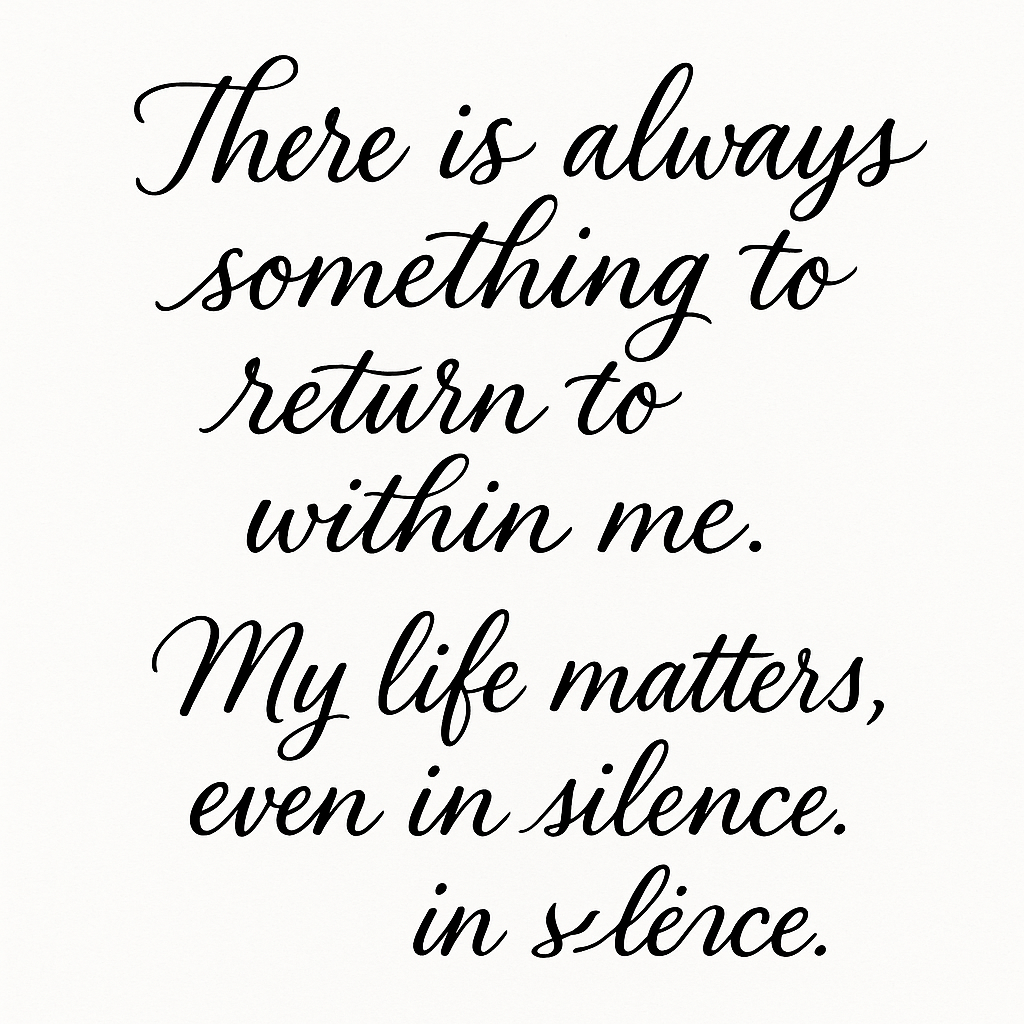
Image Healing: Mandala Stability Guidance 35
Draw a cluster of soft light spots at the center, symbolizing your "inner source of security"; the outer layer spreads out in a wavy pattern, like protective energy slowly unfolding.
As you gaze at it, remind yourself: safety is not something given from the outside, but a power that is slowly rebuilt from within.
The symmetrical and repetitive structure of the mandala allows the nervous system to naturally slow down and enter a more stable state.
◉ Please stare and watch twice.

Lesson 35: Draw a "Safety Thermometer"“
Objective: To observe the body's tension patterns and identify fluctuations in feelings of security.
Steps: Draw a vertical thermometer on a piece of paper. Label the temperature range from "extremely tense" to "deeply stable." Then, recall a few moments from today and mark them on the thermometer. Use colors to distinguish when your body was most tense and when it was slightly relaxed. After finishing, write a sentence: "I am learning to let my body know: it is safe now."“
Please log in before submitting your drawings and feelings.
○ 35. Inability to relax and guidance from a body safety log
① What was the moment that suddenly made you tense up today? Where in your body did your body react first?
② Write down any past experiences you have had where "stopping equals danger".
③ Which emotion is most likely to arise when you stop?
④ Was there a moment today that made you feel slightly safe? Why?
⑤ Write down a "body stability action" that you would be willing to try (such as pressing your chest, covering your stomach, or shaking hands).
⑥ Today's reminder: "I am rebuilding my sense of security, it's okay to take it slow."“
Please log in to use.
Your body is not your enemy; it has just not felt safe for too long.
May you begin today to teach it: You no longer need to be on guard all the time.
 EN
EN  ZH
ZH  ES
ES  FR
FR  JA
JA