

Lesson 36: High-functioning anxiety – People who are calm on the outside but turbulent inside
Duration:70 minutes
Topic Introduction:
High-functioning anxiety is often misunderstood as "people who seem fine have no problems."
These people appear stable, hardworking, responsible, and efficient, but they may be experiencing immense tension, anxiety, and high self-expectations internally.
This lesson will guide you to identify the hidden patterns of high-functioning anxiety: why you may appear to be functioning normally but are quietly breaking down internally; and how to gradually emerge from the "invisible storm" in your mind and body.
Typical characteristics of high-functioning anxiety
- Outwardly strong, inwardly fragile:He always appears calm and collected, but he's constantly on edge inside.
- Excessive self-demand:Any "mistake" will be magnified into self-doubt.
- Fear of disappointing others:They worry that others will think they are not good enough or not working hard enough.
- Excessive need for control:They can't relax because they feel that if they do, they'll "drop the ball."
- Staying calm by being busy:Stopping means anxiety sets in, so you keep pushing yourself forward.
Lesson 36: High-functioning anxiety—a person with a calm exterior but a turbulent inner world 🎧 Click to watch/listen to the reading.
High-functioning anxiety is a master of disguise. To outsiders, you might seem like someone with an "extraordinary life": highly efficient at work, never late, always completing tasks perfectly, and even attentive to the emotions of those around you. Everyone sees you as stable and reliable. But only you know that beneath this calm mask lies a constantly raging inner storm. Your driving force isn't "I want to do it," but "I dare not not do it." Behind your hard work lies a deep fear: fear of disappointing others, fear of being abandoned if you stop, fear that even a small mistake could lead to disaster. The brain of someone with high-functioning anxiety is like a never-ending to-do list and a disaster rehearsal theater. You might be lying in bed, physically exhausted, but your mind is frantically reviewing today's conversations to see if you offended anyone, or rehearsing tomorrow's meeting for the tenth time. You find it hard to say "no" because refusing others makes you feel immense guilt. This anxiety does bring you many worldly achievements because it makes you work harder and be more meticulous than others. But it's a toxic fuel. It's burning away your vitality. You might find yourself accomplishing a lot, but finding it hard to feel joy. You only experience a temporary sense of relief, a feeling of "finally done," followed by another round of worry. This lesson aims to debunk this lie: you don't need anxiety to maintain excellence. We'll try to transform "fear-driven" into "steady-state driven." Try practicing small experiments on "it's okay to be imperfect." For example, intentionally reply to a message a few minutes late, or admit once, "I'm a little tired today, I can't do it." You'll find that the world doesn't collapse. True strength isn't about always being tense and never making mistakes, but about allowing yourself to be a real person, with fatigue and vulnerabilities, yet still worthy of love. Please unload that burden of perfection; you've already done enough.
▲ AI Interaction: What lies behind your "calm exterior"?
You're used to performing well because you were taught from a young age that "you can't make mistakes."
Others see stability, but they don't see how many storms are brewing inside you.
You're not pretending to be strong; you're holding on while simultaneously fearing you'll break down.
The essence of high-functioning anxiety is not a problem of ability, but rather a long-term suppressed vulnerability that has no place to rest.
Change begins when you are willing to be honest with yourself.
Click the button below to let AI help you identify which type of high-functioning anxiety you have and how to gently adjust it.
Music gives you, who appear calm on the outside, a space where you can secretly let loose.
Close your eyes and let the melody replace the high-speed processing in your mind.
Let the body no longer bear all the burden of "having to hold on".
You allow yourself to be an ordinary, gentle, and imperfect person in the music.
○ Eastern Healing Tea: Oolong Rose Soothing Tea
Recommended drinks:Oolong + Rose
Recommended reasons:The smoothness of oolong tea combined with the soothing properties of rose can help release suppressed emotions and allow the tense nervous system to gradually "de-escalate".
practice:Take 5 grams of oolong tea and 3–5 rosebuds, and steep in 90℃ hot water for 1–2 minutes. The aroma is gentle and perfect for busy and stressed people.
○ Refreshing Quinoa Energy Bowl
Quinoa paired with roasted pumpkin, avocado, cherry tomatoes, and olive oil is a stable combination for people with high functional anxiety.
Under high external pressure, the body often consumes too much energy, and this gentle, filling energy bowl can help restore balance.
It is lightweight and non-irritating, yet it provides stable blood sugar and sustained energy, preventing the body from being in a "rapidly burning" state.
Anti-anxiety nutrition
Refreshing light meals
Open Recipe
◉ Traditional Chinese Medicine Diet Therapy: Refreshing Quinoa Energy Bowl (ID 28)
This quinoa energy bowl is based on the core concept of being "light yet filling," combining the stable energy of quinoa, the refreshing fiber of leafy green vegetables, and a small amount of nuts and protein sources into a nutritionally balanced and visually appealing light meal. Quinoa itself is rich in high-quality plant protein and minerals, with a gentle impact on blood sugar; paired with refreshing vegetables and lemon olive oil dressing, it provides a stable yet light boost on busy or hot days. It's perfect as a light lunch or a light dinner.
Light and filling plant protein Refreshing energy
I. Recommended Dietary Therapy and Reasons
Recommended dishes:Refreshing Quinoa Energy Bowl (ID 28)
Recommended reasons:Quinoa, as a low-GI staple food, is more suitable for those with mood swings or sensitive blood sugar. Pairing it with leafy greens, cucumbers, cherry tomatoes, and other refreshing vegetables can reduce the feeling of greasiness and heaviness. Whether you are studying, working, or under a lot of stress, this bowl can help stabilize energy, improve afternoon fatigue, and provide a sustainable feeling of fullness.
2. Recipe and Method
Recipe (1–2 servings):
- Quinoa 60 g (dry weight)
- 180 ml of water (for cooking quinoa)
- 6-8 cherry tomatoes, cut in half
- 1/2 cucumber, diced or sliced
- A small bunch of lettuce or spinach leaves
- 1/4–1/2 avocado, diced (optional)
- Add a small amount of roasted almonds or cashews (optional, to add texture).
- 1 tablespoon olive oil
- 1–1.5 tablespoons lemon juice
- a pinch of salt
- A pinch of black pepper
- A small amount of chopped parsley or mint leaves (optional)
practice:
- After gently rubbing the quinoa several times to remove surface saponins, drain the water.
- Add quinoa and water to a pot, bring to a boil, then reduce to a simmer, cover and cook for about 12–15 minutes until the water has evaporated.
- After turning off the heat, keep the lid on and let it sit for 5 minutes. Then use a fork to loosen the quinoa so that it is soft and not sticky.
- Vegetables: Prepare cherry tomatoes, cucumbers, lettuce, and avocados by chopping them according to your preference.
- Sauce: Simply mix olive oil, lemon juice, a pinch of salt, and black pepper.
- Place the quinoa at the bottom of a bowl, and then arrange various vegetables and nuts on top.
- Drizzle with the sauce, mix gently, and enjoy. If you prefer a cooler taste, refrigerate for 10–15 minutes first.
3. Small rituals for body and mind
When arranging vegetables, consciously pay attention to the "rhythm of different colors" and let your vision become a channel for stress relief.
While mixing the ingredients, you can silently repeat to yourself, "I am replenishing my body with light and stable energy."“
The first bite is refreshing and crisp, reminding your taste buds that even when busy, you can choose to treat yourself gently.
4. Dietary Therapy Experience Record
- Record the time of consumption along with the current state of attention and fatigue.
- Observe whether there is a stable feeling of fullness and less fatigue within 2 hours after the meal.
- If you try this for several consecutive days as lunch, you can record your concentration and afternoon energy levels.
5. Tutorial Video (approximately 3–6 minutes)
◉ Video Title:Refreshing Quinoa Energy Bowl: A light yet stable bowl of plant-based power.
6. Precautions
- For those with weak digestive systems, reduce the proportion of raw or cold vegetables, and some vegetables can be blanched instead.
- If you need to control your fat intake, you can reduce the amount of olive oil or nuts you use.
- If blood sugar management is required, the amount of quinoa can be reduced appropriately, and the proportion of vegetables can be increased.
hint:These refreshing energy bowls are perfect as a light meal or a quick midday boost, but they do not replace professional nutrition advice.
○ Modern Calligraphy · Lesson 36 Writing Exercises
In-depth analysis:
Individuals with high-functioning anxiety often appear stable, reliable, and capable to outsiders.
However, internally, he is constantly under tension and driven by himself.
This state is not due to excessive ability, but rather...Long-term neglect of internal loadThe result.
Modern art calligraphy allows for the coexistence of a smooth external appearance and an inner, undulating structure.
The lines appear smooth, yet reveal a true tension through the pressure and rhythm of the pen.
This corresponds to the true nature of high-functioning anxiety.
You no longer need to hide everything so perfectly.
Writing Skills (Advanced Version):
- Simple design:The characters need not be complex; they symbolize "outward tranquility."
- The pen pressure changes significantly:Allow the inner tension to be revealed.
- The rhythm varies, sometimes fast, sometimes slow:Respect the true fluctuations of energy.
- Not striving for neatness:Stop trying to maintain a perfect appearance.
- No corrections after writing:Practice accepting things as they are.
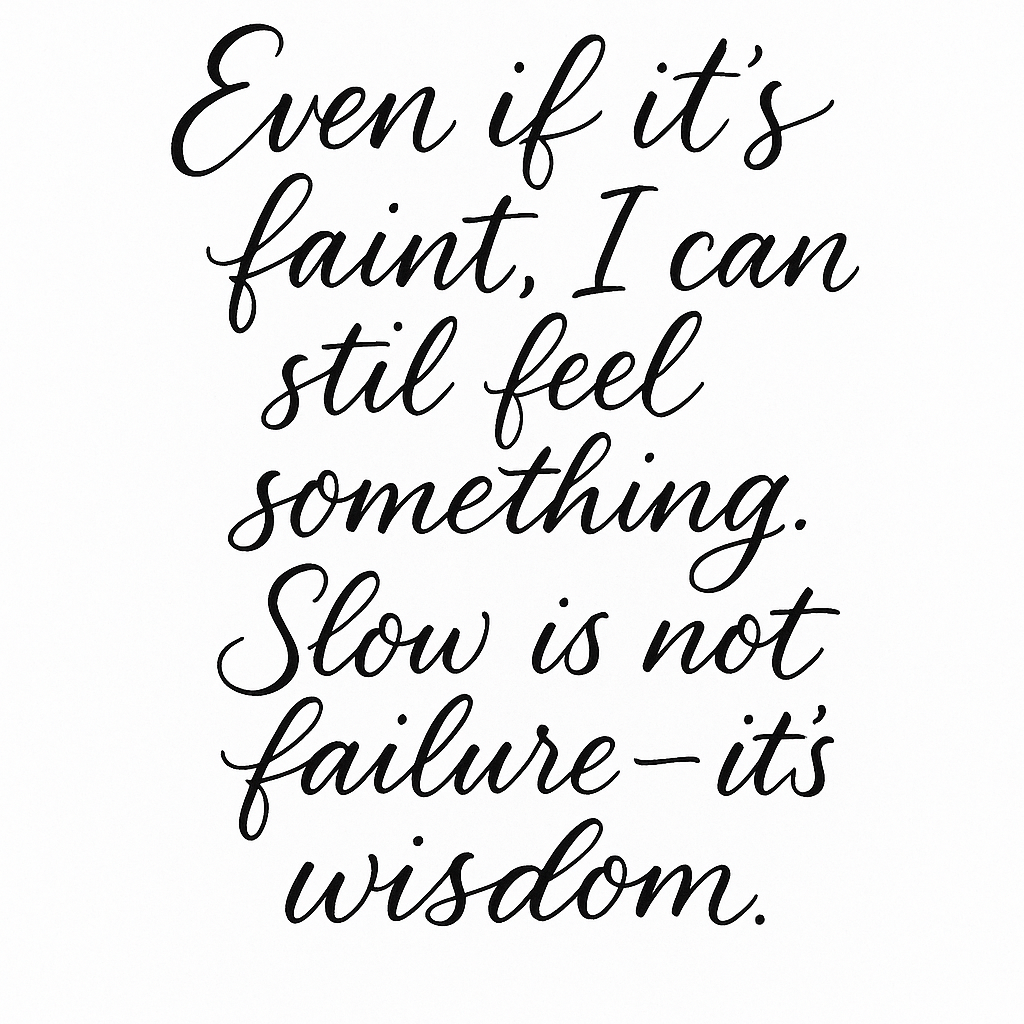
Image Healing: Mandala Stability Guidance 36
Draw a halo in the center of the paper to symbolize your "calm" appearance; then extend the ripples outward to depict the unseen inner turmoil.
When you gaze at it, you will find that external stability and internal fluctuations are not in conflict; they are simply two rivers in your life, and you can learn to let them coexist and no longer pull each other apart.
Mandala can automatically slow down a tense nervous system, giving your mind and body a buffer.
◉ Please stare and watch twice.
Lesson 36: Draw a double self-portrait of "outer appearance vs. inner self".
Purpose: To become aware of how much internal energy you expend to maintain a "high-functioning state".
Steps: Divide the paper into two halves, top and bottom.
The upper half depicts how others see you: stable, responsible, calm, and organized. The lower half depicts your true inner self: worried, tense, afraid of failure, and constantly thinking late into the night.
After completing it, I'll summarize it in one sentence: "I want to practice making my true self no longer lonely."“
Please log in before submitting your drawings and feelings.
○ 36. High-functioning anxiety: Journaling guidance suggestions
① In which moments today did I appear "very composed" but actually feel very tired inside?
② What unseen costs did I pay in order to maintain that "perfect me"?
③ Write down a perfect requirement where you would be willing to reduce 1%.
④ Record a moment when you allowed yourself to "slow down," and what did it bring?
⑤ Has anyone shown concern for you today? If not, are you willing to do something for yourself?
⑥ Write down today's reminder: I am not a machine, I can relax a little.
Please log in to use.
Your composure isn't innate; it's something you've cultivated through sheer grit and determination.
May you no longer have to rely on yourself to weather the storms in the future, but also gain true peace and support.
 EN
EN  ZH
ZH  ES
ES  FR
FR  JA
JA