

Lesson 41: Common Manifestations, Causes, and Misconceptions of Social Anxiety
Duration:90 minutes
Topic Introduction:Social anxiety is not simply "being afraid of people," but a psychological reaction of "overestimating oneself in the eyes of others." You don't hate socializing; you're afraid of being judged, making mistakes, or being misunderstood. This lesson will guide you through understanding the common manifestations, underlying causes, and cognitive biases of social anxiety, helping you shift from "the fear of being seen" to "allowing to be seen authentically."
○ Three Levels of Social Anxiety
- 1. Physiological level:A rapid heartbeat, blushing, sweating, and a trembling voice are all natural "observable reactions" of the body.
- 2. Psychological level:Constantly worrying about negative opinions from others can lead to an overemphasis on "how I am performing".
- 3. Behavioral level:Avoiding social situations, remaining silent, leaving early, and repeatedly reflecting and blaming oneself afterward.
○ Common Misconceptions
- Misconception 1:“I’m shy = I have a problem.” → Shyness is just a personality trait, not a sign of illness.
- Misconception 2:“"Everyone is paying attention to me." → In reality, most people are busy paying attention to themselves.
- Myth 3:“"You have to be perfect to be liked." → Social connections come from sincerity, not perfect performance.
Lesson 41: Common Manifestations, Causes, and Misconceptions of Social Anxiety 🎧 Click to watch/listen to the reading
Starting today, we'll turn our attention to a pervasive issue that evokes loneliness in countless people—social anxiety. Does your heart race before entering a crowd? Does your mind go blank when speaking in public? Or do you agonize over every wrong word you uttered after a gathering? Take a deep breath and tell yourself: I'm not alone, and it's not my fault. Social anxiety isn't simply shyness or introversion; it's essentially a profound fear of being scrutinized and evaluated. Physically, your body often betrays you first, exhibiting blushing, trembling hands, excessive sweating, stomach aches, or vocal cord tension. Behaviorally, you might avoid eye contact, constantly check your phone in social situations to escape conversation, or even make excuses to skip important events. Cognitively, you might wear a "negative filter," feeling that everyone around you is staring at your flaws, or fall into the trap of "mind reading," believing others are mocking you. Regarding its causes, we can't simply blame ourselves for being timid. From an evolutionary psychology perspective, being excluded from a group in ancient times meant death; this fear of negative evaluation is deeply ingrained in our genes. Furthermore, excessively high expectations, harsh criticism, or traumatic experiences like public humiliation or bullying during childhood can all put your amygdala in a state of hypervigilance. Here are a few misconceptions that must be dispelled: First, social anxiety is not the same as introversion. Introverts enjoy solitude and use it to recharge, while those with social anxiety often crave connection but are blocked by fear. Second, this is not an unchangeable personality flaw, but rather a temporarily blocked psychological state. Finally, and most importantly, social anxiety can be improved. Our goal is not to force you to become a social butterfly—that's too exhausting. Our goal is "ease." In this unit, we will no longer run away, but try to understand the protective mechanisms behind this fear and learn how to coexist peacefully with it. When you stop seeing the gaze of others as a sword of judgment, you can reclaim your own safe space in crowds. Let's begin this journey of reconnecting with this awareness.
▲ AI Interaction: Deconstructing Your "Spotlight" Fear
Social anxiety often makes us feel like the world is a giant stage, and you are the only actor.
But in reality, we are all just passersby in each other's background.
Try talking to the AI about the last time you felt "embarrassed".
Let's take a look together and see if that "catastrophic consequence" really happened.
Please remember that accepting your nervousness is the beginning of self-confidence.
Click the button below to have a relaxed conversation with AI simulation and practice finding comfort in "imperfection".
○ Audio - Exercises for Stabilizing Self-Sense
Play the audio track and practice "internal positioning," which involves shifting your focus from others' perspectives back to your own.
- Be aware of your body – feel the weight of your feet.
- Be aware of your breathing – quietly count the rhythm of your inhalation and exhalation.
- Be aware of your environment – look around the space and name three items you see.
○ Eastern Tea Therapy: Jasmine Longjing Tea for a Refreshing Mind
Recommended reasons:The fragrance of jasmine can soothe tension and calm the nervous system; Longjing tea helps to clear the mind and regulate breathing rhythm.
practice:Take 3 jasmine flowers and 3 grams of Longjing tea, steep in 85°C water, let stand for 3 minutes before drinking, and let the aroma relieve tension through your breathing.
○ Dietary Recommendation: Tremella, Lily Bulb, and Goji Berry Soup
White fungus nourishes the lungs and calms the mind, lily bulbs soothe the nerves, and goji berries replenish blood and nourish the heart. This soup is mild and gentle, making it especially suitable for those who experience high social stress, tension, and excessive sweating.
Open Recipe
◉ Traditional Chinese Medicine Diet Therapy: Tremella, Lily Bulb, and Goji Berry Soup (ID 41)
White fungus, lily bulb, and goji berry soup is a classic, warming sweet soup. It combines the smooth, gelatinous texture of white fungus, the calming and soothing properties of lily bulbs, and the delicate sweetness and garnish of goji berries. From a Traditional Chinese Medicine perspective, white fungus is considered a mild ingredient that nourishes yin, moistens dryness, nourishes the stomach, and promotes the production of body fluids. Lily bulbs are known for their yin-nourishing, calming, lung-moistening, and irritability-relieving properties, while goji berries are believed to nourish the liver, improve eyesight, and provide moderate tonification. The entire soup has a soft texture and a light sweetness that isn't overly cloying. It's a gentle daily nourishing choice, especially during dry seasons, when experiencing stress, poor sleep quality, or prolonged use of the voice or eyes.
Nourishing yin and moistening dryness Calming the mind and nourishing the lungs Soft and sweet soup
I. Recommended Dietary Therapy and Reasons
Recommended dishes:Tremella, lily bulb and goji berry soup (ID 33)
Recommended reasons: Amidst work pressure, prolonged screen time, and disrupted sleep patterns, the body often experiences a state of "mild dehydration": dry mouth, dry throat, tight skin, and irritability that makes it difficult to fully relax. The gelatinous texture of white fungus provides a delicate and soft enveloping sensation, while the addition of lily bulbs and goji berries adds a calming and gently nourishing touch to this sweet soup. As a late-night or afternoon snack, it's a more suitable tool for slow, daily repair than heavy, oily, and sugary treats.
2. Recipe and Method
Recipe (1–2 servings):
- 5–8 g of dried white fungus (about one small piece, soaked and the hard stem removed).
- 8–10 g of dried lily bulbs (or 20–30 g of fresh lily bulbs)
- 8–10 g of goji berries (about a small handful)
- 600–700 ml of clean water
- 15–20 g of rock sugar (adjust to taste, or use brown sugar/a small amount of honey instead; honey should be added after the temperature has cooled down).
- 2-3 red dates (optional, pitted).
practice:
- Soak dried white fungus in cold water for 1–2 hours beforehand, until it fully expands and softens. Trim or break off the hard yellow stem at the base and tear it into small pieces for later use.
- Rinse dried lily bulbs briefly with water and then soak them for a short time; if using fresh lily bulbs, separate the petals, wash them, and set aside.
- Rinse the goji berries and red dates quickly with water. You can remove the pits from the red dates and cut them open a few times to help release their flavor.
- Place the white fungus, lily bulbs, red dates, and water into a small pot. Bring to a boil over high heat, then reduce to a simmer and cook for 30–40 minutes, allowing the white fungus to release its gelatinous substance and become soft and glutinous.
- When the soup becomes slightly viscous and the edges of the white fungus become "curled and transparent", add goji berries and rock sugar, then simmer over low heat for 5-8 minutes until the rock sugar is completely dissolved.
- After turning off the heat, cover the pot and simmer for another 5 minutes to allow the sweetness and aroma to blend further. Let it cool slightly until it is warm and palatable before eating.
- To make the soup thicker, you can extend the simmering time or reduce the amount of water to make the gelatinous texture of the white fungus more pronounced.
3. Small rituals for body and mind
When cleaning and washing white fungus and lily bulbs, you can deliberately slow down your movements and focus on the texture of the ingredients, allowing yourself to take a few minutes off from the rush.
As the soup simmers for a while, it will start to release a slightly sweet and mild aroma of grains. You can take a few deep, steady breaths during this time and treat it as a short break "just for yourself".
When you pick up a bowl of warm white fungus, lily bulb, and goji berry soup, you can gently say to yourself, "This bowl is slowly taking care of my body, which has been working a bit too hard today." Let every bite of this sweet soup be a gentle confirmation.
4. Dietary Therapy Experience Record
- Record the time of consumption (afternoon snack/evening soup/1–2 hours before bedtime) and the degree of dry mouth, dry throat, skin tightness, and emotional state at that time.
- Observe for subtle changes in throat comfort, oral moisture, and psychological relaxation within 1–2 hours after consumption.
- If consumed 3–5 times consecutively during dry seasons or periods of high stress, one can record whether there is any improvement in sleep quality, mental state upon waking in the morning, and skin dryness.
V. Instructional Videos (approximately 4–7 minutes)
◉ Video Title:Tremella, lily bulb, and goji berry soup – a soft and sweet soup that soothes the lungs and calms the mind.
6. Precautions
- Those with weak spleen and stomach, or prone to diarrhea, should not consume too much white fungus. They can try a small amount initially and observe the gastrointestinal reaction.
- Lily bulbs are moistening; if you have significant phlegm or dampness or poor digestion, you should reduce the amount accordingly and closely monitor your body's response.
- Goji berries and rock sugar are sweet ingredients, so those who need to strictly control their blood sugar should significantly reduce or eliminate their use and make dietary arrangements under the guidance of a professional.
hint:This recipe is a reference example for daily care and self-care, and does not replace professional medical diagnosis and treatment. If you experience persistent severe dry throat, insomnia, weight fluctuations, or other physical discomfort, please seek medical attention promptly and follow your doctor's advice.
○ · Suggestions for practicing running script in Chinese calligraphy
Starting with this lesson, we will practice "running script". People with social anxiety often become stiff due to "over-control". Running script requires flowing strokes and connecting lines, which is the best way to practice "allowing for loss of control" and "accepting imperfection".
Writing Instructions:
The essence of running script lies in the "flow of energy." Avoid excessive pausing and elaboration at the beginning and end of strokes; try to let the momentum of the previous stroke naturally lead into the beginning of the next. Even if a stroke is written crookedly, don't stop; continue with the flow of the next stroke. The same applies to social interactions; occasional "mistakes" won't ruin the overall communication.
Written words:
Determined to have good fortune
Motivational words:
Every word doesn't have to be perfect, but the flow of the text should be smooth. Allow yourself to "flow" through those imperfect moments.
Writing Tips:
Speed up a bit, don't hesitate. Feel the friction of the pen tip gliding across the paper; it's proof of your connection with the present moment.
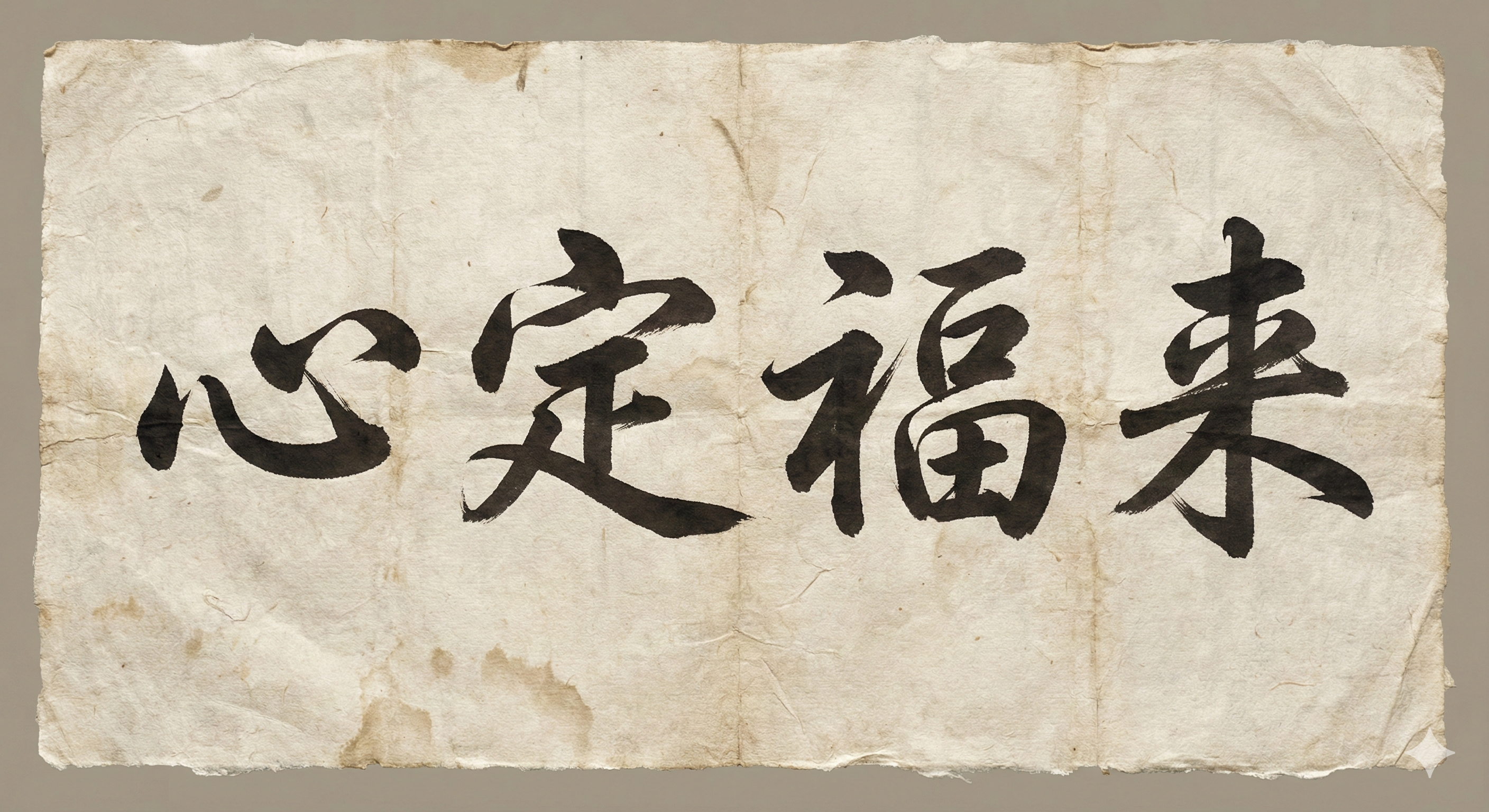
Image Healing: Mandala Stability Guidance 41
Imagine you are standing at the center of a circle. The surrounding noise swirls like the outer ring's ripples, yet it cannot reach your center. The gazes from the outside are not glaring searchlights, but soft, diffused light. You don't need to please any of the lines outside the circle; you only need to rest at your own center. With each breath, exhale the illusion of being scrutinized and inhale the sense of security that comes from within.
Traditional mandalas typically feature a harmonious and intricately varied circular structure, symbolizing the wholeness of the universe and the cycle of life. By viewing mandala images, individuals can perceive inner peace and strength, achieving psychological balance.
◉ Gaze at the mandala twice, while taking deep breaths.

Lesson 41: Common Manifestations, Causes, and Misconceptions of Social Anxiety
Objective: To observe one's own physical reactions and internal narratives in social situations through drawing, and to distinguish between real threats and psychological misinterpretations.
Steps: Draw a diagram on paper showing the positions of the "crowd" and "yourself," using lines to represent distance. Red lines represent tension, and blue lines represent safety. Next, draw a halo around yourself, symbolizing psychological boundaries. Finally, write the sentence outside the diagram: "I can be present, without being overwhelmed."“
Please log in before submitting your drawings and feelings.
○ 41. Suggestions for Guiding Social Anxiety Journaling
① In what situations do I most often feel nervous?
② What am I most afraid of? Is this a true opinion or just speculation?
③ When I am anxious, which part of my body reacts first?
④ In what situations do I feel relaxed and at ease?
⑤ Write down a small action you took today that allowed yourself to be seen.
⑥ Tomorrow's small steps: When socializing, tell yourself, "I can be seen, and I can relax."
Please log in to use.
True social courage is not about making everyone like you, but about being able to like yourself in front of others.
 EN
EN  ZH
ZH  ES
ES  FR
FR  JA
JA