

Lesson 42: Cognitive Distortions of Social Anxiety: The Spotlight Effect
Duration:90 minutes
Topic Introduction:“The "spotlight effect" is one of the most typical cognitive distortions in social anxiety. It makes people mistakenly believe that they are being watched and judged by everyone. In reality, most people don't notice your "minor mistakes," but you magnify them in your mind as shame and tension. This course will guide you to identify and correct this thinking bias, rebuild a sense of reality through practice, and restore natural social confidence.
○ The psychological mechanism of the spotlight effect
- 1. Egocentrism bias:People tend to overestimate how much attention others pay to them when socializing.
- 2. Negative filtering:Anxious people tend to focus only on the parts that might go wrong, while ignoring the real positive reactions.
- 3. Projective hypothesis:Using "what I care about" as a standard to infer "what others must care about as well" leads to self-inflation.
○ Correcting Distorted Thinking
- Fact Check:Did others actually see and comment on it?
- Note the transfer:Shift from "How am I behaving?" to "What am I communicating?"
- Allow for ambiguity:Accept the normality that "it is impossible to be liked by everyone".
Lesson 42: Cognitive Distortions in Social Anxiety - The Spotlight Effect 🎧 Click to watch/listen to the reading
Today we'll delve into a key driver of social anxiety: cognitive distortions. Among these distorted thought patterns, the most famous is the "spotlight effect." Imagine you're standing in the center of a giant theater stage, a blinding spotlight shining on you, surrounded by an audience who are holding their breath, even using magnifying glasses to observe your every move, every micro-expression, every awkward pause. This is the true psychological feeling of someone with social anxiety in daily life. You might think: because my hair is a little messy today, strangers are laughing at me; because I misspoke in the meeting, my colleagues are probably secretly laughing at me; because I tripped while walking, everyone around me is staring at me. But what's the truth? Psychological research tells us that this is entirely an illusion. The fact is, everyone is the protagonist of their own life, and everyone is busy performing under their own "spotlight," with no extra energy to pay attention to you. This phenomenon of "overestimating how much attention others pay to you" is the spotlight effect. Psychologically, we tend to believe that how others see us is as important as how we see ourselves, but this is not actually the case. Psychologists conducted the famous "T-shirt experiment," where participants wore oddly patterned clothing into a room. They predicted half the people would notice, but in reality, less than 20% (TP3T) did. Our brains, driven by their egocentric instincts, deceived us. Understanding this is the first step to healing. The next time you feel nervous and think everyone is staring at you, try a "reality test": look up and observe your surroundings. You'll find people looking at their phones, daydreaming, chatting with those around them—everyone is living their own lives, and no one is waiting for you to make a mistake. That suffocating spotlight doesn't actually exist; it only exists in your imagination. Turn off that light, and you'll find you can safely be an imperfect, ordinary person. When you realize, "Nobody really cares about me," it's not a depressing statement, but a supreme declaration of freedom.
▲ AI Interaction: Turning Off the "Spotlight" of Your Heart“
“The "spotlight effect" makes us overestimate how much attention others pay to us.
This illusion makes us live in constant tension, always ready to be "criticized".
In fact, everyone is busy focusing on the spotlight in their own lives.
We can turn off this light through a small thought experiment.
Once you shed the burden of performing, you'll find that the people around you are actually very tolerant, or—very forgetful.
Click the button below to conduct a "reality test" with AI and dismantle those non-existent audience seats.
○ Audio - Spotlight Shrinking Exercise
Play the audio track and follow the guidance to complete the "Inner Light" exercise:
- Close your eyes and imagine a beam of bright light shining on you from above.
- With each breath, gradually dim the light until it only illuminates your chest.
- Repeating in the light: "I am being understood by myself, and I don't need to prove anything."“
○ Eastern Tea Therapy: Chrysanthemum and Goji Berry Calming Tea
Recommended reasons:Chrysanthemums soothe the liver and improve eyesight, relieving tension in the head and face caused by being stared at; goji berries nourish yin and balance nerve energy.
practice:Steep 5 chrysanthemums and 6 goji berries in boiling water, let it cool to a warm temperature, and drink it in small sips while taking deep breaths.
○ Dietary Recommendation: Black Sesame and Walnut Paste
Black sesame seeds nourish the kidneys and replenish essence, while walnuts warm and nourish the brain, helping to restore nerve fatigue and confidence after social stress.
Open Recipe
◉ Traditional Chinese Medicine Diet Therapy: Black Sesame and Walnut Paste (ID 42)
Black sesame and walnut paste is a smooth, fragrant, and warm dessert, featuring the rich oiliness of black sesame and the robust aroma of walnuts. From a Traditional Chinese Medicine perspective, black sesame is often considered a mild food that nourishes the liver and kidneys, moisturizes dryness, and promotes hair growth; walnuts, on the other hand, are known for their brain-boosting and digestive benefits, and their ability to relieve dryness and constipation, making them suitable for those who use their brains extensively, stay up late frequently, are prone to dizziness and fatigue, or have a tendency towards mild constipation. Blending both with a small amount of grains into a smooth paste reduces the burden on the digestive system, ensuring this fragrant and delicious treat is both nourishing and provides a satisfying feeling of being well-cared for.
Nourish the liver and kidneys Moisturize and nourish hair Brain-boosting snacks
I. Recommended Dietary Therapy and Reasons
Recommended dishes:Black sesame and walnut paste (ID 34)
Recommended reasons: For those who spend long hours working in front of a screen, overthink, experience sleep disturbances, or feel like their "brain is always working at high speed," a bowl of warm black sesame and walnut paste can provide some healthy fats and energy, while its aroma and texture can help the brain temporarily slow down from its "high-frequency operation." Compared to high-sugar, high-fat desserts, this paste, made primarily of grains, nuts, and sesame, is more suitable as a slow and gradual way to repair the body, and can be consumed in small amounts during breakfast or a low-energy afternoon.
2. Recipe and Method
Recipe (1–2 servings):
- 20–25 g of roasted black sesame seeds (about 2 tablespoons; it is recommended to roast them in advance).
- 20–25 g of walnuts (about 2 tablespoons; you can roast them first to remove the bitterness).
- 10–15 g of rice or glutinous rice flour (about 1 tablespoon, to help form a paste and increase satiety)
- 300–350 ml of water or unsweetened soy milk
- Add 10–15 g of rock sugar, or a little honey/brown sugar (adjust to taste; honey should be added after it has cooled slightly).
- A small amount of crushed black sesame seeds or chopped walnuts (for garnish, optional)
- A pinch of salt (optional, to enhance flavor, but not much is needed).
practice:
- If using raw black sesame seeds and raw walnuts, you can first dry-fry them over low heat until they are slightly fragrant and the surface is slightly oily, then let them cool before use to reduce the raw taste.
- Put cooked black sesame seeds, walnuts, and rice (or glutinous rice flour) into a food processor, add about half water or soy milk, and blend into a smooth paste.
- Pour the blended liquid into a small pot, add the remaining water or soy milk, stir well, and heat over low heat.
- Keep the heat low throughout and stir constantly in the same direction with a spoon to prevent burning. When the paste gradually thickens and slow bubbles appear, reduce the heat and continue heating for 3–5 minutes.
- Add rock sugar or brown sugar and stir until completely dissolved; if using honey, turn off the heat and let it cool slightly before adding a small amount.
- Add a pinch of salt to taste (optional), stir well and turn off the heat.
- Pour into a bowl, and sprinkle with a little black sesame seeds or walnut pieces for decoration. Enjoy slowly when the temperature has cooled to a suitable level.
3. Small rituals for body and mind
While roasting sesame seeds and walnuts, you can deliberately stop other actions and focus only on your sense of smell and hearing: feel the aroma slowly emerge and hear the slight friction sound when turning the ingredients, allowing your attention to step back from your chaotic thoughts.
When stirring and cooking black sesame and walnut paste, watching the liquid in the pot thicken from thin can be seen as a symbol: allowing excessively scattered energy to slowly gather and become supported.
As you pick up the bowl, whisper to yourself, "This bowl is helping me slowly replenish myself." Let every sip of rich flavor be a gentle response to your own depletion.
4. Dietary Therapy Experience Record
- Record the time of consumption (breakfast/mid-morning/afternoon low point) and the mental state at the time (awake, tired, distracted, etc.).
- Observe changes in mental concentration, dizziness, satiety, and intestinal comfort within 1–2 hours after consumption.
- If consumed regularly 2–3 times a week, subtle changes in hair and skin dryness, bowel movements, and overall energy levels can be recorded.
5. Tutorial Video (approximately 4–6 minutes)
◉ Video Title:Black sesame and walnut paste – a bowl of rich and comforting daily nourishment.
6. Precautions
- Black sesame seeds and walnuts are high in oil, so those who need to control their blood lipids or total energy intake should reduce the amount or frequency of consumption.
- Those with weak digestive function or prone to diarrhea should start with a small amount when drinking it for the first time, and adjust the dosage after observing the gastrointestinal reaction.
- If using sweeteners such as brown sugar or honey, these should be included in the total daily sugar intake; individuals managing their blood sugar should plan their overall diet under the guidance of a professional.
hint:This recipe is for daily health maintenance and is not a substitute for medical diagnosis and treatment. If you experience persistent symptoms such as significant fatigue, dizziness, hair loss, or insomnia, please seek medical attention promptly and follow your doctor's advice.
Lesson 42: Chinese Calligraphy - Suggestions for Writing Running Script
The theme of this lesson is overcoming the "spotlight effect." This cognitive bias makes us feel that every stroke we make while writing is being "watched," causing us to hesitate when putting pen to paper. The goal of practicing running script is to "forget the self," to forget the imagined audience, and to retain only the tactile sensation of the pen tip moving across the paper.
Writing Instructions:
Try writing without ornamentation. Don't deliberately embellish the beginning and end of strokes to make the characters "look" better; let the strokes remain in their most natural and simple state. If the ink dries out, don't rush to dip it in again; just continue writing along with that dry, rough feeling, accepting the current, authentic state.
Written words:
Tranquility leads to far-reaching goals
Motivational words:
The world is too busy for anyone to scrutinize you with a magnifying glass. Your writing is your own personal kingdom of freedom.
Writing Tips:
Relax your wrists and imagine the spotlight slowly dimming, the surroundings becoming soft and quiet. Your words don't need to be performed for anyone.
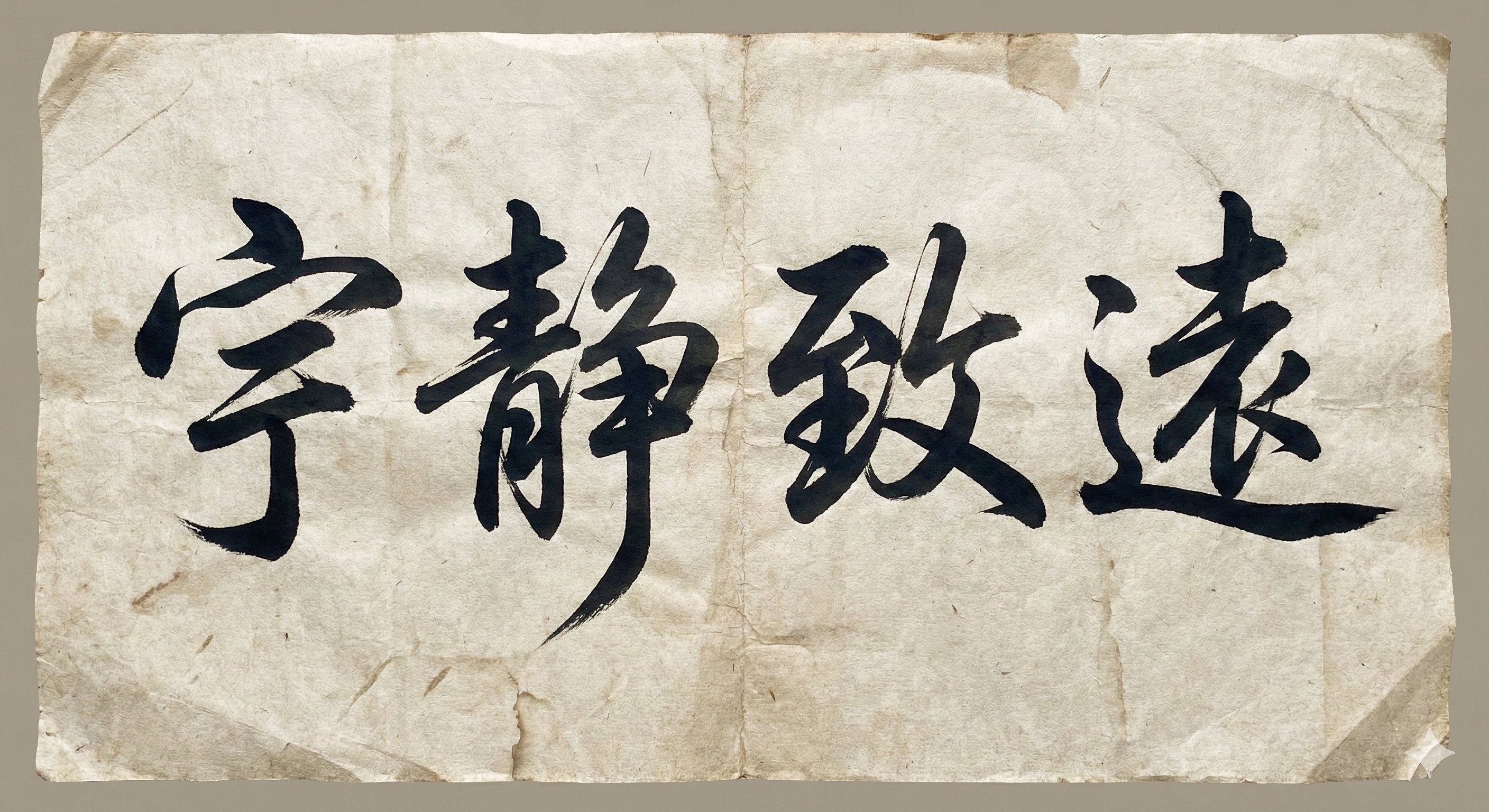
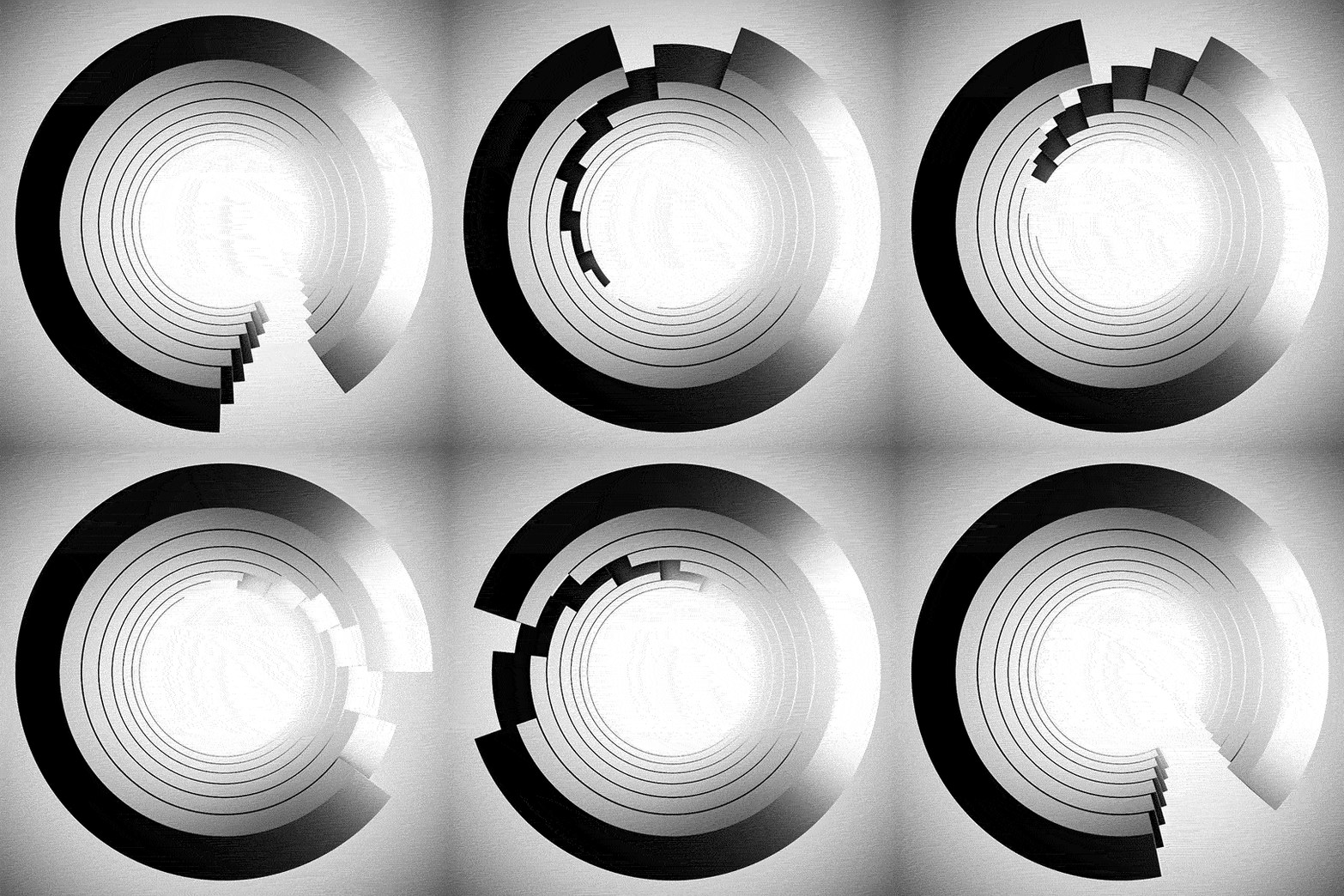
Image Healing: Mandala Stability Guidance 42
Imagine the blinding spotlight overhead slowly dimming, transforming into a soft, moonlit hue. You are no longer the sole focus on the stage, but a harmonious part of the grand tapestry. The surrounding lines are not judging gazes, but a supportive network. As you blend into the background, you gain ultimate freedom. Here, you can become invisible, or you can shine—it's all up to you.
Traditional mandalas typically feature a harmonious and intricately varied circular structure, symbolizing the wholeness of the universe and the cycle of life. By viewing mandala images, individuals can perceive inner peace and strength, achieving psychological balance.
◉ Gaze at the mandala twice, while taking deep breaths.
Lesson 42: Cognitive Distortions of Social Anxiety: The Spotlight Effect
Objective: To help students recognize the psychological feeling of the "spotlight effect" through drawing, and to shift their attention from the perspective of others back to their own center.
Steps: Draw a stage in the center of the paper, with you in the middle and a strong light above you. Then gradually dim the light, cover the outer edge with a light color, and then draw a calm background and a natural crowd. Finally, write the sentence: "I am not on a stage, I am in life."“
Please log in before submitting your drawings and feelings.
○ 42. Spotlight Effect Log Guidance Suggestions
① In what situations do I feel like "everyone is watching me"?
② Did they really notice? What evidence do they have?
③ Do I care about "facts" or "imagination"?
④ Can I shift my focus from "how others see me" to "what I am expressing"?
⑤ Try having a conversation today that isn't deliberately faked.
⑥ Tomorrow's small steps: Before socializing, tell yourself, "I'm just participating, not performing."
Please log in to use.
True light does not come from external gaze, but from inner acceptance of oneself.
 EN
EN  ZH
ZH  ES
ES  FR
FR  JA
JA