

Lesson 445: Parent and Caregiver Response Exercises
Duration:70 minutes
Topic Introduction:When children or loved ones lose control of their emotions, do we always respond with "Don't cry" or "You're too sensitive"? This course helps parents and caregivers develop the ability to "accommodate emotions" and establish empathic responses rather than suppressive control.
○ Awareness exercises for the three response styles
- Suppressive response:Statements like “Don’t cry” and “Why are you so fragile” will weaken your sense of security.
- Avoidance Response:Sayings like “be more positive” and “don’t affect others” will only deepen loneliness.
- Empathic response:Statements like “I hear how you feel” and “You don’t have to go through it alone” can build trust.
▲ AI interaction: Do you remember the most hurtful thing your parents said to you?
Responding isn't about control, it's about companionship. Write about a time when someone around you felt emotionally escalated.
Practice responding with three sentences: “I see you’re having a hard time,” “This isn’t easy,” and “I’m here.”
Record the other person's reactions and how you feel physically at that moment.
Even if you don't achieve perfection, allow yourself to practice slowly.
You will find that being seen and accompanied is a kind of healing.
Click the button below to help AI recreate the response you really want to hear at that moment.
○ Parent and caregiver response exercises · Music guidance
When responding to an emotion, calm yourself down first. Play a gentle song to calm your mind.
Practice three responses to the music: “I see you,” “This isn’t easy for you,” and “I want to be with you.”
Record the other person's reactions and your own feelings, even if it's just a small attempt.
Even if it is not perfect, please remember that you are practicing gentle companionship.
In the melody and response, healing is happening quietly.
○ Warm milk drink · Golden milk and burdock
Recommended drinks:Golden Milk + Burdock
Recommended reasons:It calms the nervous system, regulates liver emotions, and helps maintain gentleness in caregiving situations.
practice:Boil 250ml of milk and a little burdock slices in water, then strain out the excess. Add 1/3 tsp of turmeric powder and appropriate amount of honey, and bring to a boil over low heat.
○ Apple Oatmeal Yogurt Bowl
A base of plain yogurt, topped with diced apples and instant oats, garnished with a sprinkle of nuts and honey. This refreshing, sweet-tart dish is simple and ready in minutes.
Healing Recipes
/home2/lzxwhemy/public_html/arttao_org/wp-content/uploads/cookbook/ping-guo-yan-mai-suan-nai-wan.html(Please confirm that the following has been uploaded: ping-guo-yan-mai-suan-nai-wan.html)
Mental Healing: Mental Mandala Imagery 20
Finally, depict "Oneness" with transparent light. Let all colors merge back to the center, and light disappear into light. You are no longer an individual, but a breath of the entire universe. Please sit quietly for a moment and feel that boundless peace.
Unity is the ultimate return of the soul.
Spiritual mandalas are commonly used in religious and spiritual practices, and their patterns and shapes symbolize spiritual growth, awakening, and spiritual connection. By drawing spiritual mandalas, individuals can explore their connection with the universe, divinity, or higher beings, and achieve psychological and spiritual healing.

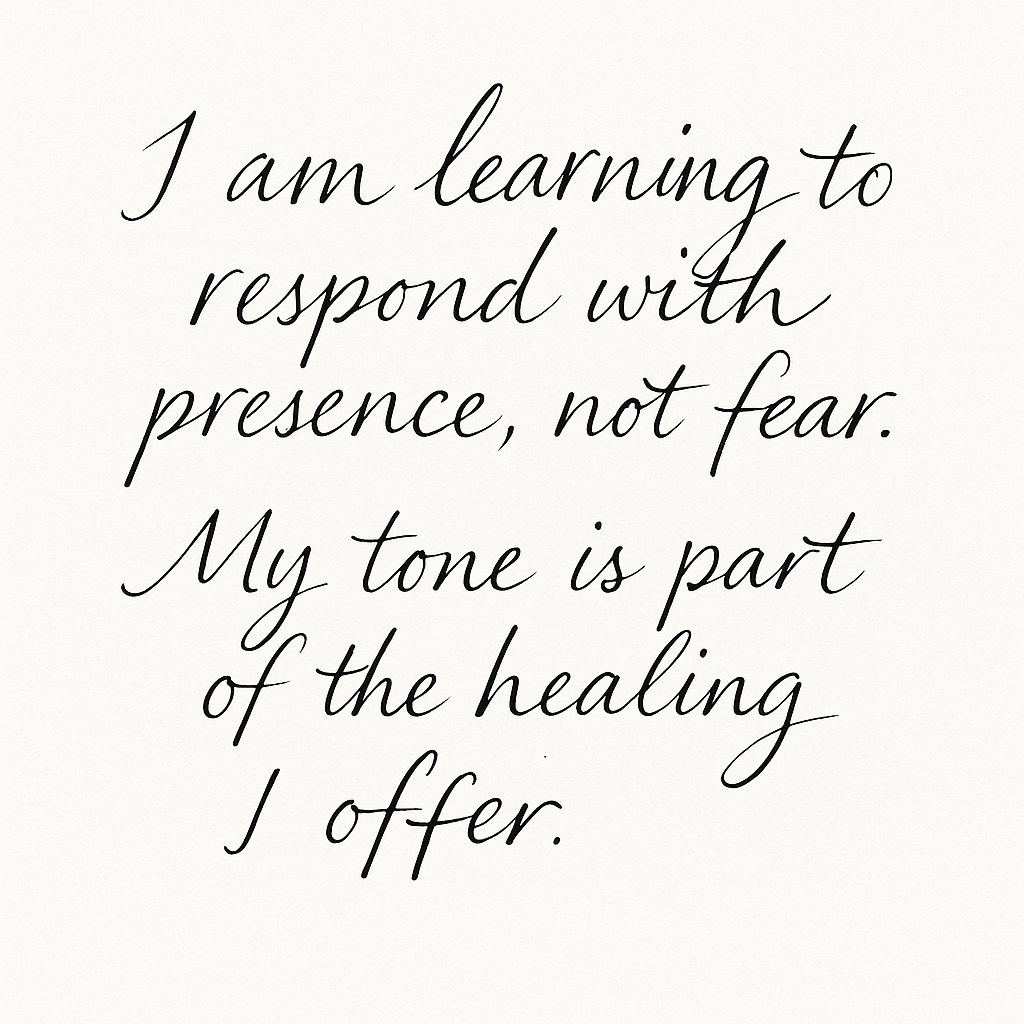
○ Ancient Roman Script · Western Calligraphy Practice
Use words to write a gentle response letter to your "caring self."
Suggested sentences for practice:
“I am learning to respond with presence, not fear.”
“My tone is part of the healing I offer.”
Practice copying one of these sentences and sticking it in the space where you are most likely to lose control, such as the kitchen, your phone case, or your living room mirror.
Lesson 445: Parent and Caregiver Response Exercises
Objective: To help caregivers learn to maintain empathy and boundaries when their children or partners have emotional outbursts.
Steps: Draw two people and connect them with a soft line. Write "Emotional Expression" on the left and "Safe Response" on the right. Use warm colors to highlight listening and support, and gray to represent blame or indifference. After finishing, think: Which side of the picture would I want to be?
Please log in before submitting your drawings and feelings.
○ 445. Parent and Caregiver Response Exercises: Journaling Guidance Suggestions
① Write down the most recent situation where your child/partner’s emotions became heated, and your first reaction and intention (protection/correction/eagerness to resolve).
② Practice three empathy scripts: “I see you’re feeling bad,” “This is really not easy for you,” and “I’m here, let’s breathe slowly together.”
③ Observe the other person’s body signals and your own trigger points, record the intensity of each on a scale of 0-10, and learn to calm yourself before responding.
④ Choose a small support that you can do right now: pour water, pass paper, sit silently for two minutes; write down the other person’s reaction and your feelings.
⑤ Review of unfinished tasks: If you didn’t accomplish something today, write down the reasons and what can be fine-tuned next time. Allow time for practice.
⑥ Conclusion: Being seen and accompanied is healing in itself.
Please log in to use.
The way you respond determines whether your emotions are accepted. Gentleness is not a sign of giving in, but rather the deepest strength.
 EN
EN  ZH
ZH  ES
ES  FR
FR  JA
JA