

Lesson 37: Pre-Social Anxiety: I'm Already Breaking Down Before I Even Go
Duration:70 minutes
Topic Introduction:
Many people have already experienced a "pre-breakdown" in their minds before the social scene actually takes place.
From what to wear, how to stand, whether others will stare at you, to whether there will be awkward silences, misunderstandings, or saying the wrong thing—the brain automatically enters a cycle of "rehearsal—failure—collapse."
This lesson will guide you to understand the mechanisms of this rehearsed anxiety and teach you how to bring your brain back to reality instead of continuing to exhaust yourself in imagined scenarios.
Why did it crash prematurely?
- Threat prediction loop is overactive:The brain's constant attempts to "prepare for danger" actually leave you feeling powerless.
- Setting excessively high standards for self-evaluation:The belief that "no mistakes can be made" leads to any imagined flaw being seen as a disaster.
- Lack of social confidence:Lacking positive experiences, negative rehearsals become the default pattern.
- Body memory activation:Stories of physical reactions such as racing heart, stomach discomfort, and rapid breathing exacerbating anxiety.
Lesson 47: Pre-Social Anxiety: I'm already breaking down before I even go! 🎧 Click to watch/listen to the reading.
There's a party tomorrow night, but from the moment you opened your eyes this morning, you started feeling stomach pain, heart palpitations, and even contemplating countless excuses to skip it. This agonizing experience of "dying a thousand times in your mind before it even happens" is what psychology calls "anticipatory anxiety." For many people with social anxiety, the real hell isn't the social event itself, but the long wait before it begins. Your brain transforms into a terrible disaster movie screenwriter, constantly replaying terrifying scenarios that might go wrong: Will I get lost? Will I wear the wrong clothes? What if there's an awkward silence? What if they ask about my job? This frantic mental rehearsal, seemingly preparing for the future and trying to control the situation, is actually a serious drain on your energy. Research shows that the physiological stress and psychological pain caused by anticipatory anxiety are often far more severe than the actual event itself. Because the awkwardness in reality might only last a few seconds, while the awkwardness in your mind can loop endlessly for dozens of hours. When you attend the party in this completely drained state, you'll naturally appear stiff and exhausted, thus "confirming" your prediction. To break this spell, first, you must recognize the brain's tricks: thought is not fact, and rehearsal is not reality. Those terrifying images in your mind are merely random neuronal firing, not prophecies of the future. Second, learn to "live in the present." When you find yourself being dragged into catastrophic future fantasies, try using your five senses to return to the present: touch the table beside you, smell the aroma of coffee, and tell yourself, "I am safe right now; those terrible things haven't happened." Finally, try to "go out with fear." Don't fantasize about waiting for your anxiety to completely disappear before socializing; that will never happen. Often, the moment you actually step into that room and utter your first word, all the rehearsed anxieties vanish instantly. Because reality is always more concrete, more detailed, and often much gentler than your imagination.
▲ AI Interaction: When you start to feel nervous before you even leave the house, what is the first thing your body does?
Anxiety will "arrive at the scene" before you do.
Your brain starts rehearsing all the worst scenarios before you even step into a crowd.
This is not a sign of weakness, but rather your brain trying to protect you.
But you can learn to tell it: It hasn't happened yet, I don't need to suffer in advance.
You can gradually practice bringing the scene from your mind back to reality.
Click the button below to practice the method of "stop rehearsing and return to the present moment" with AI.
When pre-rehearsal anxiety starts to accelerate, music can help you cut off the "mental drama."
Close your eyes gently and let the melody slowly pull you away from the awkwardness and tension in your imagination.
Focus on the rise and fall of your chest, making your breathing more real than the scene itself.
○ Eastern Healing Tea - Anji White Tea
Recommended drinks:Anji White Tea
Recommended reasons:It is refreshing and soothing, helping to reduce the mental and physical tension that comes with not being there.
practice:Brewed with 80℃ water, it has a light and mild aroma, perfect for a calming drink before heading out.
○ Oat & Mushroom Calming Stew
The umami flavor of mushrooms and the smooth texture of oats can bring a solid sense of security to the body, helping to relieve the emptiness and weakness caused by rehearsal anxiety.
Warm and easy to digest, it is an ideal food before going out or after finishing a social gathering.
warm stomach
Light burden
Open Recipe
◉ Warming Soup Recipe: Mushroom and Oatmeal Stew (ID 47)
Mushroom and oat soup is a warm and comforting soup that offers both a soft texture and a satisfying feeling of fullness. Mushrooms provide a natural umami flavor and a small amount of dietary fiber, while oats give the soup a slightly viscous, "coated" texture. It's a gentler "slower-down" option for those who are easily stressed, have irregular digestive rhythms, or always eat hastily. Compared to rich cream soups, this soup is lighter in fat and less heavy, yet still provides a reassuring feeling of fullness, making it ideal as a light dinner or a relaxing meal after a long day at work.
Gentle and filling Warm and peaceful Gastrointestinal friendly
I. Recommended Dietary Therapy and Reasons
Recommended dishes:Mushroom and Oatmeal Stew (ID 39)
Recommended reasons: When the diet is too oily or the pace is too fast, the digestive system and nervous system are prone to entering a state of "tension and fatigue." The aroma of mushrooms combined with the softness of oats in a bowl of hot soup can provide moderate energy and a feeling of fullness with minimal burden. For those who don't want to eat a heavy meal in the evening, but also don't want to rely solely on snacks, this is a middle ground that allows the body to gradually slow down. It can also be paired with a small amount of whole-wheat bread or steamed vegetables to make a simple meal.
2. Recipe and Method
Recipe (1–2 servings):
- 120–150 g of mushrooms (white or brown mushrooms, sliced or diced)
- 25–30 g of rolled oats (pressed oats or instant oats are recommended)
- 1/6–1/4 onion, chopped
- Cut half a carrot into small cubes (optional)
- Dice a small amount of celery stalks or 1-2 small pieces of celery (optional)
- 1 teaspoon of olive oil
- 500–600 ml of water or vegetable broth
- a pinch of salt
- A pinch of black pepper
- A small amount of dried herbs (such as thyme, rosemary) (optional)
- Add a small amount of chopped parsley or chopped scallions (optional, as a garnish after cooking).
practice:
- Quickly wash the mushrooms with a damp cloth or running water, drain them, and then slice or dice them; finely chop or dice the onion, carrot, and celery.
- Add olive oil to a pan and sauté the chopped onions over low heat until slightly translucent. Then add the carrots and celery and stir-fry for 1–2 minutes.
- Add the sliced mushrooms and continue to stir-fry over medium-low heat until the mushrooms release some water, shrink in size, and release their aroma.
- Pour in water or vegetable broth, bring to a boil over high heat, then reduce to low heat. Add the rolled oats and stir well to prevent clumping.
- Keep the heat on a simmer and cook for about 12–15 minutes, allowing the oats to slowly absorb the broth and release their viscosity, making the soup slightly thicker.
- Add salt, black pepper, and a small amount of dried herbs to taste, and continue to simmer over low heat for 3–5 minutes to allow the flavors to meld.
- For a smoother texture, gently crush some of the oats and vegetables with a spoon before turning off the heat; if you prefer a more textured feel, leave them as is.
- After turning off the heat, cover the pot and let it simmer for 3 minutes. Serve and garnish with a small amount of chopped parsley or scallions. Enjoy while it's hot.
3. Small rituals for body and mind
The process of sautéing onions and mushrooms is itself a signal to slow down the pace. You can intentionally slow down your movements while stir-frying to appreciate the changes in aroma from mild to strong.
While the soup is simmering, listen to the gentle bubbling sound and take a break from your information flow and to-do list. Give yourself a few minutes to focus solely on "this pot of soup".
When you pick up the bowl, you can tell yourself, "I'm allowing myself to eat simply and gently tonight." Then drink the soup more slowly than usual.
4. Dietary Therapy Experience Record
- Record the time of consumption (such as dinner after working overtime, noon on weekends, or when physically tired) and the feeling of hunger and tension at that time.
- Observe the feeling of fullness, stomach comfort, and whether you feel more relaxed or heavier within 1–2 hours after consumption.
- If you replace your oily, high-salt dinner with this soup multiple times a week, you can record changes in your sleep quality and your mental state the next morning.
5. Tutorial Video (approximately 4–6 minutes)
◉ Video Title:Mushroom and Oatmeal Stew: A light yet comforting warm soup.
6. Precautions
- Oatmeal contains a lot of dietary fiber. People with sensitive stomachs or who are prone to bloating should try a small amount first or reduce the amount appropriately.
- For individuals with kidney problems or who need to control their potassium, phosphorus, and purine intake, the amount of mushrooms and oats consumed should be adjusted according to the advice of a doctor or nutritionist.
- To control total energy intake, reduce the amount of olive oil used and include this soup in your daily carbohydrate and fat intake calculations.
hint:This recipe is a reference example for daily dietary adjustments and does not replace professional medical diagnosis and treatment. If you experience persistent digestive discomfort, significant fatigue, or other physical symptoms, please seek medical attention promptly and follow your doctor's advice.
Lesson 47: Chinese Calligraphy - Suggestions for Writing Running Script
The theme of this lesson is coping with "pre-conference anxiety." We often mentally replay countless "disaster movies" before social interactions even begin, and this mental strain is more exhausting than the actual interaction itself. The art of calligraphy emphasizes "no regrets once the brush touches the paper," meaning once the pen tip touches the paper, simply follow the flow and don't dwell on the predetermined path. Action is the only switch to stop overthinking.
Writing Instructions:
Practice "writing decisively." Don't hesitate in the air for too long before putting pen to paper (this is like a mental rehearsal before a social interaction).
Take a deep breath, and as you exhale, firmly press the pen onto the paper and begin writing.
Break free from the "perfect pre-set". Don't think, "I want to write this character exactly like the model", but accept "it is what it is". This randomness is the charm of running script.
Written words:
Blessings fill the world
Motivational words:
Often, the storms you fear only exist in your mind.
Writing Tips:
If you feel impatient while writing, it means your mind has wandered ahead of your hand. Please stop, look at the ink on the pen tip, and bring your attention back to the current stroke, not the next one.
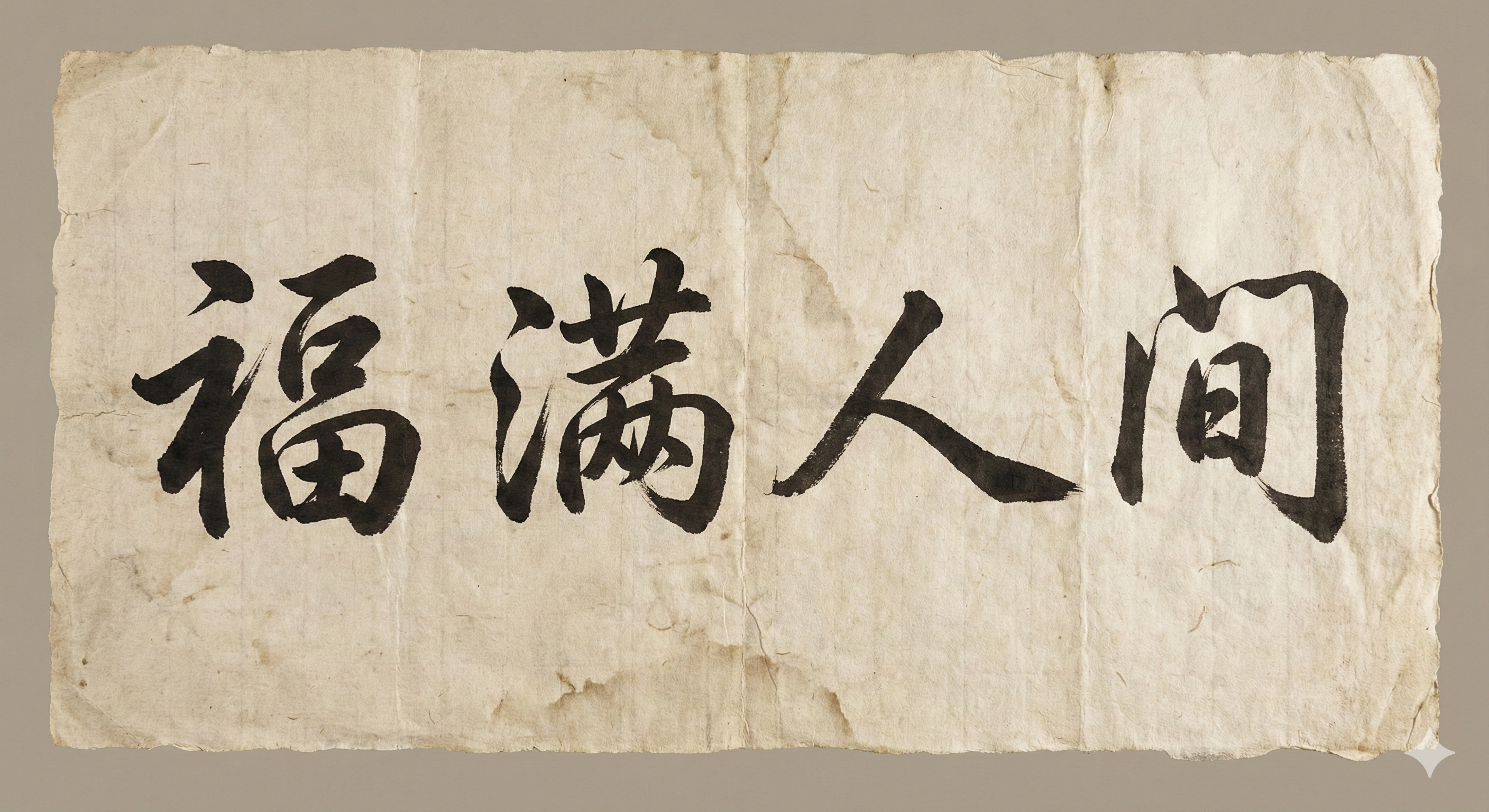
Image Healing: Mandala Stability Guidance 47
Close your eyes, and you might see countless chaotic lines tangled together, representing the future. Now open your eyes and look at the center of the mandala. That center is the "present moment." The future has not yet happened, the past is over, only this moment is real. There's no need to control the next circle of patterns that hasn't happened yet; simply focus intently and steadily on this one stroke of color in the present. The future will unfold naturally when you arrive.
Traditional mandalas typically feature a harmonious and intricately varied circular structure, symbolizing the wholeness of the universe and the cycle of life. By viewing mandala images, individuals can perceive inner peace and strength, achieving psychological balance.
◉ Gaze at the mandala twice, while taking deep breaths.

Lesson 37: Returning from the Mental Theater to the Body's "Anchor Point Map"“
Purpose: To provide you with a tool to ground your attention during rehearsals of anxiety.
Steps: Draw three "anchor points" on the paper:
① Breathing anchor: A symbol of chest rise and fall. ② Body anchor: A symbol of feet touching the ground. ③ Visual anchor: A real object you can see at this moment.
Write a reminder next to it: "Return to your physical self before facing the scene." You can look at this picture once before going out to reduce the need for your mind to fill in the blanks.
Please log in before submitting your drawings and feelings.
○ 37. Social Rehearsal Anxiety: Journaling Guidance Suggestions
① Which scene did I rehearse today?
② How much of it is imagined rather than factual?
③ What part of my body gets tense first?
④ Did your mood decrease after using the "anchor point chart"? (0–10)
⑤ Can I give myself a gentler explanation?
⑥ Tomorrow's practice: When the rehearsal begins, pause for 10 seconds and take a slow breath.
Please log in to use.
You don't need to experience the whole world in advance.
All you need to do is, at the moment it actually happens, slowly walk in with your body and breath.
 EN
EN  ZH
ZH  ES
ES  FR
FR  JA
JA