

Lesson 48: Post-Social Reflection: I kept reviewing whether I had embarrassed myself.
Duration:70 minutes
Topic Introduction:
For many people with chronic anxiety, what truly exhausts them is not the social interaction itself, but the "rumination cycle" that follows.
Even though the incident has already passed, I keep replaying it in my mind: "Was I being too strange? Will everyone think I'm bad? Did I say something wrong?"“
This lesson will guide you to understand the psychological mechanisms of rumination and teach you how to gently interrupt this self-destructive replay.
Why do we keep reviewing our performance?
- Threat memory is dominant:The brain is more likely to remember "dangerous details," leading to repeated replays.
- The self-evaluation system is overly harsh:Transform ordinary interactions into "performance tests".
- My emotions have not yet calmed down.The body is still in "emergency start mode," making it impossible to stop thinking.
- Want to gain a sense of control through replay:They thought that by paying attention to the details, they could "avoid failing next time".
Lesson 48: Post-Social Reflection: I kept reviewing whether I had embarrassed myself 🎧 Click to watch/listen to the reading
The party is over, and the real torture begins the moment you finally get home and close your bedroom door. Your body is exhausted and collapsed on the bed, but your brain, like a cassette tape recorder, starts rewinding frantically, replaying every detail of the social scene over and over again. You fixate on one sentence: "Why did I tell that boring joke? Nobody laughed at all, it was so awkward." You magnify every expression: "Was my smile too stiff when I greeted my boss? Did he think I wasn't sincere?" Even a glance from someone else is scrutinized: "He looked at his watch, probably because he thought chatting with me was a waste of time." This frantic post-social deliberation is called "rumination" in psychology. It consumes more energy than the social interaction itself. If anticipatory anxiety is "pre-emptive pain," then rumination is "high-interest, additional pain." You think that this kind of deliberation will help you learn from experience and avoid making the same mistakes next time, but in reality, this negatively filtered scrutiny only amplifies your sense of defeat. Under the microscope of rumination, you ignore most of the normal interaction throughout the evening, fixating only on that tiny flaw and magnifying it into an irreparable disaster. This mindset not only fails to help you improve but also creates a deeper fear of future social interactions, forming a vicious cycle. To stop this mental drain, you must first mentally shout "Stop!" when you realize you've started "rewinding." Tell yourself: the past is past, unchangeable, like spilled water—staring at it won't bring it back. Second, adopt an "observer's perspective." Imagine if your friend made the same so-called "mistake"—would you find them unforgivable? Would you dislike them for telling a lame joke? Most likely, you wouldn't even notice, or you'd forget it immediately. Be as forgiving of yourself as you are of your friends. Socializing isn't a perfect exam, but an experience that allows for imperfections. Even if you say something wrong, it's a genuine display of human charm, not evidence of guilt to be judged. Learn to forgive yourself, get a good night's sleep, and the sun will still rise as usual tomorrow, while that little thing will have long since faded away.
▲ AI Interaction: Stopping the "Replay" in Your Brain“
After the party, do you transform into the most demanding editor, scrutinizing your performance frame by frame?
“"Was what you just said really stupid?" "Were they laughing because of me?"”
This kind of rumination not only fails to change the past, but also depletes future energy.
Try talking to AI about that embarrassing scene that's currently playing on repeat in your head.
We'll press the "stop" button together and turn the page.
Click the button below to practice "mind blocking" with AI and learn to let go of your past self.
The body often lingers after social interactions, and music can help this tension gradually subside.
Let the gentle melody guide you gradually out of your "mental review session".
Close your eyes and feel how each breath takes you away from those self-reproaching images.
○ Oriental Healing Tea - Silver Needle White Tea
Recommended drinks:White Tea Silver Needle
Recommended reasons:It has a mild and refreshing taste, making it suitable for drinking when you are emotionally exhausted or mentally overworked after socializing.
practice:Steep in 85℃ water for 3 minutes. It is light, slightly sweet, and suitable for helping the body and mind to stabilize during rumination.
Gentle Pumpkin Coconut Milk Soup
Gentle Pumpkin Coconut Milk Soup is a bowl of smooth, sweet, yet not cloying, comforting warm soup. The natural sweetness of pumpkin and the smooth texture of coconut milk blend together, allowing the body to slowly relax with each sip of its warm comfort.
Coconut milk has a light, milky aroma, but it is not as heavy as dairy products, making it suitable for people who are lactose intolerant or those who are weak or easily fatigued.
The soup is warm, smooth, and comforting, making it a perfect "soothing warm soup" to prepare for yourself in the evening, during seasonal changes, when you feel slightly cold, or when you are feeling unsettled.
Open Recipe
◉ Gentle and Warm Soup: Gentle Pumpkin and Coconut Milk Soup (ID 48)
Gentle Pumpkin Coconut Milk Soup is a smooth, sweet, yet not cloying, comforting warm soup. The natural sweetness of pumpkin blends perfectly with the smooth texture of coconut milk, allowing the body to slowly relax with each sip. The coconut milk brings a delicate milky aroma, without being as heavy as some dairy products, making it suitable for those with lactose intolerance or those who are weak or easily fatigued. The whole soup is warm, smooth, and comforting, making it a perfect "soothing warm soup" to prepare for yourself in the evening, during seasonal changes, when feeling slightly chilled, or when feeling emotionally unstable.
Smooth and Healing Warm stomach and relax Lightly sweet and not cloying
I. Recommended Dietary Therapy and Reasons
Recommended dishes:Gentle Pumpkin Coconut Milk Soup (ID 42)
Recommended reasons: When you're physically tired, emotionally stressed, or have a poor appetite, the natural sweetness of pumpkin and the smooth texture of coconut milk can provide a comforting feeling. This soup is low in fat, smooth, and easy to digest, making it a light, warming soup that can be enjoyed after dinner, after working overtime, or before your day off, allowing your body to slowly return to a peaceful state from tension and cold.
2. Recipe and Method
Recipe (1–2 servings):
- 200–250 g pumpkin (peeled and cut into chunks)
- 1/6–1/4 onion, chopped (optional)
- 80–120 ml of coconut milk (adjust the concentration according to personal preference)
- 500–600 ml of water or vegetable broth
- 1 teaspoon of olive oil
- 1-2 slices of ginger (optional, for warmth)
- a pinch of salt
- A pinch of white or black pepper (optional)
- A small amount of pumpkin seeds or chopped coconut (optional, as a garnish)
practice:
- Peel and dice the pumpkin; finely chop the onion and set aside.
- Add olive oil to a small saucepan and sauté the onions over low heat until they become slightly translucent; skip this step if you do not wish to use onions.
- Add pumpkin chunks and ginger slices and stir-fry for 1–2 minutes to allow the vegetables to absorb the aroma slightly.
- Pour in water or broth, bring to a boil over high heat, then reduce to low heat, cover and simmer for 15–20 minutes, or until the pumpkin is completely soft.
- Turn off the heat and let it cool slightly. Use a blender or hand blender to blend the soup until smooth and creamy.
- Pour the blended soup back into the pot, add coconut milk, and heat over low heat until it just starts to bubble. Be careful not to boil it over high heat to avoid the coconut milk separating.
- Season with salt, and you can add a small amount of white or black pepper according to your preference.
- Pour into a bowl, and sprinkle with a little pumpkin seeds or coconut flakes for added texture before serving.
3. Small rituals for body and mind
While the pumpkin is simmering, you can pay attention to the change in the pot from hard to soft, and slow down your breathing accordingly.
The moment soup is blended into a silky texture can be seen as "softening" chaotic emotions into a more palatable form.
When you take your first sip of warm, thick soup, you can gently tell yourself, "I deserve to be treated gently," and let it bring you a deep sense of relaxation.
4. Dietary Therapy Experience Record
- Record the time of drinking and the current body temperature, tightness, or fatigue level.
- Observe the stomach comfort, feeling of fullness, and physical and mental relaxation after drinking.
- If consumed for several consecutive days, observe whether there is any improvement in sleep quality, mood fluctuations, and physical recovery.
V. Instructional Videos (approximately 3–5 minutes)
◉ Video Title:Gentle Pumpkin and Coconut Milk Soup: A bowl of delicate and comforting heartwarming soup.
6. Precautions
- Coconut milk is high in fat, but it is mild in nature; if you need to control the fat content, you can reduce the amount used or use a small amount of coconut cream for flavoring.
- People with excessive stomach acid should reduce their intake of ginger to avoid irritation.
- Pumpkin is naturally sweet, so those who need to control their blood sugar should reduce their portion size and pair it with low-GI foods.
hint:This soup is mild and nourishing, suitable as a light meal for dinner or after working overtime; if you have chronic digestive problems or special dietary needs, please adjust it under professional advice.
Lesson 48: Chinese Calligraphy - Suggestions for Writing Running Script
In this lesson, we address the habit of "rumination," that is, repeatedly thinking, "Did I say something wrong?" This kind of thinking is like constantly rewinding in your mind. A key characteristic of running script is its "irreversibility"—once the ink is applied and dried, it's done and cannot be corrected. The goal of writing training is to learn to accept the "formed result" and quickly shift attention to the "next stroke."
Writing Instructions:
Strictly adhere to the "no rewriting" principle. If a word is written incorrectly, never go back to correct or rewrite it (this symbolizes our attempt to correct past obsessive-compulsive tendencies).
Acknowledge the existence of this "flaw," and then continue writing the next word.
Experience the feeling of "passing through the pen": the pen tip sweeps across the paper, leaving a mark, and then moves away, without any hesitation.
Written words:
Smooth and worry-free
Motivational words:
The ink has dried; further contemplation is pointless. Let the past remain on the paper, and bring your heart back to the present.
Writing Tips:
During practice, try to maintain a steady breathing rhythm. When you feel like stopping to dwell on the last character, force yourself to exhale and begin writing the next character. Use the momentum of action to cut off the rumination of thoughts.
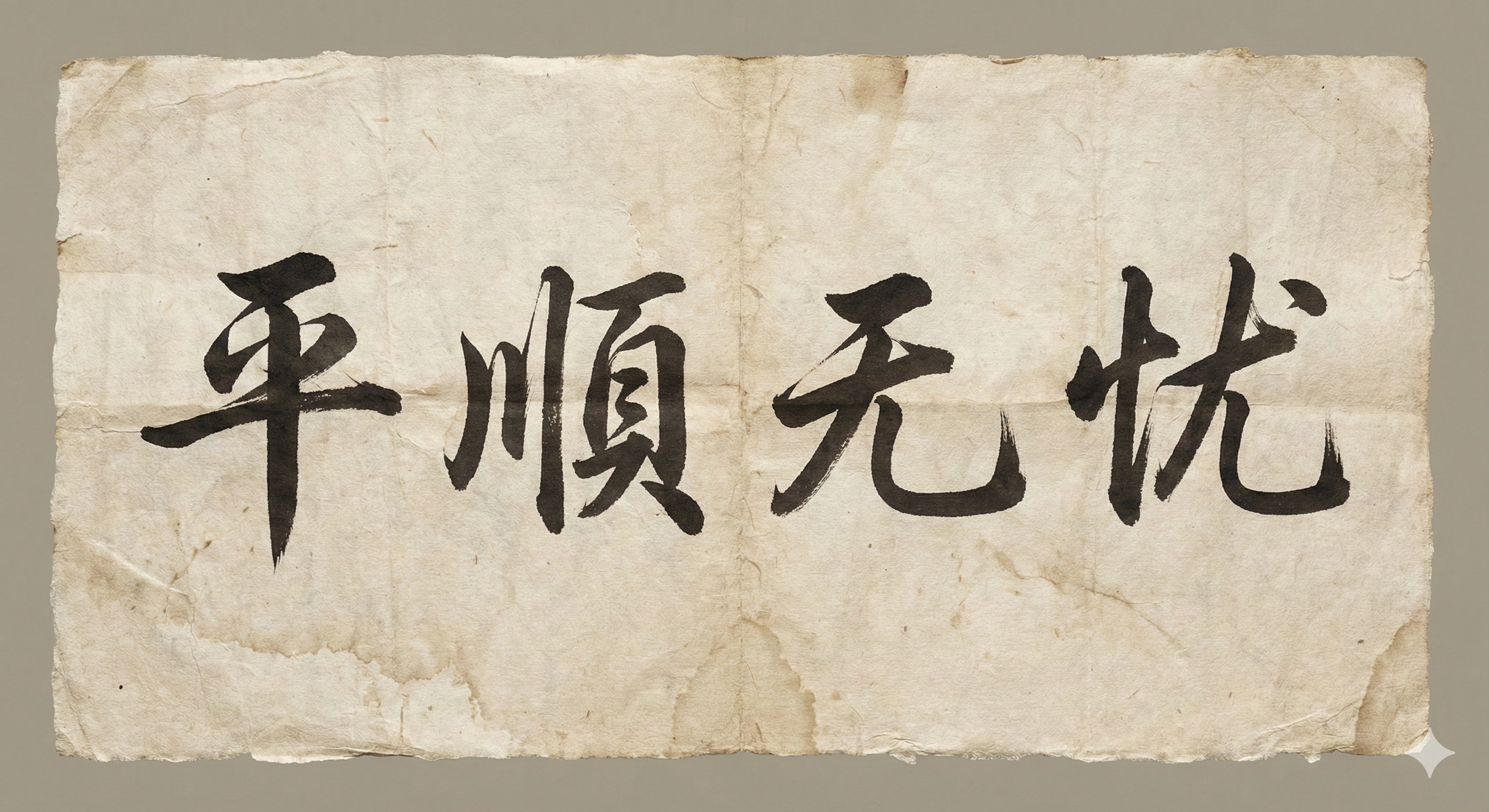
Image Healing: Mandala Stability Guidance 48
Watching the ripples spread outwards from the mandala. Like a pebble thrown into water, once the ripples are created, they continue to spread until they disappear. You cannot bring the ripples back to the center, nor do you need to. Every act of rumination is a futile attempt to turn back time. Please allow those conversations, those glances, to dissipate like ripples on water. No need for correction, just let the surface return to calm.
Traditional mandalas typically feature a harmonious and intricately varied circular structure, symbolizing the wholeness of the universe and the cycle of life. By viewing mandala images, individuals can perceive inner peace and strength, achieving psychological balance.
◉ Gaze at the mandala twice, while taking deep breaths.

Lesson 48: The Three-Quadrant Diagram for Stopping Replay“
Purpose: To help you shift from "only focusing on your own mistakes" to a more objective and balanced perspective.
Steps: Draw three small quadrants: ① What I'm worried about (write 1 sentence) ② What actually happened (write 1 sentence) ③ What has already ended (write 1 sentence)
The point of this image is not beauty, but to show the brain that the event is over, and what is ruminated on is the "story," not reality.
Please log in before submitting your drawings and feelings.
○ 48. Post-social Reflection: Journaling Guidance Suggestions
① What did I reflect on today?
② What details am I reviewing? Are these details accurate?
③ Between fact and imagination, which part can I distinguish?
④ Did my mood score (0–10) decrease after viewing the mandala?
⑤ Can I give myself a gentler explanation?
⑥ Tomorrow's practice: When rumination occurs, pause for 10 seconds, take a deep breath, and bring your attention back to your body.
Please log in to use.
Your value is not determined by a single conversation.
There's no need to punish the past self with rumination.
 EN
EN  ZH
ZH  ES
ES  FR
FR  JA
JA