

Lesson 49: Why is eye contact so difficult?
Duration:70 minutes
Topic Introduction:
Many people think that "being unable to look others in the eye" is shyness, but in the context of anxiety, it often means: I cannot bear the attention, evaluation, scrutiny, and expectations from others.
When you look someone in the eye, your brain automatically associates it with thoughts like, "Will I be seen through? Am I acting unnaturally? Will the other person misunderstand me?"“
This lesson will help you understand why eye contact is particularly difficult for anxious people and teach you gentle, step-by-step methods.
Why is eye contact particularly difficult for anxious people?
- Excessive self-awareness:When staring at someone, one tends to over-analyze their own facial expressions and behavior.
- The threat system has been activated:The eyes represent attention, and the brain mistakenly thinks, "I am being evaluated."
- Overburdened by emotions:I'm afraid of seeing disapproval in the other person's eyes.
- Triggered by past experience:If someone experienced criticism or humiliation in childhood, their gaze will be more like a source of stress.
Lesson 49: Why is eye contact so difficult? 🎧 Click to watch/listen to the reading.
Today we'll talk about one of the most direct sources of stress in social situations—eye contact. Why is it so hard to look someone in the eye? Eyes are often described as the windows to the soul, but for those with social anxiety, these windows are often tightly shut. This is because eye contact isn't just about seeing and being seen; it's more like being nakedly "examined." Do you find your gaze wandering during conversations, staring at the other person's shoes, table legs, or pretending to look at your phone? Once your eyes meet someone's, do you recoil as if electrocuted, even feeling a physical sting? Don't blame yourself; this reaction has profound biological roots. In the animal kingdom, prolonged eye contact usually signifies two extremes: either intimate courtship or a deadly provocation. For the highly sensitive amygdala of the brain in those with social anxiety, the gaze of a stranger is often interpreted as the latter—a potential threat. Therefore, avoiding eye contact isn't because you're inherently cold or impolite; it's your biological instinct screaming, "Danger, get away!" It's an instinctive defense mechanism, attempting to reduce the anxiety of being "seen through" by severing visual connections. Subconsciously, we often feel that if we don't look at you, you won't see our nervousness, our blushing, or our insecurity—this is a form of psychological self-deception. However, completely avoiding eye contact can send the wrong signals of "lack of confidence" or "lack of interest," leading to strained interpersonal relationships. There's a huge misconception that needs correcting: good eye contact isn't about staring intently at the other person. In fact, in natural communication, eye contact is fluid and dynamic. Research shows that in normal, comfortable conversations, people only make genuine eye contact for 30% to 60% of the time. So, you don't need to force yourself to be a staring contest champion. We can start with "downgrading exercises": instead of forcing yourself to look directly into their pupils, try looking at their forehead, the tip of their nose, or their philtrum. At social distance, this is almost indistinguishable from looking into their eyes, but it greatly reduces your psychological pressure. Or try the "saccade method": after making eye contact for two or three seconds, naturally look to the side to think, and then return to the other person. Take your time, and you'll find that what's hidden in those eyes is mostly the curiosity and goodwill of ordinary people, not the sharp swords you imagine.
▲ AI Interaction: What is your first reaction when someone is looking at you?
Eye contact is the most direct way to connect, but it's also the moment when anxiety is most easily triggered.
It's not that you're incapable of socializing, but rather that your nervous system misinterprets "gaze" as "danger."
You can take it one step at a time; you don't have to force yourself to suddenly become natural.
Practice eye contact, not by forcing stability, but by gently approaching.
Click the button below to practice a step-by-step strategy for "safe eye contact" with the AI.
When you try to make eye contact with someone, your body will involuntarily tense up.
Music can help you release that unspeakable pressure and let your brain know "I am safe now".
Let the melody guide you back into your body, instead of lingering in the gaze of others.
○ Eastern Healing Tea - Anji White Tea
Recommended drinks:Anji White Tea
Recommended reasons:The fragrance is gentle and non-irritating, making it suitable for calming the mind after feeling surrounded by "staring pressure".
practice:Steep in 80℃ water for 2-3 minutes; the tea soup is light and refreshing, helping to relax the nervous system.
○ Spleen-strengthening and nerve-calming yam and lotus seed porridge
Excessive thinking often weakens the spleen and stomach and causes unstable sleep, while this bowl of porridge is a good way to regain a sense of "center".
The combination of the creamy texture of yam and the calming power of lotus seeds can gently nourish the body, soothe anxiety, and bring a deep sense of stability and tranquility.
Calm
warm and gentle
Open Recipe
◉ Spleen-strengthening and mind-calming · Yam and lotus seed porridge (ID 49)
Yam and lotus seed porridge is a mild and nourishing basic porridge that can "stabilize the body and mind." The soft texture of the yam combined with the gelatinous texture of the rice porridge gently soothes the stomach lining; lotus seeds, on the other hand, have a calming effect on a restless mind. This porridge has no strong flavor, yet it provides a deep sense of nourishment, helping the body recover from excessive thinking, anxiety, or indigestion, and rebuilding inner order and stability.
Strengthen the spleen and replenish qi Calming the mind Warm and nourishing stomach
I. Recommended Dietary Therapy and Reasons
Recommended dishes:Yam and lotus seed porridge (ID 49)
Recommended reasons: Traditional Chinese medicine believes that "excessive thinking injures the spleen," meaning that excessive mental work and emotional strain can easily lead to weakened digestive function and unstable sleep. Yam nourishes the spleen and stomach, while lotus seeds nourish the heart and calm the mind. The combination of these two ingredients acts like a pair of steady hands, replenishing the body's vital energy and calming chaotic thoughts. It is suitable for consumption during periods of high stress, poor appetite, or insomnia and excessive dreaming.
2. Recipe and Method
Recipe (1–2 servings):
- Rice (japonica rice) 80 g
- 100–150 g of Chinese yam (peeled and cut into small pieces)
- 20–30 g of dried lotus seeds (about 15 seeds, soaked in advance)
- 1000–1200 ml of clean water
- A small handful of goji berries (added before serving, optional)
- Add a little rock sugar (add according to taste, or you can eat it plain).
practice:
- Prepare the ingredients:Soak dried lotus seeds in warm water for 1 hour beforehand to remove the bitter core (you can keep it if you don't mind the bitterness, as the core has the effect of clearing heart fire); wash the rice; peel the yam while wearing gloves and cut it into chunks or small cubes, then soak it in water to prevent oxidation.
- Congee base:Add water and rice to a clay pot or rice cooker and bring to a boil over high heat.
- Add auxiliary ingredients:After the water boils, add the soaked lotus seeds and simmer over medium-low heat for about 20 minutes.
- Add to yam:When the rice grains have opened up and the lotus seeds are half-cooked, add the yam chunks and continue to simmer over low heat for 15–20 minutes.
- ending:Stir occasionally during cooking to prevent sticking. Once the porridge has thickened and the yam is soft and tender, sprinkle in the goji berries, turn off the heat, and let it simmer for 5 minutes. Those who prefer a sweeter taste can add a small amount of rock sugar at this point.
3. Small rituals for body and mind
When handling yams, focus on feeling their smooth texture, reminding yourself that life also needs a little "lubrication" and tolerance.
Watching the rice grains and water slowly blend and thicken in the pot, I imagine my anxiety and unease being gently dissolved by the warm porridge.
When eating lotus seeds, chew them slowly and savor their soft, powdery texture, feeling the steady power of them taking root downwards.
4. Dietary Therapy Experience Record
- Observe whether there is a warm, full feeling in the stomach after consumption, and whether it reduces stomach discomfort caused by stress.
- Pay attention to how quickly you fall asleep and the quality of your sleep that night; is it more stable and peaceful than usual?
- Record whether you find a moment of peace in the process of cooking, when you focus on the simple changes in ingredients.
V. Instructional Videos (approximately 3–5 minutes)
◉ Video Title:Yam and Lotus Seed Porridge: A Spleen-Strengthening and Heart-Nourishing Porridge to Soothe Anxiety
6. Precautions
- Use with caution if you have constipation:Lotus seeds have an astringent effect, so if you are constipated, you should not eat too many lotus seeds. You can just drink yam porridge instead.
- Blood sugar control:Porridge has a high glycemic index, so it is recommended that diabetic patients reduce the amount of rice, increase the proportion of yam, and avoid overcooking it, and try not to add sugar.
- Yam processing:Yam sap may cause skin itching, so it is recommended to wear gloves when handling it.
hint:This recipe focuses on nourishing the spleen and stomach and calming the mind, and is suitable as breakfast or a light dinner; if you have a serious digestive system disease, please consult your doctor.
Lesson 49: Chinese Calligraphy - Suggestions for Writing Running Script
In this lesson, we will explore "eye contact." People with social anxiety often avoid eye contact for fear of making eye contact, or become stiff due to forced eye contact. In the art of calligraphy, there is a specific term called "gaze," which refers to the eye contact and exchange between strokes, much like the interaction between people. Through writing, we practice establishing this visual connection that is "not stiff, connected but not lifeless."
Writing Instructions:
Experience the "looking back" relationship between strokes. When the previous stroke ends, the direction of the brush tip should "look" at the beginning of the next stroke.
This connection is made in the air, a mental connection, like eye contact; there are no physical lines, but there is a flow of energy.
Don't stare at a single stroke (just like you shouldn't stare into someone's eyes). Let your gaze wander naturally with the strokes, maintaining a "flowing focus."
Written words:
Ji Qing Anhe
Motivational words:
Eyesight is not a sword, but a bridge. Like strokes seeking each other, try to let your gaze gently "see" the other.
Writing Tips:
Keep your neck relaxed while writing, and don't focus your gaze on a single point on the pen tip. Instead, use your peripheral vision to observe the structure of the entire character (gentle attention). This is the secret to practicing comfortable eye contact.
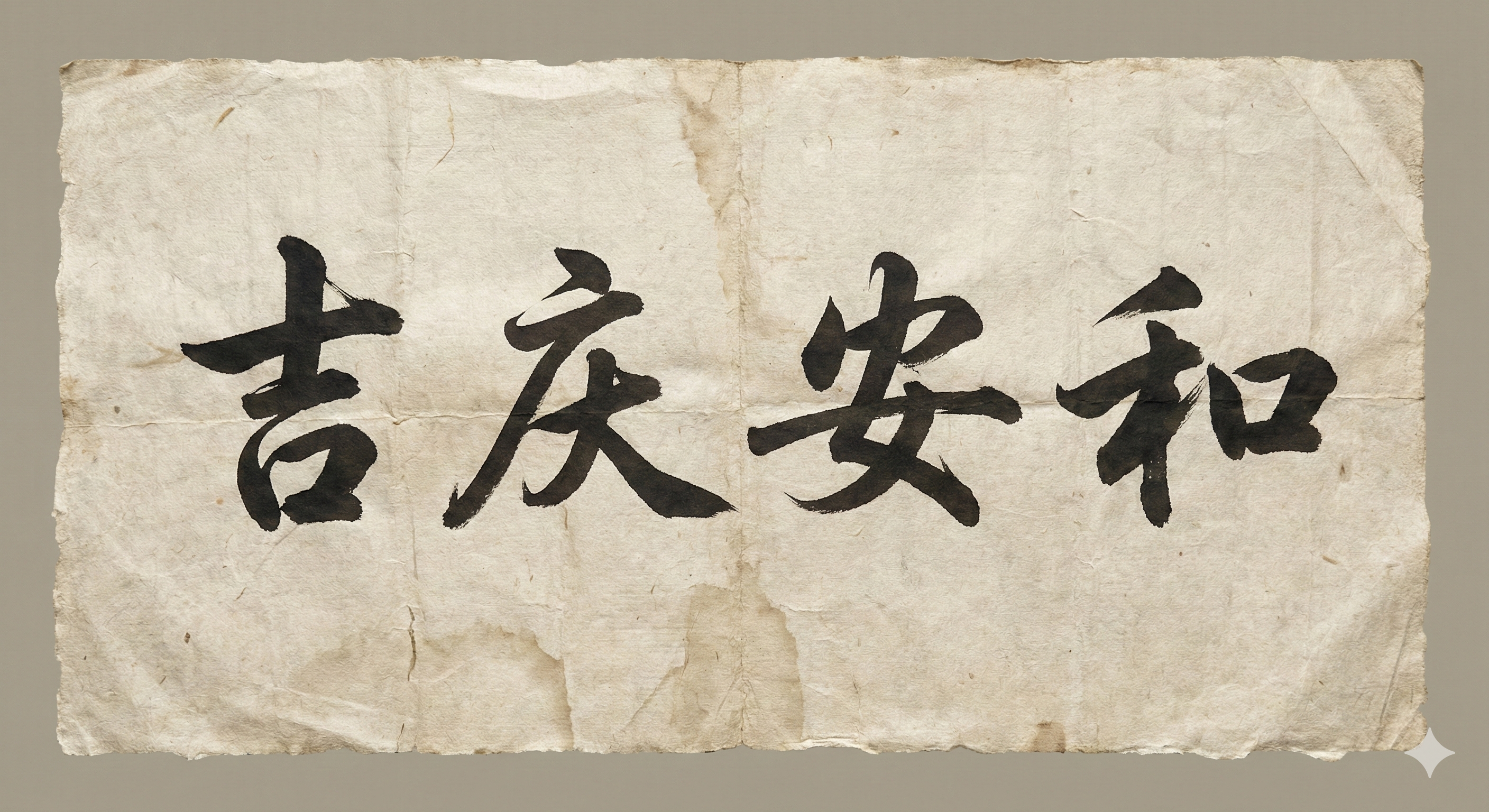
Image Healing: Mandala Stability Guidance 49
Try gazing at the center of the mandala, imagining it as a giant, benevolent eye. It is looking at you, but without judgment, only acceptance. If you feel the urge to look away, take a deep breath and try not to look away, but rather to let your gaze become more diffuse and gentle. In this still center, practice safe eye contact; you are seen and permitted.
Traditional mandalas typically feature a harmonious and intricately varied circular structure, symbolizing the wholeness of the universe and the cycle of life. By viewing mandala images, individuals can perceive inner peace and strength, achieving psychological balance.
◉ Gaze at the mandala twice, while taking deep breaths.

Lesson 49: The Three-Step Approach to Resolving Eye Contact Pressure“
Purpose:It helps you shift from "others are watching me" to "I can handle this moment," building a more balanced understanding.
step:
Draw a short sentence in three paragraphs:
① When others look at me, my first reaction is... (write one sentence)
② What actually happened was... (write one sentence)
③ The support I can give myself is… (write one sentence)
The point isn't drawing, but rather letting your brain see:
“Being seen does not equate to being denied.
Eye contact is a form of interaction, not judgment.
Please log in before submitting your drawings and feelings.
○ 49. Eye Contact & Log Guidance Suggestions
① What moment today made me want to escape from other people's gaze?
② Am I imagining how others "see me"? Are these imaginings true?
③ Did my body feel more relaxed after viewing the mandala? (Rating 0–10)
④ Can I allow myself to maintain eye contact for only 1 second in the next social interaction?
⑤ What is the new perspective I learned today?
⑥ Tomorrow's mini-practice: Maintain natural eye contact with someone next to you for 0.5 to 1 second.
Please log in to use.
Eye contact is not an attack, but a connection.
You can avoid it for a while, but you don't have to deny yourself because of it.
 EN
EN  ZH
ZH  ES
ES  FR
FR  JA
JA