

Lesson 54: Why do I make mistakes the more I try to perform well?“
Duration:70 minutes
Topic Introduction:
Many people have had this experience: the more they care about their performance and the more they crave to "not make mistakes," the more likely they are to panic, go blank, say the wrong thing, or do the opposite at crucial moments.
In fact, this is the most typical phenomenon after the anxiety system intervenes—the more you "want to control everything," the more your mind and body will be overactivated and lose their natural expression.
This lesson will help you understand the psychological mechanism behind the "the harder you try, the more stuck you become" phenomenon, and teach you how to shift your focus from "performance" back to "process," allowing your true abilities to flow naturally.
Why is it that the more you try to perform well, the more likely you are to make mistakes?
- Performance pressure puts the brain into "surveillance mode":The more nervous you are, the more you will check your movements to see if they are perfect, which will lead to distorted movements and stuttering speech.
- Excessive self-awareness:Feeling that every move you make will be magnified and scrutinized by others leads to increased physical stiffness.
- Anxiety hijacks attention:When attention shifts from the "task" itself to "have I done something wrong," it becomes impossible to concentrate on the task at hand.
- The need for control in perfectionism:The more you fear failure, the more you try to control every detail, and thus you completely lose your natural rhythm.
Lesson 54: Why do I make more mistakes the more I try to perform well? (Click to listen to the reading and view the content)
Many people repeatedly experience a sense of frustration in social or public situations: the more they remind themselves to perform well and avoid mistakes, the less their body and brain cooperate, leading to misspoken words, forgotten lines, slow reactions, or even obvious tension. This phenomenon isn't a matter of ability, but rather a stress mechanism at work. When your performance expectations suddenly increase, your brain identifies the interaction as a high-risk task; failure means rejection, belittlement, or loss of position. The nervous system then quickly enters a state of high alert, attempting to control and avoid errors. Psychologically, the more you want to perform well, the more you fear the consequences. This fear activates strong self-monitoring; you begin to scrutinize yourself simultaneously, checking if what you say is right, if what you do is good, and if your body betrays tension. This distraction consumes significant cognitive resources, squeezing out space originally reserved for natural reactions and expression, thus increasing the probability of errors. Many people first develop this pattern due to early experiences where performance is directly linked to love, approval, or security; you learn to exchange perfection for stability. Mistakes are no longer normal human experiences but are magnified into unbearable failures. Over time, whenever you mentally command yourself to perform well, your body automatically enters a tense mode. This isn't a lack of willpower, but rather a result of over-awakening the system. What needs to be re-understood is that good performance doesn't equal safety. What truly causes you to fail isn't ability, but overexertion. The key to breaking this cycle isn't harder preparation, but reducing your control over the outcome. When you shift your focus from "I have to perform well" to "I just need to complete this small step," your body regains its fluidity. Allowing for imperfection, pauses, and corrections actually makes performance more stable. You don't need to prove your worth with perfection, nor do you need to define yourself with a single performance. When you stop treating performance as a survival task, mistakes lose their amplification, and you gradually rediscover the ability to perform naturally.
▲ AI Interaction: When are you most afraid of performing poorly? Why?
The more you try to "show your best side," the more likely anxiety is to take over your body.
Your hands will tighten, your breathing will quicken, and your mind will start to sluggish.
This isn't because you lack ability, but because your brain has entered a cycle of "control-tension-blocking".
You can learn to shift your focus from "I want to be perfect" to "What I am doing".
When you shift from self-monitoring to the task at hand, your performance will be much more natural and fluid.
Click the button below to practice the core skill of "shifting focus back from performance" with AI.
When you become tense due to performance pressure, music is the gentlest "loosening switch".
Let the melody help you release the inner command of "I must do well" and let your body return to its natural rhythm.
When the body is relaxed, there is room for expression to flow.
○ Eastern Healing Tea - Longjing Tea
Recommended drinks:Longjing tea
Recommended reasons:It's refreshing and gentle, making it especially suitable for relieving tension in your chest under "performance pressure".
practice:Brew with 75–80℃ water; it has a sweet taste and helps the body feel lighter and more relaxed.
Calming Pumpkin & Brown Rice Porridge
The sweetness of pumpkin and the stable energy of brown rice can help the body and mind return to a stable state.
When you experience stomach tightness, chest congestion, or trembling hands due to fear of performing poorly, this gentle food can help your body regain a sense of security.
Warm-up
Stable energy
Open Recipe
◉ Warming and Nourishing Food: Refreshing Pumpkin and Brown Rice Porridge (ID 54)
Pumpkin and Brown Rice Porridge is a gentle porridge that combines satiety, comfort, and lightness. Brown rice provides slow-release energy, helping to stabilize blood sugar; the natural sweetness and soft, glutinous texture of pumpkin make the porridge gradually smooth and delicate during cooking. Whether you need a stomach-friendly dinner, a light meal after working overtime, or a warm bowl of porridge for the first thing in the morning, this dish gently treats your body without causing any burden.
Warm and gentle Slow energy Low-fat light meals
I. Recommended Dietary Therapy and Reasons
Recommended dishes:Nourishing Pumpkin and Brown Rice Porridge (ID 46)
Recommended reasons: Pumpkin is rich in beta-carotene and dietary fiber, providing the body with gentle energy and aiding digestion; brown rice has a more complete structure and releases energy slowly, helping to maintain a more stable mental state. For those who don't want to eat greasy food for dinner, those with an upset stomach, or those who want to maintain a light feeling, this porridge can provide the body with nourishment that is "slowly replenished and unhurried."
2. Recipe and Method
Recipe (1–2 servings):
- 150–200 g pumpkin (peeled and cut into small pieces)
- 40–50 g of brown rice (soaking for 1 hour beforehand is best)
- 550–650 ml of clean water
- 1-2 slices of ginger (optional)
- Add a pinch of salt (optional, or add lightly at the end).
- A small handful of goji berries (optional, to enhance moisturizing effect).
practice:
- Soaking brown rice for 1 hour beforehand will make it softer and less glutinous, and shorten the cooking time. If you are short on time, you can use it directly, but you will need to extend the cooking time.
- Peel and cut the pumpkin into chunks; for a smoother texture, cut it into smaller cubes.
- Add water, brown rice, and ginger slices to a pot, bring to a boil over high heat, then reduce to low heat and simmer for 20 minutes.
- Add the pumpkin chunks and continue to simmer over low heat for 18–25 minutes, stirring occasionally to prevent sticking.
- Once the pumpkin is cooked until completely soft, you can gently mash it with the back of a spoon to make the porridge thicker naturally.
- If you prefer a slightly sweet taste, you can add a few goji berries and cook for another 3–5 minutes.
- After turning off the heat, add a little salt to taste as needed, or you can leave it without salt to make a mild and nourishing porridge.
- Let it sit for 3 minutes to allow the porridge to blend better before serving.
3. Small rituals for body and mind
When crushing and softening the pumpkin, you can gently feel the metaphor of "heaviness being softened," allowing the accumulated tension to slowly loosen.
The process of cooking porridge is itself an exercise in slowing down the pace, observing the tiny bubbles in the pot, and allowing the mind to detach from the rapidly flowing information.
As you take your first bite of porridge, silently tell yourself, "I allow myself to go slowly, and I deserve to be so gently settled."“
4. Dietary Therapy Experience Record
- Record the time of consumption, as well as the level of hunger and mental state at that time.
- Observe whether you feel relaxed, unburdened, and have stable energy levels 1–2 hours after consumption.
- If this porridge is eaten for dinner for several consecutive days, changes in sleep, stomach comfort, and mood stability can be recorded.
V. Instructional Videos (approximately 3–5 minutes)
◉ Video Title:Soothing Pumpkin Brown Rice Porridge: A bowl of gentle, slow-burning, heartwarming energy.
6. Precautions
- For those who find brown rice difficult to digest, a 50/50 ratio of brown rice and white rice can be used to make the porridge smoother.
- People with significant blood sugar fluctuations can reduce the amount of pumpkin and extend the cooking time of brown rice porridge to slow down the rate of blood sugar rise.
- For those with weak stomachs, the pumpkin can be completely crushed to make the porridge easier to digest and absorb.
hint:This recipe is a light daily diet option and does not replace professional nutritional advice. If you have chronic stomach discomfort or metabolic issues, please consult a professional to adjust your diet.
○ Seal Carving Practice Suggestions - Lesson 54: Why "The more I try to perform well, the more likely I am to make mistakes"“
The theme of this lesson is to break the "control paradox." The tighter you try to grasp quicksand, the faster it slips away; the more you strive for perfection in social situations, the stiffer your muscles become, and the more easily your brain short-circuits. Seal carving teaches us that to achieve smooth lines, your hand should be "relaxed"; too much force often results in the knife slipping and the stone crumbling.
- Introduction to the characteristics of seal carving:
Seal carving emphasizes "appearance without attainment, intention without intention." The best lines are often not deliberately drawn, but rather the result of the natural collision between the knife and the stone. If you try too hard to control every millimeter, the lines will appear contrived and stiff. - Written words (seal text):
Yi Yu Gu Hui - Psychological Intention:
“Making mistakes often stems from excessive self-monitoring. Learning to "go with the flow" is like practicing turning off the brain's constant error-correction radar. Tell your body: a perfect performance isn't needed, just a natural expression. - Knife skills:
Practice "rough cutting." Don't try to make the blade as smooth as cutting tofu (that usually requires tense muscles to control). Instead, let the blade rub against the stone, even if the carving is mottled and intermittent, that's a kind of rustic beauty (the feel of metal and stone). Accepting the "imperfections" can actually lead to better carvings. - Emotional transformation:
Transform the tension of "I must perform perfectly in this situation" into the open-mindedness of "even if a corner is chipped, it is still a kind of imperfect beauty" when carving seals.
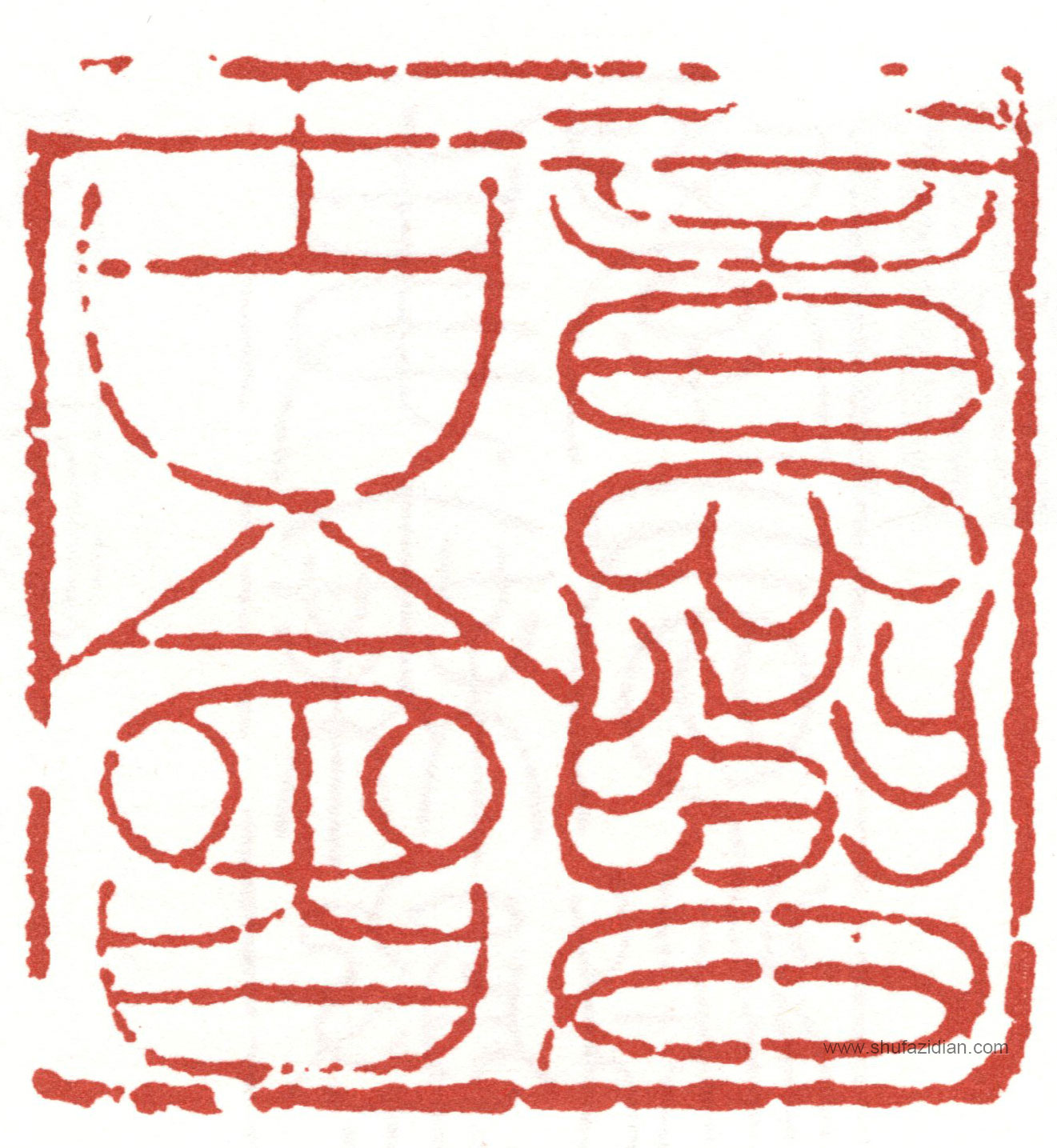
Image Healing: Mandala Stability Guidance 54
Imagine your heart is a tightly wound spring, winding it tighter and tighter until it can't move anymore. Our current social anxiety is that critical point of tension. Watch the flowing lines of a mandala, and try winding that spring in the opposite direction. With each exhale, loosen your obsession with the "perfect outcome." A flower is beautiful because it never tries to "perform" its bloom; it simply unfolds naturally. Let go of control, and you can rediscover your flowing rhythm.
Traditional mandalas typically feature a harmonious and intricately varied circular structure, symbolizing the wholeness of the universe and the cycle of life. By viewing mandala images, individuals can perceive inner peace and strength, achieving psychological balance.
◉ Gaze at the mandala twice, while taking deep breaths.

Lesson 54: "Characteristics of Stress Relief"“
Objective: To concretize the pressure of "I must perform well" through painting, and thus learn to loosen it.
step:
① Draw a "tense me" on the left side of the picture: the lines are hard and the color is dark.
② Draw a “naturally flowing me” on the right: the colors are light and the lines are free.
③ Draw a transitional band in the middle that gradually brightens from left to right, symbolizing "moving from control to nature".
A note next to it reads: "I don't perform well by being tense, I perform well by being natural and fluid."“
Please log in before submitting your drawings and feelings.
○ 54. Performance Pressure & Journal-Guided Suggestions
① In what area have I recently found myself making mistakes the more I try to do it well?
② When I'm nervous, what part of my body do I react to first?
③ Do I focus on "what others think of me" or "what I am doing"?
④ Use a scale of 0–10 to assess the stress level of today's performance.
⑤ When do I feel relaxed? Why?
⑥ Tomorrow's practice: Try taking three deep breaths before any performance scenario to relax your body.
Please log in to use.
Your best performance comes not from tension, but from natural flow.
Shift your focus from "perfection" to "process," and your power will return to your side.
 EN
EN  ZH
ZH  ES
ES  FR
FR  JA
JA