

Lesson 55: Body Inferiority and Image Anxiety in Social Situations
Duration:70 minutes
Topic Introduction:
In social situations, body anxiety and low self-esteem are extremely common sources of worry.
From your face, skin, body shape, hair, and height, to your posture, gait, smile, and facial expressions, you may be constantly concerned about whether others are "observing you."
This high level of self-monitoring can prevent you from relaxing naturally and make socializing feel like a difficult exam.
This lesson will guide you to understand the psychological mechanisms behind body dysphoria and help you shift your focus from "how others see me" to "how I get along with myself".
Why are body egos amplified in social situations?
- Over-focused on self:Focusing all attention on the details of one's own appearance leads to a decrease in genuine attention to others.
- Learned shame:Past experiences of being evaluated, compared, and ridiculed are automatically "revived" in social situations.
- Appearance is linked to value:Misunderstanding "good-looking" as "whether it deserves to be liked".
- The social magnifying glass effect:You exaggerate how much others think about you in your mind, but in reality, no one cares as much as you think.
Lesson 55: Body Inferiority and Image Anxiety in Social Situations · Click to listen to the reading
In social situations, some anxieties don't always stem from "what should I say," but rather from "how do I look?" You might repeatedly look in the mirror before leaving home, worrying about whether your body shape, skin, clothing, and hairstyle will be noticed; you might subconsciously tighten your body, hunch your back, and lower your head in a crowd, trying to "not be seen"; you might also immediately tense up when others' eyes sweep over you, a thought flashing through your mind: are they judging me? Body image anxiety and self-consciousness are often not about dissatisfaction with one's appearance itself, but a deep-seated "fear of rejection." From a psychological perspective, this anxiety is related to high levels of self-monitoring. When you enter a social environment, your brain unconsciously focuses on your physical sensations and outward appearance, as if you are being displayed under a spotlight. Your breathing, posture, gait, even where your hands are placed, become objects that need to be "constantly corrected." This constant self-scanning consumes a lot of psychological energy, making it impossible for you to participate in communication naturally, and instead exacerbating tension and stiffness. Much of this image anxiety doesn't arise out of thin air. The repeated comparisons of appearance and body shape during childhood, along with being judged as "good-looking" or "not good-looking," can bind the body to feelings of shame. Long-term societal pressure regarding aesthetics can also lead to the misconception that only by meeting certain standards can one be accepted. However, it's important to clarify that social anxiety isn't because you're "not good-looking enough," but because the brain misjudges "appearance" as a decisive factor in safety and value. Here's a crucial shift: you are not an object to be displayed, but a person participating in a relationship. When your focus shifts from "how I am perceived" to "what I am feeling, what I want to express," your body will gradually relax. Alleviating image anxiety doesn't depend on a perfect appearance, but on re-establishing a non-judgmental relationship with your body. You can learn to see your body as a vessel for experience, rather than an object to be judged.
In the following exercises, we will gently reduce self-monitoring and practice focusing our attention back on the present interaction and inner feelings. When you stop treating your body as a "problem" that needs to be hidden or corrected, and instead allow it to exist naturally, a sense of security in social situations will gradually return. You don't need to disappear, and your body doesn't need to apologize. You can stand in relationships as you truly are.
▲ AI Interaction: What part of your body are you most worried about others seeing? Why?
Body image insecurity is not your real "flaw," but rather the old belief in your heart that "I am not good enough" is speaking out.
What you fear others seeing is often the part of yourself that you find most unacceptable.
But social interaction is not a beauty contest, and you are not an exhibit that needs to be perfectly presented.
You can practice slowly: instead of trying to change that part, learn to let it exist naturally.
When you allow yourself to be "imperfect," your body will gradually relax.
Click the button below to practice the steps to "reduce image anxiety" with AI.
When feelings of inferiority keep circulating in your mind, your muscles will involuntarily tense up.
Music can help you temporarily escape the monitoring mode of "Do I look okay?"
Let the melody take you back to your body itself, rather than its "appearance".
○ Oriental Healing Tea - Osmanthus Oolong
Recommended drinks:Osmanthus Oolong Tea
Recommended reasons:A gentle fragrance that helps soothe the chest and abdomen that are tight due to image anxiety.
practice:Brew with 85–90℃ water and let the fragrance of osmanthus help you slowly relax from the harshness on your body.
○ Nourishing Blood and Regulating Menstruation: Angelica Jujube Nourishing Porridge
This is a bowl of warming porridge that comes with its own "blush effect".
Angelica sinensis is known as the "number one blood-tonifying medicine". When combined with the sweetness of red dates, it can effectively improve sallow complexion and cold hands and feet caused by blood deficiency.
That unique herbal aroma seemed to be telling the body that the blood was becoming full and warm again, flowing to every fingertip.
Regulate menstruation and relieve pain
Lubricates the intestines and promotes bowel movements
Open Recipe
◉ Blood-nourishing and Menstrual-regulating Angelica and Red Date Porridge (ID 55)
Angelica and Red Date Porridge is a classic medicinal diet derived from a traditional Chinese medicine formula for gynecological health. Angelica has a unique sweet and warm aroma, which can both nourish and invigorate the blood, allowing stagnant blood flow to become smooth again; red dates can replenish qi and strengthen the spleen. This porridge has a reddish-brown color and a sweet and glutinous texture, and it has a significant warming and nourishing effect on improving dizziness, palpitations, insomnia, and menstrual discomfort caused by blood deficiency.
Nourishing Yin and replenishing blood Warming the uterus and dispelling cold Improve complexion
I. Recommended Dietary Therapy and Reasons
Recommended dishes:Angelica and Red Date Porridge (ID 54)
Recommended reasons: Blood is the source of nourishment for the body. If you find yourself pale or sallow, easily dizzy when squatting and standing up, and your hands and feet never feel warm no matter how much you cover them in winter, this is usually a signal from your body that you have "blood deficiency." This bowl of porridge is like refueling your body's heating system, helping blood to flow smoothly to all the extremities, giving you a rosy glow from the inside out.
2. Recipe and Method
Recipe (1 serving):
- Angelica sinensis (sliced) 5–10 g
- 5-8 red dates (pitted)
- 50–80 g of white or black rice (black rice nourishes the kidneys and has a better effect on replenishing blood).
- 800–1000 ml of clean water
- Add brown sugar as needed (to taste; it also helps improve blood circulation).
- One hard-boiled egg (optional, peel and add to the pot).
practice:
- soak:Rinse the rice thoroughly and soak it for 1 hour beforehand. Quickly rinse the angelica slices with clean water.
- Decoction of herbs (recommended):For better taste, it is recommended to first put the angelica root into a pot with water and boil for 20 minutes, then remove the angelica root residue and only use the medicinal liquid to cook the porridge. (If you don't mind the taste of the medicinal material, you can also put the angelica root slices into a gauze bag and cook them with the rice).
- Cook together:Add soaked rice and pitted red dates to the medicinal broth.
- Slow cook:Bring to a boil over high heat, then reduce to low heat, cover and simmer for 30–40 minutes, stirring occasionally.
- Seasoning:Once the porridge has thickened, add brown sugar and stir well. If adding an egg, add a peeled, hard-boiled egg in the last 10 minutes to allow it to absorb the broth.
3. Small rituals for body and mind
When you smell the rich herbal aroma of angelica, you can see it as a profound "love of the earth" and accept this slightly bitter nourishment.
Watching the red dates and brown sugar dissolve in the porridge, turning the water a warm amber color, I imagine this warm current melting away the frozen chill in my body.
When consuming, concentrate your mind on your abdomen (Dantian), feel the warmth spreading throughout your body, and tell yourself, "My life force is flowing."“
4. Dietary Therapy Experience Record
- Record how quickly the hands and feet warm up after consumption and whether there is a comfortable feeling of slight sweating.
- After long-term consumption (1-2 times per week), observe whether the color of your lips and face becomes rosy when you look in the mirror.
- Pay attention to whether the abdominal discomfort is lessened during your next period.
V. Instructional Videos (approximately 3–5 minutes)
◉ Video Title:Angelica and Red Date Porridge: A Warming Secret to Say Goodbye to "Ice Queen"
VI. Important Notes
- Use with caution during menstruation:Angelica sinensis has a strong blood-activating effect. Those with heavy menstrual flow should **strictly avoid** consuming it, as it may lead to excessive menstrual bleeding; those with light menstrual flow can try it under the guidance of a physician. It is recommended to consume it after menstruation has ended.
- Not for use by pregnant women:Angelica sinensis promotes blood circulation and removes blood stasis, but it may be unstable for the fetus. Pregnant women should not consume it without authorization.
- Those with diarrhea should avoid:Angelica sinensis contains oils, which can lubricate the intestines and promote bowel movements. If you are experiencing diarrhea or loose stools, consuming it may worsen your symptoms.
hint:This recipe has significant medicinal effects; please arrange the consumption time according to your own menstrual cycle.
○ Seal Carving Practice Suggestions · Lesson 55: Body Inferiority and Image Anxiety in Social Situations
This lesson uses seal carving exercises to reshape the "body image." We often want to hide in social situations because we feel we are fat, short, or not refined enough. But the art of seal carving tells us that the most precious stones are often not perfect artificial creations, but rather "rough jade" that retains its natural textures and unique flaws.
- Introduction to the characteristics of seal carving:
Seal carving emphasizes "adapting the art to the material." When faced with an irregularly shaped or cracked stone, the carver will not force it into a standard square, but will arrange the design according to its shape. This is called "skillful simplicity," and it is the highest respect for the material. - Written words (seal text):
Zhu Ruyi Residence - Psychological Intention:
Image anxiety stems from our attempt to fit ourselves into a mold of societal aesthetics. The act of "embracing simplicity and authenticity" subconsciously affirms that my body is the vessel of my soul; it is primal, natural, and unique, and does not need excessive embellishment to please others. - Knife skills:
Practice "breaking the edge" (tapping the edge). After carving the characters, deliberately tap the edge of the seal with the handle of the knife to create a natural, chipped, and imperfect feel. This imperfection is called "ancient and weathered" in seal carving, breaking away from rigid perfection. Through this action, practicing accepting "imperfection" is itself a high level of aesthetic appreciation. - Emotional transformation:
Transform the shame of "wanting to hide one's flaws" into the artistic sense of "deliberately creating imperfections" in seal carving. Tell yourself: the scars, asymmetry, or unique physique on your body are all marks of my existence in this world.
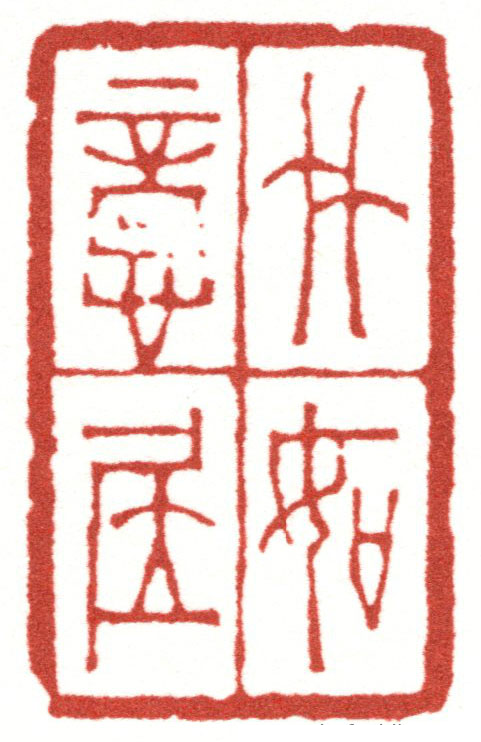
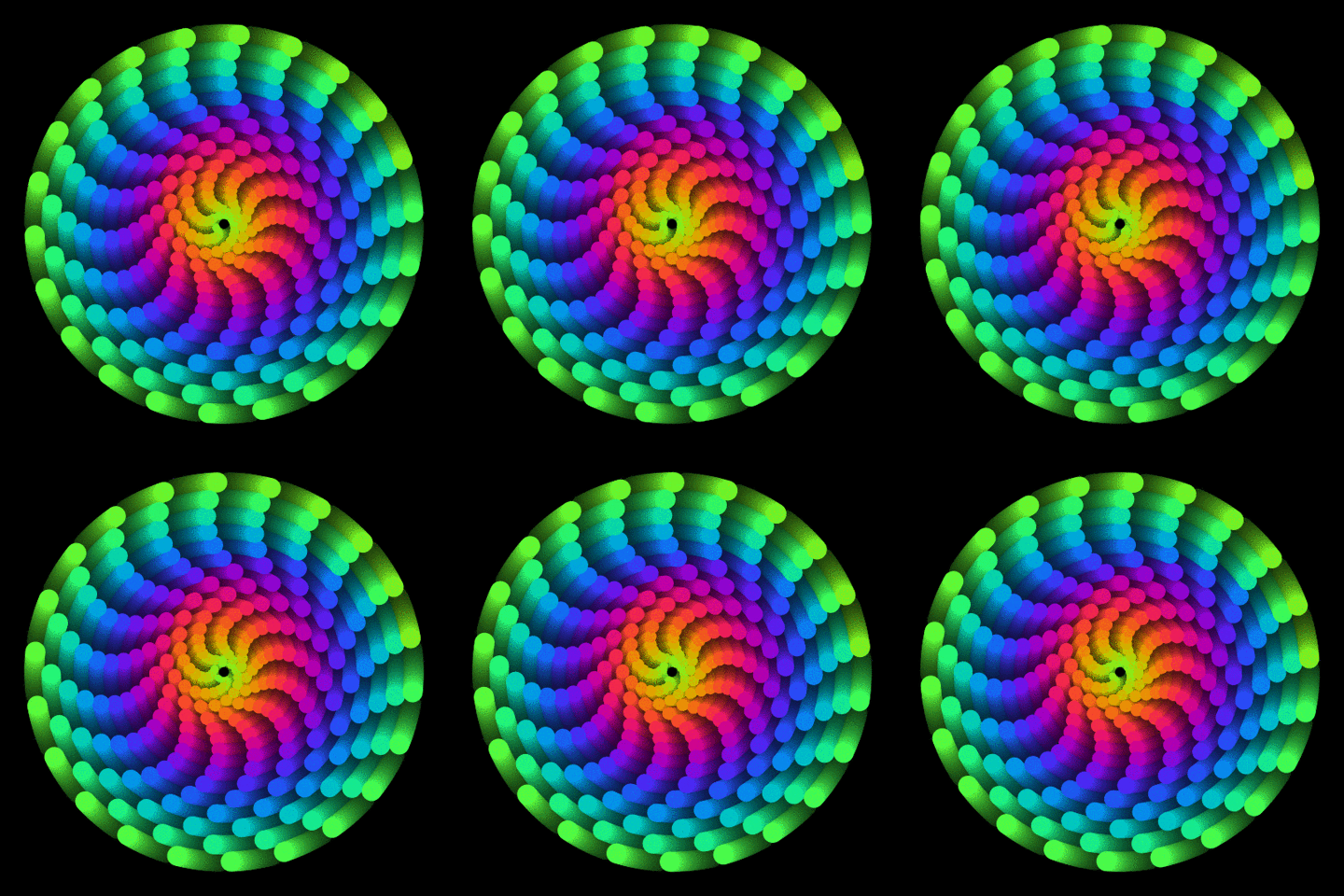
Image Healing: Mandala Stability Guidance 55
Observe the irregular geometric shapes in the mandala. In its composition, there are no so-called "fat lines" or "ugly shapes"; each stroke has its own space to occupy. Close your eyes and imagine your body as the vessel of this mandala. Regardless of its outline, it is a sacred temple that carries life energy. There's no need to cut it, no need to fill it; simply respect its present form.
Traditional mandalas typically feature a harmonious and intricately varied circular structure, symbolizing the wholeness of the universe and the cycle of life. By viewing mandala images, individuals can perceive inner peace and strength, achieving psychological balance.
◉ Gaze at the mandala twice, while taking deep breaths.
Lesson 55: The "Self-Reconciliation Map" for Body Anxiety“
Objective: To help you visualize your body image issues and build a more comfortable connection with yourself.
step:
① Draw the part of your body that you are most concerned about on the left side of the drawing, and mark its tension with slightly hard or dark lines.
② Draw your "real self" on the right side, using gentle colors to symbolize your inner strength and sense of presence.
③ Draw a soft transition line connecting the two in the middle, representing "I am learning to reconcile with myself".
Write a reminder next to it: "I deserve to be seen, I don't need to be perfect."“
Please log in before submitting your drawings and feelings.
○ 55. Body image anxiety and low self-esteem: Journaling guidance suggestions
① What part of my body do I care about most? Why?
② What is the source of this inferiority complex? (Experience, comparison, evaluation, culture, etc.)
③ Did I feel nervous about my appearance during social interactions today? In what situations did it happen?
④ Use a scale of 0–10 to assess the intensity of your image anxiety today.
⑤ Was there ever a moment when I was gentle with my body? What helped me?
⑥ Tomorrow's practice: Try looking at yourself in the mirror for 5 seconds and say, "Thank you for being with me until today."
Please log in to use.
Your body is neither an exam question nor a social ticket.
You deserve to be accepted not because of your appearance, but because you truly exist.
 EN
EN  ZH
ZH  ES
ES  FR
FR  JA
JA