

Lesson 56: Group Scenarios vs. One-on-One: Why I'm More Fearful in Front of Multiple People
Duration:70 minutes
Topic Introduction:
Many people can be relatively natural in one-on-one interactions, but as soon as they enter a multi-person setting, they suddenly become nervous, freeze, have a racing heart, and their minds go blank.
You may feel "unsure of where you are" during meetings, parties, classes, group discussions, family gatherings, or team interactions.
Group scenarios are more frightening than one-on-one situations, not because you are less capable, but because the brain's "social threat system" is amplified and triggered in multi-person contexts.
This lesson will help you understand why multi-person scenarios make you more nervous and teach you how to gradually find a safe place in a group.
Why are group settings more frightening?
- Attention is divided among multiple people:When facing multiple people, the brain has to process multiple expressions, sounds, and reactions, which increases the workload.
- The anxiety of being evaluated is stronger:The more people are present, the more worried I am about whether I seem strange to someone.
- Blurred sense of character:One-on-one interactions have a clear direction; however, in group settings, it's easy to fall into the trap of "not knowing what to do."
- Past experiences of group stress are activated:For example, being called on in class, being ridiculed, being ignored, or being compared to others.
Lesson 56: Group Scenarios vs. One-on-One: Why I'm More Fearful in Front of Multiple People (Click to listen to the reading)
You might observe a paradoxical phenomenon: in one-on-one interactions, you feel relatively relaxed and can even express yourself naturally; however, once you enter a group setting, even just sitting in a circle listening to others speak, your anxiety rapidly escalates, your heart races, your body stiffens, and your mind goes blank. This difference doesn't mean you're bad at socializing, but rather that your brain perceives threats in "group situations" very differently. In one-on-one relationships, interaction is predictable, and you can continuously calibrate your sense of security through the other person's expressions and feedback; in a group, however, attention becomes scattered, you can't confirm others' gazes and evaluations, and your brain easily enters a state of high alert. From an evolutionary perspective, being rejected by a group means being excluded from resources and protection, and this risk is amplified subconsciously, causing your nervous system to automatically activate defense mechanisms. Group settings also reinforce the feeling of being "simultaneously observed." Even if no one is actually judging you, you might have the illusion of being the center of attention and begin to over-monitor your own words and actions. This self-monitoring consumes a lot of cognitive resources, making it harder to keep up with the pace of the conversation, thus further deepening feelings of failure and fear. It's important to understand that what you fear isn't "crowds," but rather the loss of control and unpredictability. When you're unsure of your place in others' eyes, your brain uses anxiety to try and mitigate risk. The key to alleviating this fear isn't forcing yourself to perform well in a group, but gradually reducing your focus on "collective evaluation" and shifting your attention from the crowd to the specific connection in the present moment. You can start by viewing the group as composed of multiple one-on-one moments, rather than a single, overwhelming entity. When your brain stops equating large groups with collective judgment, your tense body has a chance to relax. You don't need to prove yourself to everyone; you just need to allow yourself to exist within relationships.
▲ AI Interaction: Where does your fear in group settings usually come from?
The group makes you nervous not because you are "not good enough", but because your brain is protecting you.
It automatically raises its alert level in multi-person scenarios, treating every glance as a potential assessment.
You might worry that you're talking too little, too much, too awkward, or too quiet...
But in reality, others don't pay as much attention to you as you think.
You can learn to shift your focus from "what others think of me" to "what I am doing itself".
Click the button below to practice "deconstructing methods of group anxiety" with AI.
In group settings, your body tenses up even earlier than you do.
Music can help you gradually relax from the pressure of "I have to perform well".
Let the melody give you a space to "breathe," and then step into the crowd.
○ Oriental Healing Tea - White Peony
Recommended drinks:White Peony Tea
Recommended reasons:It is light and gentle, which can help relieve chest tightness and shallow breathing in group settings.
practice:Brewed with water at around 85℃, the tea has a light aroma and is suitable for a cup before a social gathering to calm the mind.
○ Nourishing and Calming Longan and Lotus Seed Porridge
When your brain is like a relentless gear, and you find it hard to fall asleep in the quiet of the night, you need a bowl of warm porridge that can "sweeten your heart."
The rich, sweet aroma of longan can nourish the heart and blood, while the soft, powdery texture of lotus seeds can calm a restless mind.
The two combined are specifically designed to cure restlessness caused by excessive thinking, allowing the body to drift off to sleep in a sweet and warm environment.
Soothes the mind and helps with sleep
Warm and nourishing
Open Recipe
◉ Nourishing the Heart and Calming the Mind: Longan and Lotus Seed Porridge (ID 56)
Longan and lotus seed porridge is a sweet and mild "sleep-inducing porridge." Longan pulp, with its translucent color and honey-like taste, is excellent for replenishing depleted energy; lotus seeds, white and thick, have a calming and soothing effect. This porridge perfectly combines "nourishing" and "protecting," not only satisfying cravings for sweets but also soothing inner anxiety and restlessness, making it the best comfort for those who do mental work at night.
Nourish heart and blood Calm and soothe Improve memory
I. Recommended Dietary Therapy and Reasons
Recommended dishes:Longan and lotus seed porridge (ID 56)
Recommended reasons: Traditional Chinese medicine often speaks of "deficiency of both the heart and spleen," manifesting as forgetfulness, palpitations, insomnia, and a pale complexion. This is usually due to prolonged and excessive mental exertion, which depletes the heart's blood. Longan enters the heart and spleen meridians, specifically nourishing the heart's blood; lotus seeds strengthen essence and calm the mind. This bowl of porridge is like giving the brain and heart a deep "essential oil massage," helping the body switch from a tense, combat-ready state to a relaxed, resting mode.
2. Recipe and Method
Recipe (1–2 servings):
- 15–20 g of dried longan pulp (about 10 pieces, shelled)
- 20–30 g of dried lotus seeds (soak in advance; removing the core will improve the taste).
- 60–80 g of rice or glutinous rice (glutinous rice has a stickier texture and is more nourishing)
- 1000 ml of clean water
- Add rock sugar as needed (longan is very sweet, so you can add less or none at all).
practice:
- Processing lotus seeds:Soak dried lotus seeds for 1–2 hours beforehand until softened. For better texture, it is recommended to break them open and remove the green lotus seed core (the lotus seed core is extremely bitter and has a cooling effect, but it affects the sweetness of the porridge; if you have excessive internal heat, you can keep it).
- Preparation of materials:Peel the longan, remove the pulp and wash it; rinse the rice.
- Put into the pot:Put the soaked lotus seeds and rice into a pot and add water.
- Cooking:Bring to a boil over high heat, then reduce to medium-low heat and simmer for 20 minutes.
- Add longan:Once the lotus seeds have softened, add the dried longan pulp. Do not cook the longan for too long, otherwise it will lose its sweet flavor; cook for another 15–20 minutes.
- Seasoning:Once the porridge has thickened, the lotus seeds are soft and powdery, and the longan has absorbed enough water, add rock sugar and let it melt before serving.
3. Small rituals for body and mind
As you peel the longan, feel the dryness and aroma of the flesh, and imagine that this sweet energy is about to nourish your heart.
Watching the longan slowly unfurl in the pot and the lotus seeds tumble in the waves of rice symbolizes that the tangled thoughts in one's heart are being gently resolved and soothed.
When you take your first bite, close your eyes and feel the sense of peace that travels from the tip of your tongue to your heart.
4. Dietary Therapy Experience Record
- Record whether it became easier to fall asleep that night and whether dreams decreased after consuming the product.
- Observe whether you feel more energetic or less anxious when you wake up the next morning.
- Notice whether you feel naturally happy and relaxed while drinking this bowl of sweet porridge.
V. Instructional Videos (approximately 3–5 minutes)
◉ Video Title:Longan and lotus seed porridge: a calming sweet soup to soothe anxiety in the dead of night.
6. Precautions
- Use with caution if you have a fever or other heat-related symptoms.Longan is warm in nature and sweet in taste. If you are suffering from a sore throat, bleeding gums, acne, or a cold and fever, please do not eat it to avoid exacerbating the condition.
- Pregnant women should be cautious about consuming longan:Although longan is good for replenishing blood, it is warm in nature and may cause fetal restlessness if consumed in early pregnancy. It is recommended to consult a doctor or eat only lotus seed porridge.
- Note for diabetics:Longan has a high sugar content, so diabetic patients should strictly control their intake or use only a very small amount for flavoring.
hint:This is a sweet porridge that is warming and nourishing, suitable for people in autumn and winter or those with a cold constitution.
○ Seal Carving Practice Suggestions · Lesson 56: Group Scenarios vs. One-on-One: Why I'm More Fearful in Front of Multiple People
This lesson uses the wisdom of handling "intricate strokes" in seal carving to alleviate the oppressive feeling of group social interactions. A large group setting is like a seal with densely packed strokes, dazzling the eye; what we often fear is not "the number of people," but rather the loss of focus and control when faced with a massive amount of information.
- Introduction to the characteristics of seal carving:
Seal carving emphasizes "sparse enough for a horse to gallop through, dense enough to be impenetrable." When dealing with Chinese characters with numerous strokes (symbolizing complex group environments), the carver is not intimidated by the complex lines, but rather knows how to create breathing space within the densely overlapping lines. - Written words (seal text):
Meaning and meaning - Psychological Intention:
Group phobia often stems from our perception of "a group of people" as a massive, unified, and hostile monster. The phrase "acting as if alone in a crowd" suggests to the brain that even in a bustling city, one can maintain a peaceful state of mind, preserving an independent core, just as one would when alone. - Knife skills:
Practice "interweaving". When there are so many lines on the printing surface that they are pressed together (in crowded situations), the lines need to avoid each other and interweave, neither fighting nor scattering. This symbolizes finding one's place in the crowd, neither being "squeezed" to death nor escaping, but calmly existing in the gaps. - Emotional transformation:
Transform the suffocating feeling of being "overwhelmed by countless eyes" into a clear sense of order when facing a "dense seal surface" during seal carving. Order within chaos, composure amidst complexity.
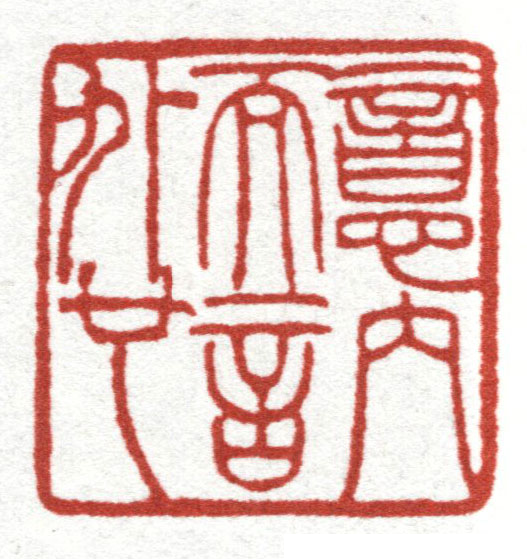
Image Healing: Mandala Stability Guidance 56
Looking at the intricate patterns on the outermost ring of the mandala, they represent crowds and clamor. But note that no matter how many thousands of points there are on the outer ring, they all share the same center. You are that center. You don't need to deal with every single point on the outer ring; you only need to stabilize the central point. When the center is stable, the abundance of the outer ring is no longer chaotic noise, but rather an adornment that enriches life.
Traditional mandalas typically feature a harmonious and intricately varied circular structure, symbolizing the wholeness of the universe and the cycle of life. By viewing mandala images, individuals can perceive inner peace and strength, achieving psychological balance.
◉ Gaze at the mandala twice, while taking deep breaths.

Lesson 56: Group and One-to-One "Safety Maps"“
Objective: To see one's sense of security in different scenarios through painting.
step:
① Draw a “one-to-one scene” on one side of the picture, using stable, simple, and soft lines.
② Draw a "multi-person scene" on the other side, using more dots and lines to indicate greater stimulation.
③ Draw a path in the middle that transitions slowly, symbolizing "I can gradually adapt to the group".
Write a note next to it: "I don't need to go into the outer circle all at once; I can start from a safe place."“
Please log in before submitting your drawings and feelings.
○ 56. Group Fear: Journaling Guidance Suggestions
① In which group settings do I feel most nervous?
② In these scenarios, what am I most afraid of?
③ Was there a moment today when I felt "more comfortable playing one-on-one"? Why?
④ Use a scale of 0–10 to assess the intensity of group anxiety today.
⑤ Have I ever felt comfortable even for a fleeting moment in a group? What does that mean?
⑥ Tomorrow's Practice: Choose a safe one-on-one interaction and practice bringing this experience to a small group.
Please log in to use.
A group does not need to be conquered in one go.
You can start with a sense of security in one-on-one situations and then gradually expand your "radius of presence".
 EN
EN  ZH
ZH  ES
ES  FR
FR  JA
JA