

Lesson 562: How do you react emotionally when faced with change?
Duration:70 minutes
Topic Introduction:Change in life isn't scary; it's our emotional reactions to change that are truly troubling. This course will help you identify typical emotions that arise in the face of change, such as resistance, anxiety, helplessness, and uncertainty, and learn how to build stability, trust, and adaptability amidst change.
○ Four common emotions when facing change
- resist:
Feeling that the old structure has been broken and unwilling to accept the new reality. - anxiety:
Worrying that the future is uncontrollable and full of fear of the unknown. - sad:
Feeling depressed or nostalgic for the loss of a past state. - blank:
Emotionally frozen, not knowing how to cope with sudden changes.
▲ AI Interaction: What change have you faced recently? What was your first emotion at that time?
Changes are like sudden rhythms that disrupt the beat of your heart.
Please look back at a change you encountered today and write down your first impressions.
Be aware of your body’s reactions: your racing heart, the tension in your neck, shoulders, or stomach.
Then ask yourself: What need does this reaction remind me of?
Conclusion: I am practicing seeing my emotions instead of being led by them.
Click the button below to discuss your typical reactions to change with AI and develop a plan to support adaptation.
○ Musical guidance for responding to changing emotions
The changes are like a sudden change in a piece of music, catching the heart off guard.
Play a melody that resonates with your emotions and gently write down your first reaction.
Be aware of your body's signals and let music help you find your inner rhythm.
You will find that emotions are not enemies, but reminders that you need to adjust.
Melody can be a bridge, allowing you to respond more gently to change.
○ Cocoa Healing· Citrus Cocoa Drink
Recommended drinks:Citrus Cocoa Drink
Recommended reasons:Cocoa stabilizes the nerves and citrus boosts the mood, making them suitable for relieving anxiety when dealing with changes.
practice:200ml hot milk + 1 tbsp cocoa powder + fresh orange or lemon zest + 1 tsp honey, stir well over low heat and drink.
○ Nut Energy Balls
Mix date paste with oats, peanut butter, and chopped nuts, then roll into balls and refrigerate to set. This no-bake, portable, and filling snack is a healthy alternative.
Healing Recipes
/home2/lzxwhemy/public_html/arttao_org/wp-content/uploads/cookbook/jian-guo-neng-liang-qiu-energy-balls.html(Please confirm that the following has been uploaded: jian-guo-neng-liang-qiu-energy-balls.html)Mental Healing: Mental Mandala Meditation Text 33
The blending of pale purple and silvery white is "grace." It is not a reward, but the natural flow of existence. Gently draw an arc, and you will understand—being loved is not a privilege, but a natural state.
Grace is the breath of the universe.
Spiritual mandalas are commonly used in religious and spiritual practices, and their patterns and shapes symbolize spiritual growth, awakening, and spiritual connection. By drawing spiritual mandalas, individuals can explore their connection with the universe, divinity, or higher beings, and achieve psychological and spiritual healing.

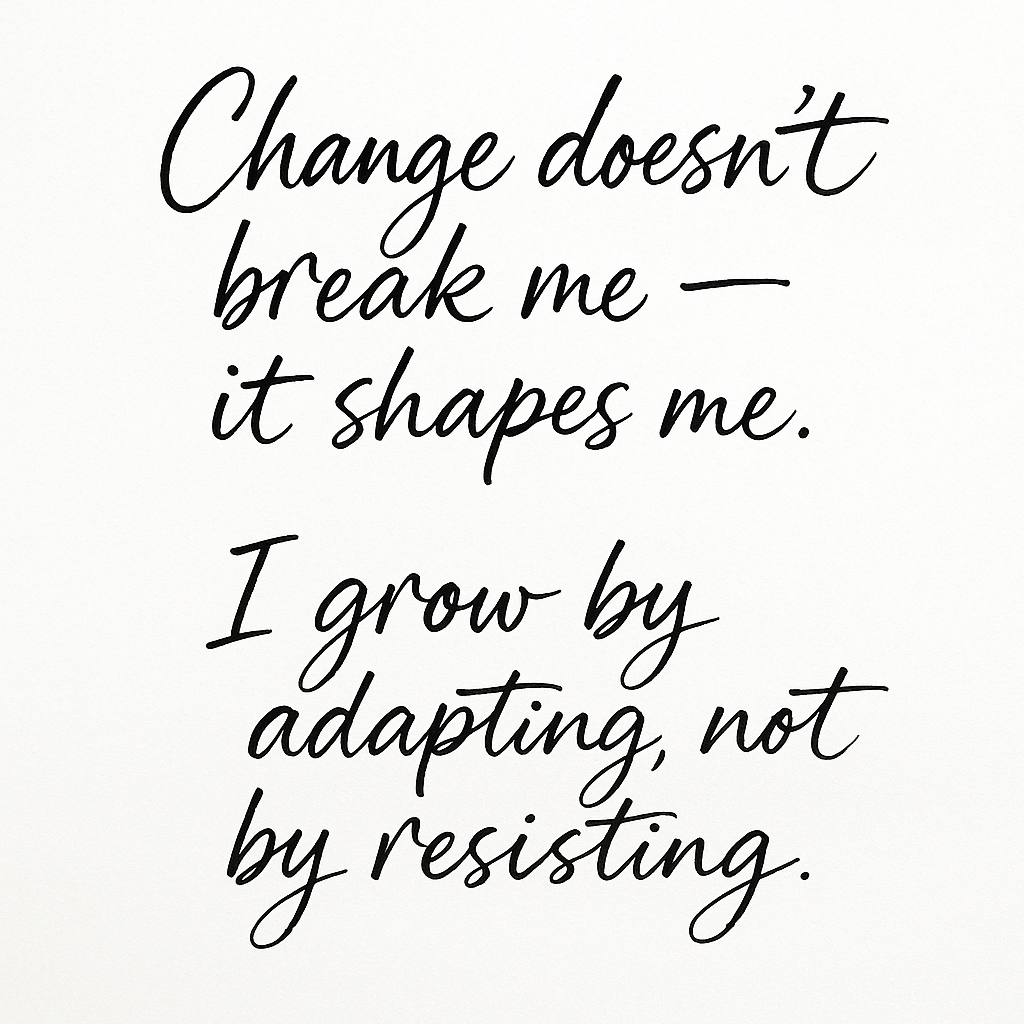
○ Modern art calligraphy practice
Write down a positive belief about change and use it to remind yourself during every turbulent moment: I am not out of control.
Suggested sentences for practice:
"Change doesn't break me — it shapes me."
"I grow by adapting, not by resisting."
Write it down in the space where you are most prone to anxiety, such as your phone desktop, bedside table, or the front page of your calendar.
Lesson 562: How do you react emotionally when faced with change?
Objective: To become aware of one's typical reactions when faced with uncertainty or sudden changes.
Steps: Draw a fork in the road, and write "Escape," "Anxiety," and "Embrace" on each road sign. Choose one road and draw the direction of your footprints. Write: "Change is not a threat, but a new training ground."“
Please log in before submitting your drawings and feelings.
○ 562. How do you react emotionally to change? · Journaling guidance suggestions
① Record a small change you encountered today (disrupted plans/last-minute notice), and write down your first reaction and the emotional words that first come to mind.
② Body signal scan: chest tightness, tight shoulders and neck, stomach knots, sweaty palms, each with a score of 0-10, and locate the one that appears first.
③ Name the emotion and greet it: “Hello, anxiety/sadness/anger, I see you,” and allow it to stay for a moment before leaving.
④ Three-step frequency tuning: 4-6 breaths x 4 rounds → Leave the field for 1-2 minutes → Write an actionable next step; review the score after completion.
⑤ Trigger record: change → thought → emotion → behavior → result, draw arrows to form a personal "reaction map".
⑥ Conclusion: I am learning to shift from automatic reactions to self-selection.
Please log in to use.
Change is inevitable, but emotions can be taken care of. You can grow as you adjust, rather than expecting perfection from the start.
 EN
EN  ZH
ZH  ES
ES  FR
FR  JA
JA