

Lesson 57: Online social interaction (voice/video/messaging) also makes me nervous.
Duration:70 minutes
Topic Introduction:
Many people mistakenly believe that "online social interaction should be more relaxed," but in reality, the online environment can actually make some people more anxious:
A message needs to be checked repeatedly before it is sent.
My hands tremble and my throat tightens before I speak;
I was even more nervous before the video conference than when I was face-to-face with someone in person.
These reactions aren't surprising; they're simply because online social networking amplifies the "delay, uncertainty, and inability to interpret the other person's reaction."
This lesson will help you understand why online interactions can be stressful and teach you how to gradually develop a more comfortable way of communicating online.
Why do I get nervous about online social interactions?
- Unable to instantly read the other person's facial expressions:If you don't see a reaction, you're likely to imagine, "Does the other person not like me?"
- The wait for a reply amplifies anxiety:The later the other party responds, the more likely the brain is to think the worst.
- Voice and video increase the "pressure to be seen":People are prone to excessive self-monitoring when in front of the camera.
- Past experiences that were ignored or read but not replied to are being triggered:Online social interaction has brought back old feelings of shame or rejection.
Lesson 57: Online Social Interactions Also Make Me Nervous (Click to Listen to the Reading)
Many people believe that communicating through a screen should be safer, but you may find that the tension remains, even in a different form, whether it's voice, video, or text messaging. You might hesitate before pressing the voice button, worrying about your voice sounding bad or your tone sounding unnatural; you might constantly adjust your facial expressions and angles during a video call, afraid of being judged on screen; you might repeatedly revise your wording when sending a message, hesitating to send it, and even falling into prolonged self-doubt after the other person has read it. The anxiety of online social interaction is no less than that of offline interaction; it just manifests in a different way. From a psychological perspective, the screen doesn't eliminate the feeling of being judged; instead, it amplifies the uncertainty. You can't see the other person's immediate and complete reaction, so your brain automatically fills in the gaps, imagining their thoughts in the way you fear most. A delayed reply to a message might be interpreted as indifference or rejection; a pause in a voice message might be repeatedly replayed and amplified. The lack of immediate corrective cues in online communication makes self-monitoring more prone to spiraling out of control. Furthermore, voice and video reinforce the feeling of being "recorded," as if your performance is permanently stored, which further exacerbates perfectionism and self-censorship. To clarify, this tension doesn't mean you're unsuitable for socializing; rather, it indicates your brain is responsibly trying to avoid relationship risks. It treats every online interaction as a crucial evaluation, ignoring the fact that communication itself allows for imperfection. The key to alleviating online social anxiety isn't writing the most perfect words or presenting the best visuals, but gradually allowing for uncertainty in interactions. You can practice shortening revision time, allowing a sentence to be sent as is; accepting natural pauses in voice messages; and focusing more on the content of the conversation than your self-image in videos. When you stop treating each online interaction as an exam and see it simply as a normal connection between people, the tension will gradually recede into the background. You don't need to be flawless on screen; you just need to genuinely participate.
▲ AI Interaction: Which type of online interaction are you most afraid of? Sending messages? Voice messages? Or video messages?
What you fear is not the phone, the message, or the camera, but "Will I be misunderstood or ignored?"
When you send a message but don't get a response for a long time, your brain will automatically start filling in the worst possible scenario.
Voice or video calls make you feel like "you're being seen too much," so you start to feel tense.
But you can practice shifting your focus from "Will the other person be unhappy?" to "What am I expressing?"
Online social networking is not the same as exams; it is simply one of the ways people connect with each other.
Click the button below to practice "de-threatization of online interactions" with AI.
When you feel nervous facing voice or video calls, music can help you return to a natural state from the pressure of "I have to perform well".
Let the melody slow down your breathing, and let your body no longer be framed by the camera.
Feel the warmth of the sound, not the pressure of the image.
○ Eastern Healing Tea - Raw Pu-erh Tea
Recommended drinks:Pu-erh raw tea (lightly fermented)
Recommended reasons:It refreshes and invigorates, allowing you to go from feeling "tight" to "relaxed" when speaking or making videos.
practice:Brewed with water at 85–90℃, the tea has a slightly fruity aroma, making it suitable for a mild "refreshing and relaxing" experience before video conferences.
○ Nourishing Blood and Qi: Purple Rice Eight Treasures Porridge
Life can sometimes feel broken and lacking, and eight-treasure porridge is a healing food ritual about "union" and "completeness".
Using purple rice, known for its blood-nourishing properties, as a base, and incorporating the essence of beans, nuts, and dried fruits, a thick, purplish-red, and fragrant warm porridge is simmered.
Each bite is a collision of different textures, bringing a deep sense of satisfaction and allowing the body to rediscover abundance and fulfillment.
Strengthen the spleen and stomach
Abundant and satisfying
Open Recipe
◉ Nourishing Qi and Blood: Purple Rice Eight Treasure Porridge (ID 57)
Purple rice eight-treasure porridge is a bowl of "energy aggregate." Purple rice is rich in anthocyanins and is known as "blood-nourishing rice." Combined with red beans, peanuts, red dates, and other ingredients, it not only boasts a soothing deep purple-red color but also a soft, glutinous, and sweet texture. Unlike plain white porridge, it offers a rich and comforting nourishment, providing a strong embrace for the body on cold or tiring days.
Nourishing Yin and tonifying the kidneys Nourishing blood and beautifying the complexion Harmonize the five internal organs
I. Recommended Dietary Therapy and Reasons
Recommended dishes:Purple Rice Eight Treasure Porridge (ID 57)
Recommended reasons: The hustle and bustle of modern life often leaves us feeling "innerly depleted." Traditional Chinese medicine believes that "five colors nourish the five internal organs," and Eight Treasure Porridge, with its combination of black (purple rice), red (beans/dates), white (lotus seeds/lily bulbs), and yellow (walnuts/rice), can comprehensively harmonize the five internal organs. The unique sticky texture of purple rice can protect the stomach and nourish qi, making it a porridge that evokes a strong sense of "nourishment" and "security."
2. Recipe and Method
Recipe (Serves 2–3):
- Base:50g purple rice (Mojiang purple rice), 30g glutinous rice (to increase viscosity)
- Legumes (difficult to cook):20g red beans, 20g peanuts
- Fruit (easily ripened):10 lotus seeds, 2 walnuts, 5 red dates, 10g dried lily bulbs
- 1200–1500 ml of clean water
- Add rock sugar or brown sugar as needed (to taste).
*Note: Ingredients can be adjusted as desired; use whatever you have at home, but purple rice and beans are the core ingredients.
practice:
- Key step – soaking:Purple rice, red beans, and peanuts have a hard texture.Soak for at least 4 hours in advance.(Even overnight), the water will turn purplish-red, which is normal due to the precipitation of anthocyanins. The water used to soak rice can be used directly to cook porridge without being wasted.
- Processing auxiliary materials:Remove the cores from the lotus seeds, remove the pits from the red dates, and break the walnuts into pieces.
- Put it in a pot and simmer:Place the soaked purple rice, glutinous rice, red beans, and peanuts into a rice cooker or clay pot, and add enough water.
- Slow cook:Bring to a boil over high heat, then reduce to a simmer and cook for 40 minutes.
- Add ingredients that cook quickly:Add lotus seeds, lily bulbs, red dates, and walnuts, and continue to simmer for 20–30 minutes.
- Gelatinization and flavoring:Once the porridge becomes very thick and the beans are soft, add sugar to taste, stir well until dissolved.
3. Small rituals for body and mind
When preparing various ingredients, consider it a "summoning" ceremony to thank the earth for providing such abundant resources.
Watching the clear water slowly turn into a deep purple, the color of life, imagine it transforming into the blood and energy within your body.
As you chew, you can feel the smooth texture of the beans, the crunchy aroma of the nuts, and the soft, glutinous texture of the purple rice, experiencing the richness brought by this "diversity".
4. Dietary Therapy Experience Record
- Record how long the feeling of fullness in the abdomen and warmth throughout the body lasted after consumption.
- Observe whether the emotions are soothed by the sweetness and warmth when consumed when feeling down or lonely.
- Pay attention to your bowel movements, as they are rich in dietary fiber, and this may help make bowel movements smoother.
V. Instructional Videos (approximately 3–5 minutes)
◉ Video Title:Purple Rice Eight Treasure Porridge: A Bowl of Porridge Reunion and Abundance
6. Precautions
- People with weak digestive function:Purple rice and glutinous rice are very sticky, and beans are prone to producing gas. If you are prone to bloating and acid reflux, please reduce the proportion of glutinous rice, cook it until it is very soft, and do not eat too much at once.
- Blood sugar control reminder:Eight-treasure porridge tastes much worse without sugar, but adding sugar increases the calorie content. It is recommended to use a small amount of rock sugar to enhance the flavor, or to utilize the natural sweetness of red dates and longan.
- Purple rice fading:Real purple rice will bleed color (the water turns purplish-red) when soaked in water. This is due to anthocyanins, not dye, so please feel free to eat it.
hint:This is a porridge that is suitable for the whole family to share, and it is also a good "reward" to yourself.
○ Seal Carving Practice Suggestions · Lesson 57: Online Social Interactions (Voice/Video/Messages) Also Make Me Nervous
This lesson uses the "indirect imaging" principle of seal carving to heal anxiety about online social interaction. Online communication is separated by a screen, just like seal carving is separated by stone and paper. We often overthink because we can't directly see the other person's reaction, or become stiff because we focus too much on ourselves in front of the camera. Seal carving practice helps us trust the "medium" and find a sense of security in non-face-to-face communication.
- Introduction to the characteristics of seal carving:
Seal carving is "carving the right seal from the wrong side." The carver carves the characters in reverse on the stone, and they only become the correct text when stamped on paper. This is similar to online social interaction: we type (reverse) into a cold screen, and the other person receives the warm message (positive) on the other end. There is a "conversion" process involved, and there is no need to rush it. - Written words (seal text):
Do as you please - Psychological Intention:
Online anxiety often stems from a "lack of information" (not being able to hear the tone of voice or see facial expressions). Writing "seeing words is like seeing the person" is a reminder that text and voice are also carriers of warmth. Even across vast distances, sincere messages can still convey feelings as if face-to-face; the screen is a buffer zone, not a barrier. - Knife skills:
Practice the "final draft." Before officially starting to carve, we need to repeatedly revise the ink draft on the stone surface. This is like the editing box before sending a message; you have the right to modify and the right to retract (before sending). Utilize this "delay" characteristic to tell yourself: I don't have to react impromptu like offline; I have enough time to organize my thoughts. - Emotional transformation:
Transform the anxious wait of "The other party is typing..." into the patience of "waiting for the ink to dry" during seal carving. After stamping, the quality is determined, so there's no more agonizing; once the message is sent, put down the phone and return to the present moment.
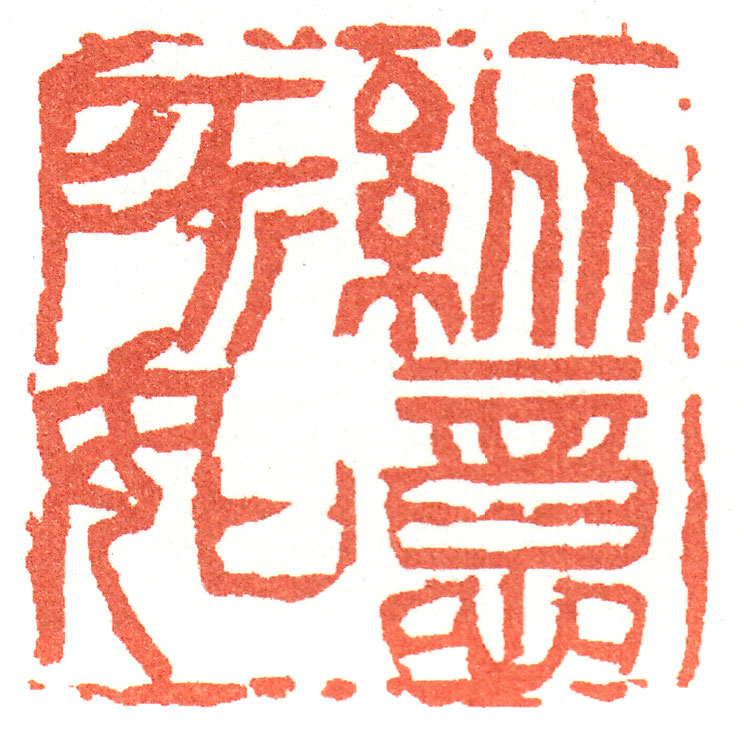
Image Healing: Mandala Stability Guidance 57
Imagine the screen in front of you transforms into a glowing mandala. The video windows and chat bubbles are merely the pulsating points of light on the outer ring of the mandala. Don't let these points of light draw you in; don't feel trapped inside the screen. Your body is outside the screen, sitting firmly in your chair. You are the observer, not the scrutinized. Each deep breath pulls you back from the virtual signals to the tangible sensations of reality.
Traditional mandalas typically feature a harmonious and intricately varied circular structure, symbolizing the wholeness of the universe and the cycle of life. By viewing mandala images, individuals can perceive inner peace and strength, achieving psychological balance.
◉ Gaze at the mandala twice, while taking deep breaths.

Lesson 57: The "Expression Flow Chart" of Online Social Networking“
Purpose: To help you identify your nervousness in online communication and to help you develop a more natural way of expressing yourself.
step:
① On the left, draw the "online situations where I am most prone to anxiety" (voice/video/replies, etc.), using a darker color to represent a strong sense of uncertainty.
② Draw "my ideal way of expression" on the right side, with free, flowing, and soft lines.
③ Draw a transitional path from dark to light in the middle, symbolizing "I can gradually move from tension to nature".
Write a reminder next to it: "I don't need perfect expression, I just need authentic flow."“
Please log in before submitting your drawings and feelings.
○ 57. Online Social Anxiety: Suggestions for Journaling
① In online social interactions, which form do I feel most nervous about? Why?
② Do I repeatedly delete and modify messages before sending them? Why?
③ What was the most tense moment during your most recent voice or video call?
④ Use 0–10 to assess the intensity of your online social anxiety today.
⑤ Was there ever a moment when I felt I expressed myself naturally? What made that happen?
⑥ Tomorrow's practice: Try a message that you "don't keep revising" and observe your body's reaction.
Please log in to use.
Online social interaction is not about presenting a perfect image, but about expressing authenticity. You don't need to be defined by the camera; you just need to let your voice gradually find its outlet.
 EN
EN  ZH
ZH  ES
ES  FR
FR  JA
JA