

Lesson 60: I'm afraid to express my needs, afraid of being seen as a nuisance.
Duration:70 minutes
Topic Introduction:
In relationships and social interactions, many people would rather silently endure than dare to express their needs:
“"I'm afraid people will think I'm asking for too much."”
“"I'm afraid of causing trouble for others."”
“"I'm afraid of being rejected, disliked, and alienated."”
This habit of not daring to express oneself is often not because you have excessive needs, but because you are forced to get used to "disappearing from your own mind".
This lesson will take you to explore the core reasons why people are afraid to express their needs, and teach you how to safely and gently make your needs visible.
Why am I afraid to express my needs?
- Early habits and patterns:You may have learned from a young age that expressing your needs equals getting into trouble.
- Fear of rejection or being denied:“"Will the other person be unhappy if I tell them?"”
- Fear of affecting the relationship:Worrying that demand will become a source of pressure and cause others to distance themselves from you.
- Long-term repression leads to a "blurred sense of self":The less you express yourself, the less you know what you truly need.
Lesson 60: I'm afraid to express my needs for fear of being seen as a nuisance. Click to listen to the reading.
The inability to express needs is a recurring problem for many in interpersonal relationships. You might be used to shouldering everything yourself, even when exhausted, unwilling to ask for help; you might choose silence when you need support, fearing that expressing your needs will burden others or be seen as selfish or difficult. This repression isn't because you don't truly need others, but because you're terrified of losing your safe position in the relationship. Psychologically, needs are often mistakenly equated with burdens. If your needs were ignored, denied, or met with impatience during your upbringing, your brain learns that expressing needs is dangerous. To avoid rejection or being disliked, you prematurely withdraw your needs, using self-repression to maintain relationship stability. But the cost of this strategy is long-term resentment and exhaustion. You might appear independent and reliable on the surface, but inwardly you accumulate feelings of loss, feeling constantly ignored in the relationship. What needs to be re-understood is that needs are not demands on others, but rather information naturally present in the relationship. Relationships without needs often lack genuine connection. Expressing needs doesn't mean the other person must fulfill them, but rather giving each other an opportunity to understand and choose. The key to alleviating this fear isn't making all your demands at once, but practicing clear and gentle expression. You can start with specific, small needs, describing your feelings instead of blaming others. When you find that expressing your needs doesn't immediately damage the relationship, your brain's expectation of "trouble" will gradually soften. You have the right to need support, and the right to be responded to or refused. Truly stable relationships aren't maintained by never bothering others, but by allowing each other to be authentic.
▲ AI Interaction: To whom are you least willing to express your needs? Why?
What you fear is not "speaking itself," but the consequences of speaking.
You worry about being misunderstood, disliked, or considered too sensitive or difficult to please.
But the need itself doesn't make the relationship worse; it's silence and repression that do.
A stable relationship doesn't depend on you being "absent-minded," but on each other being willing to be understood and heard.
You can practice expressing yourself in smaller ways instead of stating all your needs at once.
Click the button below to practice how to "safely express your needs" with AI.
When you want to express yourself but are afraid to speak, your body will automatically tense up.
Music can help you gradually loosen up from the tightness of "being afraid of becoming a problem".
Let the voice remind you: you also deserve to be cared for, not just to care for others.
○ Eastern Healing Tea: Millet and Ginger Tea
Recommended drinks:Millet Ginger Tea (millet + ginger + a little brown sugar)
Recommended reasons:It can soothe the stomach tightness and chest tightness that accompany the fear of speaking.
practice:Cook millet in warm water with a small slice of ginger for a smooth yet satisfying texture.
○ Nourishing Yin and Moistening the Lungs: Lily Bulb & Tremella Beauty Porridge
When your body feels dry from the inside out, with flaky skin and a tight throat, this bowl of crystal-clear, gelatinous, warm porridge is the best "internal humidifier".
The white fungus, when simmered, produces a smooth, gelatinous texture that nourishes every inch of parched skin; while the fragrance of lily bulbs soothes the restlessness in one's heart.
Drinking a bowl of this is like giving your body a deep hydrating spa treatment, bringing you a sense of nourishment and tranquility from the inside out.
Beauty and skin care
Calm the mind and soothe the nerves
Open Recipe
◉ Nourishing Yin and Moistening the Lungs: Lily and Tremella Porridge (ID 60)
Lily and white fungus porridge is a classic "white-based health-preserving" sweet soup. Traditional Chinese medicine believes that "white enters the lungs," and white fungus (tremella) is rich in natural plant-based colloids, which have the effects of nourishing yin and moistening the lungs, and enhancing immunity; lily bulbs can clear the mind and calm the nerves, and relieve cough and phlegm. After cooking, the two ingredients have a soft and smooth texture, which can not only relieve the dryness of the respiratory tract in autumn and winter, but also moisturize the skin, allowing the body and mind to regain moisture and peace.
Deep hydration Moisturizes the lungs and relieves cough Nourishing and beautifying the skin
I. Recommended Dietary Therapy and Reasons
Recommended dishes:Lily and Tremella Porridge (ID 60)
Recommended reasons: High stress levels or staying up late can easily lead to "yin deficiency and excessive internal heat," manifesting as hot palms, irritability, and dry mouth and throat. This porridge doesn't use rice as a base; instead, it's primarily made with the gelatinous substance of white fungus, resulting in a refreshing and non-greasy taste. It gently clears away excess internal heat and replenishes lost fluids, making it a suitable daily tonic for all ages (especially women and the elderly).
2. Recipe and Method
Recipe (1–2 servings):
- 1/3 of a dried white fungus (it will expand significantly after soaking).
- 10–15 g of dried lily bulbs (or 1 fresh lily bulb)
- A small handful of goji berries
- 1000–1200 ml of clean water
- Add an appropriate amount of rock sugar (yellow rock sugar tastes better).
- (Optional) 3 red dates
*Note: If serving as a main meal porridge, a small amount of rice can be added and cooked together; if serving as a sweet soup, only the above ingredients should be used.
practice:
- Soaking (key):Soak dried white fungus in cold water for 2–3 hours beforehand, until it is fully expanded and the base is soft. Soak dried lily bulbs for 1 hour beforehand.
- deal with:Trim the hard yellow roots off the soaked white fungus.Tear into small pieces the size of coinsThe finer the pieces are torn, the larger the contact area, and the easier it is to extract the gelatinous substance during cooking.
- Secrets to Producing Glue:Add cold water to a pot, add the white fungus, bring to a boil over high heat, then reduce to low heat, stir quickly for 20 seconds, then cover and simmer for 40 minutes.
- Add auxiliary ingredients:When the white fungus soup becomes thick and has a stringy texture when lifted with chopsticks, add lily bulbs and red dates, and continue to cook for 15–20 minutes (fresh lily bulbs only need to be cooked for 5 minutes).
- Seasoning:Add rock sugar and goji berries before removing from heat, and stir until the sugar dissolves.
3. Small rituals for body and mind
Watching the dried, curled-up white fungus slowly unfurl and bloom like a flower in the water, imagine that your body cells are also absorbing water.
Being patient when tearing apart white fungus is a Zen-like practice of breaking down a "big difficulty" into "small pieces".
When you drink that mouthful of gelatinous soup, visualize it flowing down your throat like a clear spring, moisturizing your lungs and carrying away all dryness and worries.
4. Dietary Therapy Experience Record
- Pay attention to whether the dryness in the throat or dry cough symptoms are relieved after consumption.
- Observe whether your skin feels more hydrated and less tight than usual after waking up the next day.
- Record your mood changes and see if the calming effect of lilies makes your mind more peaceful at night.
V. Instructional Videos (approximately 3–5 minutes)
◉ Video Title:Lily and Tremella Porridge: A bowl brimming with collagen, a "poor man's bird's nest"“
6. Precautions
- Foods to avoid when suffering from a cold due to wind and cold:White fungus is cooling in nature. If you have a cold caused by exposure to cold (runny nose, chills), you should not eat it, so as not to trap the cold in your body.
- Those with weak spleen and stomach should eat less:If you get diarrhea after eating cold food, it is recommended to add a few red dates or some shredded ginger when cooking white fungus to neutralize its cold nature, or eat less of it.
- Cooked to order:White fungus soup should not be eaten after being left overnight, as it not only loses its nutrients but may also produce nitrites that are harmful to the human body.
hint:This is a dish that requires "patience." Once the heat is right, the gelatin will naturally form.
○ Seal Carving Practice Suggestions - Lesson 60: I dare not express my needs, for fear of being seen as a nuisance.
This lesson uses seal carving practice to reshape "self-boundaries." We dare not express our needs because subconsciously we feel unworthy of using resources. But seal carving requires occupying space on stone, even removing stone, to create characters. This teaches us that living is a reasonable "use," and expressing needs is a natural right of existence, not a debt owed to others.
- Introduction to the characteristics of seal carving:
Seal carving is divided into "white script" (characters recessed) and "red script" (characters raised). People who are afraid to express their needs often live like "white script," habitually retreating and hiding. In this lesson, we will practice "red script." You need to remove the stones around the characters to let them "stand out." This symbolizes that we need to eliminate the distraction of "being afraid to bother others" and clearly highlight our needs. - Written words (seal text):
Intending to build this building - Psychological Intention:
We often equate "needs" with "troubles." Writing "speak your mind" corrects this cognitive bias. Tell yourself: directly stating my thoughts saves others time from guessing. Clear expression is the highest form of respect for relationships, not a burden. - Knife skills:
Practice "depth." When carving red characters, the base must be carved deep and flat for the characters to stand out. If you hesitate or only scratch the surface, the printed characters will be blurry. This is like hesitating when expressing your needs, which only confuses the other party. Practice carving away the waste material decisively and deeply, allowing the red lines to stand proudly. - Emotional transformation:
Transform the guilt of asking for help into the exhilarating feeling of bold, sweeping strokes while carving seals. Every stroke affirms: I am worthy to be here, I am worthy to be seen.
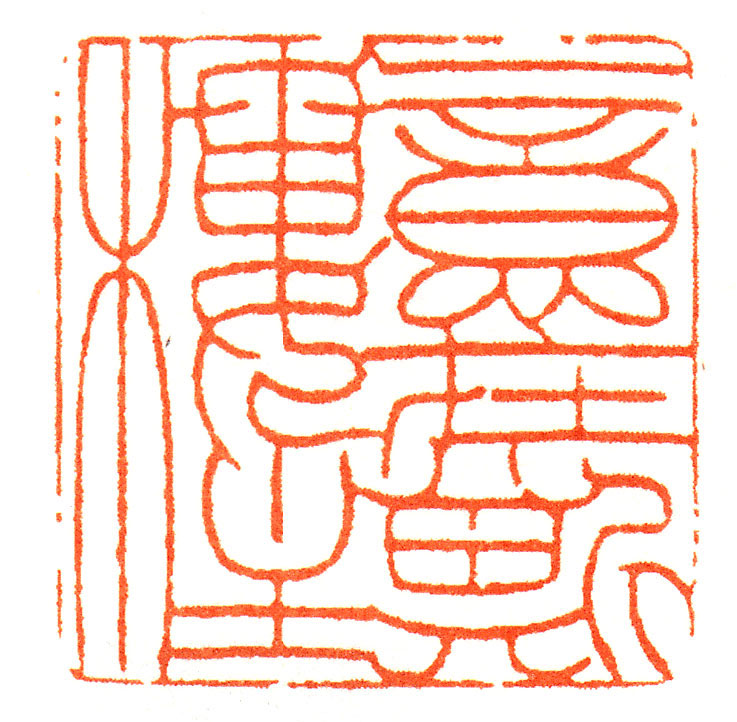
Image Healing: Mandala Stability Guidance 60
Imagine a mandala as a complex gear system. You are a small gear turning in the center. If you stop turning for fear of "bothering" the other gears (suppressing your needs), the flow of the entire pattern will stall. Your needs are your driving force, propelling the relationships around you. When you make a request, you are not creating a burden; you are inviting others to exchange energy and cooperate with you.
Traditional mandalas typically feature a harmonious and intricately varied circular structure, symbolizing the wholeness of the universe and the cycle of life. By viewing mandala images, individuals can perceive inner peace and strength, achieving psychological balance.
◉ Gaze at the mandala twice, while taking deep breaths.

Lesson 60: The "Whispered Path Map" of Requirement Expression“
Objective: To help you design a clear but not self-imposed expression path.
step:
① Draw "the self that suppresses its needs" on the left side, with taut lines and a darker color.
② Draw a "gentle self" on the right side, with soft, flowing, and open lines.
③ Connect the two with a path that gradually becomes shallower, symbolizing "I can speak slowly, without having to say everything at once".
Add a note to the side: "Needs are not a nuisance, but a bridge to relationships."“
Please log in before submitting your drawings and feelings.
○ 60. Fear of Expressing Needs: Log-Guided Suggestions
① Whom am I most afraid to express my needs to? Why?
② I'm afraid of how the other person will react. Where does this worry come from?
③ Is there a small request I wanted to make today, but I held back?
④ Use a scale of 0–10 to assess the intensity of your “fear of expressing your needs” today.
⑤ What made me realize that I am also worthy of being taken care of?
⑥ Tomorrow's practice: Try to express a very small need (e.g., I'm a little tired today, I want to rest for a while).
Please log in to use.
Your needs are not a nuisance, but rather a way of allowing others to approach you. Speaking up is not a burden, but the gentlest form of courage in a relationship.
 EN
EN  ZH
ZH  ES
ES  FR
FR  JA
JA