

Lesson 7: Catastrophic Thinking – “What if…?”
Duration:70 minutes
Topic Introduction:This course focuses on "catastrophic thinking," a common anxiety pattern—the brain habitually rehearses the worst possible outcome, constantly asking itself, "What if...?" The course will help you identify how this thought chain starts, how it amplifies fear, and through structured exercises, learn to gently bring your "worst-case scenario" back to a realistic and manageable level.
Three ways to break down catastrophic thinking
- Write a complete script:When you think, "What if...?", don't just stop at one sentence. Try writing down the beginning, process, and ending of the entire "worst-case scenario," turning your vague fear into words that can be seen and discussed.
- Probability vs. Result Separation:Rate the probability of the event actually happening and whether I would be completely helpless even if it happened (0-10) to train the brain to distinguish between "possibility" and "consequence" instead of viewing everything as "inevitable destruction".
- List of factual evidence:List at least three pieces of real-world evidence that support the idea that "things might not be so bad," such as past experiences, available resources, or support from others, to bring your thinking back from the "chain of assumptions" to concrete facts.
Lesson 7: "What If?" Type of Worry: Identifying and Deconstructing 🎧 Click to watch/listen to the reading content
Catastrophic thinking is like having a "worst-case projection machine" installed in your brain. As soon as there is any uncertainty in life, it immediately starts playing doomsday trailers—"What if I say the wrong thing?" "What if my feeling unwell is actually a serious illness?" "What if I fail this time and everything is over?" These "what ifs" are not calm reasoning, but a kind of imagination amplified by anxiety.
The core characteristic of catastrophic thinking is **leaping to conclusions**. It often omits all possible intermediate processes, jumping directly from a small trigger point to the worst possible outcome. For example, an unanswered email is automatically translated into "the other party is dissatisfied," "I've been rejected," and "all future collaborations are over." The brain here isn't predicting the future, but rather repeating past fear patterns.
Many people mistakenly believe that "thinking about the worst-case scenario is a sign of being prepared." But in reality, catastrophic thinking doesn't make you safer; it only keeps your nervous system in a state of chronic overload. Your body treats these imagined threats as real dangers, causing your heart to race, your muscles to tense, and your attention to shrink. Over time, anxiety becomes a default background noise.
The first step in identifying catastrophic thinking is to **label it**. When you find yourself repeatedly thinking "what if...?", you can silently tell yourself, "Oh, this is catastrophic thinking at work." This step is not about denying the emotion, but about slightly separating "me" from "this mindset."
Next, you can try three questions:
First, "Am I worried about facts or assumptions?"“
Second, "Are there other equally reasonable, but less extreme, possibilities?"“
Third, "Even if it really happens, am I completely without the resources to deal with it?"“
You'll find that most "apocalyptic" scenarios actually have a lot of gray areas, and you're not entirely powerless. Catastrophic thinking likes to use "all or nothing" language, but reality is more like a continuous spectrum.
Finally, you can practice rewriting "What if...?" into a more manageable version. For example, "What if I mess up?" can be changed to: "If this doesn't go well, I can review, adjust, and try again." This transformation is not self-comfort, but rather pulling the brain back from panic mode to problem-solving mode.
As you practice this repeatedly, catastrophic thinking won't disappear immediately, but its intensity will gradually decrease. "If" questions will still arise, but they will no longer dominate your emotions. You begin to learn to live with uncertainty, rather than be consumed by it. This is a crucial step from anxiety to stability.
▲ AI Interaction: Where do you most often ask "What if...?"
Perhaps it's before a health checkup, with the thought, "What if a serious problem is found?"“
Perhaps it stems from interpersonal relationships, with the thought, "What if he stops talking to me?"“
Perhaps it's about work and life: "What if I fail, go bankrupt, or am looked down upon?"“
A single "what if" may seem insignificant, but when they line up like dominoes, the brain is overwhelmed by a whole "disaster scenario," and the body has already borne all the consequences before they even happen in reality.
Here, you can describe to the AI in text: What is your most typical "what if...?" chain? In what situations is it usually triggered?
Let AI help you break it down: where is the fact, where is the speculation, and where old experiences are amplifying fear.
Click the button below to work with AI to sift through your "catastrophic scenario" and try to write a less terrifying version.
○ Easing Catastrophic Thinking: Musical Guidance
The essence of catastrophic thinking is that the brain is led astray by "images of the future," while the present is completely left unattended.
Choose a piece of music with a steady rhythm and a gentle melody, and focus your attention on "this short passage that is playing right now".
When the question "What if...?" resurfaces in your mind, don't argue about it. Just tell yourself, "Listen to this part first, and then decide whether you want to continue thinking about it."“
You will find that your current physical sensations, breathing rhythm, and heart rate are all real-world clues unrelated to the images of the disaster.
Let music be a thin thread, gently pulling you back from the worst ending to the present moment.
○ Herbal Healing Tea
Recommended drinks:Lavender and Chamomile Compound Tea
Recommended reasons:Lavender and chamomile are often used to relieve tension and irritability, making them suitable for drinking when "the movie in your mind is overactive." The combination of warmth and aroma sends a signal to the body that "it is safe for now."
usage:Steep 3 grams of chamomile flowers and a small amount of dried lavender in hot water for 5–8 minutes. Sip slowly before bed or when experiencing catastrophic thoughts, while taking deep breaths.
○ Bird's Nest Rock Sugar Soup
Simmer the bird's nest over low heat until translucent, then add rock sugar to enhance the flavor. It is delicate, smooth, and gently nourishing, and can be used as a small ritual to "return from the worst imagination to the body." As you slowly savor it, let your attention shift from the fear of the future back to the taste and temperature of the present moment.
Healing Recipes
/home2/lzxwhemy/public_html/arttao_org/wp-content/uploads/cookbook/yan-wo-bing-tang-geng.html(Please confirm that you have uploaded: yan-wo-bing-tang-geng.html)Image Healing: Mandala Stability Guidance 07
This center is not in the distance, but within yourself. When you gaze at it, time begins to slow down, and thoughts no longer become taut lines, but diffuse into soft light. You can linger here, letting your weary nerves slowly relax, and listen to your inner voice saying, "I am still breathing, I am still alive." The future doesn't need to rush; it is quietly unfolding from the light at the center.
Traditional mandalas typically feature symmetry and complex geometric structures, symbolizing the wholeness of the universe and the cycle of life. By drawing traditional mandalas, individuals can perceive inner peace and strength, achieving psychological balance.

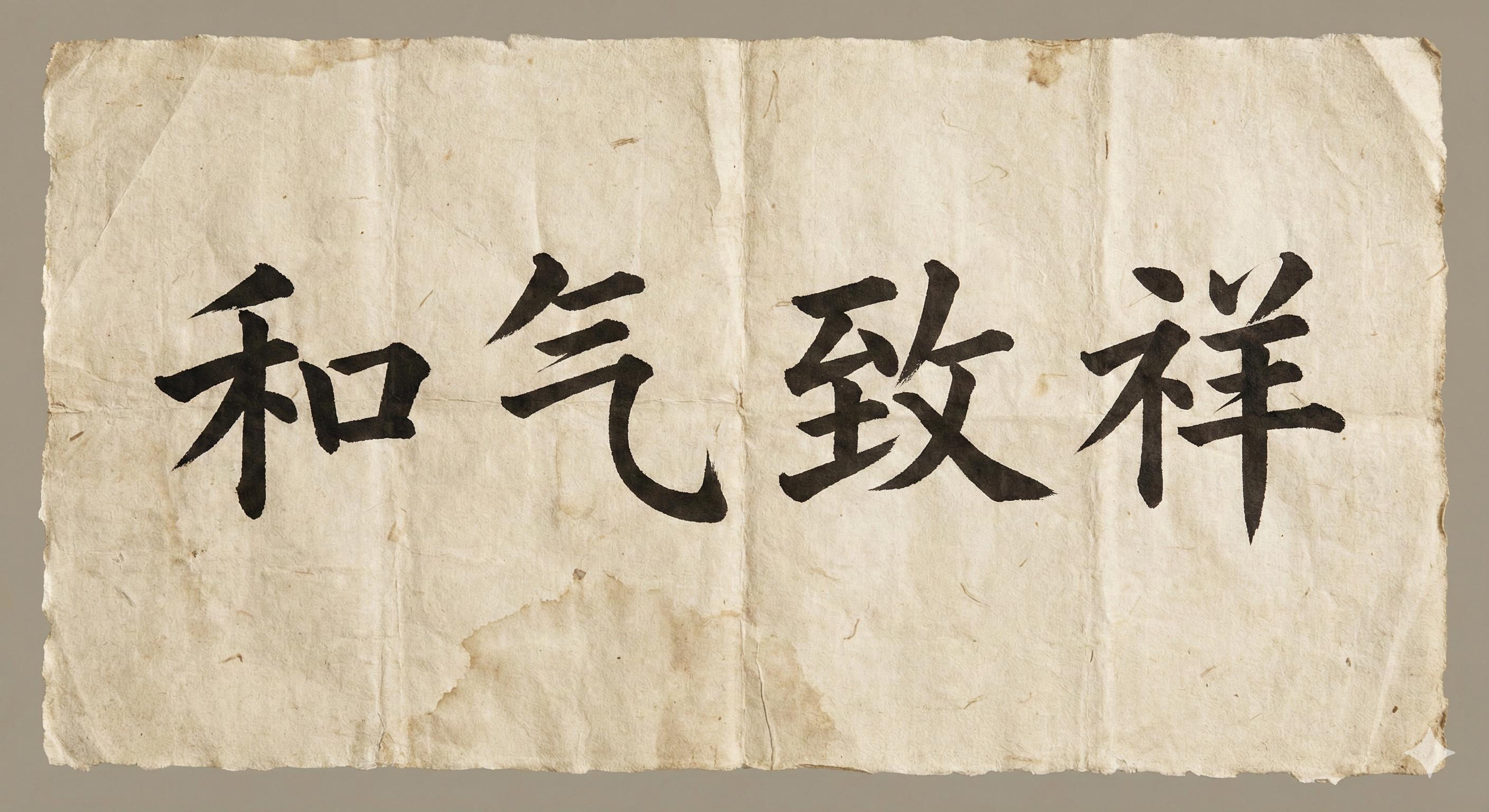
Lesson 7: Chinese Calligraphy: Regular Script - Density and Spatial Sense
In regular script, "blank spaces" are not superfluous, but rather an indispensable part of the structure. This lesson aims to develop the ability to judge space through exercises on spacing.
Writing Instructions:
Maintain a sense of breathing space between strokes and avoid stacking strokes too densely.
Pay attention to the balanced distribution of space within the characters, so that the overall design is both compact and not cramped.
Written words:
Harmony brings good fortune
Motivational words:
Leave room for maneuver; only then can things be turned around.
Writing Tips:
After writing a character, observe whether the gaps between the strokes are even, rather than just looking at the strokes themselves.
Lesson 7: Catastrophic Thinking – “What if…?”
Purpose: To help you see how you rehearse the worst scenarios in your mind and to establish a clear boundary between "realistic possibilities" and "imagined disasters".
Steps: On the left side of the image, write down your most frequently occurring "What if...?" (e.g., "What if I fail?"), and draw several concentric circles around it, representing the keywords of a "disaster scenario." On the right side, write "What is actually happening?", and describe the current support resources, neutral information, and actionable steps around it. Make the image clearly present: the same event exists in both a disaster version and a realistic version, and you are practicing shifting your attention from one version to the other.
Please log in before submitting your drawings and feelings.
○ 7. Catastrophic Thinking – “What if…?” Journal-Guided Suggestion
① Write down the most typical "What if...?" sentence of your day. Record it truthfully without criticism.
② Complete the "worst-case scenario" your brain is rehearsing: What would happen if things went the way you imagine? Write it out completely.
③ List three pieces of real-world evidence to show that "things could have been much worse," such as past experience, assistance from others, and available resources.
④ Rate the "probability of reality" and the "probability of the worst-case scenario" (0-10) respectively, and see the difference between the two.
⑤ Write down an alternative idea that is "closer to reality but still cautious," such as: "I may encounter difficulties, but it will not necessarily be completely out of control, and I also have some ways to try."“
⑥ A concluding remark to myself: I admit I'm afraid of the worst outcome, but I'm also willing to practice and dedicate more energy to the life that's happening right now.
Please log in to use.
The brain can't completely stop thinking "what if...?", but every time you see it clearly, slow it down, and write down another possibility for yourself, you are already moving from disaster to reality.
 EN
EN  ZH
ZH  ES
ES  FR
FR  JA
JA