

Lesson 76: No More Apologizing for Silence—Learning to Be Quiet in Relationships
Duration:70 minutes
Topic Introduction:
Many people believe that in social situations, "silence equals rudeness equals embarrassment equals others disliking me."
But silence is actually a natural rhythm of interaction, a necessary space for you to fine-tune, organize, and breathe in a relationship.
This lesson will help you understand why you feel ashamed of being silent, and how to shift from "fear of emptiness" to "allowing silence to exist."
Silence is not a mistake, but a gentle boundary between you and the world.
○ Core Knowledge: Why does silence make anxious people particularly uneasy?
- ① Growing up experience: Silence was defined as "bad".
Some people are required from a young age to "be sensible, be active, and be quick to respond."
When you are slow, quiet, and need to think, you are seen as "unsociable".
The anxiety stems from the old pressure of "I must perform well," rather than from the current relationship itself. - ② Excessive self-monitoring: focusing attention on other people's reactions.
You're not experiencing the present moment; instead, you're wondering, "Does anyone else think I'm boring? Angry? Embarrassed?"“
The more outward your focus, the stronger your anxiety. - ③ False belief: Silence = failure.
But real interpersonal interactions naturally involve pauses, breaths, and silences.
Silence is actually a sign of trust, a space in the relationship where each person can "be themselves". - ④ Silence itself is a kind of power.
You don't need to amuse others, you don't need to perform all the time, and you don't need to fill every second.
Being able to be quiet means you no longer give all your attention to external evaluations.
Lesson 76: No More Apologizing for Silence - Learn to Be Quiet in Relationships (Click to listen to the reading)
Many people feel guilty or even subconsciously apologize for their silence in relationships, as if not speaking is a mistake. You might become anxious and worry that others will think you're cold, boring, or antisocial after you fall silent at a party, so you force yourself to fill the silence even when you're physically exhausted. In fact, this fear of silence isn't because silence actually harms the relationship, but because you've been trained to prove your existence through output. When language is used as the only way to maintain connection, silence is misinterpreted as withdrawal or rejection. But truly mature and stable relationships don't rely on constant expression; they allow different rhythms to coexist. Psychologically, people with social anxiety are often in a state of high self-monitoring. Once they stop talking, their attention immediately turns to self-judgment, and silence is experienced as exposure and danger. But what needs to be re-understood is that silence itself is a state—a way of showing you that you are still present, still feeling, still participating. Not speaking doesn't mean you don't exist, nor does it mean you're not invested in the relationship. Learning to be quiet in a relationship means you begin to respect your body's signals instead of suppressing your fatigue with performance. You can choose not to respond, not to fill the silence, and not to explain your silence. When you allow silence to happen naturally, your nervous system gradually learns that this won't lead to the collapse of the relationship. Quietness is not indifference, but a boundary, a permission to be present without having to constantly give back. When you stop apologizing for your silence, you create breathing space for yourself in the relationship and make the connection more authentic and sustainable.
▲ AI Interaction: What kind of silence are you most afraid of?
Some silences are due to tension, some are due to organizing, and some are due to trust.
Silence is not your fault, nor does it mean you have disappointed others.
You don't need to "perform" to win relationships; your quietness can be seen and accepted.
Click the button below to let AI help you explore the source of anxiety triggered by silence and find the quiet rhythm that suits you best.
When silence makes you uneasy, music can help stabilize your breathing rhythm.
Please observe in the melody: silence is not emptiness, but a flowing space.
Let music tell you: silence can also be gentle and abundant.
○ Oriental Healing Tea - Silver Needle White Tea
Recommended drinks:White Tea Silver Needle
Recommended reasons:
The light and slightly sweet taste of white tea is perfect for lessons on embracing "quiet".
Its taste is mild and gentle, without being overpowering, symbolizing a gentle, slow, and unassuming strength.
It allows you to rediscover a subtle awareness of your body in quietude.
practice:
Brew with 80℃ hot water for 1–2 minutes; the tea soup will be clear and mellow.
Suitable for drinking before being alone or socializing, to calm the mind and bring you back to the present moment.
○ Soothing Aloe Vera Yogurt Bowl (ID76)
During moments of quiet reflection, the body often needs cooling and soothing. The soothing properties of aloe vera can alleviate inner dryness, while the gentle, enveloping feel of yogurt helps calm a tense nervous system. This soothing bowl is perfect for consumption after social interactions or when you need to regain tranquility, helping you draw energy back inward from the outside world. It symbolizes an unexplained sense of presence, reminding you that even without speaking, you are still allowed to be embodied.
Allow quiet
Restore Inner Space
Open Recipe
◉ Soothing Aloe Vera Yogurt Bowl (ID 76)
The Aloe Vera Yogurt Soothing Bowl is a calming dish with a "cool and gentle" feel: the smoothness and slight tartness of the yogurt, combined with the refreshing taste of the prepared aloe vera pulp, give the whole bowl a mild and refreshing sensation, rather than a stimulating icy shock. It's suitable as a light and delicate buffer after feeling a bit hot, having restless sleep, or after prolonged periods of visual or mental exertion. Upon tasting, it gently soothes the digestive system without leaving a greasy or heavy feeling.
Refreshing and soothing Light Yogurt Bowl Calm the mind and body
I. Recommended Dietary Therapy and Reasons
Recommended dishes:Aloe Vera Yogurt Soothing Bowl (ID 76)
Recommended reasons: Properly processed aloe vera pulp has a crisp texture and a slightly sticky consistency. When combined with the smooth texture of yogurt, it creates a comfortable feeling of being "cool but not cold, soft but not greasy." Paired with a small amount of fruit and grains, it provides gentle energy without making the body feel overly full. It's especially suitable for when the weather is hot, stress is high, or you're feeling irritable—a simple, refreshing, and well-balanced meal can help you gradually cool down, slow down, and calm down from the inside out.
2. Recipe and Method
Recipe (1 bowl, 1 serving):
- Plain yogurt 180–200 g (can be unsweetened or low-sugar)
- 30–40 g (small cubes) of fresh aloe vera, peeled and pulped.
- 30–40 g of banana chips or diced apple (choose one)
- 15–20 g of oatmeal or cereal
- 1 teaspoon honey (optional)
- Add a few drops of lemon juice (optional, to add refreshment).
practice:
- Peel the aloe vera and remove the pulp. Rinse it repeatedly with clean water to remove the surface stickiness and bitterness, then cut it into small cubes for later use.
- Pour plain yogurt into a bowl. If you prefer a thinner consistency, add a small amount of cold water and stir well.
- Gently add diced aloe vera, banana slices, or apple pieces, allowing the fruit and aloe vera to be evenly distributed on the surface of the yogurt.
- Sprinkle with rolled oats or cereal to add a bit of "chewiness" and fiber support to the dish.
- Add a small amount of honey to taste, and you can also add a few drops of lemon juice to enhance the refreshing flavor.
- Let it sit for 2–3 minutes to allow the oatmeal to absorb the yogurt and juice slightly before enjoying.
3. Small rituals for body and mind
When handling aloe vera, you can deliberately slow down and treat each step of washing and dicing as a process of "giving yourself a moment of peace" rather than a task that you have to rush to complete.
When arranging fruit and aloe vera on the surface of yogurt, you can arrange them into your favorite patterns to remind yourself that this meal is for "taking care of yourself," not just for filling your stomach.
When you take your first bite, feel the coolness travel through your mouth, throat, and chest, and whisper to yourself, "It's okay to go a little slower." Let this gentle coolness and those words sink into your body.
4. Dietary Therapy Experience Record
- Record the time of consumption (breakfast, afternoon, evening, or during overtime work) and the current physical and mental state (such as heatiness, fatigue level).
- Observe changes in stomach comfort, physical lightness, and emotional stability within 20–30 minutes after consumption.
- If you choose this yogurt repeatedly during several days of high stress or poor sleep, you can record its cumulative effect on feelings of calm and self-care.
V. Instructional video (approximately 3–4 minutes)
◉ Video Title:Aloe Vera Yogurt Soothing Bowl: A light meal that helps you cool down slowly from the inside out.
6. Precautions
- Aloe vera needs to be thoroughly peeled and rinsed, using only the transparent pulp and avoiding the outer skin and yellow sap.
- People with sensitive stomachs should start with a small amount of aloe vera for the first time and observe their body's reaction before deciding whether to increase the dosage.
- If you are not tolerant to dairy products, you can use plant-based yogurt or fermented soy milk as a substitute.
hint:This recipe is for daily dietary guidance and mental well-being, and does not replace any medical diagnosis or treatment. For chronic illnesses or special dietary needs, please consult a professional.
○ Modern Calligraphy · Lesson 76 Writing Practice Suggestions
In-depth analysis:
We often panic when there are pauses in a conversation, and we keep apologizing or trying to find a new topic.
But if this paper is filled with words without leaving any space, it becomes suffocating.
The beauty of modern art calligraphy comes from ink and from blank space.
Silence is the "blank space" in interpersonal relationships. It is not empty; it is a window for emotions to "breathe".
Learning to live in silence is learning to give relationships some breathing space.
Writing Skills (Advanced Version):
- Generous Spacing:Intentionally increase the spacing between the letters. Don't let them crowd together. Feel this spacious comfort and tell yourself, "I don't need to rush to connect to the next second; this pause is safe."“
- Leading (breathing between rows):Add whitespace between lines. If the other person is silent after you finish speaking, leave a blank line to allow them to wait quietly, rather than rushing to write the next line.
- Lifting the pen lightly:Modern calligraphy requires frequent brush lifting. Each time the brush tip leaves the paper, it's a brief moment of silence. Practice enjoying this moment; there's no need to constantly stick to the paper.
- Simplification:Sometimes, less is more. Don't decorate with patterns just for the sake of decoration. Try writing only one word and letting the surrounding white space make it stand out.
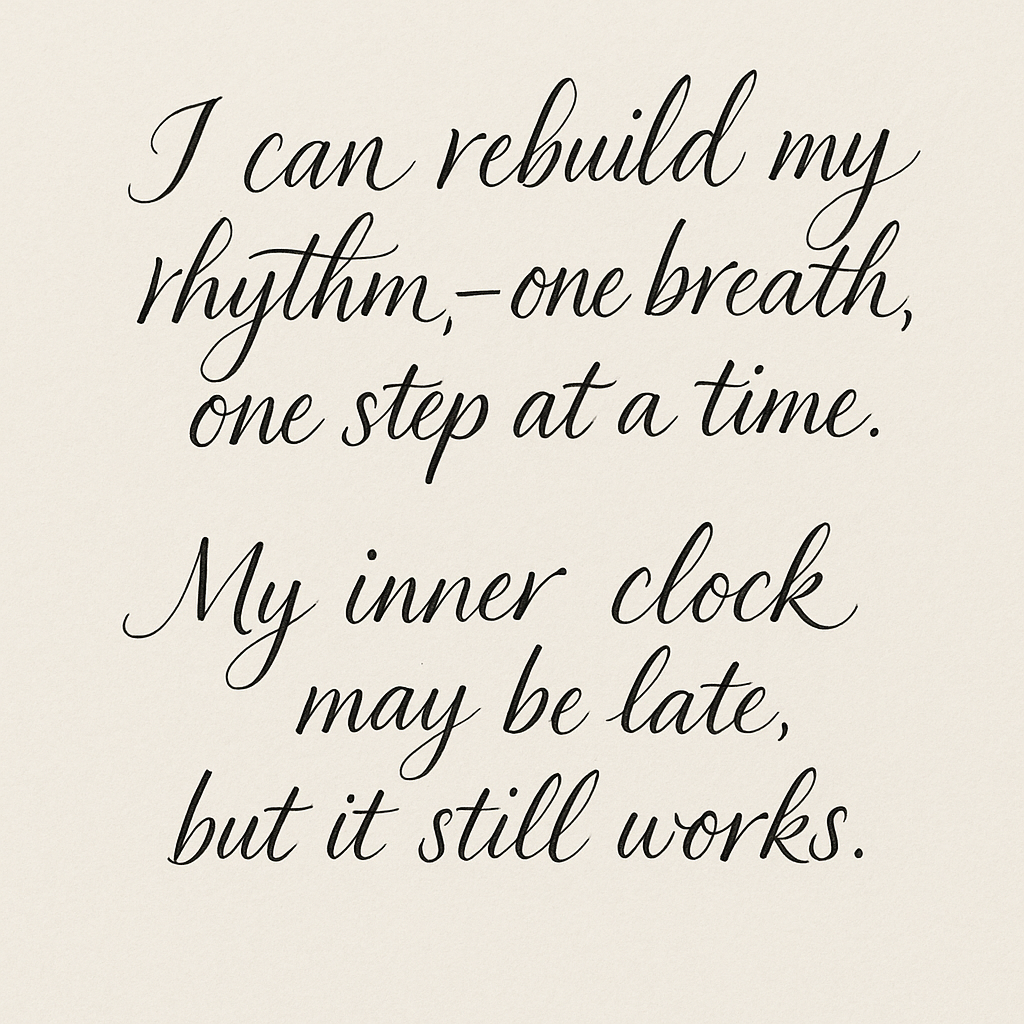
Image Healing: Mandala Stability Guidance 76
We often focus only on the colored lines in a mandala, ignoring the white background between them. Now, try the opposite. Don't look at the pattern itself; gaze at the "spaces" between them. Imagine these spaces as air, the sky, or a tranquil lake. It is precisely because of these spaces that the pattern reveals its outline. When you are silent in a relationship, you are not creating awkwardness; you are providing a backdrop for the other person, allowing them to organize their thoughts in a quiet space.
Traditional mandalas typically feature a harmonious and intricately varied circular structure, symbolizing the wholeness of the universe and the cycle of life. By viewing mandala images, individuals can perceive inner peace and strength, achieving psychological balance.
◉ Gaze at the mandala twice, while taking deep breaths.

Lesson 76: Guided Drawing: "A Sense of Quiet Space"“
Purpose:Let your brain experience the feeling that "silence is not a threat, but acceptance".
① Use very light lines or light colors to draw a soft, almost transparent "breathing space" in the center of the picture.
Don't emphasize shape; just keep it empty, open, and stress-free.
② Add slowly extending curves or washes around the edges, keeping them at a distance and not too close together.
It symbolizes "others can be present, but I still have my own quiet boundaries."
Please log in before submitting your drawings and feelings.
○ 76. Log-based guidance suggestions
① Which "silent moment" today made you the most nervous? Recall what changes your body experienced at that time?
② Consider the person you feel safest with: Is silence permissible when you're with them? What does this indicate?
③ A mini-exercise for tomorrow: Intentionally allow yourself to be quiet for 3 seconds during a small interaction and observe your physical and emotional reactions.
Silence is not a flaw, but a profound way of being. May you, from today onward, no longer apologize for being quiet.
 EN
EN  ZH
ZH  ES
ES  FR
FR  JA
JA