

Lesson 811: Understanding the Characteristics and Psychological Mechanisms of Skin Peeling Syndrome
Duration:70 minutes
Topic Introduction:Skin pulling disorder (Skin Pulling Disorder) is a body-focused repetitive behavior disorder (BFRB) that often occurs during times of stress, anxiety, or boredom, resulting in an uncontrollable urge to pick at your skin. This lesson will help you understand its psychological roots and behavioral cycle.
○ Three typical psychological mechanisms
- Awareness of detachment:The skinning behavior often occurs unconsciously and feels like it "starts on its own."
- Emotional Regulation:Getting temporary relief through skinning is actually a substitute way to release emotions.
- The pleasure of ritual:Completing the "sense of removal" brings satisfaction and even addiction, deepening behavioral dependence.
▲ AI interaction: recall your last skin-picking experience
Skin peeling is often an outlet for overwhelming emotions. Put on some soothing music and let the melody take over.
As you listen, take note of the scene in which the behavior occurs; you'll find that it's often associated with tension or emptiness.
Let music remind you that you don’t have to physically hurt yourself to express your struggles; there are other, more gentle channels.
Conclusion: Melody helps you see the story behind the psychological mechanism instead of just blaming yourself.
Click the button below to analyze your emotions and environment with AI to find the source of the triggering loop.
Lesson 125: Understanding the Characteristics and Psychological Mechanisms of Skin Peeling Syndrome · Psychological Q&A
Skin peeling is often an automatic behavior that serves as an outlet for anxiety and emotions.
Please write down the moment you most want to detach from today, including the triggering emotions and physical sensations.
Don't judge, just observe: What is it that I'm trying to escape or comfort?
When you can see the mechanism, you can gradually reduce your self-blame.
Conclusion: Understanding the mechanism is the first step to change.
○ Oriental healing tea
Recommended drinks:Lotus Leaf Chrysanthemum Tea
Recommended reasons:It can clear away heat and dampness, calm the mind and relieve restlessness, and help alleviate the anxiety caused by impulsive hand behaviors.
usage:3g lotus leaves and 5 chrysanthemums, brew with warm water for 10 minutes, drink every afternoon.
Walnut, Black Bean and Pork Bone Soup
Plant protein and nut fat work together, along with bone calcium supplementation, to provide more stable satiety and endurance. This nourishing drink balances hair and skin with physical recovery, making it ideal for daily nourishment during training days and intense work periods.
Nourishes hair and skin
Recovery Support
Healing Recipes
/home2/lzxwhemy/public_html/arttao_org/wp-content/uploads/cookbook/he-tao-hei-dou-zhu-gu-tang.html(Please confirm that the following has been uploaded: he-tao-hei-dou-zhu-gu-tang.html)
🎨 Color Mandala·Behavioral Awareness Exercise
The “stripping impulse” is visualized as a pattern, and then a new sense of self-control is established through graphic structures such as gradient, surround, and halo.
- Hand awareness diagram:Describe the state of your hands and use colors to render the vision of "letting go of impulse".
- Impulse Feeling Chart:Draw the “feeling you have when you’re impulsive” and try to soften or contain it with your image.
- Self-care chart:"My body deserves tenderness" is written in the center and protected by a surrounding pattern.
[mandala_course_125_safe]
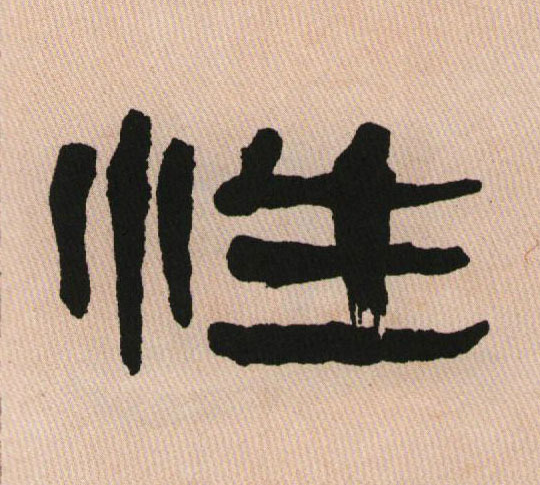
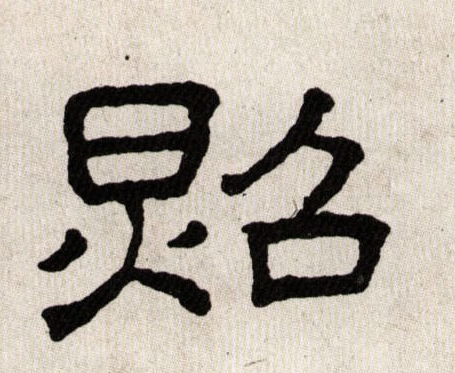
○ Seal Script· Chinese Calligraphy Practice
This lesson suggests practicing the three characters "awareness," "guard," and "protect," so as to inscribe the concepts of body awareness and self-care into your heart.
Practice sentences:
“"Understanding Reason and Mindfulness"
Be Rational and Understanding · Mindful Awareness”
Write once in the morning and once in the evening every day, coordinating the writing process with your breathing to strengthen the connection between body and mind.






Lesson 811: Understanding the Characteristics and Psychological Mechanisms of Skin Peeling Syndrome
Objective: To understand that skin peeling behavior is not simply a "bad habit," but rather a result of an imbalance between stress release and self-control.
Steps: Draw a hand, with one finger surrounded by soft light, symbolizing awareness. Write: "I am learning to understand, not blame." Let the drawing become an observation of the impulse, rather than a rejection, allowing you to begin to confront this symptom with a gentle perspective.
Please log in before submitting your drawings and feelings.
○ 811. Understanding the characteristics and psychological mechanisms of skin peeling syndrome • Journal-guided suggestions
① Record the time/scene/duration/tools (nails/tweezers, etc.) of a peeling behavior today. Do not judge, just restore it.
② Functional Awareness: Does it help me regulate (nervousness/boredom/anxiety) or has it become an automatic habit? Write it down truthfully.
③ Body scan: Most commonly affected area and pain/burning/itching sensation, 0–10 points, allowing for feelings to exist.
④ Trigger chain diagram: event → thought → feeling → impulse → behavior → consequence, circle the link that is easiest to intervene.
⑤ Today’s Commitment: Choose the smallest feasible change (delay 30 seconds/cover the area/shift the light).
⑥ Conclusion: Understanding the mechanism has helped me move from self-blame to actionable changes.
Please log in to use.
Every moment of awareness is proof that you are fighting against impulses and protecting yourself.
 EN
EN  ZH
ZH  ES
ES  FR
FR  JA
JA