

Lesson 89: Conditioned Reflexes and Learning Fear
Duration:70 minutes
Topic Introduction:
Many fears are not innate, but rather "learned".
A sound, a scene, or an uncomfortable experience can all cause the brain to incorrectly label a "safe situation" as a "danger signal".
This lesson will guide you to understand the scientific mechanisms of conditioned reflexes and learning phobias, laying a solid foundation for subsequent exposure training.
○ The core mechanisms of conditioned reflexes and learning phobia
- Classical conditional action:A neutral stimulus (such as an elevator) becomes associated with an unpleasant experience, and repeated exposure can lead to an automatic fear response.
- Operational learning:“"Escape" brings temporary relief → the brain mistakenly believes that escape is effective → fear is reinforced.
- Strengthening emotional memory:Strong physical reactions (palpitations, shortness of breath) can reinforce the brain's belief that "this is dangerous."
- Generalization effect:Similar scenarios can become terrifying, such as being afraid of elevators and also afraid of rooms with closed doors.
Lesson 89: Conditioned Reflexes and Learning Fear (Click to listen to the reading, view the content)
Many fears don't stem from actual immediate danger, but rather from the body's learned automatic responses to certain cues. This is the core mechanism of conditioned reflexes and learned fear. Conditioned reflexes initially arise from one or more intense emotional experiences. When a neutral stimulus occurs simultaneously with fear, pain, shame, or loss of control, the brain associates the two. Subsequently, even if the actual threat has disappeared, the body will preemptively activate its defenses whenever a similar cue appears. This reaction is not a result of thought, but rather of learning. Learned fear is characterized by its rapid, automatic nature and difficulty in being eliminated through reasoning, as it is stored in the emotional memory and bodily response system rather than the rational judgment area. Psychologically, the amygdala is responsible for rapid association; once a conditioned reflex is formed, it triggers a rapid heartbeat, muscle tension, and an escape impulse within milliseconds. The prefrontal cortex often doesn't have time to intervene and explain, which is why your body completely disobeys commands even when you know everything is alright. Learned fear is also constantly reinforced through avoidance; each escape confirms to the brain that it was fortunate to have avoided the danger, thus solidifying the conditioned reflex. It's important to understand that conditioned reflexes themselves are not wrong; they protected you from greater harm at some point. The problem lies in the fact that when the environment and risks change, the old reflex continues to operate. The real change is not eliminating the reflex, but relearning. By gradually exposing the cues that originally triggered fear in a safe and controlled manner, allowing the body to experience different outcomes, the conditioned reflex will slowly be rewritten. This process requires repetition, patience, and sufficiently low intensity, rather than a one-time challenge. Understanding the significance of conditioned reflexes and learned fears means that you can stop fighting your body and instead cooperate with it. Fear is not evidence of failure but a trace left by learning, and learning can be renewed. When you replace old connections with new experiences, fear gradually loses its automaticity, and you regain the space for choice.
▲ AI Interaction: How are your fears "learned"?
Tell the AI what you are afraid of or what kind of situation you are afraid of.
AI will help you analyze: What are the neutral stimuli? What are the uncomfortable experiences?
It also helps you identify the "escape-reinforcement" cycle.
Learning anxiety is often accompanied by a pattern of physical tension; music can help weaken "automatic responses" and bring the brain back to a learning-ready state.
Try listening to music and observing: Does my body begin to relax? Does the rhythm become more natural?
○ Eastern Healing Tea - Oolong Tea
Recommended drinks:Oolong tea (lightly roasted)
Recommended reasons:Oolong tea, with its delicate fragrance and mellow flavor, can help you stay clear-headed and relaxed when exploring "learning phobia".
practice:Brew at 90℃, discard the first brew, the second brew is the most mellow.
○ Stable Nutrition - Soft Sweet Potato Stable Bowl (ID89)
During the process of loosening conditioned reflexes and learning fear, the body needs stable and gentle support. The soft texture and natural sweetness of sweet potatoes can send signals of safety and care to the nervous system, helping to alleviate the exhaustion caused by prolonged vigilance. This calming bowl is suitable for consumption after exposure exercises or psychological learning, allowing the body to receive a solid energy replenishment while updating reaction patterns. It symbolizes giving the body sufficient patience and nourishment during the relearning process.
Stable energy
Gentle Repair
Open Recipe
◉ Stable Diet & Nourishment: Gentle Mashed Potato Bowl (ID 89)
The Gentle Sweet Potato Bowl is a heartwarming dish that melts in your mouth with a natural sweetness. The sweet potatoes, after steaming or boiling, have a soft and creamy texture, becoming even smoother and more delicate when mixed with a touch of milk or plant-based milk. The whole bowl feels like it's gently supporting you, making it perfect for those recovering, feeling tired, experiencing emotional sensitivity, or needing a light evening meal. Sweet potatoes are rich in dietary fiber and gentle energy, providing a slow and real sense of calm for both the stomach and the mind.
Soft and easy to digest Heartwarming energy boost Sensitive period friendly
I. Recommended Dietary Therapy and Reasons
Recommended dishes:Gentle Mashed Potato Bowl (ID 89)
Recommended reasons: The natural sweetness of sweet potatoes can provide a comforting sensation, while their soft texture after steaming or boiling significantly reduces stomach pressure. Adding a small amount of milk or plant-based milk makes the mashed potatoes even smoother and helps stabilize blood sugar and mood. For those who are physically or mentally exhausted, have a weak appetite, are going through a sensitive period, or should not eat too much at night, this bowl of mashed potatoes can be a gentle yet nutritious way to replenish energy.
2. Recipe and Method
Recipe (1–2 servings):
- One sweet potato (approximately 200–250 g)
- 20–40 ml of milk or plant-based milk (depending on preference)
- A small amount of butter or coconut oil (optional)
- A pinch of cinnamon (optional)
- A few black sesame seeds or chopped nuts (optional, as a garnish)
- 1 teaspoon honey (optional)
practice:
- Wash the sweet potatoes, cut them into chunks, and steam them for about 15–20 minutes, until they are completely soft.
- Place the sweet potato in a bowl and gently mash it into a puree using the back of a spoon or a masher.
- Add a small amount of milk (or plant-based milk) and adjust to your desired smoothness.
- To add a warmer flavor, you can add a little butter or coconut oil and mix well.
- Sprinkle with cinnamon powder to your liking to add a warm, aromatic touch.
- Finally, you can add black sesame seeds, chopped nuts, or a little honey as a garnish before enjoying.
3. Small rituals for body and mind
When mashing sweet potatoes, you can deliberately slow down your movements and observe the sweet potatoes gradually becoming soft, as if reminding yourself, "I can also slowly loosen up."
As you add milk or plant-based milk, watch the mashed potatoes become smooth and soft, and imagine your heart being gently soothed as well.
As you take your first bite, silently say to yourself, "I deserve gentleness and to be well taken care of."“
4. Dietary Therapy Experience Record
- Record the time of consumption and the current energy or emotional state.
- Observe stomach comfort and mental stability within 20–40 minutes after consumption.
- If consumed for several consecutive days, changes in sleep, energy levels, and mood can be recorded.
V. Instructional Videos (approximately 3–5 minutes)
◉ Video Title:Gentle Potato Bowl: A bowl of soft strength and comfort.
6. Precautions
- Those with weak stomachs can make the mashed potatoes thinner and softer to aid absorption and digestion.
- The amount of honey and butter can be adjusted according to your needs; if you are eating it at night, it is recommended to reduce the amount of fat.
- Sweet potatoes can cause bloating in people with sensitive stomachs, so they should be eaten in small amounts frequently.
hint:This recipe is for daily health maintenance and does not replace any medical advice. If you have diabetes or gastrointestinal problems, please consult a professional to adjust the portion sizes.
○ Modern Calligraphy · Lesson 89 Writing Practice Suggestions
The topic of this lesson:Conditioned reflexes and learning phobia: Unraveling incorrect cursive writing
In-depth analysis:
A conditioned reflex is like a "groove" formed by ink on paper.
Once a stimulus is encountered (such as seeing a high place), thoughts will automatically flow like water into the abyss of fear.
This is learned muscle memory, not a real danger.
In modern calligraphy, this is similar to how you get used to a certain incorrect way of writing a letter.
To change it, we cannot rely on brute force, but must rely on...“"Consciousness blocking"”.
We need to pause deliberately, take a deep breath, and then, at an extremely slow pace, guide the pen tip toward a new, wider path just as the pen tip is about to slip into that old groove.
Writing Techniques (Revised Version):
- Cutting the link:Practice writing words separately. Letters that were originally connected (symbolizing the instantaneous binding of stimulus and response) are now intentionally separated. For example, when writing "Fear," lift the pen between the F and the e. This symbolizes: the stimulus (F) occurred, but I cut off its automatic reflex leading to fear (ear). I have the right to pause here.
- Counter-Movement Exercise:If your habit is to write faster and faster (accelerating anxiety), practice consciously writing slower and slower. If your habit is to contract your strokes inward (defense), practice consciously extending them outward. Do the opposite of your instincts to break old neural circuits.
- Rewriting the script (New Variation):Write the same word in three completely different styles. This tells the brain: when faced with the same thing, I have three response modes to choose from: A, B, and C. I don't have to choose "fear".
- Gently soothe (Smoothing):If the surface of your heart (or your inner self) has become rough due to past scratches, use the tip of a pen to gently and repeatedly draw circles (Oval drill) to "smooth" it. Use a lot of gentle repetitive movements to cover up that intense traumatic memory.
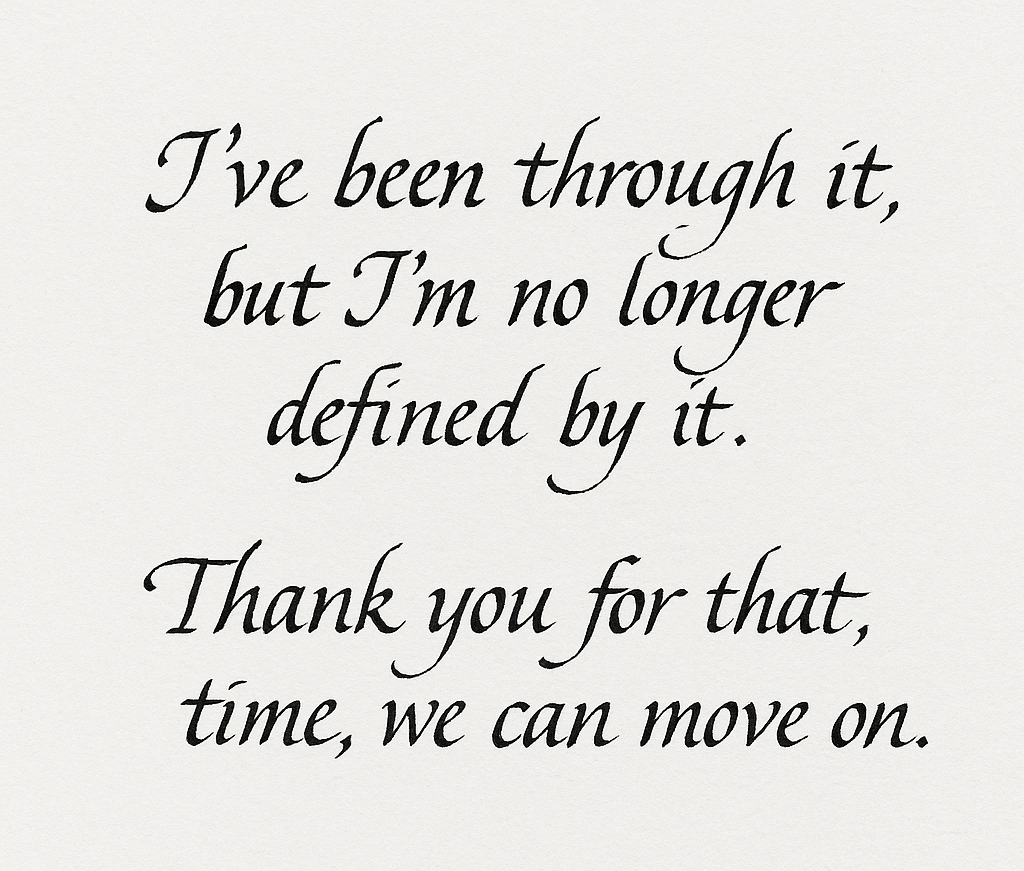
Image Healing: Mandala Stability Guidance 89
A conditioned reflex is like a worn-out record; the needle always skips in the same spot, making a jarring sound. Imagine the mandala as the grooves of that record. In the past, you were always forced to slide into that dark groove (fear response). But now, gaze at the blank areas in the mandala that haven't been colored. Those are new tracks, unwritten music. Imagine your consciousness gently lifting the needle, stepping over the old scratch, and gently landing on the smooth new track beside it. Although it will feel awkward at first, there will be no noise, only peace.
Traditional mandalas typically feature a harmonious and intricately varied circular structure, symbolizing the wholeness of the universe and the cycle of life. By viewing mandala images, individuals can perceive inner peace and strength, achieving psychological balance.
◉ Gaze at the mandala twice, while taking deep breaths.
Lesson 89: Visual Resetting of Automatic Responses
① Guiding drawing actions:Draw a repeating wavy pattern to symbolize fear of automation; let the wavy pattern gradually flatten out to symbolize "retraining".
② Guiding drawing actions:Adding stable straight lines or squares to a corner of the image conveys the message that "I can establish a new order from chaos."
Please log in before submitting your drawings and feelings.
○ 89. Conditioned Reflexes and Learning Fears: Journal-Based Guidance Suggestions
① In which event or period of my fear was I first "learned"?
② What did I do that further intensified my fear?
③ Can I do something a little different today to let my brain learn new responses?
④ Rate the intensity of your fear today on a scale of 0–10 and write down the triggers that caused it.
Please log in to use.
Fear can be learned, and it can also be relearned. Every experience of safety is a gentle counter-training of past automatic reactions.
 EN
EN  ZH
ZH  ES
ES  FR
FR  JA
JA