

Lesson 953: How to Distinguish Between Transient Stress and Long-Term Trauma Response
Duration:75 minutes
Topic Introduction (Overview):
Following a sudden event, the body and mind activate strong protective mechanisms: increased alertness, insomnia, crying, numbness, palpitations, and confused thoughts. These are mostly short-term stress responses and do not automatically evolve into long-term trauma. This lesson will teach you to identify which reactions gradually decrease over several days, representing a natural systemic reset; and which experiences persist, worsen, or spread over several weeks, indicating they are solidifying into a long-term trauma pattern. Identifying these changes is not about denying your suffering, but about understanding that when you can see the direction of change, you can find more precise support for yourself. Stability is not about recovering overnight, but about gradually allowing your body and mind to return to a manageable rhythm.
▲ AI Interaction: Am I experiencing a short-term fluctuation, or am I developing long-term trauma?
Reflect on the three most prominent reactions from the past 72 hours: an emotion, a physical change, a recurring image or thought. Simply write them down; do not judge.
The characteristic of short-term stress is that it "comes like a wave and then slowly recedes"; if you notice that the symptoms are getting better day by day, it means that the system is working hard to repair itself.
Conversely, if these reactions persist for more than two weeks, become more intense, more chaotic, or gradually interfere with your life, it may mean that you are experiencing a long-term traumatic reaction and need deeper support and intervention.
Stability begins with awareness. When you put your experiences into words, they are no longer the huge shadows pressing down on your body.
Click the button below to work with AI to identify the recovery trajectory and find the most suitable support method for you at this time.
○ Music Therapy: Identifying the Recovery Trajectory of Body and Mind in Rhythm
Play a slow, steady melody and let your breathing gently match the rhythm. During the brief period of stress, you may still feel tense at the beginning of the music, but after a few minutes you will feel relaxed or slightly calmer, which is a natural recovery signal.
If you find yourself repeatedly drawn into terrifying images while listening to music, experiencing a rapid heartbeat, and unable to stay in the present moment, this is often a sign of long-term trauma.
During the chorus, whisper to yourself: I am learning to discern, not forcing myself to get better.
🍵 Aromatherapy Drinks
Recommended drinks:Lavender flower infusion drink.
The volatile oil properties of lavender can soothe an overactive nervous system and support a return to a sense of security.
Directions: Take 1–2 teaspoons of dried lavender flowers and steep in 90°C hot water for 5 minutes.
If you feel the tightness in your chest gradually relax while drinking, this is often a sign that the short-term stress is naturally decreasing.
○ British Vegetarian Bowl: Warm Vegetable and Lentil Bowl
The combination of warm vegetables and lentils can stabilize energy fluctuations and help restore blood sugar balance and fatigue caused by acute stress. Its mild flavor makes it easier for the nervous system to "lower its guard."
Gentle and easy to digest
emotional support
Healing Recipes
/home2/lzxwhemy/public_html/arttao_org/wp-content/uploads/cookbook/kao-hong-shu-pei-hei-dou.html(Please confirm that the file has been uploaded: kao-hong-shu-pei-hei-dou.html)
🎨 A mandala is not about drawing something, but about observing it.
Dream Mandala · Mi Xiangwen 953
Please gaze at the center of the mandala, rather than drawing it.
If you are experiencing a brief period of stress, you will find that your gaze gradually becomes fixed and your breathing slowly becomes gentle.
If you are in a long-term trauma pattern, you may find yourself frequently looking away and having difficulty settling down, as if the center cannot hold your attention.
No corrections or coercion are needed; simply "watch".
The act of watching itself is a way to return to self-stable existence.

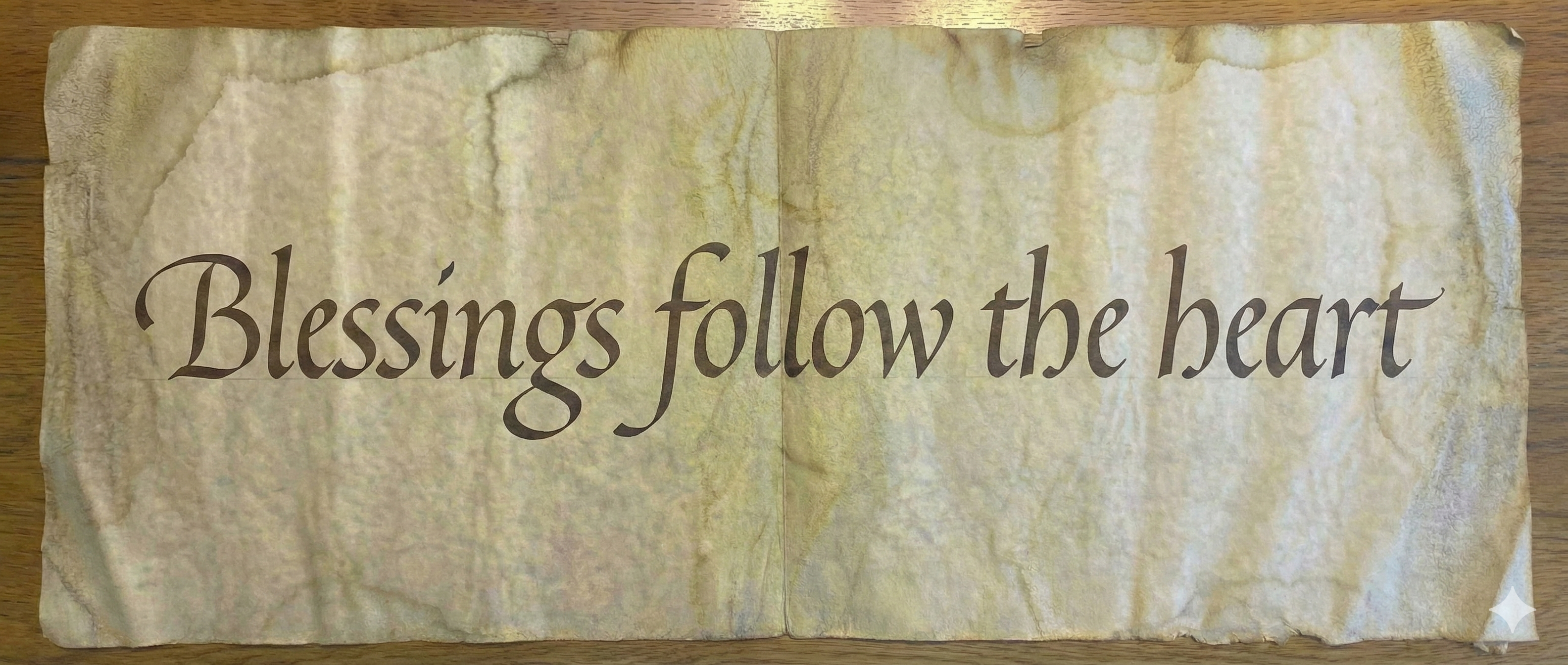
○ Running Script - Writing Practice for a Peaceful Mind
Write sentences:I allowed myself to recover slowly.
The fluidity of running script helps the body relax from stiffness or excessive tension. As you write this sentence stroke by stroke, you are also re-establishing your sense of rhythm.
It is recommended to take three deep breaths before writing, let your shoulders hang naturally, and then begin practicing.
Lesson 953: Identifying Reactions - Drawing Guidance
Objective: To visually record the "trend" of your recent physical and mental fluctuations and identify its stable direction.
Steps: Draw a curve on the paper that goes from high to low, or from chaotic to stable.
If your curve naturally declines or gradually flattens out, this is usually a sign that the short-term stress is improving.
If the lines you draw are constantly being forced to rise and oscillate repeatedly, you may be on the trajectory of a long-term trauma response.
Don't judge, just let the curve tell its story.
Please log in before submitting your drawings and feelings.
○ 953. Log Guidance Suggestions
① Write down the three most obvious reactions you had today (physical/emotional/mental).
② Record whether your condition in the past 72 hours is "gradually declining" or "gradually spreading".
③ Write down something that makes you feel safer: a person, a space, a smell, or a movement.
④ If today is difficult, allow yourself to "only complete the necessary tasks." Stability is always more important than perfection.
Please log in to use.
Through this lesson, you will be able to more clearly understand whether your mind and body are moving towards recovery or experiencing cumulative traumatic reactions. Distinguishing between these is the first step in healing.
 EN
EN  ZH
ZH  ES
ES  FR
FR  JA
JA