

Lesson 960: Self-Observation and Stress Assessment Log
Duration:75 minutes
Topic Introduction (Overview):
Recovery from acute stress is not linear; it's like the tide: sometimes it recedes, sometimes it rises, and sometimes it changes direction in unpredictable ways. This course will guide you into a state of "stable self-observation" and teach you how to record your daily emotional fluctuations using a stress assessment log. Self-observation is not "monitoring" or forcing yourself to stay alert, but a gentle way of internalizing and organizing, allowing you to find traceable rhythms in chaotic situations. Recording stress levels, physical reactions, triggers, and self-care actions is not for scoring, but for seeing patterns, so that when a low point occurs in the future, you won't be confused or blame yourself: you know this state has happened, and you know you can get through it. The log is a mental map that helps you track your recovery path, allowing you to gradually regain a sense of control and direction in your daily life.
▲ AI Interaction: Recording is a way to see yourself
Please write down your three strongest stress signals today: Is it chest tightness? Insomnia? Difficulty concentrating? Or mood swings?
Write down another moment that makes you feel slightly relieved, no matter how small: a warm shower, a friend's message, or a deep breath while lying in bed.
AI will help you identify: what are the trigger points? What are the recovery points? What energy do you need to protect?
Click the button below to build your own "stress observation model" with AI.
○ Music Therapy: Recording the day's emotional ups and downs with rhythm
Please choose a piece of music with a steady and gentle rhythm, and let your breathing align with the rhythm. Music will make it easier for you to "hear" your body's fatigue, tension, and relaxation.
Use music as a recorder: When the melody becomes smooth, does your emotion also become smooth? When the tempo speeds up, does your body become more sensitive? Music can help you extract the stress signals of the day.
In conclusion: Music acts as a background light in your personal journal, allowing you to see your own state more clearly.
🍵 Aromatherapy Drinks
Recommended drinks:Rose & Rosemary: A refreshing and stabilizing blend.
Roses stabilize emotions, while rosemary enhances mental clarity, making this a particularly suitable aromatic combination for "Record Day".
Instructions: Steep 1 teaspoon of rose petals and 1 teaspoon of rosemary leaves in hot water for 5–8 minutes.
While drinking, try to recall the most tense moment of your day and let your breath slowly relax in the warmth.
○ British Vegetarian Therapy: Soft Grain Pot
In the British wellness tradition, soft, warm, and easily digestible grains are the perfect complement to "record and organize day." A multigrain porridge made with oats, pearl barley, and diced carrots can quickly replenish energy in a state of mild fatigue after stress, allowing the brain to process the day's mental messages.
Stable energy
Clear thinking
Healing Recipes
/home2/lzxwhemy/public_html/arttao_org/wp-content/uploads/cookbook/kao-hong-shu-pei-hei-dou.html(Please confirm that the file has been uploaded: kao-hong-shu-pei-hei-dou.html)
🎨 Mandala Stability Viewing · Mi Xiangwen 960
Today, we don't need to draw, we just need to look.
Gazing at the center of the mandala, let your breathing find a slow rhythm within the order of the graphic.
As the lines rotate, overlap, and spread, they seem to record your day's chaos, gently settling it down.
Mandala is not about completion, but rather an "inner tracking speed".
When you feel the world moves too fast and the pressure is too much, please return to this act of observation—
Watch, watch, and you'll find yourself slowly returning to your body.

○ Running script - Inner observation writing practice
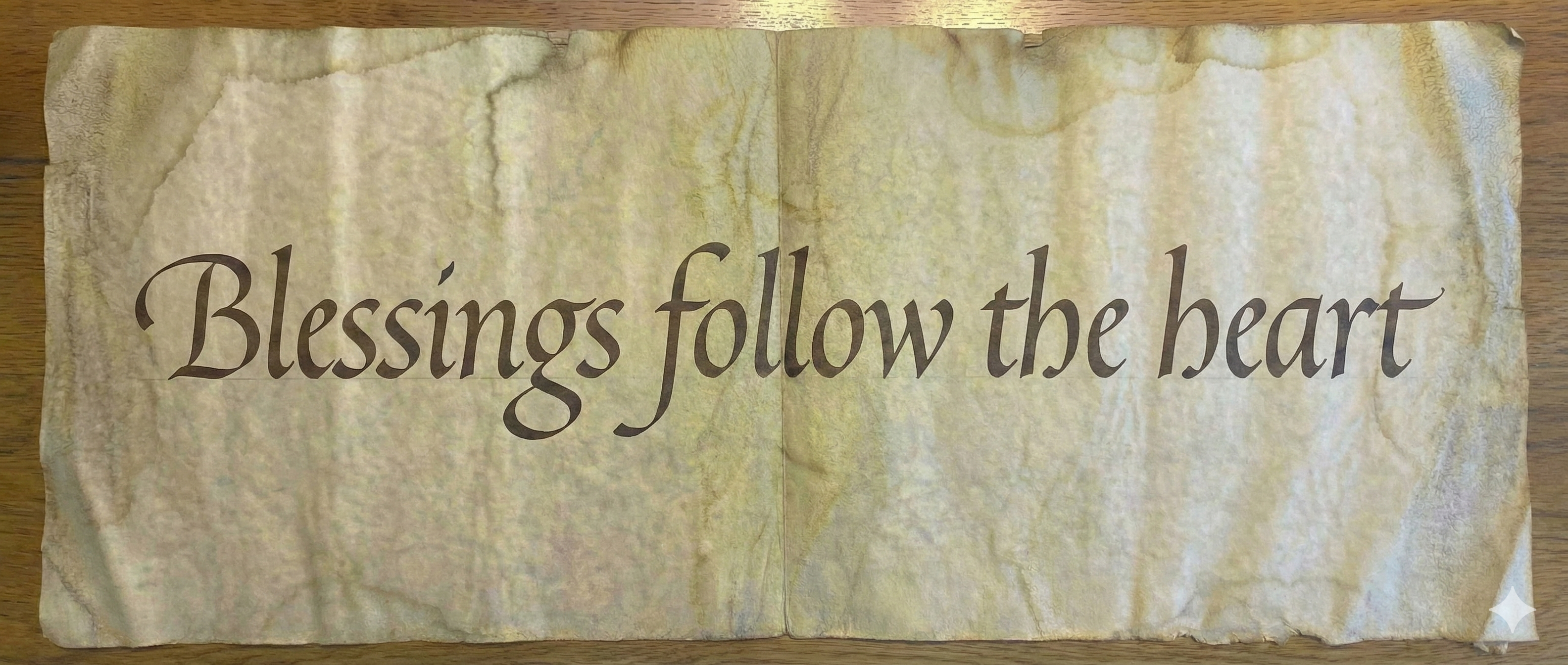
Write sentences:I am listening to my own state of mind.
The flowing yet powerful lines of running script make it ideal for recording one's feelings. When writing this sentence, keep your hand relaxed, let the brushstrokes extend naturally, and let your inner observations be revealed through the lines.
Writing slowly allows your thoughts to slow down; writing steadily allows you to release pressure.
Lesson 960: Mental Journal and Drawing Guidance
Objective: To transform stress from "difficult to define" to "visible".
Steps: Draw a circle and fill it with a color that represents your stress level today (dark, light, warm, or cool are all acceptable).
Then draw two soft lines outside the circle to symbolize your self-care actions.
The image will tell you: you are not overwhelmed by stress; you still have boundaries, you can breathe, and you have space.
Please log in before submitting your drawings and feelings.
○ 960. Self-Observation & Journal Guidance Suggestions
① Write down your stress level for today (1–10).
② Write down two events that increased your stress (no need for lengthy descriptions, just keywords).
③ Write down at least one "recovery point": a moment of relaxation, supportive interaction, or a stable rhythm.
④ Write down a summary for today: I am learning how to understand myself.
Please log in to use.
A journal isn't a task, but rather your inner map. May you see yourself gradually recovering through your records.
 EN
EN  ZH
ZH  ES
ES  FR
FR  JA
JA