

Lesson 965: Rebuilding Trust After Sudden Stress
Duration:75 minutes
Topic Introduction (Overview):
When a sudden event shakes your sense of security, what's often shattered first isn't the emotion itself, but rather "trust"—trust in others, trust in the environment, trust in the future, and even trust in yourself. You might begin to doubt whether you can still judge safety, whether the people around you are reliable, and whether the world might collapse again at any moment. Trust isn't an abstract concept, but the structural foundation of psychological stability; when it breaks, all reactions become amplified and heightened. This lesson will gently guide you to understand that your vigilance, doubt, and withdrawal aren't due to a "fragile heart," but rather the brain's natural expansion of risk response after a shock.
Rebuilding trust isn't about forcing yourself to "recover immediately," nor is it about pretending nothing happened. It's about reassessing the world through subtle clues—verifiable facts, repeatable experiences, and small interactions—gradually allowing yourself to feel grounded and connected again. A mandala isn't about drawing something; it's about observing—observing how you reach out again, reconnect, and reassess, and how you mend your broken inner structure instead of forcing it to forget. Trust won't return overnight, but it will regrow through your slow, persistent efforts.
▲ AI Interaction: Witnessing the Moment When Trust Is Shaken
After an unexpected event, you may become more sensitive, more suspicious, and less able to rely on others, and that is not your fault.
Please write down a situation you most recently felt "unbelievable": What happened? What was your first reaction?
Try asking yourself: Is this a heightened awareness stemming from the facts? Or is it just a lingering inertia after being startled?
You don't need to force yourself to trust; just acknowledge that your trust has been affected and see what that impact looks like.
Click the button below to help AI create your "trust map".
○ Loosening the Walls of the Heart: Music Therapy
Please choose a piece of music that makes you feel "not pushed along," something that is not rushed or oppressive, like a gentle companion.
Practice subtle “outward connections” in music: remember someone you once relied on, a memory of feeling safe, or a place that makes you relax.
It's not about making you trust immediately, but about letting the music gently remind you that "I was also caught somewhere before."
The restoration of trust often begins with the re-emergence of this small feeling.
🍵 Chinese Black Tea: Warmth Brings Back Trust
Recommended teas:Lapsang Souchong.
The warming qualities of Lapsang Souchong can help a frightened body gradually return from tension and "freezing" to a more reassuring state. The sweet aftertaste of black tea can create a slight sense of calm in the chest, like a gentle signal to the body: you can slowly approach the world, instead of hiding in your shell.
usage:Steep 3 grams of tea leaves in hot water at 85–90℃, and sip slowly after brewing. It is recommended to drink this before writing reflections or doing connection exercises, so that the rhythm of trust begins in the body.
○ Chinese Food Therapy: Yam, Red Date, and Millet Porridge
Yam nourishes the spleen and replenishes qi, millet strengthens the spleen and calms the mind, and red dates nourish the blood and heart. This combination is the best for the body to repair itself when the trust system is damaged after stress. The warmth and soft texture of porridge can awaken a sense of being cared for, helping you to be less easily hurt or alienated when facing others and the world.
Healing Recipes
/home2/lzxwhemy/public_html/arttao_org/wp-content/uploads/cookbook/shanyao-hongzao-xiaomi-zhou(Alternatively, you could try relaxed="1" or use an existing filename.)
🎨 Mandala Stability Viewing · Mi Xiangwen 965 · Safe Level
Look at the outermost circle of the mandala, the widest circle, symbolizing "the possibilities of the environment." The next inner circle represents "the boundaries of relationships," a buffer zone between you and the world. The central circle represents your current state: you may still be trembling, perhaps not yet ready to approach.
You don't need to understand the meaning of a mandala; simply observe how the layers surround the center: even if the core is not yet stable, the outer layers still provide space. A mandala is not about drawing something, but about observation—observing yourself being protected by layers, observing that you are not facing the world naked, but have the support of the outer layers. Rebuilding trust is not about jumping out of the center, but about allowing yourself to gradually feel the presence of these outer layers.

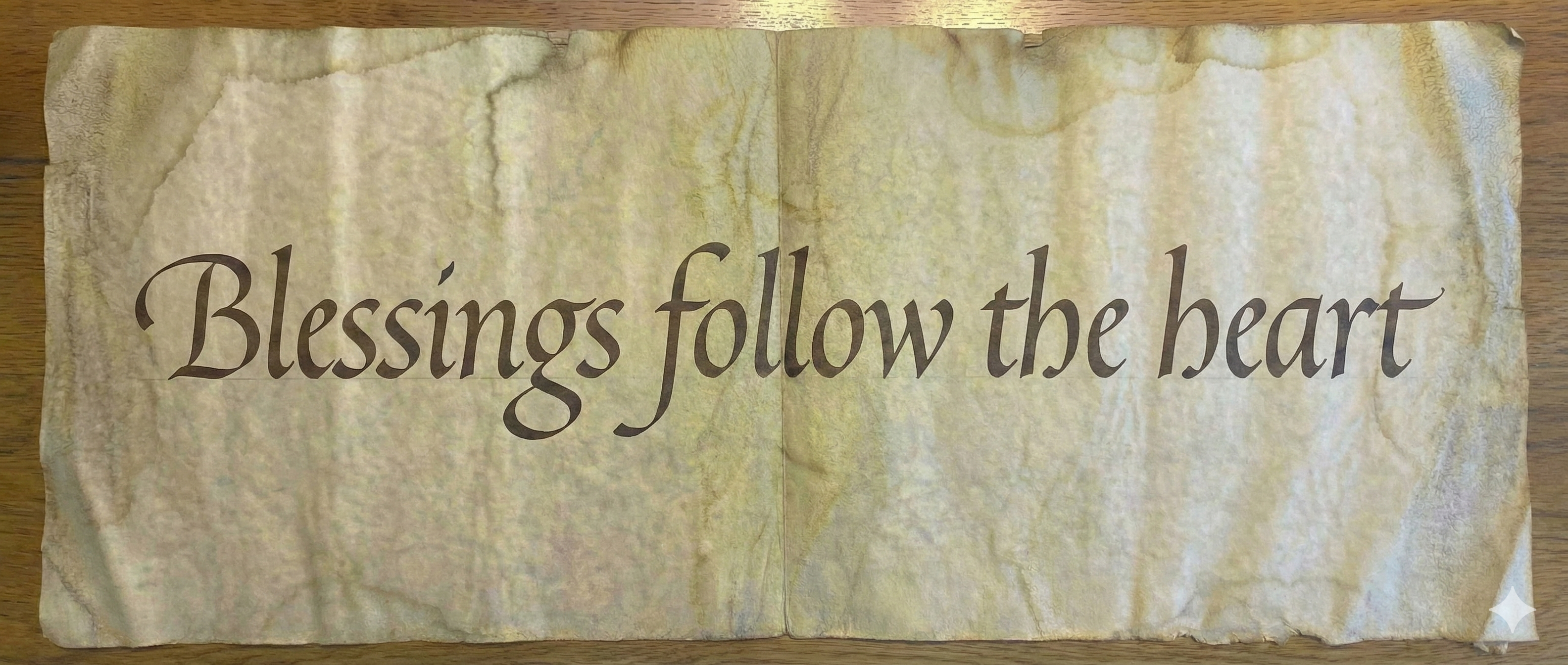
○ Italian Renaissance Humanist Script: A Practice in Writing with Gentle Trust
Write sentences:I am learning to trust again, slowly and safely.
Humanist Script's expansive strokes and gentle curves will accompany you as you practice the rhythm of "approaching slowly." With each stroke, you are telling your brain: trust is not a leap, but a gradual approach; I can be slow, I can be cautious, but I can also reconnect.
Lesson 965: Rebuilding Trust - Guided Drawing
Objective: To externalize the process of "reconnecting with the world" into images.
Steps: Draw a small circle to represent yourself in the present moment; draw three gradually expanding circles around it, representing "personal boundaries," "approachable people," and "the wider world," respectively. Then, draw a thin but continuous path between the small circle and the outer circles. This path is not a straight line, nor does it need to be uniform; it represents the "re-approach" you are building. You don't need to rush to complete the entire path; just see that you are already on the path.
Please log in before submitting your drawings and feelings.
○ 965. Trust Rebuilding After Sudden Stress: Log-Based Guidance Suggestions
① After writing down the events, what do you find hardest to trust again? People? Environment? Yourself?
② Record a recent, small "moment of trust." It could be just a gentle response, a small task being completed, or an action that makes you feel slightly at ease.
③ Write down a small step closer to your comfort zone that you're willing to try today (no need to step outside your comfort zone).
④ Mark your body sensations: Is it tight when you get close? Loose when you pull away? Or the opposite?
⑤ Write a sentence that you would give yourself: "I can take my time."“
⑥ Conclusion: Trust is not a command, but a structure that grows slowly.
Please log in to use.
Trust is not forgetting, but regaining the ability to connect with the world; you are gradually returning to your own power.
 EN
EN  ZH
ZH  ES
ES  FR
FR  JA
JA