

Lesson 967: Managing Anger and Fear in Sudden Stress Responses
Duration:75 minutes
Topic Introduction (Overview):
In sudden stress, anger and fear often occur simultaneously: anger stems from the frustration of being unable to stop the event, while fear arises from the instinctive reaction of "Am I still safe?" These two intertwine, putting the body into a state of heightened alertness: a tightness in the chest, rapid eyes, a fast and heavy heartbeat, and constant flashes of thoughts of escape or retaliation. Anger is not a loss of control, and fear is not weakness; they are both inevitable reactions of the stress response system in protecting you. This course will guide you to identify the "starting points," escalation paths, and buffer points of anger and fear, and teach you how to find a small but solid "pause space" when these two emotions alternate or overlap, pulling you out of your automatic reactions.
We will practice three methods: First, identifying the source of the emotion: is it a "triggered memory" or a "real danger"? Second, regulating the intensity: using breathing, muscle switching, and physical contact to reduce alertness. Third, developing the ability to "remain clear-headed amidst emotions." You don't need to suppress anger or drive away fear, but rather learn not to be swept away when they arise. A mandala isn't about drawing something, but about observing—observing the speed of anger, observing the shape of fear, and moving yourself from the center of the emotional storm to a position where you can stand firm.
▲ AI Interaction: Differentiating Between "Anger Signals" and "Fear Signals"“
Anger pushes outward, fear pulls inward. Please describe the most recent instance where both occurred simultaneously: Where were you? What happened? What was your first physical reaction?
Next, divide the body's reactions into two categories: outward (tense limbs, wanting to leave, wanting to say harsh words) and inward (tightening of the chest, wanting to avoid, sudden silence).
AI will help you organize these two signals into a "reaction map," allowing you to more quickly identify which emotion is driving you next time.
Click the button below to practice distinguishing and regulating anger and fear with AI.
○ Reaction slowdown · Music therapy
Choose a piece of music with a slow tempo but a deep bass, and let the low frequencies act as an "emotional decelerator".
When anger surges outward and fear retreats inward, follow the low-frequency rhythm of your breathing and slowly inhale and exhale, letting your breathing rhythm become the dividing line between you and your emotions.
You don't need to change your emotions immediately; you just need to slow down the "automatic reaction" a little bit—slow enough that you can see it once and be aware of it once.
🍵 Chinese Black Tea: Regulating Mood with Temperature
Recommended drinks:Yunnan black tea.
The thickness and temperature of Yunnan black tea help reduce the agitation of anger and soothe the chest tightness caused by fear. As the tea soup slides down, it's like a warm thread, drawing the upward force downward and gently expanding the feeling of tightness outward.
usage:After brewing, gently inhale the aroma three times, then sip it three times, focusing all your attention on the "path of temperature movement in the body," allowing the taste to become the entry point for the soothing system.
○ Chinese Food Therapy: Lily and Lotus Seed Soothing Porridge
Lily bulbs nourish the lungs and soothe the emotions, while lotus seeds nourish the heart and calm the mind. Both can help stabilize volatile emotions during stress. Anger causes chest tightness, while fear causes stomach constriction. The smooth texture of lily bulb and lotus seed porridge helps the body gradually slow down, reduce alertness, and increase internal feelings of support. It is suitable as a restorative meal at night or after stress.
Healing Recipes
/home2/lzxwhemy/public_html/arttao_org/wp-content/uploads/cookbook/baihe-lianzi-zhou(Alternatively, you could try relaxed="1" or use an existing filename.)
🎨 Mandala Stability Viewing · Mi Xiangwen 967 · The Ring of Dual Emotions
Imagine a mandala where the outer circle expands outward like flames, representing the power of anger; while the inner circle contracts inward like ink drops into water, representing the shape of fear. What you do is not to suppress the flames, nor to disperse the ink, but to observe—to observe how the two forces coexist and how they attract each other.
When you focus on watching, the flames slow down, and the ink's contraction softens. A mandala isn't about drawing something; it's about watching—watching how emotions move within the body, how they gradually transform from chaos into a comprehensible rhythm. You don't have to become powerful immediately; simply regain autonomy through observation.

○ Italian Renaissance Humanist Script: Emotional Regulation Writing Exercises
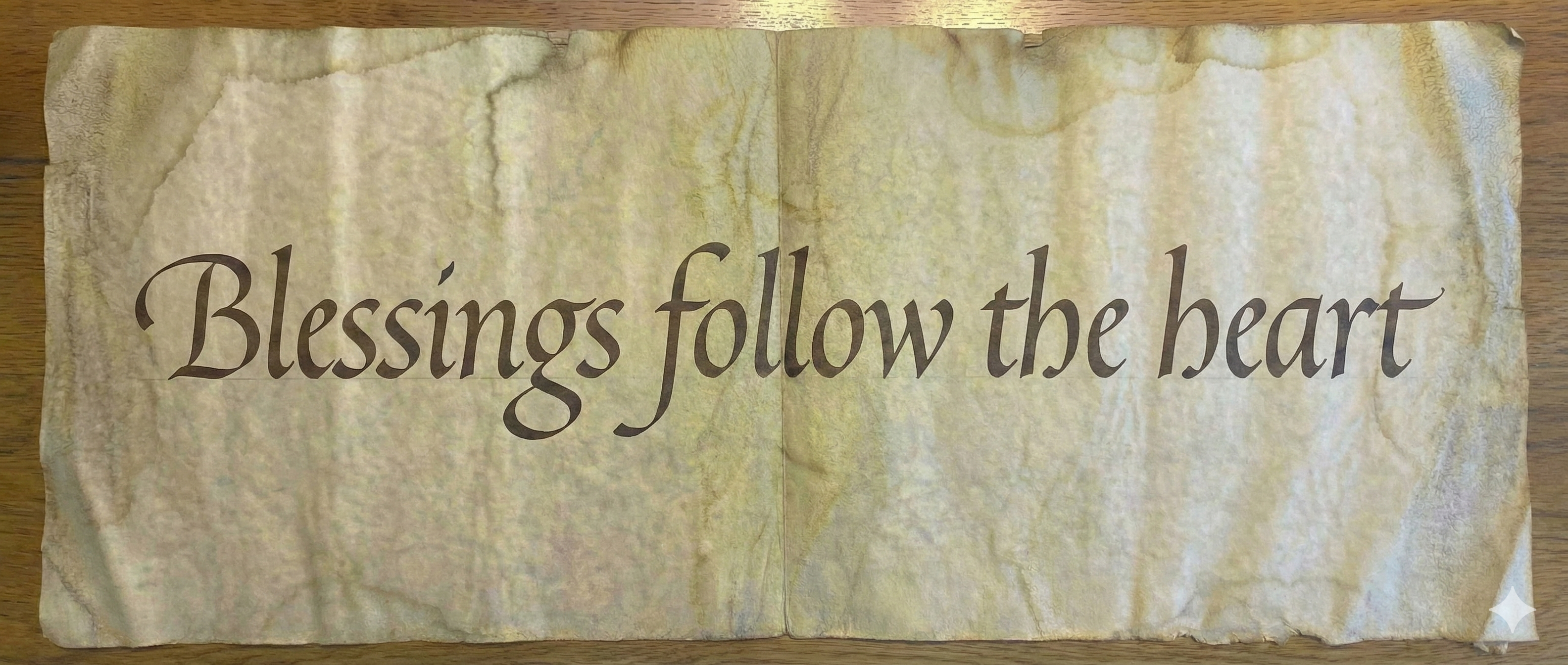
Write sentences:I can pause inside anger and breathe inside fear.
Practice Humanist Script at a slower pace, making each letter feel like a steady step taken in one's emotions. Pause slightly when writing "pause," and exhale as you write "breathe." You are practicing a new ability: to retain choice even in anger and fear.
Lesson 967: The Two Paths of Anger and Fear - Guided Drawing
Objective: To observe how two emotions move within the body.
Steps: Draw a red wavy line spreading outwards on the left side of the paper, symbolizing anger; draw a dark blue vortex contracting inwards on the right side of the paper, symbolizing fear. Then, draw a small circle in the center of the paper and write "Pause". Your task is not to make the red and blue disappear, but to make "pause" a bridge between them.
Please log in before submitting your drawings and feelings.
○ 967. Managing Anger and Fear: Journaling Guidance Suggestions
① What was the most recent situation in which you "felt both anger and fear at the same time"? Please describe it in detail.
② What is your first reaction to anger? What is your first reaction to fear? (Actions, thoughts, and physical sensations are all acceptable)
③ Write down three "pause actions" that you can use when you feel emotional.
④ Record one successful pause experience from today, even if it's only for 1 second.
⑤ Write a sentence to support yourself: "The simultaneous occurrence of two emotions does not mean that I am incompetent, but that I am trying to protect myself."“
Please log in to use.
When anger and fear no longer push you to extremes, but are two forces you can easily see, you truly begin to have control over your emotions.
 EN
EN  ZH
ZH  ES
ES  FR
FR  JA
JA