

Lesson 970: The Difference Between Acute Stress and PTSD
Duration:75 minutes
Topic Introduction (Overview):
Many people, after experiencing a sudden event, immediately search online for "Do I have PTSD?", but in fact, there is a connection between acute stress response and post-traumatic stress disorder, but also a clear distinction. Acute stress is more like an "emergency brake" on the mind and body in an extreme situation: increased alertness, rapid heartbeat, insomnia, recurring flashbacks, and significant mood swings—these reactions that occur in a short period are mostly normal self-protective mechanisms. PTSD, on the other hand, occurs when a long time has passed, but the trauma seems to be stuck in the nervous system, continuously interfering with your sleep, dreams, emotions, and daily life.
This course will help you understand the differences between acute stress and PTSD, from the time span, symptom persistence, and degree of functional impairment to the brain and body's adaptation process. You will learn how to make an initial assessment that "I may still be in the acute phase" instead of hastily labeling yourself; you will also know in what situations you need to seek professional evaluation as early as possible. Mandala drawing is not about drawing something, but about observation—observing the rhythm, evolution, and lingering of reactions, thereby gaining a gentler understanding of yourself in this moment, rather than hastily defining "I'm broken."
▲ AI Interaction: What stage am I at now?
Sometimes you're not "sick," but rather experiencing the natural fluctuations that follow a dramatic event.
Please try to write down: Approximately how much time has passed since the event occurred? During this time, how have your sleep, dreams, startle responses, and avoidance behaviors changed? Have they gradually weakened, fluctuated in quality, or become more entrenched?
AI will help you analyze which symptoms are closer to acute stress and which may indicate the need for further evaluation, rather than providing a professional diagnosis.
Click the button below to draw a psychological timeline "from the event to now" with AI.
○ Differentiated Stages of Music Therapy
Choose a piece of instrumental music that has a slightly tense first half and gradually softens in the second half.
In the first half, allow yourself to recall the most obvious stress responses of the past few days; in the second half, focus only on your breathing and the physical sensations of the present moment.
Through this musical exercise of "first seeing the tension, then returning to the present moment," you are using sound to remind yourself: time is moving forward, and so am I.
🍵 Chinese Black Tea: Let Time Flow Slowly
Recommended drinks:Qimen black tea.
Keemun black tea has a delicate and lingering aroma, and a smooth, non-irritating taste. For people in the transitional phase after acute stress, a cup of Keemun black tea at a moderate temperature will not aggravate palpitations like high-caffeine drinks, but will also give you a feeling of "time flowing slowly," making you realize that the present moment is different from when the event occurred.
usage:Take 3 grams of Qimen black tea, brew with hot water at 85–90℃, and let it steep for 2–3 minutes. It is recommended to drink it in a relatively quiet moment, and while sipping the tea, silently repeat to yourself: I am slowly returning from "the past" to "the present".
○ Chinese Food Therapy: Yam and Lotus Seed Soothing Porridge
Post-stress symptoms often include poor appetite, gastrointestinal tension, and decreased sleep quality. Yam strengthens the spleen, and lotus seeds nourish the heart and calm the mind. When cooked into porridge with a small amount of rice, it is easily digestible and gently nourishes the body, helping it gradually return to a stable state from high stress. It's not a strong "medicinal" approach, but rather a daily, sustainable form of care.
Healing Recipes
/home2/lzxwhemy/public_html/arttao_org/wp-content/uploads/cookbook/shanyao-lianzi-zhou(Alternatively, you could try relaxed="1" or use an existing filename.)
🎨 Mandala Stability Viewing · Mi Xiangwen 970 · Present Moment and Aftermath
Stare at the center of the mandala and imagine it as "the moment the event occurred": sharp, sudden, and bright. Then slowly move your gaze to the outer layers of patterns—those are the days that followed, each circle becoming less glaring, yet still carrying an echo.
You don't need to immediately determine whether "this is acute stress" or "it's already PTSD." Just observe: Does the light gradually soften? Are the shapes still fixed in a certain circle? A mandala is not about drawing something, but about observing—observing how you expand outward from the center, observing how time settles in the image, thereby learning to distinguish: which are the necessary reactions at the time, and which are parts that have lingered too long and need to be gently cared for.

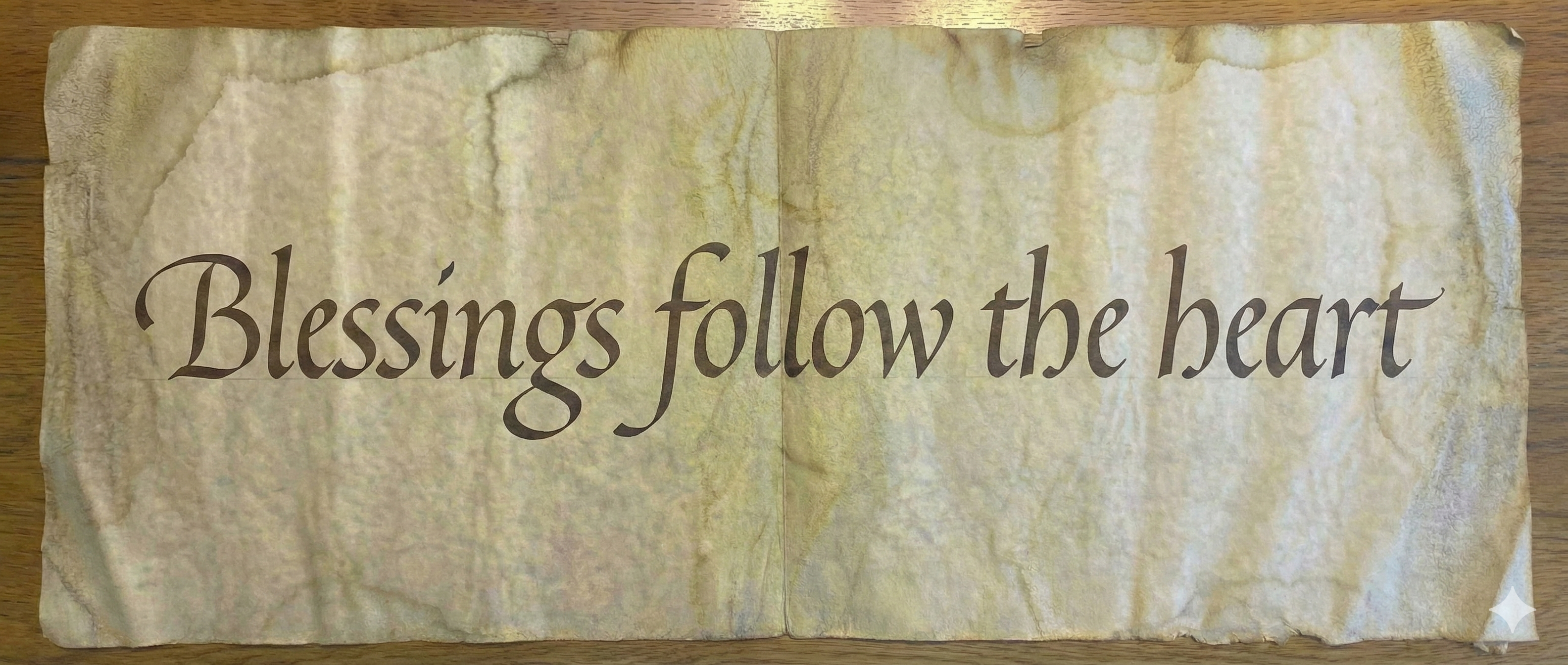
○ Italian Renaissance Humanist Script: Writing Exercises to Distinguish Between the Present and the Past
Write sentences:I can see the difference between now and the past.
When writing Humanist script, make the spacing between "now" and "the past" slightly wider to remind yourself that the present and the past do not overlap. The arc of each letter is like you gently tracing a dividing line—the past happened, but I am breathing and sitting here right now.
Lesson 970: Acute Stress and PTSD - Art-Guided Learning
Objective: To use images to distinguish between "instantaneous impact" and "long-term stay".
Steps: Draw a small, bright dot on the left side of the paper to represent the impact of the event; draw a long horizontal axis on the right side to represent the time that follows. If you feel your reaction is mainly concentrated around the left dot, add color and texture to that area; if you find yourself still stuck at the far end of the timeline, draw that area as repeating ripples. You don't need to evaluate; just draw "where I feel I am" so your eyes can see it first.
Please log in before submitting your drawings and feelings.
○ 970. Acute Stress and PTSD: Journal-Guided Recommendations
① Approximately how much time has passed since the event occurred? Write it down using the date and number of days.
② During this period, have your nightmares, flashbacks, and startle reactions decreased, fluctuated, or become more stable? Write down three specific examples.
③ Which reactions made you feel "this still seems like normal protection"? Which ones made you start to worry "am I trapped?" Record them separately.
④ Write down a reminder for yourself: I can take these reactions seriously, but I'm not in a hurry to label myself.
⑤ If you find that your symptoms have lasted for more than a month and are seriously affecting your life, please write down the channels or names of people you are willing to seek help from as a protection plan for yourself.
Please log in to use.
Distinguishing between acute stress and PTSD is not about scaring yourself, but about taking better care of yourself. May you alleviate your fear through understanding and regain control through observation.
 EN
EN  ZH
ZH  ES
ES  FR
FR  JA
JA