

Lesson 973: An Initial Exploration of Mindfulness and Awareness Practices
Duration:75 minutes
Topic Introduction (Overview):
After acute stress, the mind is often surrounded by chaotic images: sometimes unstoppable replays, sometimes a sudden emptiness or a strong sense of "unreality." Mindfulness is not about forcing yourself to be calm, but rather inviting you to return to a small point in the present moment: a breath, a physical sensation, a sound. This ability to return to the present moment helps the brain switch from "threat mode" to "perception mode" in the early stages after acute stress, allowing you to gradually regain a sense of inner control.
This lesson will guide you through the most basic and gentle form of mindfulness—being aware of your breath, observing bodily sensations, and recognizing arising thoughts without being led astray by them. The focus is not on "performing well," but on allowing yourself to observe internal changes without judgment. A mandala is not about drawing something, but about observation: observing the rise and fall of your breath, observing the coming and going of thoughts, observing how your body gradually loosens in awareness. You will learn how to find your own "place to rest" even when the storm has not completely passed.
▲ AI Interaction: The First Step to Present Awareness
Close your eyes for a moment and ask yourself: What is the first feeling I notice right now? Is it the tightness in my chest, the heaviness in my back, or the soreness behind my eyes?
Now, shift your attention to a relatively neutral sensation, such as the temperature of the back of your hand, the feel of your feet on the ground, or the edge of your clothes lightly touching your skin.
No need to change it, no need to analyze it, just see it.
Click the button below to let AI accompany you in a 2-minute "present practice".
○ Mindfulness and Music Awareness Practice
Choose a minimalist, repetitive piece of music with no strong rhythmic changes, such as a gentle piano or a single-frequency ambient sound.
Exercise: With your eyes closed, focus your attention on the subtlest changes in the background sound. Don't "think about the music," but observe yourself: "Am I being carried away by the sound?" "Is my breathing changing as a result?"“
If you find your mind wandering, gently bring yourself back to the sound itself. Each act of returning to that state is the core of mindfulness.
🍵 Chinese Green Tea: A Mindful and Relaxing Tea Drinking Experience
Recommended drinks:Huangshan Maofeng tea.
Huangshan Maofeng tea has a mild aroma and a refreshing taste. It can gently refresh the mind without stimulating the heart rate, making it an ideal companion for mindfulness practice after acute stress. When brewing tea, consciously slow down your movements: observe the tea leaves unfurling, smell the aroma, and sip gently, making the tea drinking itself a "mindfulness exercise." You are not just drinking tea, but observing how the tea enters your body, how it is absorbed, and how it warms your chest.
usage:Take 2 grams of tea, rinse it with a small amount of 80℃ water for 10 seconds, then add more water and steep for 1–2 minutes. Drink it in small sips, keeping all your attention on the path of "tea entering the body".
○ Chinese Food Therapy: Millet and Pumpkin Porridge
Both millet and pumpkin are traditionally believed to have calming, stomach-soothing, and sleep-aiding properties, making them ideal for consumption after acute stress or during the initial stages of mindfulness training. Their warm, soft texture helps the brain transition from a state of heightened alertness back to its natural state, promoting a sense of security. Before consuming, please perform a 10-second "observation exercise": observe the color, smell the aroma, and feel the warmth, then gently put it in your mouth.
Healing Recipes
/home2/lzxwhemy/public_html/arttao_org/wp-content/uploads/cookbook/xiaomi-nangua-zhou(Alternatively, you could try relaxed="1" or use an existing filename.)
🎨 Mandala Stability Viewing · Mi Xiangwen 973 · Breathing Light Spots
Imagine a faint point of light at the center of the mandala in front of you, its brightness changing with your breath: expanding slightly as you inhale and gently receding as you exhale. Don't try to magnify it; simply observe its flow. Each concentric circle outside the point of light represents your thoughts: coming and going, needing neither obstruction nor pursuit.
A mandala is not about drawing something, but about observing—observing how your breath moves within you, observing how thoughts arise and fall, observing how you gradually quiet down with each breath. You don't need to control it, you just need to see: this is the initial, gentlest form of mindfulness.

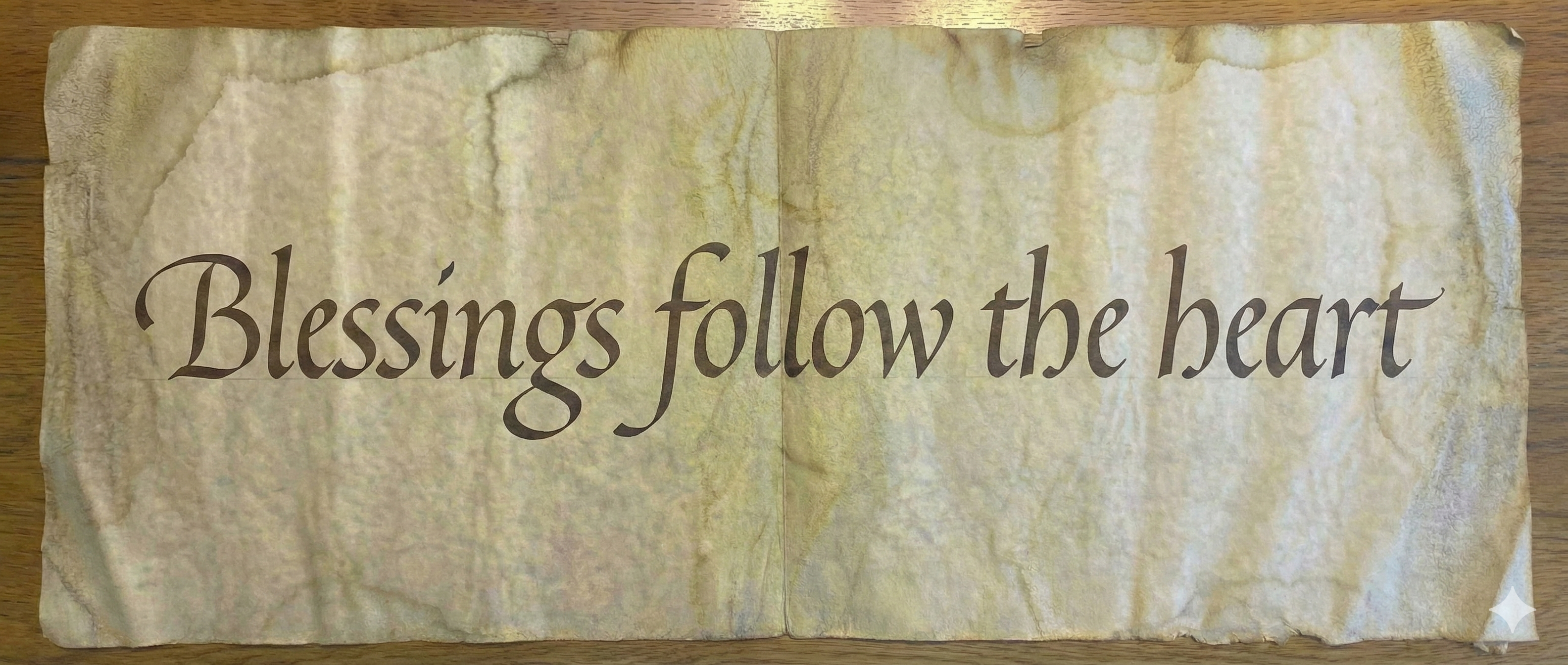
○ Italian Renaissance Humanist Script: Practice Writing the Next Sentence
Write sentences:I return to this moment.
The rounded and expansive nature of Humanist Script is perfectly suited to the theme of "gently returning to the present moment" in mindfulness practice. When writing, let each letter feel like an extension of a breath: inhale when writing "I"; exhale slowly when writing "return"; let your shoulders naturally drop when writing "moment". The act of writing itself is a process of immersing oneself in the present moment.
Lesson 973: Mindfulness and Awareness - Guided Drawing
Objective: To concretize the "present moment" and transform abstract mindfulness experiences into visual images.
Steps: Draw a small dot of light in the center of the paper, symbolizing the present moment; then draw three to five concentric circles outwards, representing thoughts, bodily sensations, and emotional fluctuations. Finally, leave a blank space on the outermost circle, symbolizing "I can choose to stop here." When observing, don't think about whether it "looks good or not," but rather feel whether your breathing changes as you view the image.
Please log in before submitting your drawings and feelings.
○ 973. Mindfulness and Awareness: Suggestions for Journaling Guidance
① What are the most noticeable bodily sensations today? Write down three.
② What type of thought occurred to you most frequently today? Worry? Blankness? Anxiety?
③ Was there a moment today when you realized, "I am in the present moment"? Please write it down.
④ When you focus on your breathing, does your body undergo even the smallest changes, such as 1%?
⑤ Set aside 3 minutes for tomorrow's mindfulness practice: breath, sound, touch, anything is fine.
Please log in to use.
Mindfulness is not about pursuing perfection, but about finding a moment to stop in the midst of chaos—a moment you deserve.
 EN
EN  ZH
ZH  ES
ES  FR
FR  JA
JA