

Lesson 977: Daily Strategies for Sustained Recovery
Duration:75 minutes
Topic Introduction (Overview):
Acute stress reactions don't disappear immediately after the event. Many people experience a brief period of stability followed by a return of rapid heartbeat, startle reflexes, irritability, emptiness, numbness, and hypervigilance, mistakenly believing, "Am I not good enough?" or "Am I back to square one?" This lesson aims to help you understand that sustained recovery is not a linear process, but a gentle, iterative one. What you need is not "just hang in there," but a replicable, sustainable, and practical daily strategy to allow your nervous system to gradually stabilize in real-life situations.
We will guide you in establishing the "four basic pillars" of stress recovery: a stable rhythm (breathing and sleep), micro-actions (small and consistent behaviors), a supportive environment (reduced stimulation), and self-reflection (observation without blame). You will also learn how to utilize methods such as "grounded movements, sensory anchors, thermotherapy, and predictable mini-processes" to ensure that recovery is not based on willpower but on structural support. Mandalas are not about drawing anything, but about observation—observing how you regain a sense of control through small daily movements, watching your body gradually return to its own rhythm.
▲ AI Interaction: Create Your "Mini Recovery Checklist"“
Please select the type of support you need most today: physical, emotional, sleep, or focus.
AI will help you generate a recovery item that can be completed in 5 minutes, such as: taking 3 deep breaths, washing a cup of hot water, walking for 2 minutes, or writing a sentence to record your emotional temperature.
Recovery is not a big effort, but a series of small and gentle steps toward recovery.
Click the button below to let AI help you develop a "5-minute recovery strategy".
○ Daily Rhythm & Music Coordination Exercises
Please choose a piece of music that is gentle, has a clear rhythm, and does not involve strong emotional fluctuations.
The task is simple: synchronize your breathing rhythm with the tempo of the music.
You don't need to relax; just establish a "synchronous relationship" between your body and the music. This is a key step in rebuilding a sense of security.
🍵 Chinese Green Tea: A Companion for a Calm and Refreshing Aroma
Recommended drinks:Biluochun tea (clear and soft, suitable for the process of the nervous system from tension to relaxation).
Sustained recovery doesn't require strong stimulation; a "gentle awakening" is more important. The delicate aroma and light taste of Biluochun tea can help you slightly lift your spirits from lethargy, emptiness, and fatigue, without causing excessive excitement like coffee or strong tea. It's an excellent companion tool for your "recovery routine strategy."
usage:Take a small amount of tea leaves, add water at around 80℃, and sip it slowly, letting the aroma linger in your mouth for a moment, experiencing a slight boost and a sense of calm at the same time.
○ Chinese Food Therapy: Millet and Red Date Soothing Porridge
Millet replenishes qi, red dates nourish blood, and the soft texture of the porridge provides a "digestible sense of security." During a long recovery period, the body is often "over-consumed," and this gentle and nourishing porridge is perfect for quietly replenishing energy in your daily life, stabilizing the fragile nervous system, and allowing you to move on to the next step.
Healing Recipes
/home2/lzxwhemy/public_html/arttao_org/wp-content/uploads/cookbook/feng-tang-jiang-ning-meng-yin.html(Please confirm that the following has been uploaded: feng-tang-jiang-ning-meng-yin.html)
🎨 Mandala Stability Viewing · Mi Xiangwen 977 · Rebuilding the Rhythm Ring
Imagine a mandala unfolding before you: at its center is a slowly pulsating point of light, symbolizing the rhythm you are rediscovering. The outer ring is not a dense pattern, but rather concentric circles of smoothly spreading ripples, each circle softer and more serene than the last.
You don't need to draw it, just watch—watch how the ripples spread outwards, watch which circle best matches your current breath, watch how the rhythm naturally emerges without you forcing it. A mandala isn't about drawing something, but about watching—watching your revitalizing life force, watching how the small, daily moments of stability accumulate into greater power.

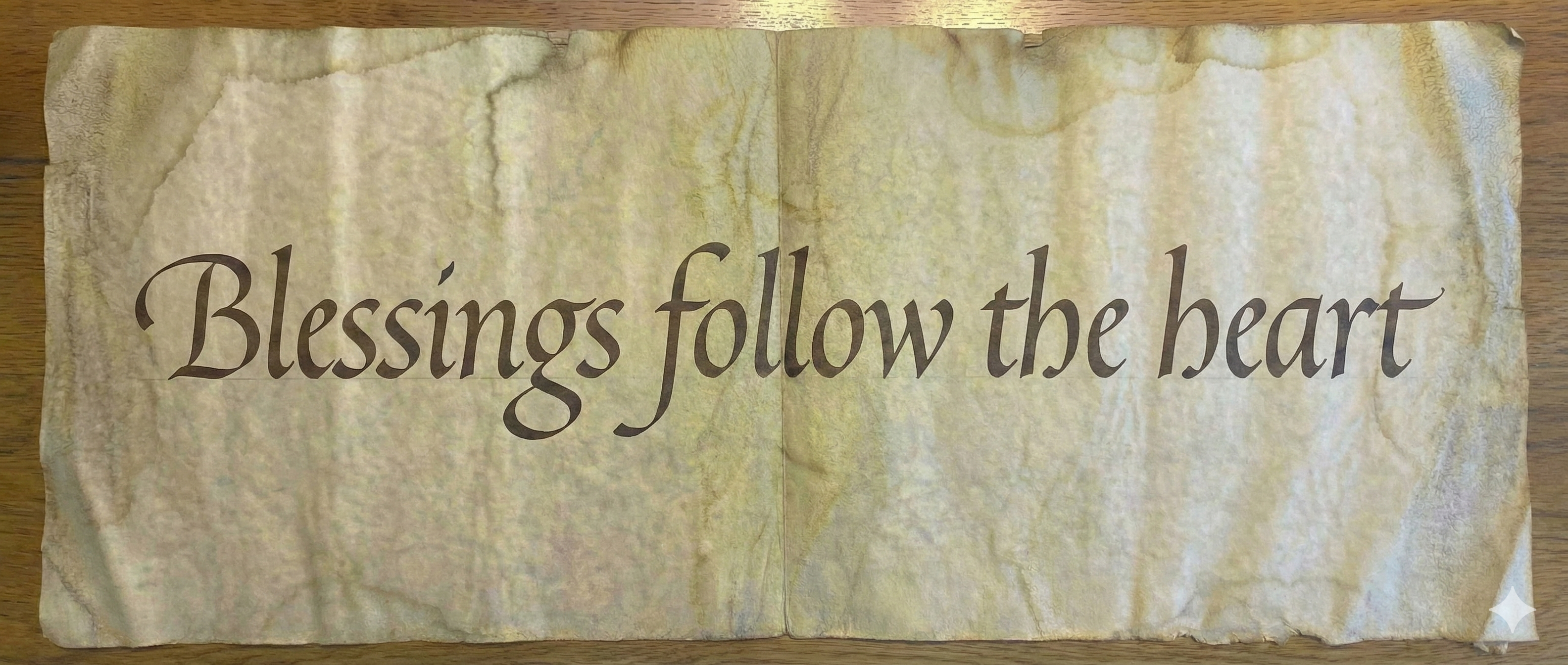
○ Italian Renaissance Humanist Script: Stable Sentence Writing Exercises
Write sentences:I rebuild my rhythm, one gentle step at a time.
The gentle, rounded, and breathing nature of Humanist Script is perfect for writing on the theme of "continuous recovery." When writing "rhythm," let the letters maintain a natural undulation; when writing "gentle step," let the strokes lightly lift and press, symbolizing that your steps are both gentle and continuous.
Lesson 977: Continuous Recovery - Guided Drawing
Objective: To help you "see" your own recovery rhythm, instead of blindly forcing yourself.
Steps: Draw a slightly wavy line on the paper, starting from the center, like a slow heartbeat. Then, using the center line as a base, add wider, softer, and more stable lines layer by layer around it. Each layer represents a day, a small task, or an effort. You don't need to draw them neatly; just let the lines grow naturally. When you're finished, you'll see that recovery isn't forced, but accumulated.
Please log in before submitting your drawings and feelings.
○ 977. Daily Strategies for Continuous Recovery: Log-Guided Recommendations
① At what moment today did you feel a little at peace? Please write down that moment.
② What small habit did you repeat over the past three days? What changes did it bring about?
③ Write down your most common "restoration obstacle sentences" (e.g., I can't do it / it's pointless / it's too slow).
④ Please write a more truthful and gentler version of these sentences.
⑤ Write a promise to yourself tomorrow: "I will keep going, just a little bit more."“
Please log in to use.
Continuous recovery is not about speed, but about rhythm. May you gradually rediscover your true self in every small moment of stability.
 EN
EN  ZH
ZH  ES
ES  FR
FR  JA
JA