

Lesson 98: Self-Reinforcement and Positive Feedback
Duration:70 minutes
Topic Introduction:
In exposure exercises and long-term healing, "self-reinforcement" is the most easily overlooked yet most crucial step.
When you successfully confront a fear, accomplish a small goal, or simply take a slight step forward from yesterday, your brain needs to receive the "good job" signal in order to form a new positive learning path.
This course will guide you in establishing a gentle, specific, and repeatable positive feedback system, enabling your brain to reward itself after effort, rather than criticize it.
Why does self-reinforcement accelerate healing?
- Strengthening the brain's positive circuits:Each instance of approval tells the nervous system, "It's safe to do this, I can continue."“
- Counteracting habitual self-criticism:Anxious people often focus on mistakes and ignore progress; self-reinforcement can help balance the scales.
- Make small progress visible:The brain likes to be seen; the more it notices small achievements, the more willing it is to move forward.
Lesson 98: Self-Reinforcement and Positive Feedback, Click to listen to the reading, View the content
Self-reinforcement is not self-comfort or forcibly encouraging oneself, but a crucial learning mechanism that helps the brain consolidate new behaviors. Many people, after exposure or facing fear, habitually focus on their shortcomings, ignoring the effort they've already made. Such brains only remember the tension, not the action itself. The significance of positive feedback lies in explicitly telling the nervous system which behaviors are worth retaining. When you choose to pause, express yourself, or complete the exercise when fear arises, this is a new behavioral path; without reinforcement, the brain is unlikely to recognize it as a valuable experience. From a psychological perspective, whether a behavior is repeated is closely related to the emotional experience of the result; even a slight sense of affirmation, relaxation, or satisfaction can be an important learning signal. The first step in self-reinforcement is to accurately describe the behavior rather than evaluate the result—for example, "I completed a step in my plan today," rather than "Did I perform well?" The second step is to provide immediate feedback, such as verbal affirmation, physical relaxation, or arranging a gentle care routine for yourself. These help the brain associate the action with safety. The third step is to avoid negative reinforcement; if you immediately blame yourself or overanalyze after reinforcement, the effect will be negated. Positive feedback doesn't make you complacent; it gives your efforts a purpose. A long-term lack of reinforcement makes changes seem hollow, while consistent positive feedback gradually builds trust, making the body more willing to try again. It's important to understand that self-reinforcement isn't about rewarding courage, but about rewarding participation. When you start valuing each instance of participation instead of just focusing on the finish line, your fear control decreases. You're not indulging yourself, but rather energizing yourself for new learning paths. Only when positive feedback becomes a habit will the change truly last.
▲ AI Interaction: What do you want to reward yourself for today?
Name the smallest improvement you made today.
AI will help you break it down into "specific behaviors + psychological abilities".
And we will design a reinforcement statement that best suits you.
Positive feedback is not just about language, but also about physical experience.
Gentle music allows the brain to truly "absorb" the feeling of being affirmed, rather than rushing through it.
○ Oriental Healing Tea - Osmanthus Oolong
Recommended drinks:Osmanthus Oolong
Recommended reasons:A pleasant fragrance can uplift your mood without being overly stimulating, making it a light way to "reward yourself".
practice:Soak in 95℃ hot water for 20–30 seconds to allow the aroma to be released naturally.
○ Stable Dietary Therapy - Lemon Avocado Tofu Refreshing Salad (ID98)
During periods of self-reinforcement and positive feedback, the body needs a light yet supportive nourishment. The smooth texture of avocado brings satisfaction and a sense of security, while the lightness of tofu provides stable protein, and the refreshing aroma of lemon helps restore vitality. This refreshing salad is perfect for enjoying after a workout or when giving yourself recognition, allowing the body to feel a positive connection after effort. It symbolizes the natural combination of growth and care.
Lightweight support
Consolidate learning
Open Recipe
◉ Stable Dietary Therapy: Lemon Avocado Tofu Salad (ID 98)
Lemon avocado tofu salad is a refreshing egg white salad bowl that can be enjoyed chilled or at room temperature. The soft tofu provides a light, satisfying feeling and a smooth texture, while the avocado offers a delicate, oily richness and smoothness. The lemon juice adds a bright, tangy touch, enhancing the overall flavor. This dish offers a comforting, gentle experience without being overly heavy. It's perfect as a mild main course or side dish when you have a poor appetite, the weather is warm, or you just want a simple, easy meal after work.
plant protein healthy fats Refreshing light meals
I. Recommended Dietary Therapy and Reasons
Recommended dishes:Lemon and avocado tofu salad (ID 98)
Recommended reasons: Soft tofu provides high-quality plant protein, with a smooth texture that won't irritate the stomach; the fats in avocado are mostly unsaturated fatty acids, which help increase satiety and energy stability, making this dish "light but not empty"; the simple sauce made of lemon juice and a little olive oil gives the overall flavor a fresh and clean feel, making it very friendly to those who are adjusting their diet and want to reduce greasiness and heavy flavors. For those whose appetite is easily reduced due to stress, this dish is both easy to eat and gently replenishes nutrients.
2. Recipe and Method
Recipe (1–2 servings):
- Soft tofu (silk tofu or silken tofu) 150–200 g
- 1/2 to 1 avocado (depending on size and personal preference)
- 4–6 cherry tomatoes (halved, optional)
- 20–30 g of chopped or diced cucumber (optional, to add crunch).
- 1.5–2 tablespoons lemon juice
- 1 tablespoon olive oil
- a pinch of salt
- A pinch of black pepper (optional)
- A small amount of chopped parsley or cilantro (optional, as a garnish)
practice:
- Gently remove the soft tofu from the packaging, drain the water, cut it into bite-sized pieces or cubes, and gently place it in a bowl.
- Cut the avocado in half, remove the pit and peel, cut into small pieces or gently mash into large chunks, and place in a bowl for later use.
- Wash the cherry tomatoes and cut them in half; dice the cucumber and add them to the bowl (optional).
- In a small bowl, prepare the sauce: add lemon juice, olive oil, a pinch of salt and black pepper, and gently stir until slightly emulsified.
- Pour the sauce over the tofu and avocado, and gently toss with a spoon to coat the ingredients evenly with the sauce. Avoid stirring too vigorously to prevent the tofu from breaking apart too much.
- Garnish with a little chopped parsley or cilantro before serving. Enjoy at room temperature or chill for 5–10 minutes before eating.
3. Small rituals for body and mind
When slicing avocado and tofu, I deliberately slowed down my movements, feeling the slight resistance of the soft ingredients under the knife, as if reminding myself, "I can be gentler today."
When squeezing lemon juice, take a deep breath of the citrus-scented air and let this refreshing scent act as a brief "breathing button".
As you take your first bite, simply tell yourself, "I'm taking care of myself, not just filling my stomach." Make this bowl of tofu a part of your self-care.
4. Dietary Therapy Experience Record
- Record the eating scenarios (lunch, dinner, after working overtime, hot weather, etc.) and your current physical and mental state.
- Observe the feeling of fullness, stomach comfort, and mental clarity within 30–60 minutes after consumption.
- If you replace high-fat, heavy meals with these light meals for a period of time, you can record changes in mood fluctuations, physical strength, and sleep patterns.
V. Instructional Videos (approximately 3–5 minutes)
◉ Video Title:Lemon avocado tofu salad – a refreshing yet comforting light meal.
6. Precautions
- Avocados are ideally ripe when they are "springy but do not collapse when lightly pressed." If they are too unripe, they will be astringent; if they are too ripe, they will easily oxidize and turn black.
- Tofu should be consumed as soon as possible after opening. If it is used in a cold dish, it is recommended to prepare and eat it on the same day.
- People who are sensitive to fat intake can appropriately reduce their consumption of avocado and olive oil.
hint:This recipe is for daily dietary guidance and adjustment and is not a substitute for any medical diagnosis or treatment. If you have specific medical conditions or dietary restrictions, please follow the advice of a professional medical practitioner or nutritionist.
○ Gothic script - Lesson 98 Writing Exercises
The topic of this lesson:Self-reinforcement and positive feedback – crowning your courage
In-depth analysis:
After completing the arduous task of exposure, the brain desperately needs positive feedback to solidify the victory.
After completing the arduous task of copying the text in black ink, medieval scribes would switch to red ink to depict the titles (Rubrication) or decorate the large initials with gold leaf (Illumination).
This is not just for aesthetics, but also for a sacred purpose.“"Celebration Ceremony"”.
In this lesson, we won't write the main text; instead, we'll focus on practicing drawing those ornate, decorative initials. This is to tell the subconscious: every courageous attempt I make deserves to be gilded and solemnly recorded.
Writing Techniques (Celebration Edition):
- Versals (the initials of Shanda)
Practice drawing a huge initial letter that takes up multiple lines (like "V" for Victory). Don't rush; take your time outlining and coloring it. Treat this letter like a trophy for yourself, and pour all your patience into polishing it. - Rubrication (red ink blessing):
Break the monotony of just black. Try adding thin red lines inside the black letters. Red represents vitality and passion. This symbolizes: I not only survived, I lived passionately. - Line Fillers:
To maintain neatness, Gothic manuscripts often feature intricate geometric patterns in the blank spaces at the end of lines. When you feel empty or weary in life, fill those gaps with self-appreciation, and don't leave room for self-doubt. - Diamond Dots:
Adorn the letters with delicate diamond-shaped dots. Each dot is a tiny affirmation of yourself: "Well done," "Great job," "Not easy." Let affirmation surround you like stars.
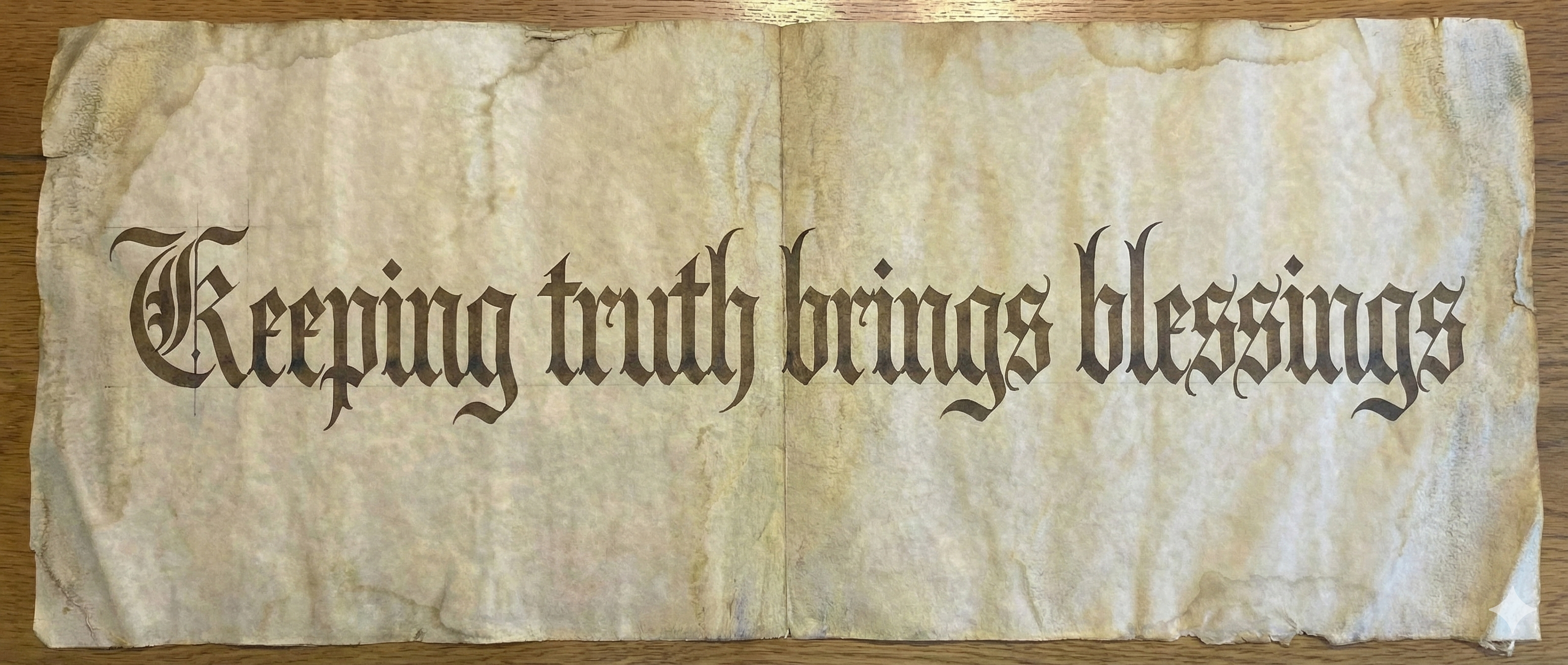
Image Healing: Mandala Stability Guidance 98
Today's mandala is a golden medal, or a crown studded with jewels. Look at the most brilliant light at the center of the image. This light doesn't come from external praise, but from the pride you feel after overcoming fear. Imagine "wearing" this mandala on your chest, or "wearing" it on your head. Feel its weight and warmth. You don't need to wait for applause from others; your current peace and power are the highest honor the universe bestows upon you.
Traditional mandalas typically feature a harmonious and intricately varied circular structure, symbolizing the wholeness of the universe and the cycle of life. By viewing mandala images, individuals can perceive inner peace and strength, achieving psychological balance.
◉ Gaze at the mandala twice, while taking deep breaths.

Lesson 98: Positive Trajectory (Drawing Guidance)
① Guiding drawing actions:A spiral extending outwards is drawn with light-colored lines, symbolizing that growth is constantly being seen.
② Guiding drawing actions:Highlight a few points on the track to represent the things you did well today.
Please log in before submitting your drawings and feelings.
○ 98. Positive Feedback & Log Guidance Suggestions
① What small things did I accomplish today? (The more specific, the better)
② What kind of strength does this behavior demonstrate? (Courage/Persistence/Patience/Awareness)
③ How do I hope to reward myself today?
④ Which small habit do I want to continue to strengthen tomorrow?
Please log in to use.
Self-reinforcement is not about praising yourself, but about teaching your brain that your efforts deserve to be remembered.
 EN
EN  ZH
ZH  ES
ES  FR
FR  JA
JA