

Lesson 981: Course on Psychological Adjustment Disorders

Duration:70 minutes
Topic Introduction:Adjustment disorder often occurs after significant changes, stressful events, or life transitions. It is not weakness, nor is it intentional suicidal thinking; rather, it is the body and mind struggling to adapt to the new situation. This section helps learners gently recognize this reaction and understand the relationship between emotions, functioning, and daily rhythms.
○ Course Topic Audio
Lesson 981: Course on Psychological Adjustment Disorders
Click to view the read-aloud text
Psychological adjustment disorders often arise after life changes. Changing jobs, moving, changes in close relationships, family pressure, academic pressure, and medical diagnoses can all make it difficult to keep up. You may not completely break down, but you'll noticeably become anxious, depressed, irritable, have trouble sleeping, experience decreased work efficiency, and even start to doubt yourself. The purpose of clarifying this topic is to make you understand that adaptation isn't something that can be done by flipping a switch. People need time to understand what happened and time to rearrange their lives. We will distinguish between ordinary stress reactions, depression, and anxiety, and we will learn to break down big problems into smaller ones: what must be dealt with today, what can be postponed, who can provide support, and which part of the body needs to recover first. Adaptation isn't about pretending everything is fine, but about slowly finding your place in the new reality. You can allow yourself periods of chaos, and you can start with small routines, such as eating regularly, organizing your schedule, writing down your worries, and being honest with someone. It's not that you're not strong enough; it's that change truly needs time to process. This section will help you break down changes into several levels: the events themselves have changed, the positions of relationships have changed, the daily rhythm has changed, and your vision of the future has changed. Much pain stems from these multiple layers moving simultaneously, leaving one feeling adrift. Later, we'll discuss writing down the three most troubling things, then breaking each down into actions, requests for help, and waiting. The adjustment period also requires allowing for emotional fluctuations; feeling better today and sad tomorrow doesn't mean you're regressing. Humans aren't machines; we can't follow a calendar. As long as you're trying to piece your life back together, you're already on the path to recovery. Adaptation doesn't mean embracing change, nor does it mean denying sadness. It's more like helping yourself find a new way to stand after reality has changed. When you're willing to admit you haven't adapted yet, it's easier to truly begin adapting. Denying pain only makes things more exhausting; facing it gently gives you a chance to pick things up again. The new life will feel unfamiliar, but you can gradually become familiar with it. This is already adaptation. Don't rush to force yourself.

AI Healing Q&A
The AI-powered healing Q&A section helps learners transform their anxieties about "Am I abnormal?" into an understanding of stress responses, distinguishing between emotional, physical, and functional changes. When interacting, please describe the specific event, your thoughts at the time, your physical sensations, and the help you need. The AI will assist in organizing your thoughts with gentle questions and suggest actionable small actions, but it cannot replace doctors, psychologists, or crisis intervention. If there is a risk of self-harm or if the condition continues to worsen, please contact offline professional resources promptly. Record one small action after the Q&A session.

○ Music therapy guidance
Choose a slow piano or gentle harp piece, letting the sound unfold like clear water. While listening, don't rush to change your mood; simply focus on your breathing, shoulders, and feet, allowing yourself to acknowledge that you are adapting to the new situation. The music is there to help you gradually regain your footing, not to pressure you into feeling better immediately. After listening, write down the part of your body that felt most relaxed, giving yourself a small boost. Don't judge it as good or bad; just allow yourself a moment of gentle companionship. If your emotions are still fluctuating, take a sip of water and take it slow.

○Eastern and Western Healing Teas
○ Eastern and Western Healing Teas
Eastern Healing Tea
Huangshan Maofeng
Introduction: Huangshan Maofeng is a famous tea from Anhui Province, named for the fine hairs covering its leaves, which resemble the shape of a mountain peak. The tea has a rich aroma and a fresh, mellow, and sweet taste. Huangshan Maofeng is believed to have cooling and detoxifying properties, lower blood lipids, and anti-aging effects. It also helps regulate the stomach and intestines and promotes digestion. Its unique flavor and rich nutritional components make it an excellent daily beverage.
Directions: Take 1 teaspoon of Huangshan Maofeng tea and steep in 80°C water for 3 minutes. Add a small amount of honey to taste before drinking. Suitable for drinking in the morning or afternoon to help cleanse the body of toxins and boost energy.
○ Healing Recipes
101. Greek Herb Omelette
The recommended recipe for this lesson is: 101. Greek Herb Omelette. Please click the "Click to view healing recipe" button below to open the full recipe page, where you can view the recipe, instructions, mind-body rituals, experience notes, instructional videos, and precautions.
Recipe file:
u27_lesson_981_recipe_101.html

○Mandala Healing
When viewing a mandala, gently focus your gaze on the center first, without rushing to understand the pattern. Slow down your breathing and feel the inclusiveness of the circular structure. Adapting to obstacles is not failure, but rather your mind and body finding a new place. After viewing, look away from the screen, blink gently, and record the most comfortable part of your body at this moment. There's no need to judge whether you did well or not; simply acknowledge that you were taking care of yourself in this moment. Take your time. Let these few minutes be a gentle rest, not a new task.
● AI Dynamic Geometric Vision Focus and Emotion Regulation Engine ●
AI Dynamic Geometric Vision Focus and Emotion Regulation Engine · v7.0.0
Before we begin, I'd like to know how you feel right now.
There is no standard answer; just choose the one that best reflects how you feel right now.
The experience is over. Tell us how you feel now.
There is still no standard answer; just choose the one that best reflects how you feel right now.
#FF5252
After the fluorescent line crawling is completed and stopped, first select a color, then click on the closed area in the graphic to fill in the color.
AI Digital Mandala Static Focus EngineAZ Image Coloring · 60 Colors
AI Digital Mandala Interactive Focus Engine
A–Z Free Selection · Layered Lines · 60 Color Fills

○ Calligraphy and engraving therapy practice
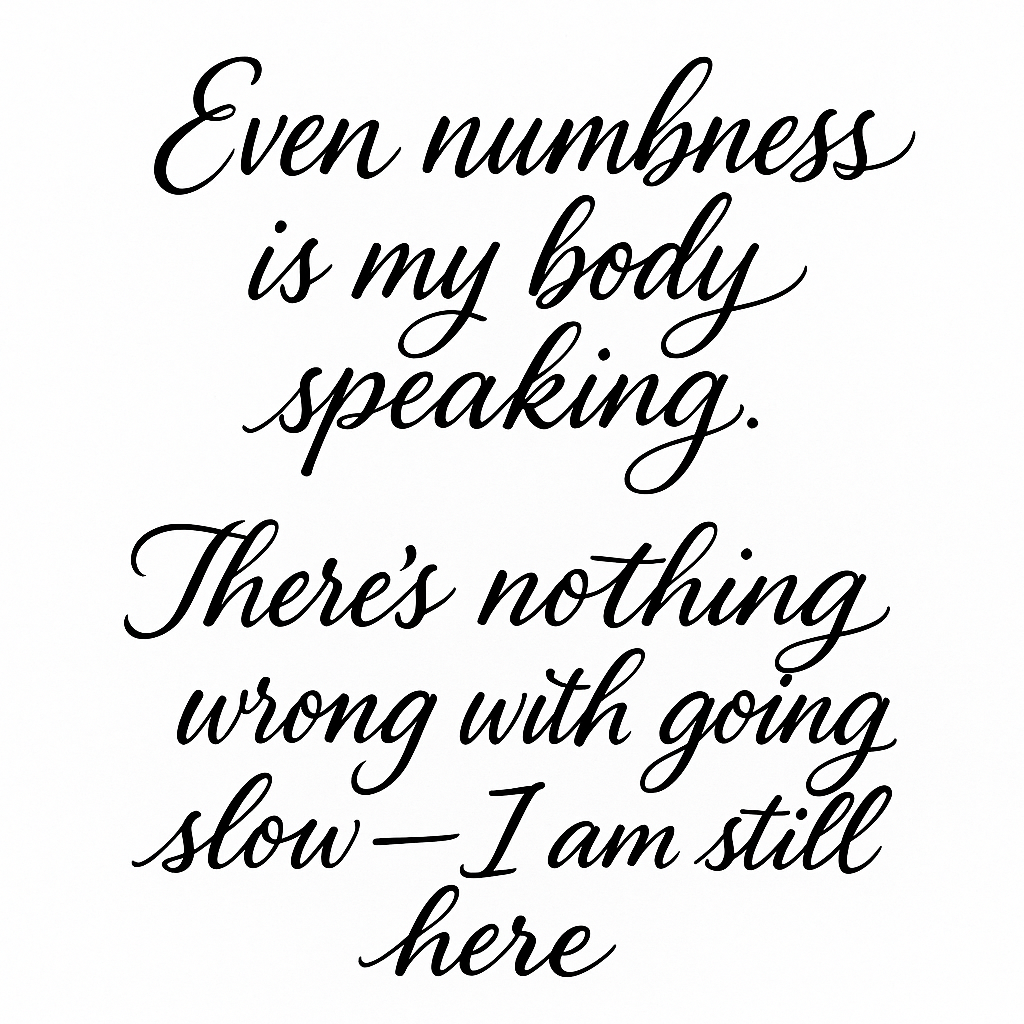
When practicing calligraphy, first set up your paper, pen, or carving tools, without rushing to achieve neatness. Relax your wrist and slowly feel the rise and fall of the strokes and the rhythm of your breath. The focus of practice is not on what you write, but on seeing yourself adapting and stabilizing through repetitive movements. After finishing your practice, put down your tools, gently move your fingers, and note the part of your body that feels most relaxed. There's no need to judge whether it's good or bad; just recognize that you've completed a gentle companionship. Please take your time. Please take your time.

○ Art Therapy Guidance
When using art therapy, first choose a few colors that resonate with you, without rushing to create a specific image. Express your current difficulties using lines, blocks of color, shades, or blank spaces. Once vague emotions are placed on paper, they are no longer confined to the body. After finishing, step back and observe, noting the quietest part of the image. There's no need to judge its quality; simply seeing that your emotions have been gently placed on the paper is enough. If you still feel emotional turmoil, that's okay. Take a sip of water and take your time. Please take your time.
Please log in before submitting your drawings and feelings.

○ Diary Healing Suggestions
Please write down the most touching point for you today: Adaptability difficulties are not weakness, but rather a cry for help from your body and mind when facing change. Next, write down one small action you're willing to try, such as giving yourself ten minutes of quiet time, eating a meal on time, or telling a trusted person your true state. After writing, please read it gently, without rushing to revise, simply thanking yourself for being honest and staying still. If you can only write a little today, that's perfectly fine; honesty is more important than completeness. Please schedule this small action for today or tomorrow, making care concrete and feasible. May this record become a gentle guide for you to return to yourself.
Please log in to use.
May you gradually return to a more stable, clear-headed, and gentler version of yourself through today's practice.
This unit's comprehension test
After completing the lesson's main topic, you can access the corresponding lesson's comprehension test here.