

Lesson 988: The Relationship Between Psychological Adjustment Disorders and Stress Management
Duration:75 minutes
Topic Introduction (Overview):
Adjustment disorders often occur "after major life changes": moving, unemployment, illness diagnosis, changes in interpersonal relationships, role transitions, etc. On the surface, it seems the stressful event itself is "too big," but more importantly, the original psychological and life rhythms are disrupted in a short period, and internal cues lose their grip. Many people experience mood swings, insomnia, irritability, increased tearing, decreased attention, or avoidance of reality, yet they neglect the importance of stress management because they feel they "can still manage." This course will help you understand adjustment disorders from the perspective of the "stress curve," showing that there is actually a buffer zone that can be nurtured between overload and emotional breakdown.
When you begin learning stress management, you're not demanding that you "instantly become stronger," but rather practicing: how to recognize early warning signs, how to proactively de-stress and break down tasks before stress overflows, and how to schedule "repair periods" for your body and emotions. Together, we'll explore the dynamic balance between sources of stress (external demands) and adaptive resources (time, support, skills, rest), understanding why the same event can have drastically different impacts at different stages. A mandala isn't about drawing something, but about observation—observing the rise and fall of stress throughout a day, a week, and a period of life, and, without judging yourself, creating more room for adjustment.
▲ AI Interaction: Understanding Psychological Adaptation Using the "Stress Curve"
Think back to the last life change that made you feel "unable to cope" or "very tired": it could be a turning point in your work, relationships, health, or studies.
Try dividing this period into three stages: when it first happened, when it gradually accumulated, and when there was a significant imbalance. What were your emotional, physical, and behavioral changes during each stage?
In the AI dialogue, you can write these three segments as a "micro timeline" and mark: at which stage did you actually realize that the pressure was increasing, but at that time you chose to ignore it or grit your teeth and bear it.
You don't need to examine your past self; instead, work with AI to redraw a stress management path so you can take care of yourself earlier next time.
Click the button below to share your stress timeline and let's practice together how to start adjusting before it gets overloaded.
○ Stress Curve · Music Therapy
Choose a piece of music that starts with a quiet, slow tempo and gradually develops layers without becoming overly loud, and treat the whole piece as "a microcosm of changing pressures".
Close your eyes and, during the gentlest part of the music, imagine yourself in a relatively stable phase of life; when the music enters a slightly tense or faster-paced section, notice where your body begins to tighten.
Don't force yourself to relax. Just ask yourself with each change in rhythm: "Do I need to do more now, or stop for a while?" Let the music help you practice "awareness, rather than forcing yourself."
As the music returns to a more stable ending, imagine yourself reserving a buffer for your future self—that's not retreating, but rather more mature rhythm management.
🍵 Chinese Green Tea: Healing, Calming, and Stress-Regulating
Recommended drinks:Brewing Chinese green tea (such as Longjing and Biluochun) in a light brew serves as a small ritual to "clear away overload."
Green tea is mild in nature, making it suitable for refreshing and invigorating during the day, helping to reduce feelings of greasiness and mental fog. For those experiencing adjustment disorder, strong tea and excessive caffeine can sometimes worsen palpitations and tension, so this lesson emphasizes "light brewing, slow sipping, and coordinating with breathing."
Instructions: Take a small amount of tea leaves and pour in slightly cooled boiling water. Quickly rinse the tea with the first infusion and discard it. Begin sipping gently from the second infusion onwards. With each small sip, take a deep, gentle breath and feel the aroma of the tea spreading through your mouth and chest. You're not trying to "pull yourself together" to stay alert, but rather using the tea to remind yourself that you can slow down and reallocate your stress.
○ Chinese Food Therapy: Longan and Lotus Seed Porridge (Nourishes the Heart and Calms the Mind)
During the adjustment period, many people feel exhausted while simultaneously experiencing prolonged tension: they have trouble sleeping, wake up early, and their minds are constantly preoccupied with one issue. Longan and lotus seed porridge is a classic combination for "nourishing the heart and calming the mind"—longan (dried longan pulp) nourishes the heart and spleen, and is warm without being irritating, while lotus seeds calm the mind and soothe the nerves, while also strengthening the spleen. It has a gentle and lasting restorative effect on irritability, forgetfulness, and light sleep caused by stress overload.
You can treat the process of cooking porridge as an exercise in "rebuilding rhythm": washing the rice, soaking it, adding water, and simmering it over low heat—each step should be done calmly and patiently. When you lift the lid, you'll see the longan and lotus seeds slowly unfurling in the porridge, like watching a mandala unfold—a mandala isn't about what you're painting, but about watching: watching yourself gradually return from an overloaded rhythm to a warm, orderly, and supportive daily routine.
Healing Recipes
/home2/lzxwhemy/public_html/arttao_org/wp-content/uploads/cookbook/gui-yuan-lian-zi-zhou(Alternatively, you could try relaxed="1" or use an existing filename.)
🎨 Dream Mandala Healing · Mi Xiangwen 988 · The Halo of the Stress Curve
Imagine yourself standing on an open field, with the sky above you painted as concentric halos: the halos closest to you are the darkest, symbolizing recent pressures; the halos lighten as you move outwards, representing events that have passed. When you look up, you'll notice that some halos are thick, like layers upon layers of tasks and expectations; others are so thin they're almost transparent, leaving only a faint trace.
You don't need to rush to erase any of the circles; just quietly observe their flow—which circles are slowly fading, and which are deepening? A mandala isn't about drawing something, but about observation: observing how pressure swirls around you, how it moves away or closer. Then, whisper in your heart: I can adjust it, making the next circle a little lighter, widening the gaps in the light, leaving room for breathing and life.

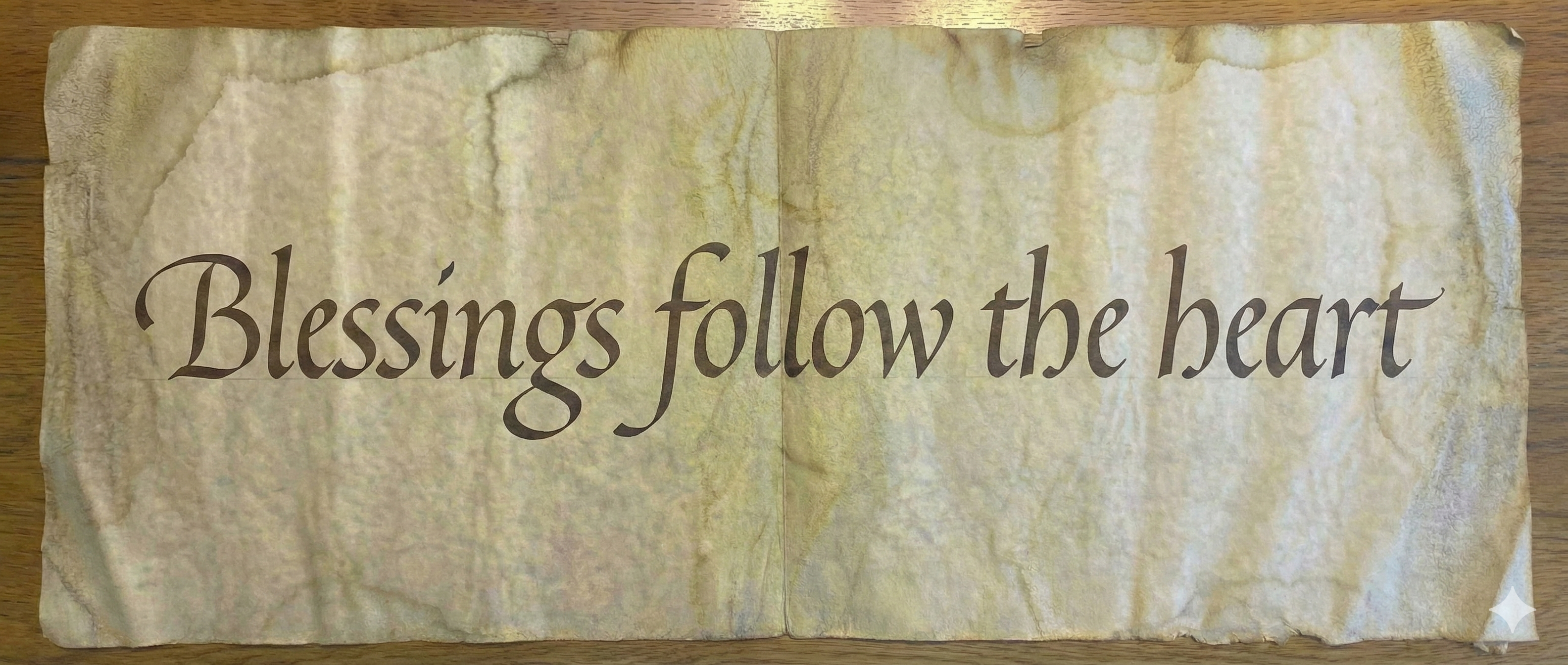
○ Italian Renaissance Humanist Script: Gentle Writing Exercises
Write sentences:I allow myself to take time to adjust.
Humanist Script originates from the Renaissance pursuit of "humanity and gentle order." Its characters are rounded, with broad strokes and a balanced structure. It doesn't pursue exaggerated ornamentation but emphasizes a breathable sense of stability. When writing this sentence, slow your movements, allowing clear and relaxed spacing between each letter—like creating windows of time for yourself on the paper.
Before you begin writing, take a long exhale and gently place your pen at the end of the exhale. After each "adjust" is written, pause for a second and let your eyes observe the overall rhythm of the line: which sections are too tight, and which sections retain soft space. Don't rush to correct; simply experience the rounded lines of Humanist Script: "I can go slower; I have the right to allow myself room to adapt."“
Lesson 988: The Pressure Curve - Drawing Guidance
Objective: To draw out the abstract changes in pressure so that you can see more intuitively "where the overload occurs".
Steps: Draw a timeline horizontally on a piece of paper, marking several key dates or phases related to your "major life changes" from left to right. Then draw a "stress curve" above the timeline: low-stress areas should be drawn close to the timeline, and high-stress areas should be drawn higher. Allow the line to have sharp peaks, long plateaus, and sudden drops.
Next, at the point where you feel you're "getting a little too weak," make a small mark in a different color and write down the inner monologue that most often occurred to you at that time (e.g., "I can just hold on a little longer / I shouldn't be so fragile"). Finally, draw small green leaves or dots of light at certain points along the curve, symbolizing nodes where you can try to add rest, ask for help, or break down tasks in the future—allowing the image to simultaneously accommodate real fatigue and new possibilities.
Please log in before submitting your drawings and feelings.
○ 988. Psychological Adjustment Disorders and Stress Management: Journal-Based Guidance Suggestions
① Write a brief description of your most recent significant life change: What happened? Approximately when did it begin?
② Record in a few sentences the three most obvious changes you have experienced during this period: emotional, physical, and lifestyle-related.
③ Think about it: As the pressure gradually increased, did you notice any early warning signs? How did you respond to them or ignore them at the time?
④ List three “mini stress management methods” that you can currently use (e.g., a ten-minute walk, disconnecting from the internet for half an hour, writing down tomorrow’s to-do list in advance), and write down the “most easy-to-implement specific scenario” for each one.
⑤ Write a new inner dialogue that you'd like to try giving yourself, to replace old phrases like "Why am I so bad?"
⑥ Conclusion and advice: Acknowledging that you are experiencing difficulties in adaptation is not a failure, but rather giving this process a real name—from the moment you see it, you have the opportunity to redistribute the pressure instead of being dragged down by it.
Please log in to use.
When you understand the relationship between adjustment disorders and stress management, you no longer passively endure stress, but gradually learn to build buffers for yourself amidst change. Stress still exists, but you can have more choices and a greater sense of pace.
 EN
EN  ZH
ZH  ES
ES  FR
FR  JA
JA