

Lesson 990: Anxiety Manifestations in Psychological Adjustment Disorders
Duration:75 minutes
Topic Introduction (Overview):
In adjustment disorders, anxiety often doesn't manifest as an "explosive" burst like acute panic, but rather exists as a persistent worry, tension, and a constant internal loop: a vague voice inside keeps asking, "Will it get worse?", "What if I can't handle it?", "What will happen next?" This anxiety closely revolves around real-life events and changes in life—moving, changing jobs, academic pressure, interpersonal conflicts, role transitions… You'll find yourself almost constantly preparing for the worst-case scenario, yet finding it difficult to truly stop and rest. This course will help you identify typical anxiety manifestations in adjustment disorders, understand their differences from generalized anxiety disorder and panic disorder, and thus choose coping strategies more accurately.
In analyzing these manifestations of anxiety, you'll see that some tension is a forced "bragging" to maintain basic function, some worries stem from a deep-seated fear of loss of control, and some anxieties are actually unspoken needs and sorrows. We won't hastily label them all as "illnesses," but rather as high-frequency signals emitted by life as it adapts to change. Through grounded practice, breathing regulation, task breakdown, and the establishment of support systems, you will learn to coexist with these anxieties, rather than be driven by them. Mandala drawing isn't about creating something, but about observation—observing how anxiety fluctuates with events, how it leaves traces in the body and mind. Begin with observation, and slowly regain control.
▲ AI Interaction: See what "Anxiety in Adaptation" looks like
Please write down the three things that have been bothering you the most lately: these could be changes in your work, studies, family, relationships, or health.
Then answer three questions: ① How much of my day do I spend thinking about it? ② Are these thoughts more like "concrete plans" or recurring "what ifs"? ③ When I stop to rest, does my body become more stressed or I feel guilty?
These clues can help you distinguish whether this is normal anxiety about real-world pressures or has evolved into an "overload mode in psychological adjustment disorder."
In AI conversations, you can try drawing an "intensity curve" of your anxiety: how has it fluctuated since the event occurred? When has it eased slightly? In which situations does it suddenly intensify?
Click the button below to map your anxiety during the adaptation period with AI and find key areas that can be adjusted.
○ Anxiety Relief: Music Therapy
Choose a piece of instrumental music with a steady beat that isn't too intense, and make it your go-to background music for a "three-minute break."
In the first half of the music, do only one thing: count the beats, such as "1-2-3-4", and coordinate with light, regular breathing; in the second half, turn your attention to your body, find the three tightest parts, and respond to them by silently saying "I see you" and "Don't worry about it for now".
Anxiety often urges you to "think of a solution quickly and do something quickly," while the significance of music practice is to experience "not collapsing if you stop for a while" within a safe framework.
Everything you do in music is simply practice of observation—neither suppression nor indulgence, but gently observing the speed and rhythm of anxiety.
🍵 Chinese Green Tea: Healing, Calming, and Noise-Reducing
Recommended drinks:Lightly brew green tea (either Longjing or Biluochun is fine).
In a cycle of anxiety, the brain is prone to overheating, repeatedly scanning for all the worst-case scenarios. The delicate aroma and slight bitterness of lightly brewed green tea neither overstimulates the nerves nor hinders the senses, but rather brings a sense of clarity, helping you step back from the emotional vortex and rediscover what is happening in the present moment.
Usage: Use more water and less tea leaves to avoid making it too strong. With each small sip, do only one thing—mentally repeat, "I'm only focusing on this one sip of tea," shifting your attention from future assumptions to the specific feeling of the present moment.
○ Chinese Food Therapy: Longan and Lotus Seed Porridge (Calms the nerves and relieves anxiety)
Anxiety makes it difficult to sleep and eat well, leaving the body in a state of chronic tension and exhaustion. Longan and lotus seed porridge is known for its ability to nourish the heart and calm the mind, as well as to replenish the heart and spleen. It is suitable for people who experience severe anxiety, frequent awakenings at night, and daytime palpitations during the adaptation period. The mildness of longan and the calming properties of lotus seeds allow the body to gradually transition from "over-vigilance" to "being able to relax a little" as it is slowly swallowed.
The process of cooking porridge is itself a mandala-like observation: the water's surface changes from bubbling to calm, the rice grains from hard to soft. You don't need to do complex analysis; just accompany the changes in this bowl of porridge. A mandala isn't about drawing something, but about observation—similarly, you don't need to immediately fix yourself; just see yourself gradually returning to warmth.
Healing Recipes
/home2/lzxwhemy/public_html/arttao_org/wp-content/uploads/cookbook/gui-yuan-lian-zi-zhou(Alternatively, you could try relaxed="1" or use an existing filename.)
🎨 Dream Mandala Healing · Mi Xiangwen 990 · Shaking Rings
You dream that you are standing on the edge of a giant ring, which is trembling slightly. The trembling is not a violent oscillation, but a continuous quiver, just like your state during the day: you can continue living, but there is always a little tension, a little unease. You begin to wonder when this ring will break, when it will suddenly collapse.
As you approach, you discover that each segment of the ring is engraved with the name of an event: moving, exams, family health, financial pressure, relationship changes… It turns out that these slight tremors come from pulls in different directions. Instead of trying to stop them, you sit in the center and quietly observe: which segment trembles the most? Which segment has gradually stabilized? A mandala isn't about drawing something, but about observation—observing how this "adapting ring" trembles and gradually settles under your gaze.

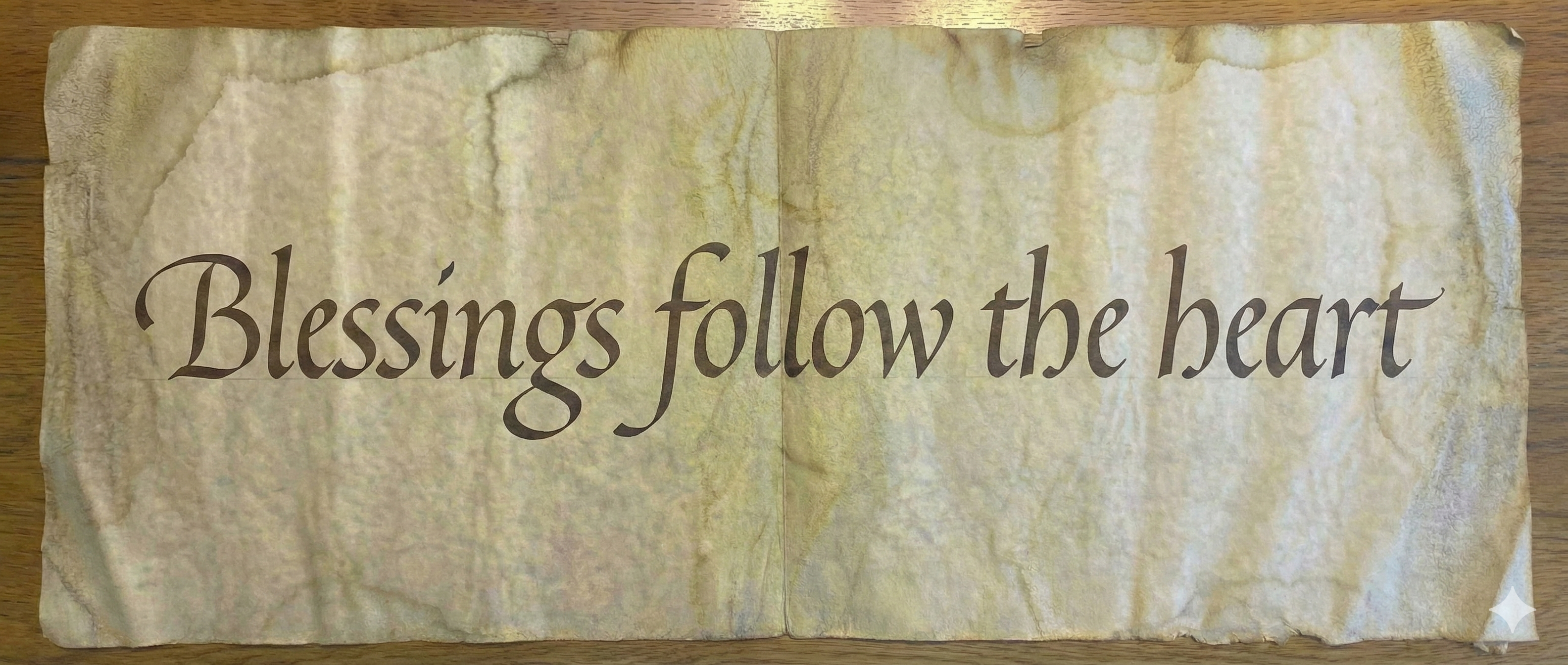
○ Italian Renaissance Humanist Script: Gentle Writing Exercises
Write sentences:I allow myself to feel anxious and still move gently.
With the rounded and balanced structure of Humanist Script, each letter is like a slow breath: acknowledging the existence of anxiety without being completely swallowed by it. You don't need to write perfectly; just let your hand move a little slower than your heartbeat, and let the strokes guide you from "being pushed along by anxiety" to "still being able to choose your pace even in anxiety."
Lesson 990: Depicting Anxiety Ripples - Drawing Guidance
Objective: To transform the anxiety experience in psychological adjustment disorder into visible ripples, helping you to see its rhythm and boundaries.
Steps: Draw a small dot in the center of the paper to represent "you at this moment". Using this dot as the center, draw concentric circles of ripples outwards: if you are more anxious in the past few days, make the lines denser and sharper; if you are in a more stable period, use softer and rounder lines.
While drawing, do only one thing—observe: Which ripples are closely related to specific events? Which ripples have become detached from events, leaving only habitual tension? On the outermost layer of the picture, draw a stable and complete circle, symbolizing "the part of yourself that sees all of this." This is not anxiety, but rather observing anxiety.
Please log in before submitting your drawings and feelings.
○ 990. Anxiety in Psychological Adjustment Disorders: Journaling Guidance Suggestions
① Write down the three things that made you most anxious today, and what changes or stresses they are related to.
② Describe the anxiety signals in your body: What are the sensations in your heart, stomach, shoulders and neck, head, hands and feet?
③ Distinguish between: Which ideas are "real-world problems that need to be addressed"? Which are "hypothetical worst-case scenarios"?
④ Write down one small action you have accomplished today, no matter how small, and consider it a step forward despite your anxiety.
⑤ Write a comforting sentence for yourself, as if you were writing it to a friend, and do not use words such as "affected" or "useless".
⑥ Conclusion: Anxiety is not evidence of your weakness, but a sign that you are seriously facing change—only when anxiety is seen can it gradually calm down.
Please log in to use.
When you learn to see the source and rhythm of anxiety, it is no longer a wave that engulfs you, but a ripple that can be felt and accompanied. You don't need to be without anxiety to continue living.
 EN
EN  ZH
ZH  ES
ES  FR
FR  JA
JA