

Lesson 995: Application of Emotion Regulation Techniques in Adjustment Disorders
Duration:75 minutes
Topic Introduction (Overview):
When life experiences short-term but drastic changes, such as moving, starting school, advancing to a higher level of education, changing jobs, shifts in romantic relationships, or sudden stressful events, many people find it difficult to adjust in a short period: experiencing intense mood swings, decreased sleep, difficulty concentrating, increased sensitivity and irritability, or recurring urges to escape. Adjustment disorder is not about being "too fragile," but rather that "the speed of external change exceeds the speed at which the mind and body can process it." Emotional regulation techniques can help you regain a sense of control over your world amidst the shocks of change.
In this lesson, we will learn: how to identify the rising curve of emotions, how to use the breathing and body movement stabilization system, how to use cognitive regulation to avoid interpreting temporary difficulties as "permanent failure," and how to establish "micro-safe points" under stress. These techniques are not about suppressing emotions, but about enabling you to communicate with them without being overwhelmed by them. Mandalas are not about drawing something, but about observation—observing how emotions arise, spread, and subside, thus seeing that you still have room and rhythm for regulation.
▲ AI Interaction: Find your current emotional flow chart
Please write down your strongest emotion today: anxiety? resentment? irritability? emptiness?
Then write down what its "trigger point" is: an event? A sentence? A scene? A thought?
Finally, write down what you need most right now: support? space? explanation? rest? rhythm?
Let AI help you break down your "emotional storm" into a clearer process, so you can see that you are not the emotion itself, but the observer of the emotion.
Click the button below to analyze your emotional chain with AI.
○ Emotional Regulation & Music Therapy
Choose a slow, steady, and unhurried piece of music and focus your attention on the low-frequency rhythm.
Each time you hear a low frequency, inhale once, then slowly exhale for a longer duration, as if cooling down your emotions.
If you are feeling very emotional, you don't need to force yourself to calm down; just let the music be your "external rhythm."
When your emotions can fall from their peak in time with the rhythm of the music, you regain the space to adjust.
🍵 Chinese Green Tea - Refreshing and Invigorating
Recommended drinks:Biluochun or Maojian.
When your emotions start to become chaotic, irritable, or spread, try stepping away from where you are for a minute and making yourself a cup of light green tea.
Watching the tea leaves unfurl and the steam rise, this minute is not an escape, but a "pause point for restoring regulatory capacity."
○ Chinese Food Therapy: Longan and Lotus Seed Porridge (Calms the nerves, replenishes qi, and soothes palpitations)
The effectiveness of emotion regulation techniques depends on whether the body can obtain sufficient energy and stability. Longan nourishes the heart and calms the mind, while lotus seeds tonify the spleen and strengthen the spirit, making them particularly suitable for mood swings, shallow sleep, and tension-related fatigue. Adaptability disorders often cause "rapid emotional depletion," and a bowl of warm longan and lotus seed porridge can help the body return to a state where it can "support regulation," and also help stabilize your rhythm.
Healing Recipes
/home2/lzxwhemy/public_html/arttao_org/wp-content/uploads/cookbook/kao-hong-shu-pei-hei-dou.html(Please confirm that the file has been uploaded: kao-hong-shu-pei-hei-dou.html)
🎨 Dream Mandala Healing · Mi Xiangwen 995 · The Tides of Emotions
You dream that you are standing on a coastline, and your emotions surge like the tide. Some waves gently lap at your ankles, while others suddenly rise, almost drowning you. You don't run away; you just stand there quietly, watching the sea approach and recede.
Then, you see concentric circles of natural patterns on the sand beneath your feet, spreading outwards like a mandala. Suddenly, you understand—emotions don't stay at their peak forever; they rise and fall, they ebb and flow. A mandala isn't about drawing something, but about observation—observing the trajectory of emotions, watching their rise and fall, watching them eventually recede. You don't need to defeat them; just stand firm and let the tide recede on its own.

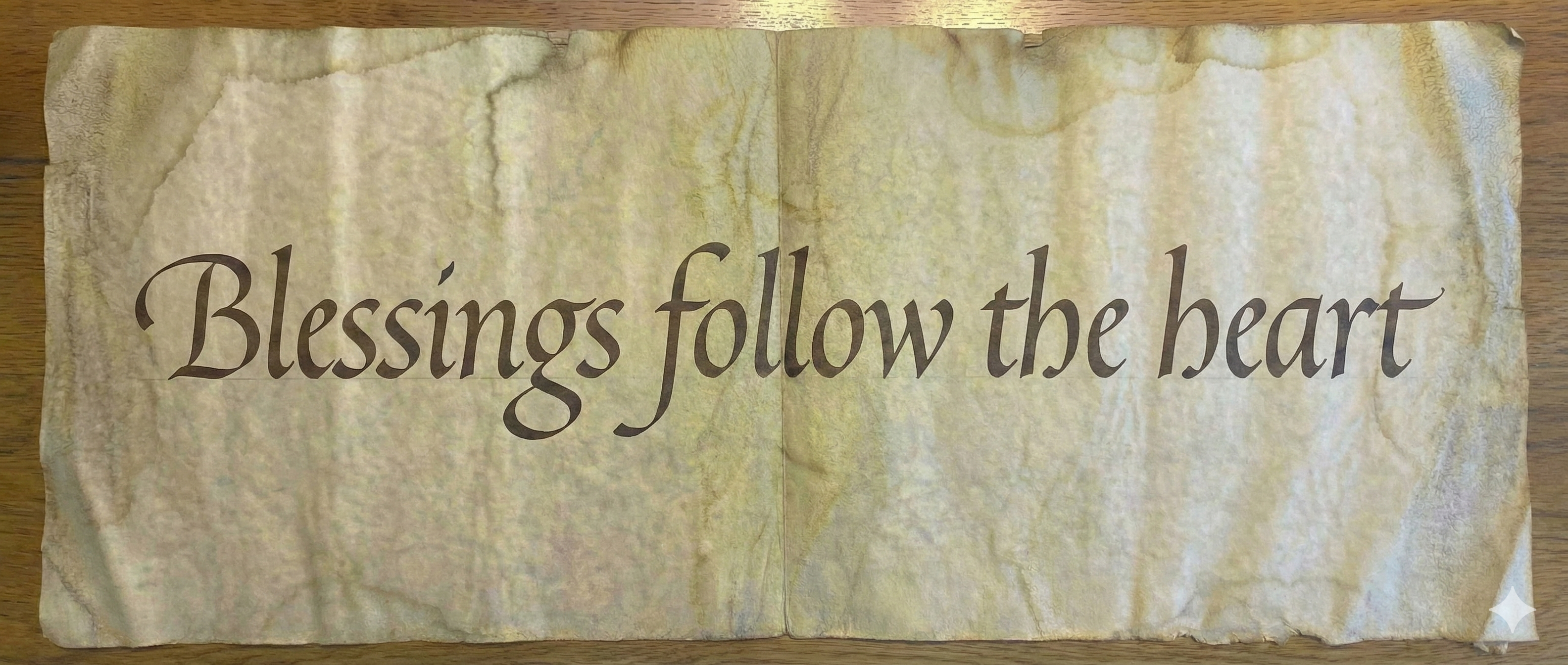
○ Italian Renaissance Humanist Script: Gentle Writing Exercises
Write sentences:I allow myself to take time to adjust.
Humanist Script's strokes emphasize "balance, breathing, and a slow, unfolding feel."
When writing this sentence, you can make the curve of each letter a rhythm:
I paused slightly as I began to write, as if telling myself – I don't need to react immediately;
The stretch in the middle section is like the chest cavity slowly opening up, allowing air to truly enter;
The gentle slam of the pen at the end symbolizes the beginning of a settled emotional state.
This writing method is not about practicing calligraphy, but rather a process of resynchronizing the hand, breath, and emotions.
When you write the word "adjust," feel how the movement of the pen tip helps your body slow down.
Allow yourself to adjust gradually, rather than rushing through the process.
Lesson 995: Emotion Regulation Techniques - Guided Drawing
Objective: To make emotions concrete and external, and to transform them from being "suppressed" to being "seen".
Steps: Draw a large circle on a piece of paper, and represent your emotions as different lines: anxiety like sharp lines, irritability like tangled lines, helplessness like light-colored areas, and sadness like drooping arcs. Then draw a more stable and even line around the outside of the circle, as an "emotional regulation shell." You are not driving your emotions out, but providing them with a safer container.
Please log in before submitting your drawings and feelings.
○ 995. Emotion Regulation Techniques: Suggestions for Journaling
① Write down three emotions that you experienced today.
② Write down the trigger points for each of them.
③ If we personify these emotions, what would they look like? Hasty? Exhausted? Crying? Protective?
④ Write down one resource you would be willing to offer them: breathing? space? pause? companionship?
⑤ What is a "micro-adjustment behavior" that you would be willing to do for yourself today?
⑥ Conclusion: Emotions are not obstacles, but part of the adaptation process; when you regulate them, you are rebuilding your own rhythm.
Please log in to use.
Every adjustment is a way of telling myself, "I am adapting, and I can do it."“
 EN
EN  ZH
ZH  ES
ES  FR
FR  JA
JA