

Lesson 996: The Application of Mindfulness and Relaxation Exercises
Duration:75 minutes
Topic Introduction (Overview):
After a sudden event or prolonged stress, many people find themselves "out of danger," yet their bodies and minds remain trapped in the scene: the image keeps replaying in their minds, they are unusually alert before bed, and tense at the slightest disturbance during the day. At this time, simply telling yourself "don't think about it" or "relax" often only adds to the burden. This course focuses on the practical application of mindfulness and relaxation exercises—not on mastering some advanced technique, but on building several simple and reliable "entry points" for slowing down in daily life, giving you a chance to get back on solid ground when caught in the waves of emotion.
Together we'll practice several basic methods: breath counting, square breathing, sensory awareness, body scanning, and a small relaxation ritual that can be done at the bedside. The focus isn't on achieving perfection in one go, but on having a rhythm you can recall at any time. Mindfulness isn't about forcing yourself to "think of nothing," but about practicing finding a gentle, observing position between thoughts and bodily sensations—like when you're facing a mandala, not rushing to interpret the image, but simply observing quietly. A mandala isn't about what it depicts, but about observation; mindfulness isn't about becoming perfectly quiet, but about consciously living in the present moment.
▲ AI Interaction: The First Step in Practicing "The Present Moment"
Many people worry when trying mindfulness: "I keep having thoughts in my head, am I practicing poorly?"“
Please write down the three thoughts or images that have been most frequently occurring to you recently. No judgment is required, just record them: for example, "If only I hadn't done that," "I can't hold on any longer," "I have to recover quickly," etc.
Next, add a small note next to each thought: What is this worry about? What is this being protected? What is this being reminded of?
You don't need to make these thoughts disappear immediately; just turn them from "a stone weighing on your heart" into "an object on the table," allowing yourself to see them clearly first.
Click the button below to work with AI to keep your thoughts on the "current desktop" and practice gently observing them instead of immediately confronting them.
○ Mindfulness Breathing & Music Therapy
Choose a piece of music with no obvious lyrics and a steady rhythm, and turn the volume up to a level where you can hear it but it won't take up all your attention.
Sit upright or lean back in the chair, first feeling the contact between your back and the seat cushion, then silently count your breaths in your mind: "Inhale for 4 beats - pause for 2 beats - exhale for 4 beats - pause for 2 beats", slowly repeating in rhythm with the music.
If your attention gets diverted, don't blame yourself. Just gently say, "I'm back," and then get back into the rhythm of the music.
When you can establish a stable back-and-forth path between music, breath, and body, you have another way to go home at any time.
🍵 Chinese Green Tea: A Small Ritual to Refresh and Invigorate the Mind
Recommended drinks:A small cup of Chinese green tea (such as West Lake Longjing or Biluochun) serves as a "mind-clearing reminder" before mindfulness practice.
When brewing, I deliberately slow down: watching the tea leaves unfurl and smelling the rising fragrance, I let myself know—from this moment on, I give myself a special time to adjust.
Don't rush to swallow the first sip. Feel the temperature and taste changes as the tea stays in your mouth, then swallow slowly, paying attention to the sensation as it passes through your throat and slides into your chest.
Make this cup of green tea your daily "mindfulness bell": as soon as you start brewing tea, you are telling yourself - I am returning to the present moment, instead of continuing to be led by stress.
○ Chinese Food Therapy · Porridge · Longan and Lotus Seed Porridge
Longan and lotus seeds are both considered important ingredients in traditional Chinese medicine for nourishing the heart, calming the mind, and regulating qi and blood. A warm porridge made with them can provide a delicate and soft sense of security after mindfulness and relaxation practices: it offers the comfort of fullness without being overly greasy or stimulating. The sweetness of longan combined with the soft texture of lotus seeds helps you slowly recover from tension and fatigue, making it easier to sleep soundly at night.
After practicing breathing and body scans in the evening, prepare a small bowl of longan and lotus seed porridge for yourself. While eating, feel the sound of the spoon hitting the bowl, the warmth of the steam on your face, and the process of the porridge going from your mouth into your stomach. Let this bowl of porridge be a symbol: I am not just relying on willpower, but taking care of myself slowly in a concrete and gentle way.
Healing Recipes
/home2/lzxwhemy/public_html/arttao_org/wp-content/uploads/cookbook/kao-hong-shu-pei-hei-dou.html(Please confirm that the file has been uploaded: kao-hong-shu-pei-hei-dou.html)
🎨 Dream Mandala Healing · Mi Xiangwen 996 · A Little Island in Your Breath
Imagine you're standing on a slightly chaotic sea, waves crashing in one after another: tasks, conversations, regrets, worries, and scenes you haven't had time to process. You don't need to jump into the sea to quell every wave; just stay on a quiet island, breathing gently. With each inhale, the waves draw closer; with each exhale, they recede a little.
Now, transform this scene into a mandala: the center is the small island you stand on, and the outer ring is composed of undulating waves. Don't rush to draw all the details; simply move your gaze slowly along these lines, watching how the waves approach and recede. A mandala isn't about drawing anything, but about observation—you don't need to control the sea; you only need to see, "I am not the sea itself; I am merely an observer standing on the island." On this breathing island, you can temporarily shed the pressure of needing to "get better immediately" and practice only one thing: amidst the ebb and flow, remain with yourself.

○ Italian Renaissance Humanist Script: Gentle Writing Exercises
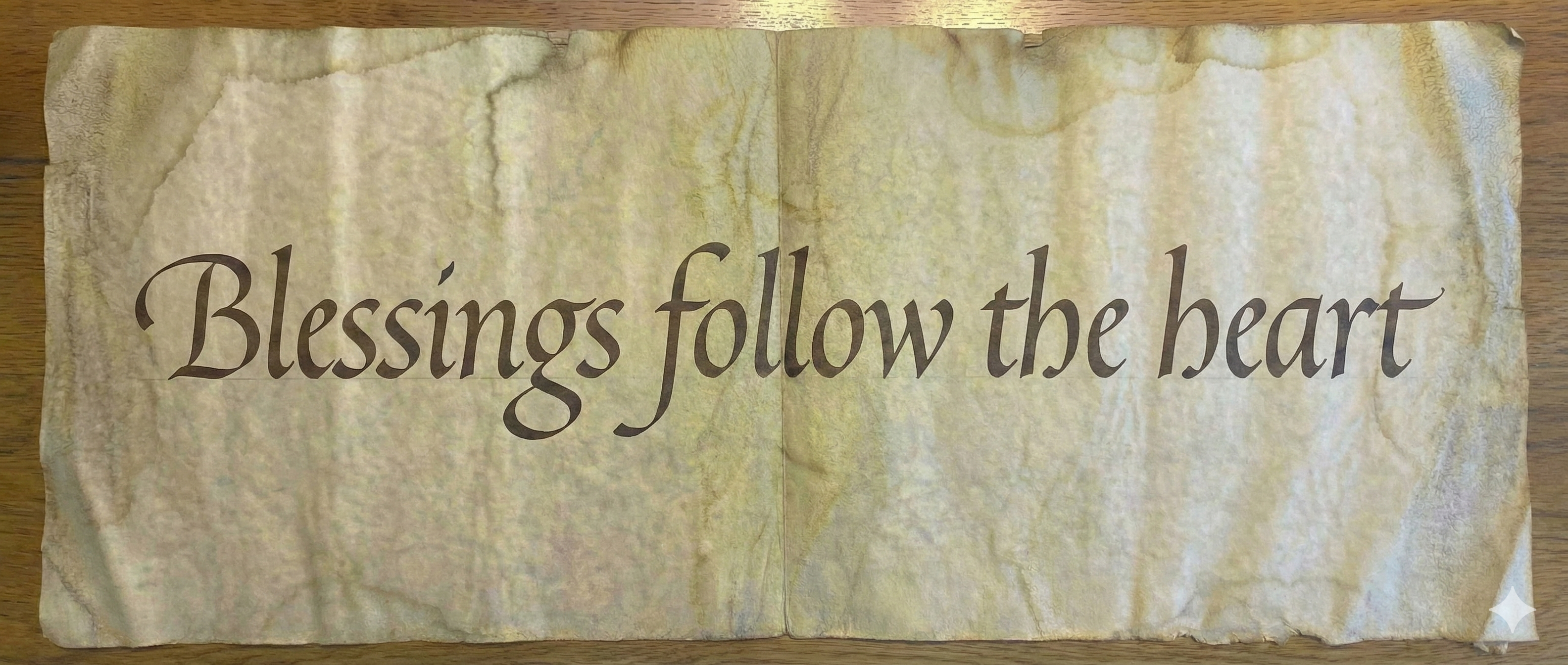
Write sentences:I allow myself to take time to adjust.
Humanist Script emphasizes "balance, breathing, and a slow, unfolding feel" in its strokes. When writing this phrase, you can make the curve of each letter a rhythm: a slight pause at the beginning, as if telling yourself—I don't need to immediately return to the way things were before; the stretch in the middle, like the chest slowly opening to let in air; and the gentle fall at the end, symbolizing the emotions beginning to settle. You can take a small exhale after writing each word, aligning your hand movements with your breathing to a new rhythm.
This writing style isn't about creating perfect handwriting, but rather about creating a gentle middle ground between the hand, the breath, and the urgency in the heart to "solve everything immediately." Every time you write the word "adjust," feel how the movement of the pen tip brings a sense of "slowing down" within you: you no longer force yourself to quickly adapt to all changes, but practice giving yourself time, allowing the adjustment itself to become a visible and respected process.
Lesson 996: Mindfulness and Relaxation - Guided Drawing
Purpose: To visualize the "breath you take in the present moment," so that you can see that you are not entirely being pushed along by pressure.
Steps: Draw a small dot in the center of the paper to represent where you are sitting. Then, using this dot as the center, draw soft lines that radiate outwards in concentric circles, each circle representing a slow breath. Use slightly darker lines when inhaling and lighter lines when exhaling. Don't strive for symmetry; simply let the lines extend naturally with your breath.
After you've completed a few laps, you can stop and slowly move your gaze along the lines, as if retracing the breath you just took. You don't need to explain whether the drawing is "good" or not; just confirm one thing: within these lines, there exists a real period of time—time you've reserved for yourself, time to be with the present moment.
Please log in before submitting your drawings and feelings.
○ 996. Use of Mindfulness and Relaxation Practices: Journaling Guidance Suggestions
① At what three moments today did you most want to "end all of this as soon as possible"? Please briefly describe the scenarios.
② Choose one of the scenarios and recall how your body felt at the time: Was it tightness in your chest, stiffness in your shoulders, or a contraction in your stomach? Describe it in a few words.
③ Imagine what would have happened if you had been able to insert four rhythmic breaths at that moment? Write down your imagination of this hypothetical scenario.
④ Choose a small exercise you're willing to try (such as square breathing, five senses roll call, or slowly sipping a glass of water), and write down where you plan to put it during the day.
⑤ Was there a moment today when you felt a little more relaxed or slower than before? Even if it was only for a few seconds, please write it down.
⑥ Conclusion and suggestion: I don't need to achieve perfect mindfulness in one go. Just give myself a little more time to stay in the present moment than yesterday, and that's part of the practice.
Please log in to use.
When you learn to bring yourself back to the present moment through breathing, green tea, porridge, and small writing rituals, mindfulness and relaxation are no longer abstract concepts, but rather life tools that you can always hold in your hands.
 EN
EN  ZH
ZH  ES
ES  FR
FR  JA
JA