

Lesson 998: Reconstructing the Rhythm and Structure of Daily Life
Duration:75 minutes
Topic Introduction (Overview):
Following acute stress, a person's life structure is often disrupted instantly: sleep disturbances, irregular eating habits, decreased concentration, drastically reduced mobility, distorted sense of time, and even the simplest daily tasks become extremely difficult. The brain is still in a "residual alarm period," not yet back to a state capable of processing information normally. Therefore, the most important thing at this time is not "regaining efficiency," but rather rebuilding rhythms, allowing life to regain a reliable framework and order.
This lesson will guide you to rediscover rhythm: it's not a list, not a task, but a stable signal that lets your body know what's next. When you give your day a clear structure, your body can gradually return from disorder to order, from chaos to control. Mandalas aren't about drawing something, but about observing—observing how the rhythm of life reassembles from its fragments, observing how your energy gradually returns to its place, observing how you regain your sense of direction through these small structures.
▲ AI Interaction: Your "Today's Rhythm Map"“
Please write down three small things you have accomplished today: drinking water, washing your face, opening the window, tidying your desk... anything is fine.
Then write down the rhythm you most want to restore: sleep? eating? work? exercise? quiet time?
Finally, please write: If you had to describe today's rhythm in one sentence, what would it be like? Scattered pieces of paper? A slow-moving river? Stuttering gears?
These will help you build a "rhythm reconstruction table" with AI.
Click the button below to start creating your rhythm plan.
○ Rhythm Reconstruction & Music Therapy
Choose music with a slow tempo but repetitive elements—such as soft drumbeats, gentle piano, or a loop of rain sounds.
Let music become the external "metronome" of rhythm.
Follow the music with simple movements: inhale for four beats, exhale for four beats, or gently press your fingers on each beat.
Your body will gradually regain its sense of time.
🍃 Chinese Green Tea: Awakening and Stabilizing Your Rhythm
Recommended tea drinks:Huangshan Maofeng or Longjing.
The mild theanine in green tea can help stabilize attention, calm mood swings, and help the brain return from over-excitement to a clear state.
Take small sips and let the aroma linger in your mouth for a few seconds, making it a "signal for the start of a new rhythm."
○ Chinese Dietary Therapy: Millet and Jujube Porridge for Restoring Circadian Rhythm and Calming the Mind
Millet strengthens the spleen and stomach, jujubes nourish blood and calm the mind, and pine nuts moisturize dryness and provide nourishment; this combination of ingredients in a calming porridge can help the body restore its sense of temperature, energy stability, and daily rhythm. It is suitable as a "rhythm start meal" in the morning or evening after a crisis.
Healing Recipes
/home2/lzxwhemy/public_html/arttao_org/wp-content/uploads/cookbook/kao-hong-shu-pei-hei-dou.html(Please confirm that the file has been uploaded: kao-hong-shu-pei-hei-dou.html)
🎨 Dream Mandala Healing · Mi Xiangwen 998 · Rhythm Slowly Returns to Normal
In your dream, you see an old water clock. The sound of the dripping water is initially chaotic, varying in speed, like the days after a stressful event. You watch quietly, without interfering, simply observing how the water droplets gradually fall steadily, like your heartbeat changing from frantic to regular.
You notice these water droplets forming concentric circles on the ground, like a mandala. The outer circle is a chaotic ripple, the middle circle a more orderly rhythm, becoming clearer and more uniform closer to the center. A mandala isn't about drawing something, but about observing—observing how the rhythm returns to the center, observing how order emerges from chaos, observing how you regain direction without forcing it.

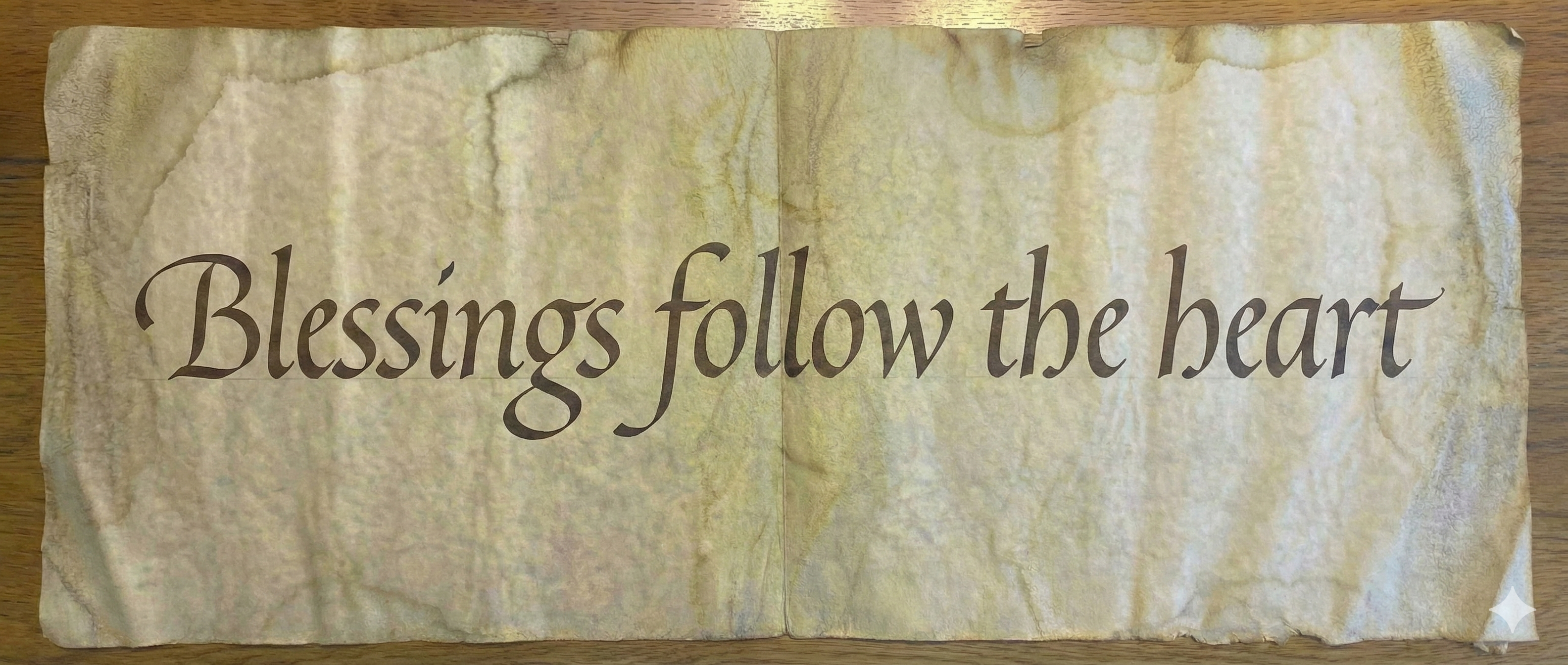
○ Humanist Script · Rhythmic Writing Exercises
Humanist Script emphasizes rounded, breathing strokes, making it ideal as a "rhythm exercise".
- Written words:Flow · Rhythm · Return.
- Chinese:Flow, Law, Return.
- hint:Write each stroke at the same pace, making writing a "mini-rhythmic ritual".
Lesson 998: Rhythm Reconstruction - Guided Drawing
Objective: To make life rhythms tangible and visible.
Steps: Draw three concentric circles on a piece of paper: the outer circle symbolizes chaos, the middle circle symbolizes emerging order, and the inner circle symbolizes the rhythm center. Draw irregular lines on the outer circle, smoother ripples on the middle circle, and a stable circle on the inner circle. The clearer the structure, the clearer your rhythm.
Please log in before submitting your drawings and feelings.
○ 998. Rhythm and Structure: Journaling Guidance Suggestions
① What three specific little things did you accomplish today?
② What is the most chaotic part of your life right now? Write down your feelings.
③ What rhythm do you most want to restore? Why?
④ If we were to visualize today's rhythm, what shape would it be?
⑤ What is a "small rhythm" that you can establish tomorrow?
⑥ Write down your rhythm commitment for the next three days: small and specific.
Please log in to use.
Rhythm is not about efficiency, but about safety. When you regain your rhythm, you regain your sense of direction in life.
 EN
EN  ZH
ZH  ES
ES  FR
FR  JA
JA