

Lesson 112: The Psychological Path from Fear to Awe
Duration:70 minutes
Topic Introduction:
Fear is not always the enemy.
Once we learn to stabilize our bodies, understand the source of fear, and regulate our brain's alertness patterns,
Some fears will gradually be recoded into moments of awe, a sense of depth, and a feeling of power.
This lesson will help you understand how fear can be naturally transformed when it is "not fought, but re-understood".
How does fear transform into awe?
- From threat to significance:When the unknown is no longer a danger, but a new possibility, the chemical reaction of fear begins.
- From Escape to Contemplation:Facing your fears head-on allows your brain to relearn "I can handle it".
- From contraction to expansion:After the sympathetic nervous system is calmed, the body enters a state where it can receive a wider range of sensations.
Lesson 112: The Psychological Path from Fear to Awe (Click to listen to the reading and view the content)
Fear doesn't always need to be eliminated; at certain stages, it can be transformed into a broader and more stable psychological experience—awe. Awe isn't the absence of fear, but rather, when facing immense uncertainty, shifting the focus from personal safety to a sense of order, connection, or meaning that transcends the self. Psychologically, fear and awe share similar arousal bases at the physiological level, but their cognitive orientations are completely different. When fear is directed solely at a threat, the brain's field of vision shrinks; however, when the experience is reorganized into awe, attention expands from the egocentric to a larger picture. The first step in this transformation is allowing intense feelings to exist rather than hastily suppressing them—whether it's a racing heart, tension, or tremors, these are manifestations of energy. The second step is changing the way you ask questions, shifting from "Will something happen to me?" to "What kind of force or process am I experiencing?" This kind of questioning naturally creates psychological distance. The third step is introducing a meaning framework; you can view a fearful situation as a learning experience, a growth opportunity, or an encounter with the unknown, rather than simply a test. Research has found that when people experience awe during intense experiences, the brain's self-related network activity decreases, and emotions become more stable. It's important to understand that awe doesn't appear in every instance of fear; it's more like a channel that is gradually opened up. This transformation occurs when, through repeated experiences, you no longer simply fight against fear but begin to observe the vastness behind it. Transforming fear into awe is not about glorifying pain, but about freeing pain from being solely directed at harm. When you can feel connection and meaning within fear, your control over it decreases significantly. You are no longer just a threatened individual, but a participant experiencing the complexities of life. This shift in position is itself a profound psychological transformation.
▲ AI Interaction: Is there any hidden "meaning" in your recent fears?
Share a scenario that frightens you, and let AI help you explore its potential value and power.
You don't need to change immediately; just see "the other layer behind the fear."
A sense of awe is often accompanied by slow, deep, resonant breathing.
Music can take you from a tense, contracted state to a steady, expansive feeling, softening fear.
○ Eastern Healing Tea - Rock Tea
Recommended drinks:Wuyi Rock Tea
Recommended reasons:Rich, deep, and with a sweet aftertaste, it is suitable for drinking when adjusting the inner transformation from "fear" to "awe".
practice:Pour boiling water over the ingredients to release the aroma quickly, helping you transition from tension to calm.
○ Tranquilizing Dietary Therapy: Yam and Lotus Seed Soup for Calming the Mind (ID112)
During the phase of experiencing emotional transformation and inner expansion, the body needs a gentle and calming nourishment. The smooth and moist texture of yam can stabilize the central axis, while the sweetness of lotus seeds brings introspection and tranquility. This calming sweet soup is suitable for consumption after deep practice or emotional fluctuations, helping the body transition from a state of high arousal to a stable state. It symbolizes the support of returning to inner peace after intense experiences.
Internal expansion
Gentle transformation
Open Recipe
◉ Tranquilizing Diet: Yam and Lotus Seed Soup for Calming the Mind (ID 112)
Yam and lotus seed calming soup is characterized by its gentleness, delicacy, and soothing properties. Lotus seeds have long been considered a representative ingredient for calming the mind and soothing the nerves, while yam nourishes the spleen and stomach, stabilizing energy. Slow-cooked together, the two ingredients create a smooth soup with a warm, fragrant, and non-greasy taste, making it especially suitable for those experiencing restlessness, racing thoughts, fatigue due to stress, or light sleep. A warm bowl allows the body and breathing to gradually return to a slow, stable, and safe rhythm.
Soothes the mind and helps with sleep Strengthen the spleen and replenish qi Smooth and warming to the stomach
I. Recommended Dietary Therapy and Reasons
Recommended dishes:Yam and Lotus Seed Soup for Calming the Mind (ID 112)
Recommended reasons: Lotus seeds have traditional properties of calming the mind and relieving anxiety; yam nourishes the spleen and helps stabilize energy; the soup has a soft, smooth texture and is easy to digest, making it especially suitable as a "buffer food when the mind is tired." Whether you feel mentally heavy in the morning or unable to relax at night, this calming soup can help your body and mind gradually recover.
2. Recipe and Method
Recipe (1–2 servings):
- 120g fresh yam (peeled and cut into small pieces)
- 25–30 g of lotus seeds (soaked in advance)
- 450–550 ml of clean water
- 6–10 goji berries (optional, to add a warming sensation)
- Add a small amount of rock sugar (optional, adjust according to sweetness).
- A pinch of salt (optional, to make the flavor more rounded).
practice:
- Soaking lotus seeds for 1 hour beforehand can remove the core and reduce bitterness.
- Add lotus seeds and water to a small pot, bring to a boil over high heat, then reduce to low heat and simmer for 20 minutes.
- Add the diced yam and continue cooking for 10–15 minutes until it is completely softened.
- For a smoother texture, you can gently crush some of the yam with a spoon.
- Add goji berries and a small amount of rock sugar, then cook for another 3–5 minutes.
- After turning off the heat, let it sit for a moment to allow the soup to naturally become thicker and smoother.
- Enjoy it warm; it's perfect as a comforting snack in the morning or evening.
3. Small rituals for body and mind
As the aroma of slowly simmering lotus seeds rises, try to slow your breathing as well, as if to "settle down" your thoughts.
Feel the smooth texture of the soup as you stir it, and let your body remember this "gentle rhythm".
As you take your first bite, silently repeat, "I am returning to stability." Let the soup be a signal of calm.
4. Dietary Therapy Experience Record
- Record your emotional state while drinking (irritability, fatigue, restlessness, etc.).
- Observe the changes in physical relaxation, warmth, and drowsiness 20–40 minutes after drinking.
- When consumed for several consecutive days, the effects on sleep quality and anxiety levels can be recorded.
V. Instructional Videos (approximately 3–5 minutes)
◉ Video Title:Yam and Lotus Seed Soup for Calming the Mind: A Bowl of Smooth and Soothing Gentle Power
6. Precautions
- If you have a cold stomach, you can add 2-3 slices of ginger to cook together to make the temperature more moderate.
- Lotus seeds taste best when cooked until soft; they should not be soaked for too short a time.
- Yam oxidizes and turns black easily after being cut, so it is recommended to cook it immediately.
hint:This recipe is for daily health maintenance and should not replace medical diagnosis. If you have sleep disorders or chronic anxiety, please follow professional advice.
○ Seal Carving Practice Suggestions · Lesson 112: The Psychological Channel for Transforming Fear into Awe
This lesson explores a sublimated version of "fear"—"awe"—through seal carving practice. When faced with immense, uncontrollable forces (such as the future or fate), fear arises if we try to resist; awe arises if we choose to surrender and look up. Seal carving is a dialogue between man and rocks formed over millions of years. In this process, we will learn how to transform "my insignificance" into "a sense of security carried by something great."
- Introduction to the characteristics of seal carving:
Seal engraving is an art“"Beauty in Imperfection"”(Damaged). A perfect seal often appears craftsman-made, while an ancient seal weathered by time and with mottled edges possesses a unique charm. Fear often stems from the fear of "damage" or "imperfection." But seal carving tells us that imperfection is not destruction, but rather a trace left by power, a higher form of completeness. - Written words (seal text):
Na Yun's secrets are unknown to others. - Psychological Intention:
Fear arises from our desire to conquer mountains but our inability to do so; reverence arises from our recognition of their towering height and our awe. Inscribing "high mountains inspire awe" is about adjusting our psychological perspective: I don't need to conquer that mountain (the source of anxiety); I can simply appreciate its grandeur. When I stop fighting, fear transforms into scenery. - Knife skills:
practise“"Edge-hitting method"”(Making it flawed). After carving the characters, deliberately tap the edge of the seal with the handle of a knife or a hard object to create a cracked or peeling effect. At the moment of tapping, you will feel a kind of "destructive" pleasure. This is a kind of desensitization training: creating "imperfection" by hand and discovering that it is actually more beautiful than the whole. - Emotional transformation:
Transform the "tremor" (fear) you feel when facing something colossal into the "awe" (reverence) you feel when facing the long river of history. The stone in your hand has existed for hundreds of millions of years; your anxiety is nothing but a speck of dust in its presence. Let this grand sense of time wash away your present anxiety.
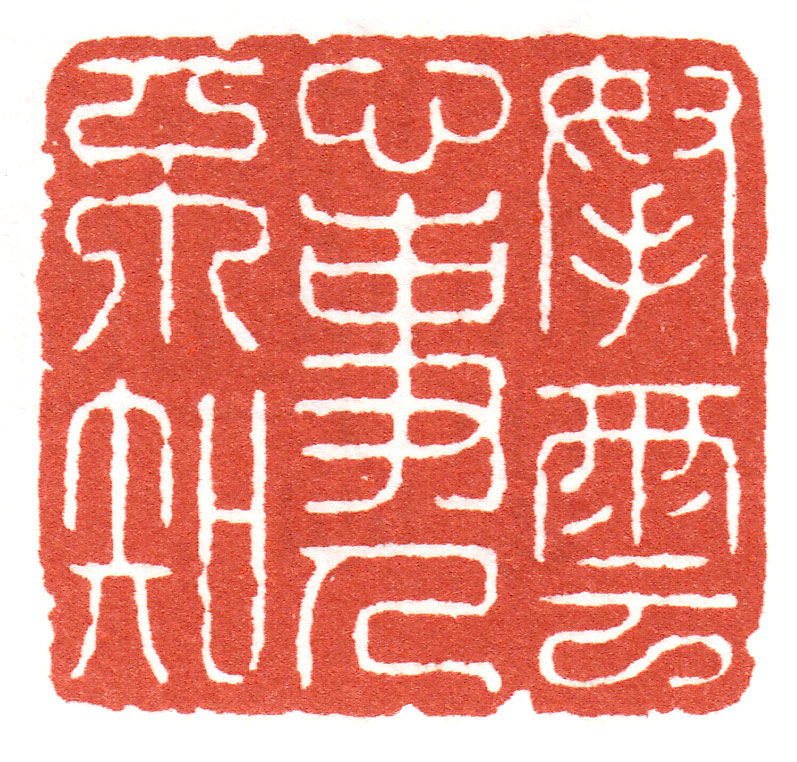
Image Healing: Mandala Stability Guidance 112
Imagine this mandala as a nebula in the vast universe, or the eye of a giant typhoon. It is enormous, swirling, and full of power. If you imagine yourself as a wall trying to block it, you will be destroyed (fear). But now, imagine yourself as a leaf dancing in the wind, or even as part of the nebula itself. When you give up resistance and go with the flow of this immense energy, you no longer feel fear; you feel one with the grand being. This is the freedom that comes from awe.
Traditional mandalas typically feature a harmonious and intricately varied circular structure, symbolizing the wholeness of the universe and the cycle of life. By viewing mandala images, individuals can perceive inner peace and strength, achieving psychological balance.
◉ Gaze at the mandala twice, while taking deep breaths.

Lesson 112: Fear Transformation Drawing
① Action guidance:Use dark lines to draw the "thickness of fear" around the outer edge; there's no need for a specific pattern.
② Action guidance:The use of brighter colors gradually moves towards the center, symbolizing that "fear is being transformed."
③ Action guidance:Leave a small bright spot in the very center, representing the budding of a sense of awe.
Please log in before submitting your drawings and feelings.
○ 112. Respect for Transformation: Log Guidance Suggestions
① What was your most recent intense fear? Can I see another meaning in it?
② What changes occur in my body when I allow myself to face my fear?
③ What moment today made me feel that "power is a little greater than fear"?
④ Would I be willing to try a "gentle approach" tomorrow?
Please log in to use.
Fear itself contains power.
When you stop running away, you will discover that the other side of fear is actually awe and depth.
 EN
EN  ZH
ZH  ES
ES  FR
FR  JA
JA