

Lesson 191: Exposed Exercises on High-Rise Buildings, Elevators, and Bridges
Duration:70 minutes
Topic Introduction:
High-rise buildings, elevators, and bridges fall into the "highly uncontrollable zone" in spatial phobia: height, enclosedness, transparent structures, vibrations, and the inability to exit midway can all trigger the alarm system.
The focus of exposure exercises is not to "force yourself up," but to allow your body to gradually become familiar with the rhythm of these spaces, starting from a position where you can retreat, and gradually building an internal sense of security that "I can stay here."
○ Analysis of triggering sources in three types of high-pressure spaces
- ① High-rise buildings:Visual height creates a sense of instability, and transparent curtain walls and prolonged ascent amplify the uncertainty of the body.
- ② Elevator:Enclosed space + uncontrollable docking + small space are the most typical triggers for "inescapable" situations.
- ③ Bridge:Open structures, vibrations, wind, and excessively wide fields of vision can mislead the brain into thinking that it has "lost support" or that "the risk of fainting has increased."
Lesson 191: High-Rise Building Elevator and Bridge Exposure Exercises (Click to listen to the reading and view the content)
During the recovery phase from spatial anxiety, high-rise building elevators and bridges are often seen as the most threatening scenarios. Their common characteristics are height differences, exposed views, and a sense of fixed location from which one cannot escape in a short time. These elements quickly activate catastrophic imaginings of falling out of control or being trapped. However, it's important to understand that the fear doesn't stem from the height itself, but from the brain's misjudgment of losing control. High-rise buildings and bridges don't require you to move very far, but they do require you to remain in an amplified sense of space—a capability the nervous system is least adept at but most in need of relearning. The first step in exposure practice is not to stand directly at the edge, but to enter the building or bridge's perimeter, such as staying outside an elevator, walking in a high-rise lobby, or near a bridge entrance, allowing the body to relearn that these places are not inherently dangerous. The second step is short stays, not pushing limits—for example, taking an elevator up only one floor or walking a few steps on a bridge and then returning. The key is not the height, but whether you can avoid immediately fleeing when tension arises. The third stage is to extend the stay time while maintaining predictability—for example, knowing the return route in advance, standing still in an elevator without frequently checking numbers, or choosing the middle section of a bridge rather than the very edge. The fourth stage involves introducing visual exposure, such as approaching a window or the side of a bridge, but always with the possibility of retreat. The message that needs to be repeatedly reinforced is that I am at a height, but I can still stand firm; I am moving, but I am not out of control. The real change isn't the complete disappearance of fear, but rather regaining control of your body in height. When you repeatedly find yourself in these situations without disaster, your brain gradually updates its old models, transforming height from a symbol of threat to a neutral space. Recovery isn't about conquering heights, but about making them a part of your life again.
○ AI Interaction: What is your "high-closed-open" stress ratio?
Click on the interactive area and answer three questions: "Am I least comfortable with tall, enclosed, or open structures?"“
“"What is the minimum level of exposure I can accept?" "What am I most worried about happening when I enter this type of space?"”
The system will generate a custom exposure path for you.
○ Voice Exercise: Steady Rhythm with Up and Down Movements
Before entering high-rise buildings, elevators, or bridges, it is recommended to listen to a 2-3 minute audio recording with a steady rhythm.
Allow the body to enter a state of "internal homeostasis" before engaging with unstable external factors.
This can significantly reduce peak alertness when entering an elevator or walking on a bridge.
○ Western Herbal Healing Tea - Jasmine Tea
Recommended drinks:Jasmine Tea
Recommended reasons:The rich floral fragrance promotes dopamine secretion, has a significant antidepressant effect, and makes people optimistic.
practice:Steep 3 grams of dried jasmine flowers in 85°C water for 3 minutes.
○ Stable Dietary Therapy - Greek Spinach Pie Spanakopita (ID191)
After strenuous exercise involving height and vertical exposure, the body needs nourishment that feels both structured and supportive. Greek spinach pie, with its layered pastry and moist filling, symbolizes stable support even amidst changes in altitude. This nourishing dish is ideal after an elevator or bridge exercise to help the body confirm a safe landing.
Vertical space
Physical confirmation
Open Recipe
◉ Greece – Mediterranean Diet: Spinach Feta Pie (ID 191)
Spanakopita transforms the most ordinary spinach into a stunningly delicious dish. Its core lies in the art of layering—thin, translucent pastries stacked one on top of the other, encasing nutrient-rich green leaves and cheese. For those experiencing anxiety, this dish, rich in dark leafy greens (a treasure trove of magnesium), effectively relaxes the tense nervous system. The satisfying crunch (ASMR) sound as you bite into those layers of flaky pastry is also a wonderful way to release intracranial pressure.
Magnesium supplementation for sedation Gentle Practice Auditory therapy
I. Recommended Dietary Therapy and Reasons
Recommended dishes:Greek Spinach and Cheese Pie (Spanakopita)
Recommended reasons:
1. Natural sedative:Spinach is one of the vegetables with the highest magnesium content in the plant kingdom. Magnesium is known as an "anti-stress mineral" that can regulate cortisol, relax muscles, and improve stiffness caused by anxiety.
2. Brain vitamins:Spinach and eggs are rich in folic acid and choline. These nutrients are directly involved in the synthesis of dopamine and serotonin, which are the material basis for preventing depressive moods.
3. Tactile Focus:Handling phyllo dough requires the gentleness of handling a baby. This requirement to "slow down and be gentle" forces a calming effect on anxious movements.
2. Recipe and Method
Recipe (6–8 pieces):
- Spinach (fresh or frozen) 500g (Key: Make sure you get enough)
- Feta cheese 200g (crushed)
- One box of Greek puff pastry (approximately 10–12 sheets, thawed beforehand)
- 1 onion (chopped) + 1 bunch of scallions (chopped)
- A large handful of fresh dill (chopped, for the soul of the aroma)
- 2 eggs (beaten)
- Extra virgin olive oil (as needed, for brushing the skin).
- A little lemon zest (to enhance the flavor)
practice:
- Drainage (the most crucial step):If using fresh spinach, blanch it and squeeze out the excess water; if using frozen spinach, thaw it and squeeze out the excess water.You must squeeze until no more water drips out.Otherwise the bottom of the pie will become soggy.
- Mixing the filling:In a large bowl, combine squeezed spinach, chopped onion, chopped scallions, dill, shredded feta cheese, beaten egg, and lemon zest. Add a pinch of pepper (usually no salt is needed, as the cheese is quite salty).
- Gentle lining:Grease a baking sheet. Place a sheet of puff pastry on top, brush with a thin layer of oil; place another sheet on top, brush with oil again. Repeat this process 5–6 times to form a base.
- Fill in:Spread the spinach filling evenly on the puff pastry base.
- Capped:Repeat the "lay out the dough - brush with oil" process, then cover the filling with 5-6 more sheets of puff pastry.
- Pre-cut:Before putting it in the oven, use a sharp knife to cut out squares or diamond patterns (it will be impossible to cut if it is baked until crispy).
- bake:Bake at 180°C for 45–50 minutes, or until the surface is a nice golden brown and crispy.
3. Small rituals for body and mind
Squeezing out water to release:When processing spinach, imagine that clump of wet leaves as your pent-up emotions. Squeeze it! Watch the green juice flow out and feel the resistance in your hand. This is a very good physical catharsis exercise.
Broken Art:The pastry is very thin and easily breaks. If it does break, don't panic, just brush it with some oil to glue it back on, and it won't be visible after baking. This teaches us that small cracks in life don't affect the final beautiful result.
4. Dietary Therapy Experience Record
- Close your eyes and take the first bite, focusing on the crisp "crunch" sound. This cracking sound can bring great pleasure and stress relief to the brain.
- Experience the striking contrast between the moist spinach filling and the crispy outer crust, and appreciate the balance of "tough on the outside and soft on the inside".
- Record whether you feel lighter and calmer after eating this compared to eating a sweet dessert.
V. Instructional Videos (approximately 3–5 minutes)
◉ Video Title:Layer upon layer of crispness: How to handle the delicate Greek puff pastry
6. Precautions
- About puff pastry:Phyllo Dough dries extremely quickly in the air. When processing, any unused leather must be used.Slightly damp clothCover it. If you can't find this kind of wrapper, you can use regular scallion pancake wrappers instead (it's not authentic, but it's easier) to make spinach boxes.
- thaw:The puff pastry must be thawed slowly in the refrigerator overnight. If you try to thaw it at room temperature, the pastry will stick together and become impossible to tear apart.
- Dill:Don't omit the dill; it's the soul of Greek flavor. If you don't have it, you can substitute mint or parsley, but the taste will be different.
hint:This is an excellent breakfast option. Bake a large batch over the weekend, cut it into pieces, and freeze it. Rebake it for 10 minutes in the morning to fill the house with the aroma of butter and spinach, starting your day with plenty of energy.
○ Suggestions for Chinese Calligraphy and Seal Carving Practice - Lesson 191
This lesson's seal carving practice revolves around a core ability: maintaining steady progress even when experiencing significant discomfort. The dizziness caused by high-rise buildings and bridges can easily trigger the urge to immediately retreat, but seal carving training teaches you to complete each movement inch by inch under pressure.
- Introduction to the characteristics of seal carving:
The focus of this lesson is on keeping the knife steady and moving smoothly. The knife not shifting due to external changes symbolizes that even with significant changes in the environment, the inner direction remains clear. - Writing words and seals:
Lao Shun - Psychological Intention:
The essence of Lao Shun lies in training by following the process rather than resisting it, allowing the body to regain trust at high altitudes. - Knife skills:
Practice slow, steady movements, and gentle, controlled knife strikes. Ensure each strike lands precisely, evoking a sense of standing at a height. - Emotional transformation:
Transform your urge to leave immediately into the ability to steadily complete this moment.
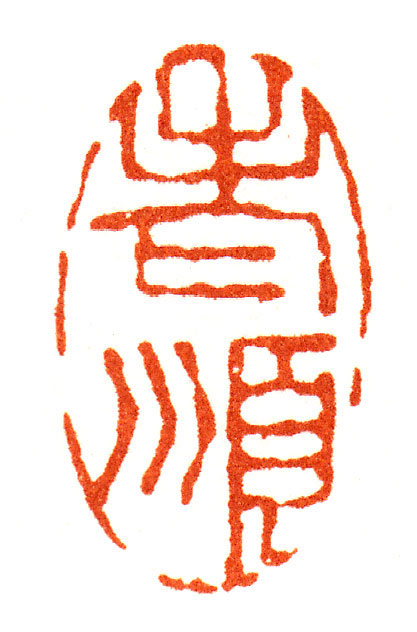
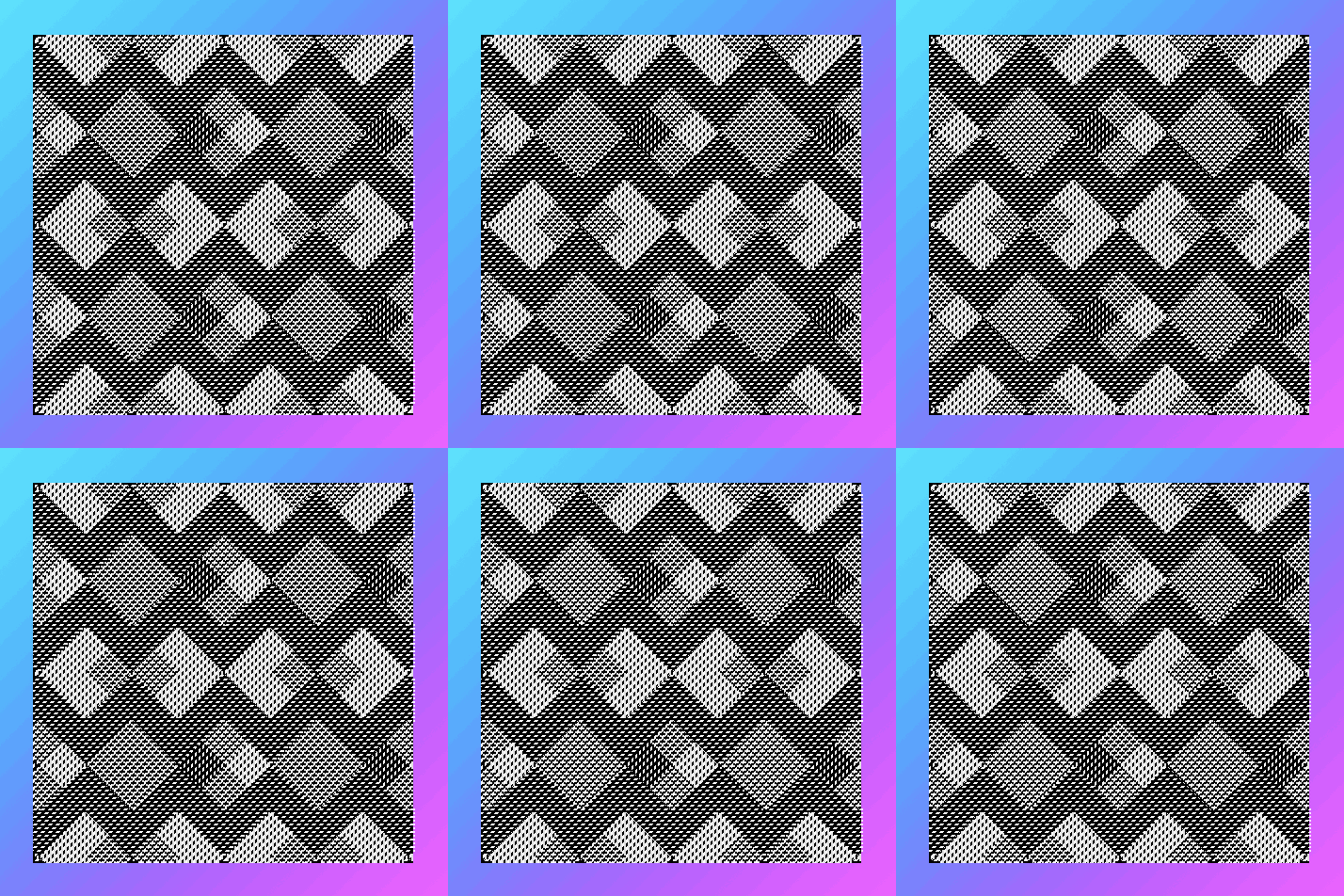
Image Healing: Guided Mandala Viewing - Lesson 191
Choose a mandala with a clear upper and lower structure and a stable center.
Let your gaze move slowly up and down.
Feel the axis that still exists despite the changes in altitude.
A mandala is not about drawing something, but about observing; what you practice in observing is a state of abiding in a higher realm.
The theme of this lesson's mandala is vertical stability, symbolizing that height is no longer synonymous with danger.
◉ One gaze is sufficient; no repetition is required.
Lesson 191: Draw your "High-Rise-Elevator-Bridge" adaptation diagram
① Height profile:
Draw a symbolic outline of a tall building on paper, making the lines narrow from wide to narrow. Mark the floor height or visual focal point that makes you feel most uncomfortable, so that your body can see where the "trigger point" is.
Instead of viewing the entire building as a threat.
② Elevator space:
Draw a small square to represent the elevator, and then draw two concentric circles around it to symbolize "I can approach with preparation." Write down the minimum steps you can accept to enter.
For example, "stand at the elevator entrance for 30 seconds"; re-establish a sense of control in a way that allows you to either stay or leave.
③ Bridge structure:
Draw the bridge surface with an arc, then add two support lines below to symbolize stability. Mark the areas you want to practice, such as the inside of the railing or the middle section.
The image should convey the message that "I'm not forcing my way through, but rather choosing a safer position."
Please log in before submitting your drawings and feelings.
○ 191. High-voltage scenario exposure · Log guidance
- Record the scene of today's practice (high-rise building, elevator, or bridge) and write down your "minimum exposure action".
- Write down the changes in your body sensations before, during, and after the exercise (tension, soles of feet, breathing, head).
- Write yourself an encouraging quote: "I am experiencing, not being forced."“
Please log in to use.
High-rise buildings, elevators, and bridges don't need to be conquered all at once, but rather encountered gradually, allowing the body to slowly build up a stable upward and forward momentum.
 EN
EN  ZH
ZH  ES
ES  FR
FR  JA
JA