

Lesson 8: Over-vigilance and over-scanning for danger signals
Duration:70 minutes
Topic Introduction:This course focuses on the core issue of "neural hypervigilance," helping you understand why you are always scanning for risks and predicting the worst-case scenario, learn to distinguish between real danger and "false alarms," and through physical and psychological exercises, gradually bring your brain back from a state of constant alertness to a relatively safe and adjustable range.
○ Three ways to identify over-vigilance and danger scanning
- Body radar recording:Choose a time each day to record what you are scanning and your current physical sensations (heartbeat, breathing, muscle tension), and learn to see how your body engages in "alarm mode".
- Risk rating scale:When faced with a stressful situation, rate the "actual level of danger" (0-10) and then rate the "subjective level of worry." Compare the two to help your brain begin to distinguish between reality and imagination.
- Security Clues List:Write down at least three "safety cues" in your current environment (such as the door is open, someone is nearby, and your phone is at hand) to reassure your brain's "worst-case scenario" with concrete evidence.
Lesson 8: Over-vigilance and Over-scanning for danger signals 🎧 Click to watch/listen to the reading
Over-vigilance is like having a red alarm light constantly flashing in your brain. You're not actually in danger, but your nervous system is always in a state of "something's about to happen." You unconsciously scan everything around you: subtle physical discomfort, changes in other people's tone of voice, any unusual sound in the environment. Even a slight skipped heartbeat or someone frowning will immediately trigger a warning from your brain: "Something's wrong, there might be a problem." This isn't because you're overly sensitive, but rather because your anxiety system has been trained to be overly diligent. Normally, vigilance is meant to protect us in times of real danger; however, under prolonged stress, traumatic experiences, or constant worry, the brain treats "possibility" as "certainty," and "signals" as "evidence." As a result, your attention automatically filters out safe information, focusing only on details that seem threatening. Over-scanning for danger signals has a distinct characteristic: **the more you check, the more uneasy you become.** You think that paying more attention will avoid risk, but you find that the clues only multiply. Physically, you might repeatedly feel your breathing, heartbeat, and stomach; psychologically, you might repeatedly replay conversations and speculate about other people's reactions. This constant scanning prevents the nervous system from "shutting down," leading to fatigue, insomnia, and irritability. The first step in recognizing this is realizing that **attention itself is creating anxiety**. You're not discovering more danger; you're constantly magnifying the "potential problem." When you notice yourself repeatedly checking and confirming, you can silently tell yourself, "I'm in hypervigilance mode." Next, practice shifting your attention from "scanning" to "allowing." For example, when you experience an uncomfortable sensation, don't rush to analyze or draw conclusions. Instead, give yourself a descriptive statement: "I noticed a tightness in my chest." Just stop there, instead of continuing to ask, "What does this mean?" This tells the brain that the information has been received, but there's no need to immediately sound the alarm. Simultaneously, you can consciously practice "safety scanning." Deliberately seek out stable and tolerable signals, such as the feeling of your feet on the ground, the quiet sounds in the room, or a relaxed part of your body. This isn't about denying risk, but about allowing the brain to relearn balance. As hypervigilance gradually decreases, you'll find that the world hasn't become more dangerous; instead, it has become clearer. You are no longer led by every minor change, but are able to stay in the present moment. Anxiety may still be there, but you no longer need to be on duty around the clock, and you can truly allow yourself to rest.
▲ AI Interaction: Are you always looking for signs that "may go wrong"?
Perhaps you're used to seeing risks first: changes in other people's expressions, unread messages on your phone, negative information in the news, or a minor physical discomfort.
The brain is like a "danger scanner" that never dares to be turned off, constantly looking for loopholes and hidden dangers.
This ability has protected you at certain stages, but when it is maintained at a high level for a long time, it will exhaust your body and emotions.
Here, you can describe to the AI in text: What are the "dangers" you scan most often? How many of these alerts later turned out to be false alarms?
Let AI help you sort out which risks are real and which are just the brain's habitual "over-defense."
Click the button below to work with AI to sort out your "inner alarm system" and find some room for maneuver for yourself.
○ Musical guidance for calming hypervigilance
An overly vigilant brain finds it hard to be "quiet," yet it desperately craves a moment of security when it's off guard.
Choose a soothing, rhythmically stable instrumental piece, letting the notes gently envelop you like background music, rather than intensely occupying your attention.
When listening, there is no need to analyze the melody; simply let your attention move back and forth between "the sound itself" and "how your body feels at this moment."
When you find yourself mentally rehearsing all sorts of possible scenarios, simply bring your attention back to the note you're hearing right now.
Let music be a gentle vessel, letting your alert system know that there are times when it's okay to take a short break.
○ Herbal Healing Tea
Recommended drinks:Chamomile calming tea
Recommended reasons:Chamomile has traditionally been used to relieve tension and aid sleep. It is gentle and non-irritating, helping to slightly lower one's guard from a state of constant "high alert" and supporting the body into a relaxed state.
usage:Steep 3–5 grams of dried chamomile flowers in hot water for 5–8 minutes. You can add a small amount of jujube slices or honey. Drink a cup slowly in the evening or when you feel particularly tense, and coordinate with slow breathing.
○ Bird's Nest and Rock Sugar Soup (Example of a soothing dietary therapy)
Simmer the bird's nest over low heat until translucent, then add rock sugar to enhance the flavor. It has a delicate and smooth texture, perfect as a slow-paced, ritualistic snack, allowing you to experience the transition from tension to softness as you savor it.
Healing Recipes
/home2/lzxwhemy/public_html/arttao_org/wp-content/uploads/cookbook/yan-wo-bing-tang-geng.html(Please confirm that you have uploaded: yan-wo-bing-tang-geng.html)Image Healing: Mandala Stability Guidance 15
The light slowly spreads from the center, unhurried and gentle like ripples on water. Your breath follows its rhythm, entering a near-silent tranquility. The shadow of anxiety cannot enter here, for you are now surrounded by light. Let the light linger in your heart, becoming your new beat.
Anxiety stems from the feeling of "having to control," but the circle of the mandala tells you—the universe rotates on its own; it doesn't need your maintenance. At this moment, you only need to observe, not interfere. When you cease to fight against order, order begins to embrace you. Seeing and being seen occur simultaneously, and peace arises within this process.
Traditional mandalas typically feature symmetry and complex geometric structures, symbolizing the wholeness of the universe and the cycle of life. By drawing traditional mandalas, individuals can perceive inner peace and strength, achieving psychological balance.

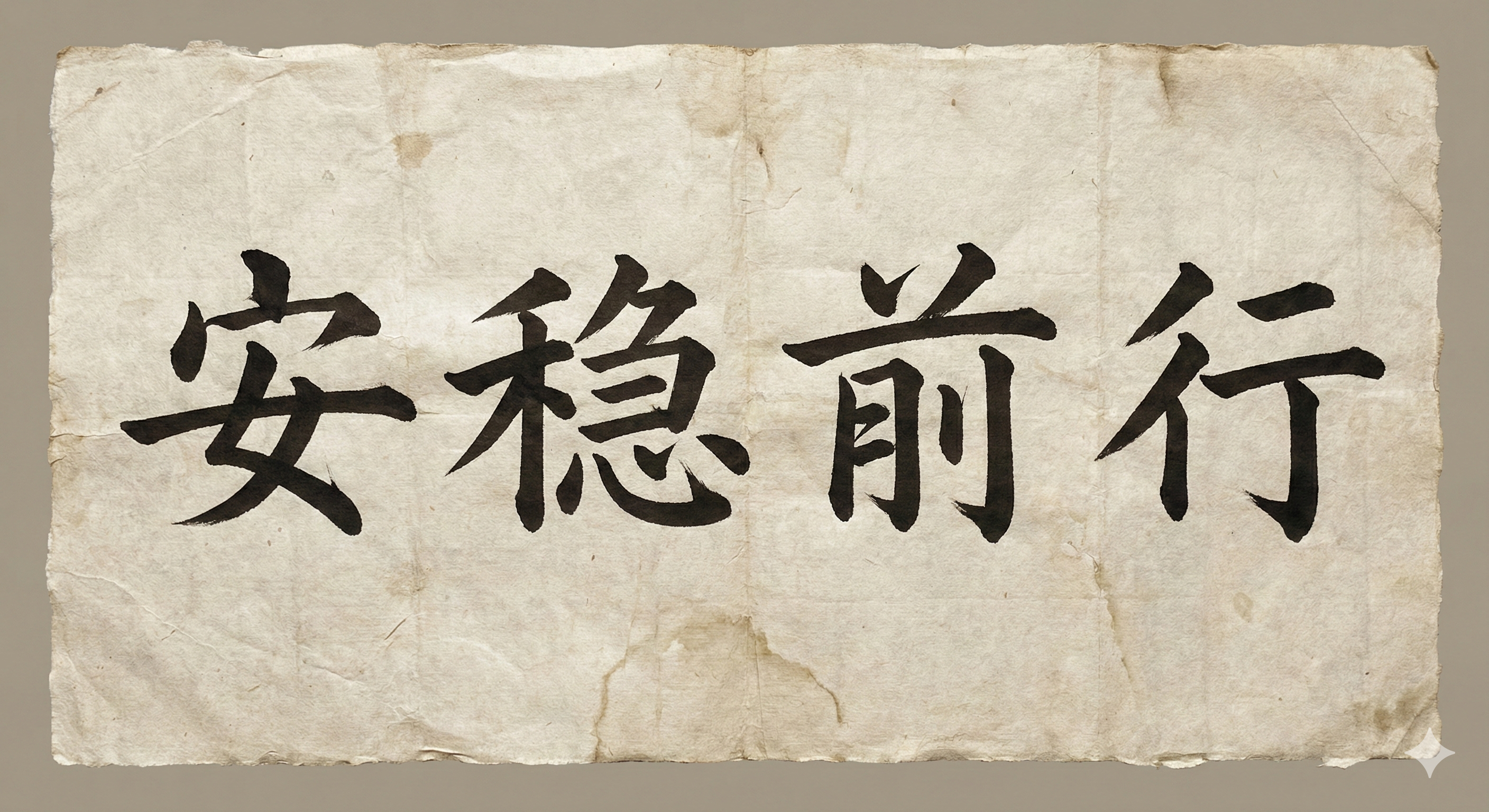
Lesson 8: Chinese Calligraphy: Regular Script - Repetitive Writing and Rhythm Establishment
Regular script calligraphy training is not about writing it perfectly the first time, but about developing a stable rhythm through repetition. This lesson uses repeated writing to help the body remember the correct rhythm.
Writing Instructions:
When writing the same character repeatedly, maintain a consistent rhythm in the beginning, middle, and end of each stroke.
Don't try to change things deliberately, or be rigid and inflexible; let the rhythm develop naturally.
Written words:
Proceed steadily
Motivational words:
When the rhythm stabilizes, the mind will naturally calm down.
Writing Tips:
You can count silently in your mind to help maintain a writing rhythm and avoid writing too fast or too slow.
Lesson 8: Over-vigilance and over-scanning for danger signals
Objective: To help you see how you continuously scan for danger in your daily life and learn to build an internal roadmap for your nervous system to return from "over-vigilance" to "relative safety".
Steps: On one side of the image, depict an "alarm zone," using taut, sharp, and high-contrast symbols to represent the danger signals you frequently scan for (others' expressions, phone alerts, news, physical sensations, etc.). On the other side, depict a "safe zone," using soft, stable shapes and colors to represent supporting factors (trustworthy people, stable places, reliable resources). Place a transition zone between the two, symbolizing your process from "immediate tension" to "pausing before assessing." While composing the image, you are also designing a path for yourself from alarm to reassurance.
Please log in before submitting your drawings and feelings.
○ 8. Over-vigilance and over-scanning for danger signals: Log-guided recommendations
① Today, record a moment when you were clearly "scanning for danger": What were you worried about at that moment? What worst scenario did your brain present?
② Write down three "actual safety cues" from the environment at the time (e.g., someone was present, it was okay to leave the scene, the problem did not actually occur), and see how they contrast with your concerns.
③ Use a scale of 0–10 to mark the “actual level of danger” and the “subjective level of anxiety”, allowing yourself to see the difference between the two instead of criticizing yourself for “overreacting”.
④ Design a small action to "reduce your alertness by one level", such as: breathing slowly for one minute, shifting your gaze to a stable object nearby, or telling yourself, "I can decide whether to be nervous a little later."
⑤ Record the actual impact of this small action on your current physical and emotional state (write down whether there are any changes).
⑥ A concluding remark to myself: Even though I still get nervous, I'm learning to prevent alarms from overly dominating my life.
Please log in to use.
You don't need to completely let your guard down overnight. Just relax a little bit each day, and your brain will gradually learn that a sense of security can be cultivated.