

Lesson 25: Creating Safe Zones for the Brain – A Four-Step Framework for Cognitive Restructuring
Duration:105 minutes
Topic Introduction: Anxiety is not just an emotion, but also a thought habit. An anxious brain tends to assume the worst, exaggerate risks, and ignore the positive aspects. This course guides you through a four-step framework for cognitive restructuring to help your brain shift from "dangerous assumptions" to "reality assessment," establishing a psychological safety zone at the cognitive level.
○ A Four-Step Framework for Cognitive Restructuring
- Identify automatic ideas:What was the first worry that popped into my head?
- Evidence to be examined:What evidence supports/refutes it?
- The idea of finding balance:If I said the same thing to a friend, how would I comfort him?
- Write down new beliefs:A gentle, realistic, and stable new narrative.
Lesson 25: Creating a Safe Zone for the Brain: A Four-Step Framework for Cognitive Restructuring 🎧 Click to watch/listen to the reading
When anxiety recurs, the brain often loses its "safe zone." Any thought that arises is quickly amplified, extrapolated, and conclusions drawn, as if every idea needs to be immediately taken seriously and processed. The purpose of cognitive restructuring is not to make you think more positively, but to create a buffer space for the brain where you don't have to immediately believe all thoughts. This is the "brain's safe zone." This safe zone can be built using a clear, repeatable four-step framework. **Step 1: Naming what is happening.** When you are swept up in a thought, stop and describe it in neutral language: "I noticed an anxious thought has arisen." Naming helps you pull yourself out of the content of the thought. You are no longer looking at "this thought," but rather at "a thought." This step itself reduces the brain's sense of threat. **Step 2: Distinguishing between facts and interpretations.** Then ask yourself: "What are objective facts here, and what are my interpretations or predictions?" Facts are usually simple, such as "My heart is beating faster" or "Things haven't come to a conclusion yet"; while interpretations often involve inferences and conclusions, such as "This means I can't do it" or "There will definitely be problems." Separating the two is the core of cognitive restructuring. **Step 3: Introduce Alternative Perspectives.** This isn't about refuting, but about broadening your understanding. You can ask, "Are there other equally plausible, but less catastrophic explanations?" Alternative perspectives don't need to be perfect; they just need to "possibly exist." When the brain realizes there's more than one explanation, the tension decreases. **Step 4: Return to Controllable Actions.** Finally, shift your focus from "clarifying your thoughts" to "What small, concrete things can I do right now?" Even something as simple as continuing your current task, getting a drink of water, or taking a short walk. Actions tell the brain: life can go on without waiting for all problems to be solved. The key to these four steps isn't eliminating anxiety all at once, but **repeated practice.** Each time you use this framework, you're paving a new path for your brain: the appearance of a thought doesn't equate to danger; thinking can be paused, but safety doesn't disappear. As you become familiar with this framework, your brain will slowly learn to self-regulate. Your safe zone no longer depends on external confirmation but is built into your cognitive style. You begin to have the ability to remain on the shore when thoughts are surging, rather than being swept directly into the water.
○ Audio - Guided Listening: "I'm Re-understanding Myself"
During the listening process, each time you hear "I allow my thoughts to slow down," gently close your eyes and let your thoughts pass by without following them.
○ Eastern Tea Therapy: Longjing Tea for a Calming Mind
Recommended reasons:Anxious thoughts run too fast and repeat themselves. Longjing tea has a light fragrance and a slightly bitter taste, which can symbolize the process of "calming down one's thoughts".
practice:Take 3 grams of Longjing tea, steep it in 80℃ water, smell the aroma for 3 seconds, and then drink it.
○ Stable Dietary Therapy: White Radish and Lemon Slices (ID25)
When your chest feels tight or your thoughts are stuck and hard to clear, a refreshing sliced cold dish can help your body regain a sense of openness. The refreshing coolness of the daikon radish helps to remove inner stagnation, while the bright, tangy lemon helps to invigorate without being overly stimulating. This sliced dish is perfect for when you want to "wash away the heaviness" after stress, allowing your body to feel refreshed and safe.
Open Recipe
◉ Japanese Dietary Therapy: Thin Slices of White Radish and Lemon (ID 25)
This is a classic, staple dish known in Japan as "Amazu-zuke." Thin, translucent slices of daikon radish are pickled with fresh lemon slices. The crisp texture of the daikon radish and the tangy aroma of the lemon create a refreshing and soothing effect, relieving chest tightness like a cool breeze. When anxiety causes shortness of breath or a feeling of blockage in the chest (a condition known in Traditional Chinese Medicine as "plum pit qi" or qi stagnation), this dish can effectively relieve this discomfort.
Cool and soothing Relieve chest tightness Soothe the liver and regulate qi
I. Recommended Dietary Therapy and Reasons
Recommended dishes:Thin slices of white radish and lemon (ID 25)
Recommended reasons:White radish has a strong "qi-regulating" function, which can promote the downward flow of stagnant qi, eliminating abdominal bloating and chest tightness; the sour taste of lemon enters the liver, which can soothe the liver and relieve depression, and the essential oil aroma in its peel directly acts on the limbic system, improving mood. The act of chewing crunchy and hard foods can also release tension in the masseter muscle, thereby relaxing the tense nervous system.
2. Recipe and Method
Recipe (Serves 2–3):
- 200g of white radish (middle section is best)
- 1/2 fresh lemon
- 1/2 teaspoon salt (for removing water)
- 1.5–2 tablespoons of white sugar or honey
- 2 tablespoons of rice vinegar (or white vinegar)
- A small piece of kelp (optional, to enhance umami flavor).
practice:
- slice:Peel the white radish (or leave the skin on for a crisper texture), cut it in half lengthwise, and then slice it into very thin semi-circular slices (the thinner the slices, the more flavorful they will be).
- Kill water:Place the radish slices in a bowl, sprinkle with salt and mix well. Let it sit for 10–15 minutes until it softens and releases water. Then squeeze out the water (to remove the radish's pungent smell).
- Preparing lemons:Wash the lemon (it's best to scrub the peel with salt to remove the wax), cut it into thin fan-shaped slices, and remove the seeds (the seeds will have a bitter taste).
- Sauce preparation:Mix the vinegar and sugar (or honey) until dissolved.
- Marinating:Find a resealable bag or glass jar, put in the squeezed radish slices, lemon slices and kelp, and pour in the seasoning sauce.
- refrigeration:After kneading evenly, refrigerate for at least 30 minutes, or overnight for the best flavor.
3. Small rituals for body and mind
When slicing a radish, try to slice it as thinly as possible so that it is translucent. Looking at its semi-transparent texture, imagine that your mind will also become so clear.
When mixing lemon and carrot, take a deep breath of the sweet and sour aroma and tell yourself, "Refreshing energy is entering my body."“
When eating, focus on the crisp chewing sound; each bite is like shattering the knots in your chest.
4. Dietary Therapy Experience Record
- Record whether the feeling of "a stone pressing on" in the chest has lessened after consuming it.
- Observe whether this tangy taste wakes you up from your drowsy state.
- Pay attention to your digestion; white radish can often significantly improve bloating caused by stress.
V. Instructional Videos (approximately 3–5 minutes)
◉ Video Title:Thin slices of white radish and lemon – a refreshing cold dish to relieve chest tightness.
6. Precautions
- For those with excessive stomach acid:Because it contains vinegar and citric acid, people with excessive stomach acid or stomach ulcers should not eat it on an empty stomach. It is recommended to eat it as a side dish after meals to cut through the richness of food.
- Radish selection:Try to choose the upper part near the leaves, as this part is juicier and sweeter; the root part is spicier and may be too irritating.
- Storage time:It can be stored in the refrigerator for 3–4 days. Over time, the radish will become more and more flavorful and the texture will become more mellow.
hint:This dietary therapy focuses on regulating qi and relieving bloating, making it very suitable for consumption when one is experiencing shortness of breath due to emotional distress.
○ Humanist Script of the Italian Renaissance - Lesson 25 Writing Exercises
Today's healing phrase:
Steady steps lead far
In-depth analysis:
This is a "safe path" prepared for the brain. The Humanist Script's clear structure and four-step approach to strengthening cognitive restructuring prevent thinking from spiraling out of control. When anxiety arises, you are not without options.
Writing Skills (Advanced Version):
- Word-by-word writing:Each word corresponds to a cognitive step.
- Pauses between words:Symbolic shift in thinking.
- Unified font height:Maintain a stable mindset.
- The ending words are smooth and concise.The emphasis is on "continuing to live".
- Daily copying:Strengthen the framework of security thinking.
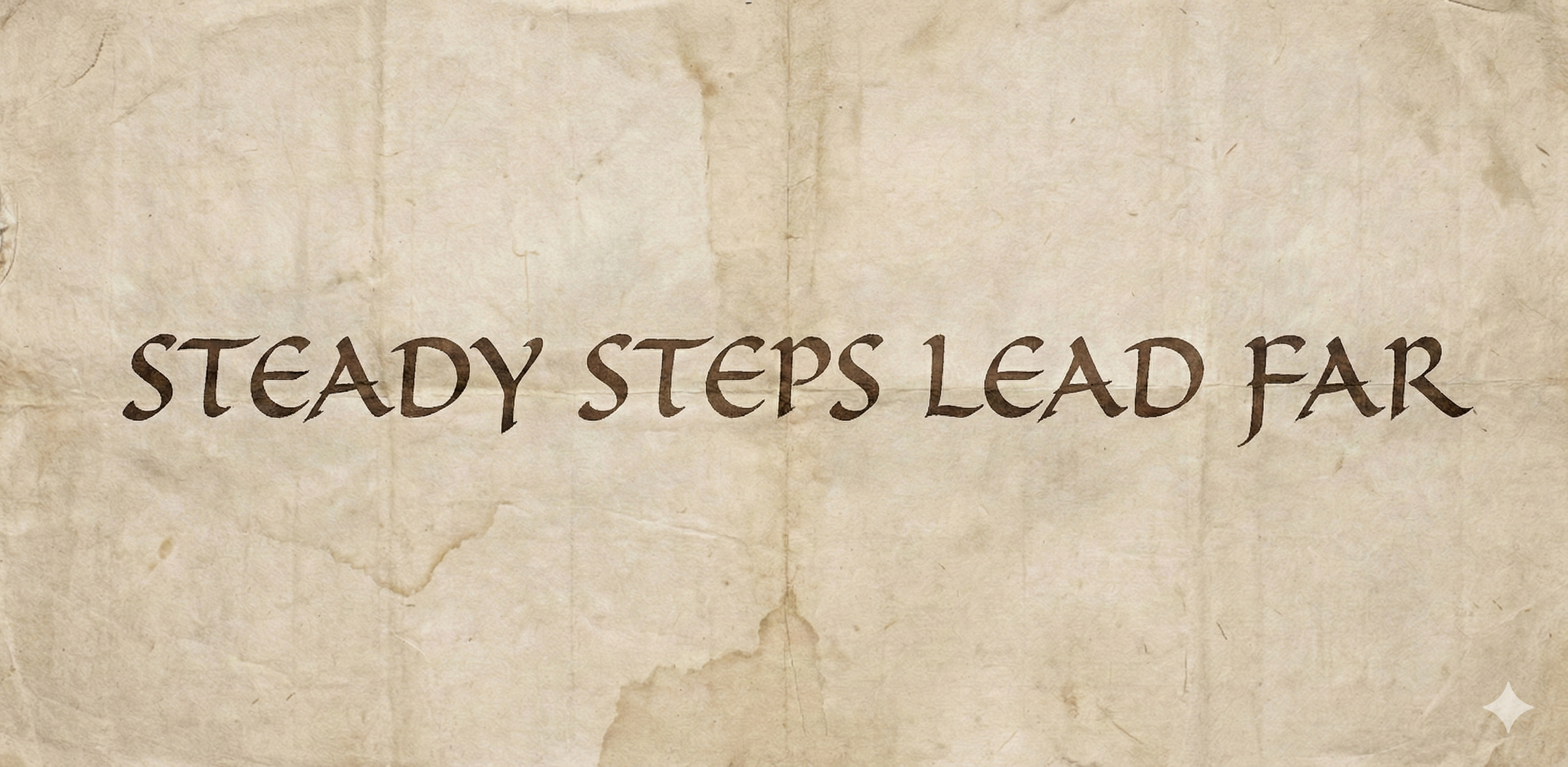
Image Healing: Mandala Stability Guidance 25
As the colors slowly blend, let your heart be bathed in their hues. There's no need to rush to interpret their meaning; simply feel the stillness of this moment. The mandala is silent yet powerful, proclaiming: balance remains, you remain. Pause your attention for a moment, allowing tranquility to grow naturally.

Lesson 25: Creating a Safe Zone for the Brain: A 4-Step Framework for Cognitive Restructuring
Objective: To train the brain to avoid being led astray by automatic thoughts during anxiety and to learn to examine things rationally.
Steps: Draw four squares on a piece of paper: Event, Thought, Emotion, and Alternative Interpretation. Briefly write down what you want to say in each square. Connect them with different colors to show that a "thought" is not the same as a "fact." Finally, add a blue line outside the squares to symbolize the boundary of rationality. Write the conclusion: "I have the right to pause thinking and choose a different interpretation."“
Please log in before submitting your drawings and feelings.
○ 25. Brain's Safe Zone: Journaling Guidance Suggestions
① What are the most frequent anxious thoughts I have today?
② What is the underlying belief behind it? (e.g., "I must control everything")
③ Where does this belief originate? Does it still hold true?
④ Can I write a new, gentler belief?
⑤ Today I can comfort my brain with one sentence: "________".
Please log in to use.
When the brain has a safe zone, the uncertainties of the world can be understood gently.