

Lesson 32: The Habit of Overanalyzing Everything (Rationalized Anxiety)
Duration:70 minutes
Topic Introduction:
Some anxious individuals don't experience tension through emotional outbursts, but rather through an inability to stop analyzing, extrapolating, and imagining consequences. This is called "rationalized anxiety," which makes you appear calm and rational, while your mind is racing. This lesson will help you understand the reasons behind this pattern and teach you how to stop this self-destructive over-analysis and return to the present moment.
○ The core mechanism of rationalized anxiety
- Disguising anxiety as "thinking":But the essence is to avoid experiencing uncertainty.
- Continuously speculate on "what if..."Hoping to find absolute safety through logic only makes one more uneasy.
- Attempting to control the future:Trying to predict all risks is futile; life is inherently beyond our complete control.
- Using imagination instead of action:The more you analyze, the harder it is to take a real step.
- Put pressure on yourself to provide the "perfect answer":Instead of worrying about making the wrong choice, doing the wrong thing, or saying the wrong thing, we allow ourselves to try things out step by step.
Lesson 32: The Habit of Overanalyzing Everything (Rationalized Anxiety) 🎧 Click to watch/listen to the reading
Some anxieties don't manifest as obvious panic or emotional outbursts, but rather hide behind a shell of "rationality" and "thinking things through." You habitually analyze: Why am I like this? Where did things go wrong? If I think more thoroughly, will I stop being anxious? This over-analysis, seemingly calm, is actually an anxiety reaction packaged in rationality. The core characteristic of rationalized anxiety is **treating emotions as problems that need immediate resolution**. Once unease arises, the brain immediately enters analytical mode, attempting to restore a sense of security through logical deconstruction. The problem is that emotions are not logical problems; analysis itself cannot truly relax the nervous system, but rather keeps attention glued to anxiety for a long time. This habit is stubborn because it is often encouraged. You might be praised for "deep thinking" and "self-reflection," making it easier to see repeated thinking as a virtue. But when analysis becomes an automatic reaction, it's hard to stop. Your thoughts swirl in place, yet give the illusion of "I'm trying to cope." A hidden consequence of over-analysis is that it distances you from your present experience. You're not feeling emotions, but interpreting them; not living, but observing life. This detachment prevents emotions from being processed, allowing them to persist in the form of tension, fatigue, or insomnia. The first step in recognizing rationalized anxiety is to pay attention to the **timing and function** of analysis. You can ask yourself, "Am I analyzing this now to take action, or just to alleviate anxiety?" If the answer is the latter, then analysis has likely become a form of avoidance. Next, you can practice setting limits on analysis. This doesn't mean prohibiting thinking, but rather delaying it. For example, tell yourself, "I'll think about this problem later." Shift your attention back to your physical sensations or the specific task at hand. Often, when the nervous system stabilizes, the problem itself becomes less acute.
You can also practice using description instead of explanation. Instead of asking "Why am I like this?", simply say, "I feel nervous right now." Description doesn't need a conclusion, but it allows the experience to be accepted. Once emotions are acknowledged, there's no longer a need to use a lot of thinking to justify them. As you gradually reduce over-analysis, rationality doesn't disappear, but returns to a more appropriate place. It's no longer used to suppress anxiety, but becomes a tool to support action. You begin to find that, often, **stopping to understand everything is itself part of alleviating anxiety.**
▲ AI Interaction: Why do you feel "worse the more you think about it"?
Your brain may be accustomed to using thinking as a source of security.
As long as you keep analyzing the situation, you'll feel like "things are still under control."
But the more I thought about it, the more the dangers of the future seemed magnified, and the more confused I became.
Analysis isn't the problem; over-analysis is.
This lesson will help you practice a gentler approach: thinking is no longer driven by anxiety, but by real-world needs.
Click the button below to explore your "over-analysis cycle" with AI and find an exit mode.
Over-analysis keeps the nervous system under mild stress for a long time, while music can provide a "non-verbal pause".
When the melody enters your body, your attention shifts from "internal dialogue" to "the present experience".
This is not about forcing yourself not to think about it, but about letting your attention naturally fall away.
○ Oriental Healing Tea - Silver Needle White Tea (Refreshing Type)
Recommended drinks:White Tea Silver Needle
Recommended reasons:Silver Needle White Tea has a calming and soothing effect, helping those who overanalyze to gradually shift from "having a head full of thoughts" to "being aware of their body."
practice:Take 2 grams of tea leaves, steep in 80℃ water for 1–2 minutes. The refreshing taste helps to slow down your thoughts.
Lemon Herb Roasted Chicken Breast
Seasoned simply with sea salt, lemon juice, rosemary, and a touch of olive oil, this light and non-irritating roasted chicken breast helps the brain return from a high-load state to a relaxed and satisfying rhythm. Over-analysts often neglect their body's needs, and this refreshing meal reminds you: perfection isn't necessary; simplicity is key.
high protein
Refreshing Dietary Therapy
/home2/lzxwhemy/public_html/arttao_org/wp-content/uploads/cookbook1/lemon-herb-baked-chicken-breast-24.html○ Modern Calligraphy · Lesson 32 Writing Exercises
In-depth analysis:
Overanalysis is often mistaken for "rationality" or "thinking things through."
But in long-term anxiety, it's more like a...Anxiety-driven defense mechanisms——
By constantly reflecting, we try to avoid the anxiety caused by uncertainty.
Modern calligraphy allows lines to be drawn before the thought process is complete.
It does not require "complete understanding," but rather encourages...Take action first, then feel..
This is exactly what trains the brain:
Not all sense of security comes from thinking things through.
Writing Skills (Advanced Version):
- Write first, then revise:Avoid excessive planning before putting pen to paper and reduce over-analysis.
- Lines can be offset:"Not entirely correct" paths are allowed.
- Reduce backtracking:Avoiding repeated revisions symbolizes ceasing endless thinking.
- Speed is natural:Don't deliberately slow down or speed up; return to your natural rhythm.
- Stop when finished:No further explanations, no more "thinking one step further".
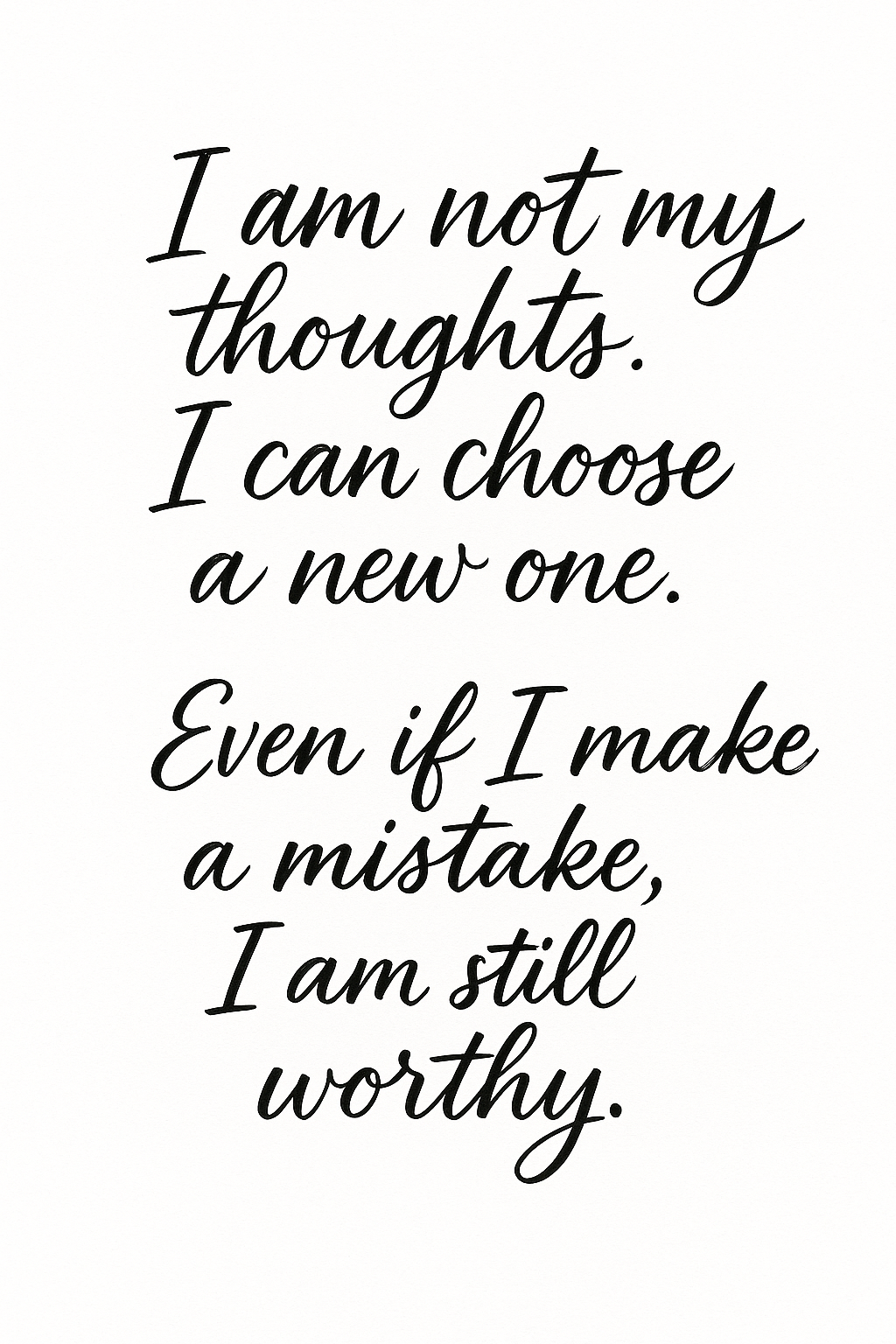
Image Healing: Mandala Stability Guidance 32
Imagine the center of the mandala as a minimalist dot, symbolizing the "present moment." The outer ring consists of complex, intersecting lines, representing the cycle of your thoughts: spiraling further and further, becoming increasingly chaotic. As you gaze at the center, allowing the complex lines to gradually blur in your vision, you experience a message: "Anxiety is the outer ring, not the center. I can choose to stay in the center." This image reminds you: the world is vast, but you don't have to constantly run on the outer ring.
The structure of a mandala helps you practice returning from "complexity" to "simplicity," and from "thought" to "body."
◉ Please stare and watch twice.
Lesson 32: Draw Your "Thought Maze"“
Purpose: To help you clearly see how you get lost in your own thoughts and practice finding your way out of the maze.
Steps: Draw a maze on a piece of paper, but don't draw the exit. Then write down your frequent over-analysis thoughts at different locations in the maze (e.g., "What if he says I'm not good enough?", "Did I do something wrong?", "Will things get worse in a month?"). Then draw a simple straight line outside the maze and write: "Do one small thing now." This image symbolizes that the exit is never in overthinking, but in action.
Please log in before submitting your drawings and feelings.
○ 32. Suggestions for avoiding over-analysis of habit logs
① Write down a situation that made you increasingly anxious the more you thought about it today.
② Summarize your core fear at the time in one sentence (e.g., I'm afraid of making a mistake).
③ Evaluate whether this analysis really helped you (0–10 points).
④ Write down a small step that you can take immediately, instead of continuing to think (such as sending an email, drinking a glass of water, or taking a five-minute break from the screen).
⑤ Record how you feel after performing the micro-steps.
⑥ Write down a gentler reminder for yourself in one sentence, such as: "I can think, but I don't need to think too much."“
Please log in to use.
Overanalyzing doesn't mean you're more rational than others; it just means you're more afraid of losing control. Starting today, may you shift your focus from "finding the perfect answer" to "allowing uncertainty and taking it one step at a time."