

Lesson 82: Understanding the "Escape-Exacerbation" Mechanism
Duration:70 minutes
Topic Introduction:
Among all anxiety symptoms, "avoidance behavior" is almost the most common and most easily overlooked aggravating factor.
What may seem like a brief respite from "avoiding" or "not confronting" actually reinforces the brain's belief that...
“"This is really dangerous, I have to run away."
This lesson will give you a complete understanding of why avoidance can intensify anxiety and how to gently break this cycle.
Why does avoidance make anxiety stronger?
- Short-term stress reduction → Long-term increased sense of threat:When you try to escape, your brain records it as "Luckily I escaped, it was too dangerous."
- There was no opportunity to correct the misunderstanding:You never know "I can actually handle it," and the brain's catastrophic tendencies are even harder to update.
- Avoidance = Avoidance learning → Fear reinforcement circuit automatically upgrades:The body and nervous system will become increasingly sensitive.
Lesson 82: Understanding the Avoidance-Enhancing Mechanism (Click to listen to the reading, watch the content)
Many people instinctively choose to escape when faced with fear, anxiety, or intense discomfort—a seemingly reasonable and short-term effective response. When you avoid scenes, people, or situations that make you tense, your body immediately relaxes, your heart rate decreases, and your breathing slows. This rapid relief leads the brain to believe that as long as you escape, you are safe. It is at this moment that the avoidance-reinforcing mechanism begins to form. From a psychological perspective, avoidance itself is not the problem; the problem lies in the fact that the immediate relief it brings is treated as a reward by the nervous system, thus continuously reinforcing the avoidance behavior. Each avoidance makes the brain more convinced that the situation is truly dangerous because you never stay long enough to verify whether things will improve. Over time, the scope of fear triggers expands; you may go from avoiding one scene to avoiding a type of scene, and then to avoiding more areas of life, making the world seem increasingly narrow. This is the so-called avoidance-reinforcing cycle. Avoidance temporarily reduces fear, but in the long run, it makes fear stronger and more frequent. What needs to be understood is that your brain is not deliberately making things difficult for you, but rather using its most effective method to protect you from discomfort. It does not distinguish between short-term relief and long-term costs; it only remembers which behavior immediately makes you feel better. The real change is not forcing yourself to endure, but breaking this automatic cycle. The key is not to completely stop running away, but to gradually shorten the distance and time of avoidance. When fear arises, lingering a little longer allows the body to experience discomfort naturally, rather than amplifying it infinitely, so the brain can slowly update its judgment. Understanding the mechanism of avoidance exacerbation means you can stop blaming yourself and stop seeing avoidance as a failure, but rather as a pattern that needs to be gently adjusted. When you begin to replace automatic reactions with awareness and complete escape from fear with short pauses, the dominance of fear will gradually weaken. You are not trapped; you are simply learning a new response path.
▲ AI Interaction: What have you been avoiding lately? What did you feel at that moment?
Escaping is not cowardice, but the brain's way of saving itself.
Tell the AI: What situations have you been avoiding lately? Is it fear of embarrassment, fear of being seen, or fear of making a mistake?
Let's work together to figure out: If avoidance can alleviate the pain, can I find a gentler, less self-harming alternative?
Before and after escaping, the body is often in a state of high alert: breathing becomes shallow, heart rate increases, and shoulders and neck are tense.
The slow, gentle rhythm of music can help the body relax and allow you to return from a state of "having to escape" to a state of being able to think.
○ Eastern Healing Tea - Agarwood Oolong
Recommended drinks:Agarwood Oolong
Recommended reasons:The aroma is calming and can help the body return to a stable state after being disturbed, making it especially suitable for moments when palpitations have not subsided after an escape.
practice:Steep in 90℃ hot water for 20–30 seconds, and take a slow, deep breath as the aroma rises.
○ Stable Dietary Therapy: Celery and Apple Soothing Salad (ID82)
In the process of becoming aware of and loosening avoidance patterns, the body often needs to clear tension and internal buildup. The crispness of celery helps release lingering stress, while the natural sweetness of apples brings a gentle sense of comfort. This salad is suitable for consumption after practicing stillness or experiencing emotional fluctuations; it won't add burden but will help the body regain lightness and fluidity. It symbolizes the gentle support one gives oneself when one is no longer running away.
Gentle soothing
Restore flow
Open Recipe
◉ Stable Dietary Therapy: Celery and Apple Soothing Salad (ID 82)
Celery and Apple Soothing Salad is a cold dish that combines a refreshing crunch with a gentle sweetness. Celery brings a fresh vegetal aroma and a crisp texture, while apples soften the overall flavor with their natural sweetness. A touch of nuts and a mildly acidic dressing ensure the salad is neither too stimulating nor too bland. It's especially suitable for those days when you feel mentally foggy, physically heavy, but don't want to eat greasy food—a soothing snack to "lighten your body and clear your mind."
Refreshing and crisp Light Salad Mild boost
I. Recommended Dietary Therapy and Reasons
Recommended dishes:Celery and Apple Soothing Salad (ID 82)
Recommended reasons: The crispness and freshness of celery often evoke images of "refreshment" and "invigoration," while the delicate sweetness of apples balances the slightly briny nature of the celery, making the salad more gentle and palatable. The addition of a few nuts and a refreshing dressing not only adds texture but also achieves a balance between fiber, a small amount of fat, and natural sugars. For those who spend long hours mentally taxed, experience fatigue from prolonged sitting, or live in stuffy weather, this salad offers a brief respite, helping the mind and body slowly unwind from a sluggish state.
2. Recipe and Method
Recipe (1–2 servings):
- 60–80 g of celery stalks (remove leaves, cut into thin strips or slices)
- One medium-sized apple, cored and sliced into thin strips or slices, peel can be left on.
- A small handful of lettuce or tender leafy vegetables (torn into bite-sized pieces).
- 10–15 g of chopped walnuts or almonds (lightly toasted is even better)
- 1.5–2 tablespoons plain or unsweetened yogurt
- 1–2 teaspoons of lemon juice
- 1 teaspoon of honey (adjust as needed)
- A very small amount of salt (optional, can be omitted).
practice:
- Wash the celery, remove the leaves, and cut it into thin strips or slices. You can soak it in cold water for a few minutes to increase its crispness, then drain and set aside.
- Wash and core the apples, then cut them into thin strips or slices. If you want to keep the peel, make sure the surface is clean.
- Wash and drain lettuce or tender leafy vegetables, then tear them into small pieces and place them at the bottom of a salad bowl.
- Arrange celery and apple strips evenly on top of the lettuce, then sprinkle with toasted walnuts or almond slivers.
- Prepare the salad dressing in a small bowl: mix plain yogurt, lemon juice, honey, and a very small amount of salt, and stir until smooth.
- Before eating, drizzle the salad dressing over the celery and apple. You can gently toss them or mix them as you eat to preserve their individual textures.
3. Small rituals for body and mind
When chopping celery and apples, you can focus on the sound and rhythm of the knife hitting the cutting board, making this preparation process a small break from the flow of information.
When plating, deliberately mix green with light yellow and light red, treating this bowl as a "personalized plate" for yourself, rather than just random side dishes.
When you take the first bite, feel the crispness and fragrance burst in your mouth, reminding yourself: this is not a time to rush, but a moment to slowly chew and breathe for your body and mind.
4. Dietary Therapy Experience Record
- Record the time of consumption (lunch, afternoon, dinner side dish) and the mental state at the time (such as drowsiness, depression, mental confusion, etc.).
- Observe whether there is an improvement in concentration, lightness, and overall refreshment within 20–40 minutes after consumption.
- If you choose this salad multiple times during a period of high stress or sedentary lifestyle, you can record how well it helps with digestion and mood relief.
V. Instructional video (approximately 3–4 minutes)
◉ Video Title:Celery and Apple Soothing Salad: A refreshing side dish to help your body "ventilate".
6. Precautions
- Celery has a strong fibrous texture, so those with weak teeth or sensitive stomachs can cut it into finer pieces, or blanch it in moderation before cooling it down.
- Those who need to control their sugar intake can reduce or omit the honey, retaining only the mild sweetness of the apple and yogurt themselves.
- If you are not tolerant to dairy products, you can use unsweetened soy yogurt or a light vinaigrette instead of yogurt sauce.
hint:This recipe is for daily dietary guidance and mental well-being, and is not a substitute for medical diagnosis and treatment. For special dietary needs or chronic illnesses, please consult a professional first.
○ Modern Calligraphy · Lesson 82 Writing Practice Suggestions
The topic of this lesson:Understanding the "Escape-Exacerbation" Mechanism: The Courage to Overcome Adversity
In-depth analysis:
Many people with phobias tend to "take detours".
While this kind of escapism may bring momentary relief, it deprives you of the opportunity to verify that "I can actually handle it," allowing the fear to grow bigger and bigger in your heart.
This is similar to writing descending letters in modern calligraphy (such as g, j, y).
If you're afraid of losing control of your pen and don't dare to draw that long loop to the end, and try to turn back halfway,
Then the character is incomplete and awkward.
To write this word well, you must insert the pen tip to the very bottom of the paper (the fear zone), draw that large arc, and use the centrifugal force of that loop to bring you back to the safe main line.
Writing Skills (Advanced Version):
- Deep Dive:Practice exaggerated downward loops. Stretch the tail of g or y to be longer and deeper than usual. Feel the pen tip "falling" downwards, and tell yourself, "Even at this low point, I can still control it to turn back."“
- No Shortcuts:Don't draw the circle too small because you're panicking. Force your wrist to complete the entire circumference. Avoiding it will only break the line; only by persisting to complete the entire process will the line be smooth and rounded.
- The U-turn:The most crucial moment is the instant you turn at the bottom of the valley. Don't stop, maintain momentum. This symbolizes that when facing fear, don't freeze up, keep moving (take deep breaths, count), and action will lead you out of the trough.
- Ink stacking (Intensity):Where the loops intersect, the ink deepens. Accept this darkness. It's a medal you wear for confronting your fears, not a stain.
Image Healing: Mandala Stability Guidance 82
This lesson's mandala is a giant spiral maze. The escape mechanism is like encountering a wall in a maze and immediately turning back, only to get further and further trapped. Follow the mandala's pattern with your eyes: although it seems to constantly encounter obstacles (angles), it never turns back, but instead follows the obstacles, continuing forward. It is these seemingly dangerous "turns" that ultimately form the only path to the center. Don't look back; the path is ahead, even if it seems winding.
Traditional mandalas typically feature a harmonious and intricately varied circular structure, symbolizing the wholeness of the universe and the cycle of life. By viewing mandala images, individuals can perceive inner peace and strength, achieving psychological balance.
◉ Gaze at the mandala twice, while taking deep breaths.
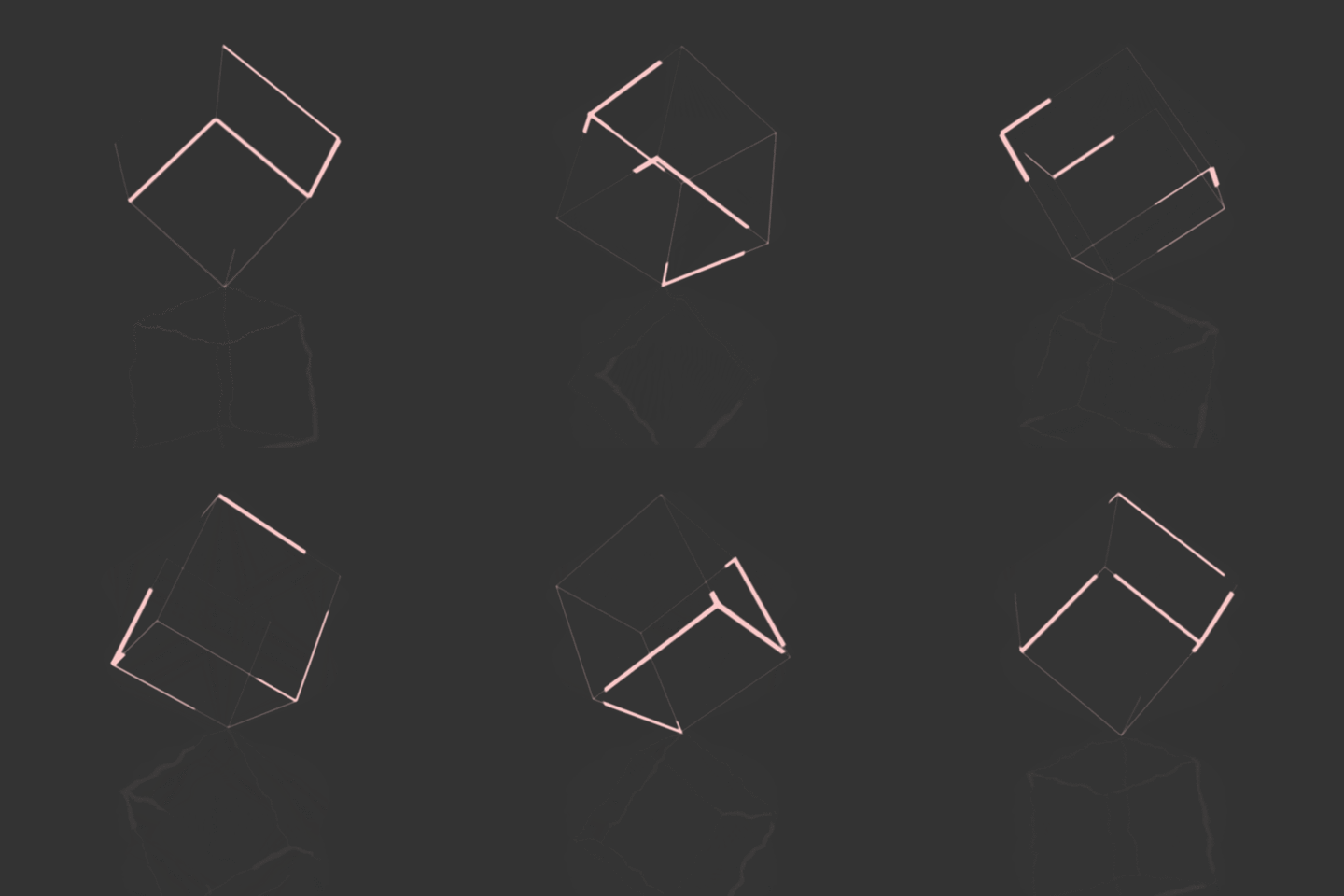
Lesson 82: Visualizing Escape Loops
① Guiding drawing actions:Draw a small circle to represent "what I can bear in the present moment," and draw a layer of strong contrasting color on the outer edge to represent "what I want to escape." Connect the two with a dotted line to symbolize "I can observe without rushing to get closer."
② Guiding drawing actions:Draw a tiny dot on the edge of the circle to symbolize "the smallest contact I'm willing to make," reminding yourself that getting close can be very small and very gentle.
Please log in before submitting your drawings and feelings.
○ 82. Avoiding Awareness: Journaling Guidance Suggestions
① What did I avoid today? Why?
② What is the temporary relief that escapism brings? What are the long-term costs?
③ What is the smallest possible approach action I would be willing to attempt? (The smaller the better)
④ How does the tension index (0–10) change after practice?
Please log in to use.
It's never your fault to run away; it's the brain's most primitive protective mechanism.
When you are willing to interrupt it in a gentle way, you are already healing yourself.