

Lesson 97: Post-Exposure Physiological Recovery Exercises
Duration:70 minutes
Topic Introduction:
After exposure exercises, many people experience aftershocks: a still-rapid heartbeat, stiff shoulders and neck, tightness in the stomach, and an inability to relax immediately.
This is normal because your body has just retreated from a state of high alert, like a "fight or flight" state.
This course will guide you through post-exposure recovery techniques, helping your brain to rediscover safety and reinforcing the long-term effects of exposure exercises.
Why is it difficult for the body to return to calm immediately after exposure?
- The inertia of the sympathetic nervous system:After the body is mobilized, it takes several minutes to tens of minutes to return to baseline.
- Cortisol has not been completely metabolized:The stress hormones triggered by exposure need time to be eliminated.
- The brain is still replaying the scene:Rumination can mislead the body into thinking that "the threat is not over yet."
Lesson 97: Post-Exposure Physiological Recovery Exercises, Click to listen to the reading, View the content
The end of exposure training doesn't mean the body has automatically returned to a safe state. In fact, many changes occur during the recovery phase after exposure. Without physiological recovery after fear subsides, the nervous system may remain at a high level of arousal, making it easier to be triggered again in the next situation. The purpose of physiological recovery training is not to analyze the experience, but to help the body transition from preparedness to repair. Once the sympathetic nervous system is activated, specific bodily signals are needed to activate the parasympathetic nervous system and truly slow down the system. The first step in recovery is rhythm re-establishment. You can send safety signals to your body by lengthening exhalations, slowing your breathing rate, or gently humming. These methods directly affect the vagus nerve, helping to stabilize the heart rate. The second step is muscle release. During exposure, the body often unconsciously tightens the shoulders, neck, jaw, and abdomen. Slowly stretching or consciously relaxing these areas allows tension to be truly released, rather than remaining. The third step is sensory recycling. You can use tactile sensations, temperature, or weight to help the body return to the present moment. For example, feeling your feet touching the ground, holding warm objects, or wrapping yourself in a blanket will enhance a sense of security. Physiological recovery is not a reward but part of learning. If you immediately engage in high stimulation or self-criticism after exposure, the brain may only remember the tension and ignore the success. Through recovery exercises, you're telling your body that it's over and you're still safe. In the long run, regular recovery lowers the overall alert baseline, making it easier to trigger the next exposure. It's important to understand that recovery isn't laziness, but a crucial step in consolidating change. Only when you seriously address your body's post-exposure state and fear learning will the cycle truly complete. You're not just toughing it out; you're teaching your body how to return to safety.
▲ AI Interaction: Tell me your body's reaction after exposure
Describe your physiological reactions when you just practiced exposure, such as heart palpitations, chest tightness, and stomach upset.
AI will analyze which type of recovery curve you have and provide personalized recovery steps.
You will receive a personalized "post-event recovery plan".
The body recovers more slowly than the will, and music can gently guide your breathing back to its natural state.
The flow of melody will remind your nervous system: there is no danger now, you can relax.
○ Eastern Healing Tea: Red Date and Ginger Tea
Recommended drinks:Red date and ginger tea
Recommended reasons:It warms the stomach and relaxes the vagus nerve, making it suitable for situations where one feels cold, experiences stomach tightness, or suffers a sudden drop in energy after exposure.
practice:Boil 3 slices of ginger and 2 red dates for 5–8 minutes, then drink while warm.
○ Stable Dietary Therapy - Honey Millet Repair Porridge (ID97)
After completing exposure exercises and entering the recovery phase, the body needs a gentle and restorative nourishment. The delicate texture of millet soothes the digestive system and helps with overall relaxation, while the mild sweetness of honey provides a sense of security and care to the nervous system. This restorative porridge is suitable for consumption after exercise, allowing the body to slowly regenerate energy in warmth. It symbolizes giving yourself true recovery after effort, rather than continuing to deplete it.
Mild recovery
Complete the closed loop
Open Recipe
◉ Stable Dietary Therapy - Honey Millet Porridge (ID 97)
Honey millet porridge is a soothing porridge with a gentle sweetness, delicate texture, and a warming, comforting taste. Millet itself has mild and nourishing properties; when cooked until soft and sticky, it turns a natural golden color. When combined with the sweetness of honey, it creates a calming and relaxing feeling for both body and mind. It is suitable as a breakfast, bedtime snack, or a light recovery meal when feeling tired, and is especially beneficial on days with poor appetite, mental tension, or unstable sleep.
Warm and gentle Easy to digest Soothing sweetness
I. Recommended Dietary Therapy and Reasons
Recommended dishes:Honey millet porridge (ID 97)
Recommended reasons: Millet porridge, when cooked, is soft, light, and gentle on the stomach, providing a mild source of energy. As honey diffuses in the warm porridge, it releases a natural floral aroma and subtle sweetness, helping to soothe tension and calm emotions. The entire bowl is pure in flavor, oil-free, and guilt-free, making it ideal as a restorative meal for days off or periods of stress.
2. Recipe and Method
Recipe (1–2 servings):
- Xiaomi 40–50 g
- 400–500 ml of clean water
- Add 1–2 teaspoons of honey (after turning off the heat).
- A few goji berries (optional)
- Add a small amount of milk or oat milk (optional, to increase smoothness).
practice:
- Rinse the millet gently twice with clean water, avoiding rubbing to preserve its nutrients.
- Add millet and water to a small pot, bring to a boil over high heat, then simmer over low heat for 18–25 minutes.
- Stir occasionally during the process to make the porridge smoother and prevent it from sticking to the bottom.
- If you prefer a smoother texture, you can add a little milk or oat milk when the sauce is almost reduced and continue cooking for 1–2 minutes.
- After turning off the heat, let it cool slightly to lukewarm before adding honey and stirring well (to avoid high temperatures ruining the flavor).
- Simply add goji berries as a garnish to taste and enjoy.
3. Small rituals for body and mind
Slow down while cooking porridge, observe the millet gradually absorbing water and softening, like watching something taut slowly loosen.
While stirring the porridge, focus on the sound of the ladle scraping against the bottom of the pot as a brief exercise in calming your mind.
Before taking the first bite, tell yourself, "I deserve to be treated gently."“
4. Dietary Therapy Experience Record
- Record the time of drinking and the mood and physical state at that time (tense, tired, empty stomach, etc.).
- Observe changes in stomach comfort, the spread of warmth, and feelings of mental calm.
- After consuming it for several consecutive days, you can record whether your sleep quality or stress levels have improved.
V. Instructional Videos (approximately 3–5 minutes)
◉ Video Title:Honey Millet Porridge: A soft and warm bowl of comforting soup.
6. Precautions
- Honey should be added while the honey is still warm to avoid affecting its flavor and nutritional value due to high temperatures.
- If blood sugar management needs are high, the amount of honey can be reduced or replaced with sugar substitutes.
- Those with weak stomachs can cook millet into a thinner, softer consistency to reduce the digestive burden.
hint:This recipe is for daily health maintenance reference only and does not replace any medical diagnosis or advice.
○ Gothic script - Lesson 97 Writing Exercises
The topic of this lesson:Physiological recovery after exposure – achieving “landing” through brushstrokes”
In-depth analysis:
After the exposure exercise, your heart may still be pounding and your palms may be sweating, which is a sign that the sympathetic nervous system has not yet withdrawn.
It's not a good time to practice flowing, dynamic calligraphy, as that would only make your mind more scattered.
What you need is likeGothic script (Textura Quadrata)Such a solid and stable font.
Especially its iconic“"Rhombus-shaped base"”—At the bottom of each vertical stroke, there is a square that is pressed down heavily and stops steadily.
Writing in this style of handwriting sends a clear signal to the brain through the physical pressure of the hand: "The battle is over, I am now on solid ground, and I am safe."“
Writing Techniques (Recovery and Landing Edition):
- The Anchor:
Focus all your attention on the "bottom" of each vertical line. As the pen tip touches the bottom and draws the diamond-shaped angle, exhale forcefully, imagining the tension within your body flowing through the pen tip and into the depths of the paper. This stroke is your anchor. - Slow Release:
Gothic calligraphy requires strokes to not connect. Intentionally extend the pause (3-5 seconds) between lifting the pen to write the next stroke. Inhale during this pause. Use the "space" between strokes to forcibly lower your heart rate. - Gravity perception:
Don't lift your wrist while writing; try to let the weight of your forearm rest entirely on the table. Write with that feeling of "heavy ink." This physiological sense of gravity can effectively counteract the "floating" sensation caused by anxiety. - Closed structure (Containment):
Practice writing letters with enclosed spaces, such as "o", "b", and "d". Imagine you are gathering the scattered energy back into these solid, black walls. The energy no longer leaks out but is safely stored.
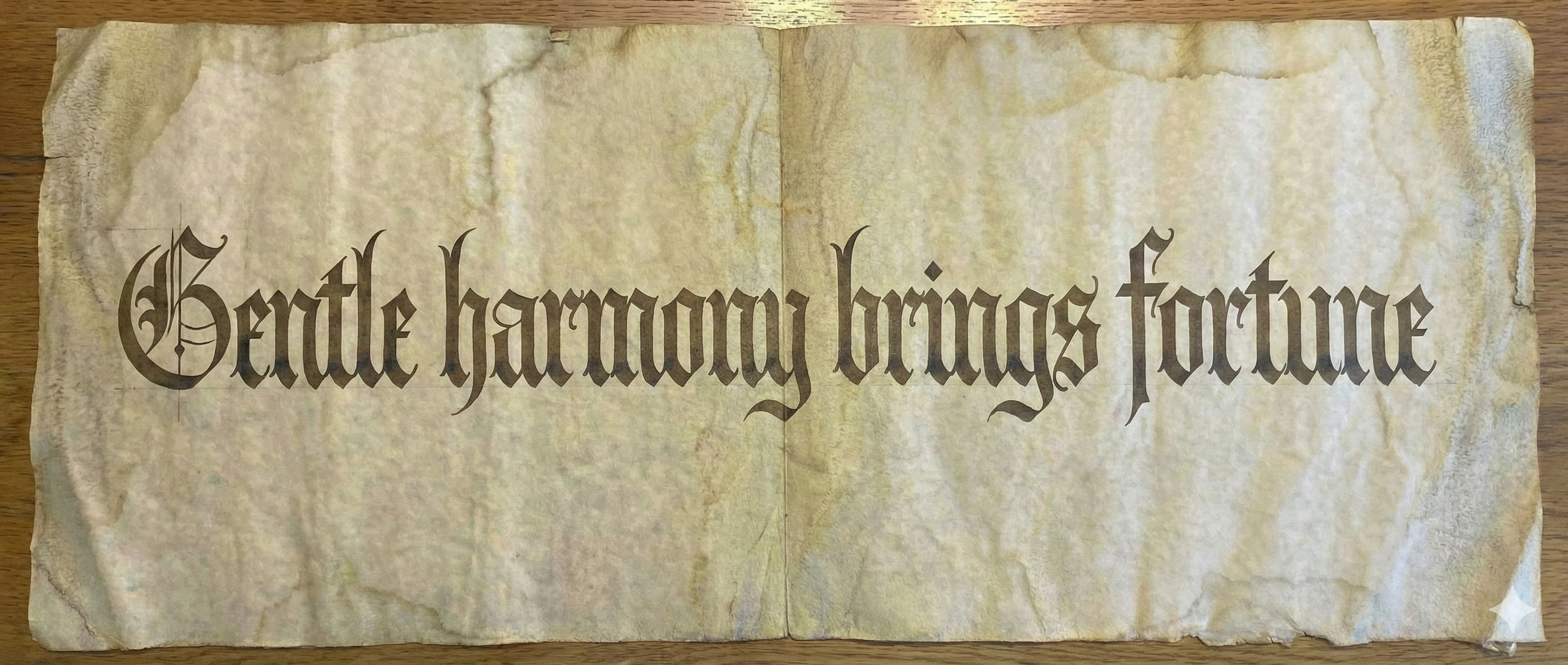
Image Healing: Mandala Stability Guidance 97
The exposed mandala is a "cooling pool." Imagine the mandala before you is an ancient well built of thick, deep blue stone bricks. The well water is deep, calm, and still. The anxiety you just experienced is like a series of red-hot iron swords; now, in your mind, throw them one after another into this deep well. Listen to the "sizzle" sound, the heat evaporates, the red-hot dissipates, and everything returns to coolness and silence. Look at the deepest, darkest center at the bottom of the well; that is your resting place after you have regained your peace.
Traditional mandalas typically feature a harmonious and intricately varied circular structure, symbolizing the wholeness of the universe and the cycle of life. By viewing mandala images, individuals can perceive inner peace and strength, achieving psychological balance.
◉ Gaze at the mandala twice, while taking deep breaths.

Lesson 97: Breathing Trajectory During Recovery (Drawing Guidance)
① Guiding drawing actions:Draw several wavy lines of light color, transitioning from tight to loose, to symbolize the body's gradually relaxing breathing rhythm.
② Guiding drawing actions:Draw a slowly expanding light-colored circle in the center of the picture, symbolizing the return of a sense of security to the chest.
Please log in before submitting your drawings and feelings.
○ 97. Post-exposure recovery: Log-guided recommendations
① What was the most energy-consuming part of today's exposure exercise?
② How long did it take my body to return to a stable state from tension? (0–10 rating)
③ Which recovery technique worked best for me? Why?
④ What small "reassurance gestures" am I willing to prepare for the exposure tomorrow?
Please log in to use.
Recovery is not regression, but consolidation; every time the body stabilizes, it helps you rebuild new fear circuits.