

Lesson 103: Training in Reconstructing Fearful Images
Duration:70 minutes
Topic Introduction:
Many specific fears (animals, heights, enclosed spaces, injections, etc.) recur because the brain stores "intense and unprocessed" fear images.
The clearer the image of fear, the easier it is to evoke fear.
The core of this lesson is to learn how to reshape these images from "threatening images" into "approachable and no longer out of control images".
This is one of the key psychological steps in exposure therapy.
Why does reshaping fearful images reduce fear?
- The brain processes emotions through images faster than through language:The more intense the fear image, the faster the body reacts.
- The image can be edited:Size, brightness, distance, and color can all be adjusted to reduce the sense of threat.
- Reshaping and altering the "emotional markers" of memories:The body's response changes from "dangerous" to "manageable".
Lesson 103: Training in Reconstructing Fearful Images (Click to listen to the reading and view the content)
Fear images are not random fantasies, but rather highly automated internal images formed by the brain through long-term experience. Many people, when faced with fear, involuntarily see certain images—such as loss of control, embarrassment, injury, being trapped, or being negated. These images often trigger a defensive state in the body faster and more intensely than words. The reason fear images have such a powerful influence is that they are stored in the emotional memory system and are linked to strong physical reactions. The goal of reshaping training is not to forcibly delete these images, but to change your relationship with them and their weight in the brain. Psychologically, when a fear image is repeatedly activated without new outcomes, the brain assumes this is the only possible result. The first step in reshaping training is image recognition. You need to gently become aware of the images that most frequently appear in your mind when fear arises, rather than immediately avoiding or suppressing them. The second step is to reduce the perceived threat of the image. You can adjust the distance, brightness, or clarity of the image in your imagination, transforming it from an oppressive panorama into a viewable object. The third step is to introduce new outcomes or supportive elements, such as adding help resources, safety exits, or a more powerful version of yourself to the image. These changes are not self-deception but rather provide the brain with new possibilities. As fear images begin to take different paths, the nervous system gradually reduces the intensity of alarms. It's important to understand that reshaping fear doesn't immediately make it disappear, but it weakens its automaticity, giving you more room to maneuver when the image appears instead of being swept away. Continued practice will gradually stabilize the new visual pathways, preventing old images from monopolizing interpretation. The essence of fear image reshaping is telling the brain that danger doesn't only have one outcome. As internal images become more adjustable, the body also gains more options.
▲ AI Interaction: Which fear image do you want to reshape?
Tell the AI: What's the first image that pops into your mind when you feel fear?
AI will guide you on how to adjust the size, color, and distance to make the image more controllable.
You don't need a complete cure; you just need to "soften" the frightening images.
Image reconstruction requires the brain to be in an "adjustable" mode, rather than a fight/flight mode.
Gentle background music can reduce the threatening feeling of visual images, making it easier for you to enter into visualization exercises.
○ Eastern Healing Tea - Roasted Oolong
Recommended drinks:Lightly roasted oolong or Wuyi rock tea
Recommended reasons:The warmth and calming effect of roasted tea can help the body enter a safe state of "visual practice".
practice:Brew with 90℃ hot water and drink slowly to enhance the sense of stability in your throat, making you feel "I can withstand changes in the scene".
○ Stable Dietary Therapy: Carrot and Ginger Warm Puree (ID103)
During the process of reshaping inner imagery and adjusting emotions, the body needs a warm and comforting nourishment. The natural sweetness of carrots can stabilize emotions, while the gentle warmth of ginger helps dispel inner coldness and tension. This warm paste is suitable for consumption after practice, allowing the body to rediscover a sense of groundedness between imagination and reality. It symbolizes providing the body with continuous support while changing inner vision.
Warm Central Axis
Support reshaping
Open Recipe
◉ Stable Dietary Therapy · Warm Carrot and Ginger Puree (ID 103)
Warm Carrot and Ginger Puree is a smooth, naturally sweet, and subtly warming dish. The sweetness of the carrots and the slight spiciness of the ginger blend together to create a gentle yet powerful warming sensation, making it especially suitable for days when you're stressed, the weather is cool, or your appetite is weak, providing a gentle boost of energy. It can be enjoyed as a light meal for one or as a gentle side dish to accompany a main course.
Warming root vegetables Smooth and easy to digest Light meals, any side dishes are acceptable
I. Recommended Dietary Therapy and Reasons
Recommended dishes:Warm Carrot and Ginger Puree (ID 103)
Recommended reasons: Carrots are rich in natural sweetness and beta-carotene, which can provide the body with stable energy; the pungent components of ginger help promote microcirculation, giving this dish a gentle "warming" effect. For those who are prone to cold hands and feet, poor appetite, or stomach cramps due to stress, this pureed dish is soft, easy to digest, and does not cause any burden, while bringing a delicate sense of calm.
2. Recipe and Method
Recipe (1–2 servings):
- 180–220 g of carrots (about 1–2 medium-sized carrots)
- 2–3 slices of fresh ginger (adjust according to tolerance)
- 1 tablespoon olive oil (or omit for the oil-free version)
- a pinch of salt
- Add 50–90 ml of warm water or vegetable broth (to adjust the consistency of the puree).
- A small amount of black pepper (optional)
practice:
- Wash the carrots and slice or dice them to make them easier to cook until soft.
- Place the carrots and ginger slices in a pot, add water to cover the ingredients, and cook until tender (about 12–15 minutes).
- Remove the carrots and ginger slices from the water, put them in a food processor or bowl, and blend them into a puree with a little olive oil and some warm water (or broth).
- Adjust the amount of liquid according to your needs to achieve the ideal consistency of the mud, making it smooth and soft.
- Add a pinch of salt and black pepper, stir again to balance the flavors.
- After serving, you can drizzle a little extra olive oil on top to enhance the aroma, or you can enjoy it as is.
3. Small rituals for body and mind
When boiling carrots, the small bubbles rising to the surface of the water can serve as a signal to "give yourself a pause," reminding yourself that there's no need to rush.
The process of blending a food into a puree is an action of "turning the rough into the smooth," which can symbolize the gradual calming of today's emotions.
Before taking the first bite, gently inhale the aroma of ginger to prepare your body for a warm sensation.
4. Dietary Therapy Experience Record
- Record your appetite state before eating (whether it is tight, cold, or tired).
- Observe the speed at which the warmth spreads throughout the body and the degree of relaxation in the stomach after consumption.
- If you use this dish when you feel stressed for several consecutive days, you can record the trend of how much relief you feel.
5. Tutorial Video (approximately 2–4 minutes)
◉ Video Title:Warm carrot and ginger puree – bringing a gentle warmth to the body.
6. Precautions
- Those with weak digestive systems can reduce the amount of ginger used to make the whole dish milder and easier to digest.
- If you cannot tolerate the spiciness of ginger, you can remove the ginger slices before stirring to retain the aroma and reduce the irritation.
- To increase satiety, you can eat it with brown rice, oatmeal, or roasted vegetables.
hint:This recipe is for daily health maintenance and does not replace any medical advice. If you have gastrointestinal issues, please adjust the ingredient ratios according to professional advice.
○ · Chinese Calligraphy · Running Script · Lesson 103 Writing Practice
The topic of this lesson:Training to Reshape Fearful Images – From Square to Round, From Hard to Soft
In-depth analysis:
Fear often manifests in the mind as sharp, huge, and rigid images.
The greatest magic of running script lies in "reshaping". It allows us to transform the sharp angles and angular lines (representing harsh reality) in regular script into smooth and flowing curves (rounded lines) through the rotation of the wrist.
Practicing the "turning points" in calligraphy is practicing "softening" the mind. When you can turn a sharp corner into a gentle circle, you are also subconsciously smoothing out the edges of that terrible object of fear.
Writing Instructions:
This lesson focuses on practicing "turning the tip".
When writing strokes such as horizontal hooks and vertical hooks, do not pause and linger as you would when writing regular script, creating right angles like those cut by a knife.
Try relaxing your wrist and gliding it through in a tiny arc. Imagine your pen tip isn't carving stone, but stirring thick syrup.
If a frightening image appears in your mind, gently round off the sharp corners of that image as you turn the pen.
Written words:
Stay mindfully
Motivational words:
External circumstances are dimensional, but the trajectory of the mind can be circular. When you begin to shift your thoughts, the rigid world begins to flow.
Writing Tips:
When writing the "cart" radical in the character "转" (zhuǎn), connect the intricate horizontal and vertical strokes with continuous lines, making them resemble a spinning wheel. Feel the centrifugal force brought about by this rotation; it can shake off the fear that has been building up in your heart.
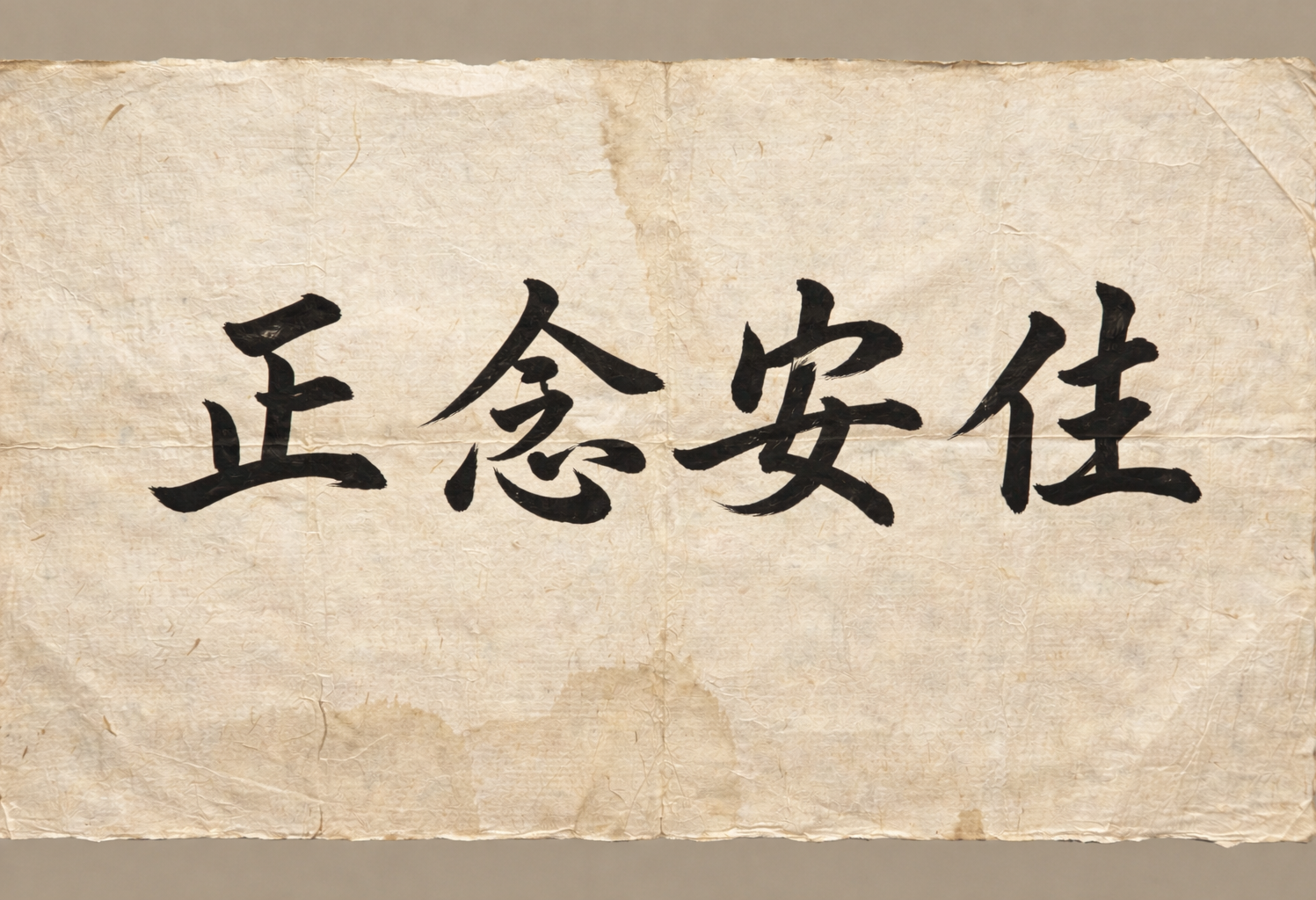
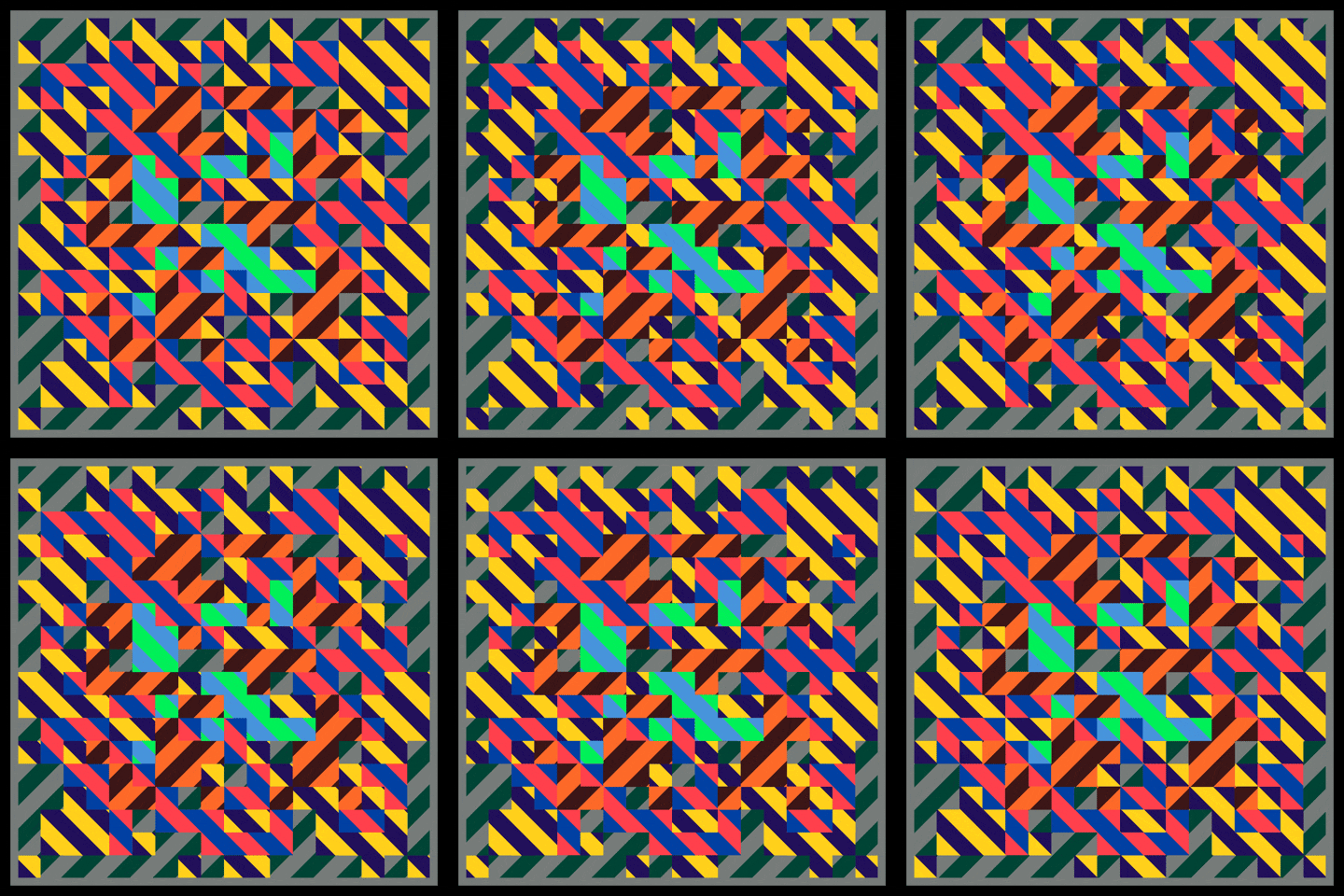
Image Healing: Mandala Stability Guidance 103
Imagine this mandala as a giant kaleidoscope. Throw the image that terrifies you (like an angry face or a spider) into the center of the mandala. Now, begin spinning the kaleidoscope. Watch as that originally frightening single image is dismantled, shattered, and replicated by the mandala's geometry, ultimately transforming into beautiful, symmetrical patterns. The energy of fear hasn't disappeared, but its "form" has been reshaped. It's no longer a threat; it has become part of the design.
Traditional mandalas typically feature a harmonious and intricately varied circular structure, symbolizing the wholeness of the universe and the cycle of life. By viewing mandala images, individuals can perceive inner peace and strength, achieving psychological balance.
◉ Gaze at the mandala twice, while taking deep breaths.
Lesson 103: The "De-Frightening Project" of Fear Images (Guided Drawing)
① Action guidance:Draw a small, dark shape in the center of the image to represent the core of the fear, then gradually blur its edges.
② Action guidance:The colors are gradually lightened as they are added from the center outwards, as if the image is being "diluted".
③ Action guidance:The outermost ring uses soft, transparent lines to allow one to see that "fearful images can be loosened and softened."
Please log in before submitting your drawings and feelings.
○ 103. Fear Image Reconstruction: Journaling Guidance Suggestions
① What are the most frequently recurring fear images in my mind? What are the details, such as color, size, and distance?
② When I adjust a part of the image (such as making it smaller/brighter), how does my body react?
③ Which reshaping method gives me the most "sense of control"?
④ Which visual reshaping technique would I be willing to try tomorrow?
Please log in to use.
Fear is not a stone etched into the brain, but a painting that can be redrawn.