

Lesson 107: The Symbolic Meaning of Fear
Duration:70 minutes
Topic Introduction:
Fear is not just "being afraid of a certain object"; it often symbolizes a deeper psychological message.
Some seemingly irrational fears may actually represent unseen needs, unexpressed emotions, or unmanageable life experiences.
This lesson will guide you to understand the symbolic layers of fear, enabling you to go beyond the surface and decipher what fear is trying to tell you.
○ Common symbolic meanings behind fear
- Signs of control failure:A fear of heights and speed may symbolize a sense of "loss of control" and "not being allowed to fail."
- Symbols of insecure relationships:Fear of being seen and fear of crowds may symbolize "fear of being judged or abandoned".
- Unprocessed emotional memories:Some fears stem from old experiences, which, after being repressed, resurface in life as "symbols".
Lesson 107: The Symbolic Meaning of Fear (Click to listen to the reading and view the content)
Fear is not merely a direct reaction to danger; it often carries deeper symbolic meaning. Many times, what frightens you is not entirely the current situation, but rather the underlying themes it triggers—such as loss of control, abandonment, rejection, or incompetence. Understanding the symbolic meaning of fear is not about over-interpreting, but about seeing why fear is so persistent. Psychologically, the brain uses specific objects of fear to represent abstract and unbearable emotional experiences. For example, the fear of public speaking may symbolize a deep-seated anxiety about rejection; the fear of enclosed spaces may symbolize a fear of being unable to escape a relationship or situation. When you only process the surface stimulus and ignore the symbolic level, fear often manifests in different forms. The first step in exploring symbolic meaning is to ask what fear is protecting—fear is not an enemy, but an overly forceful protective mechanism. The second step is to distinguish between the past and present. Many symbols originate from early experiences; past feelings of powerlessness are carried into the current situation, yet the body still reacts in old ways. The third step is to transform the symbolic meaning into a remediable need in the present, such as a sense of security, boundaries, or support. When you begin to understand what inner needs fear is reminding you of, it ceases to be merely a reaction to be eliminated and becomes a message that can be heard. It needs to be understood that symbolism does not replace exposure or regulation exercises, but rather provides them with deeper direction. Trust increases when the body knows you are not only forcing it to confront its fears but also understanding its intentions. The symbolism of fear is not mysterious; it simply uses emotional language to express what you haven't yet articulated. As you learn to translate this language, fear gradually loses its oppressive nature and transforms into an entry point for self-understanding.
▲ AI Interaction: What does your fear symbolize?
Tell the AI what you are afraid of or what kind of situation you are afraid of.
AI will help you analyze the psychological core it may symbolize.
You can also explore: "What is this fear reminding me of?"“
Only when we understand the symbolic meaning of fear can the body enter into a state of allowance.
Music can soothe an overly tense nervous system and help you hear your inner messages.
○ Oriental Healing Tea - Osmanthus White Tea
Recommended drinks:Osmanthus White Tea
Recommended reasons:The fragrance of flowers can relax a tense chest, while the gentle aroma of white tea can support "observing fear, rather than running away from it."
practice:Brew with 85℃ water to allow the osmanthus fragrance to be released slowly, symbolizing "gradually seeing your true self".
○ Stable Dietary Therapy: Osmanthus Millet Soothing Porridge (ID107)
During the exploration of the deeper meaning of fear, the body needs gentle and soothing nourishment. The delicate texture of millet stabilizes digestion and the nervous system, while the fragrance of osmanthus brings a sense of tranquility and introspection, making it easier to become aware of one's inner self. This calming porridge is suitable to eat after reflection or writing exercises, helping the body maintain warmth and security in understanding. It symbolizes the soft support one gives oneself when seeing inner meaning.
Support awareness
gentle understanding
Open Recipe
◉ Stable Dietary Therapy - Millet and Osmanthus Porridge (ID 107)
Millet and Osmanthus Porridge is a gentle, sweet porridge with a subtle floral aroma. The millet, after slow cooking, develops a naturally soft, oily texture, smooth and mild on the palate, gentle on the stomach. The addition of a small amount of osmanthus flowers enhances the fragrance and gives the porridge a soothing feel. It's especially suitable for when you've just woken up in the morning and your mind is still unsettled, or when you want to slow down and return to a gentle rhythm at night.
Warm and gentle porridge The fragrance of osmanthus Calm mind and body
I. Recommended Dietary Therapy and Reasons
Recommended dishes:Millet and Osmanthus Porridge (ID 107)
Recommended reasons: The soft texture of millet and the rice oil provide a gentle, soothing feeling to the stomach, while the subtle sweetness and calming aroma of osmanthus create a comforting and balanced porridge without being overly strong. It's perfect for days when you're feeling overwhelmed, having trouble sleeping, or experiencing digestive issues. As a gentle dietary support, it allows your mind and body to gradually find peace through its simple flavor.
2. Recipe and Method
Recipe (1–2 servings):
- Xiaomi 40–50 g
- 600–750 ml of clean water
- A small pinch of osmanthus flowers (dried or honey-preserved)
- A small amount of rock sugar or honey (optional)
- Add milk or plant-based milk (optional) as needed for flavor variation.
practice:
- Millet only needs to be washed 1-2 times; excessive scrubbing is unnecessary and may cause it to lose its oily properties.
- Add water and millet to a pot, bring to a boil over high heat, then reduce to low heat and simmer, stirring gently to prevent sticking.
- Continue simmering over low heat for 20–25 minutes, until the millet grains bloom and the porridge becomes naturally thick.
- Add osmanthus flowers, stir gently, and cook for another 1–2 minutes before turning off the heat.
- If you want it slightly sweeter, you can add a small amount of rock sugar; if you are using osmanthus honey, you can add a small amount of it after serving to enhance the aroma.
- For those who prefer a creamy flavor, add a small amount of milk or oat milk at the end, stir well, and enjoy.
3. Small rituals for body and mind
While cooking porridge, slow down your body to match the rhythm of the porridge. You don't need to stir frequently; just glance at the pot occasionally to hear the steady bubbling.
When serving porridge, I deliberately move slowly, making myself realize that I am taking care of my body at this moment, rather than hastily filling my stomach.
Before taking your first sip, gently inhale the fragrance of osmanthus, letting the aroma become a deep breath that calms your mind.
4. Dietary Therapy Experience Record
- Record your emotional state while drinking (such as tension, fatigue, restlessness).
- Observe the temperature changes and degree of relief in the stomach after the porridge enters the mouth.
- When drinking it for several consecutive days, you can record whether there is any improvement in sleep, appetite and mental stability.
V. Instructional Videos (approximately 3–5 minutes)
◉ Video Title:Millet and Osmanthus Porridge: A soft and fragrant treat that soothes the body.
6. Precautions
- If using osmanthus flowers in honey, which are quite sweet, it is recommended to add them later and in small amounts.
- People with weak stomachs can add more water when cooking porridge to make it thinner and easier to digest.
- Honey should not be heated above boiling. If you must add it, it is recommended to add it after the porridge has cooled slightly.
hint:This recipe is for general health maintenance and is not a substitute for any medical advice. For specific health conditions, please consult a professional nutritionist or healthcare provider.
○ · Chinese Calligraphy · Running Script · Lesson 107 Writing Practice
The topic of this lesson:The symbolic meaning of fear—it is a messenger, not an enemy.
In-depth analysis:
Psychology suggests that specific objects of fear are often merely symbolic representations. For example, fear of crowds may symbolize a fear of "losing boundaries."
Chinese calligraphy emphasizes“"Overconfident and carried away"”The beauty of running script lies in its freedom from the strict "form" (the concrete, fearful appearance) of regular script, and its pursuit of the "meaning" (the true inner needs) behind the brushstrokes.
Practicing running script is practicing seeing through appearances to the essence. When we stop obsessing over writing each stroke rigidly like printed text (staring at the object of fear), and instead focus on how the brushstrokes flow (focusing on inner needs), the intimidating power of fear dissipates.
Writing Instructions:
Key exercises in this lesson“"Combination of virtual and real"”.
Looking at the words you wrote, some strokes are black (solid), while others are like trajectories drawn in the air (illusory).
Fear appears "real" on the surface, but its symbolic meaning is "illusory".
When writing, try to focus more on those "invisible connections." Feel the intention directed at the moment the pen tip leaves the paper. That's you listening to what your fear wants to tell you, instead of being intimidated by it.
Written words:
Good times always come
Motivational words:
All phenomena in the world (all fearful scenarios) are projections of the mind. Don't shatter the monster in the mirror, but soothe the heart before the mirror.
Writing Tips:
When writing the character "象" (elephant), the upper part should be inclusive, while the hook in the lower part should be written with great flexibility. It resembles an elephant, large yet agile. Think of fear as this elephant; it may seem awe-inspiring, but if you know how to guide it (through your brushstrokes), it can become your strength.
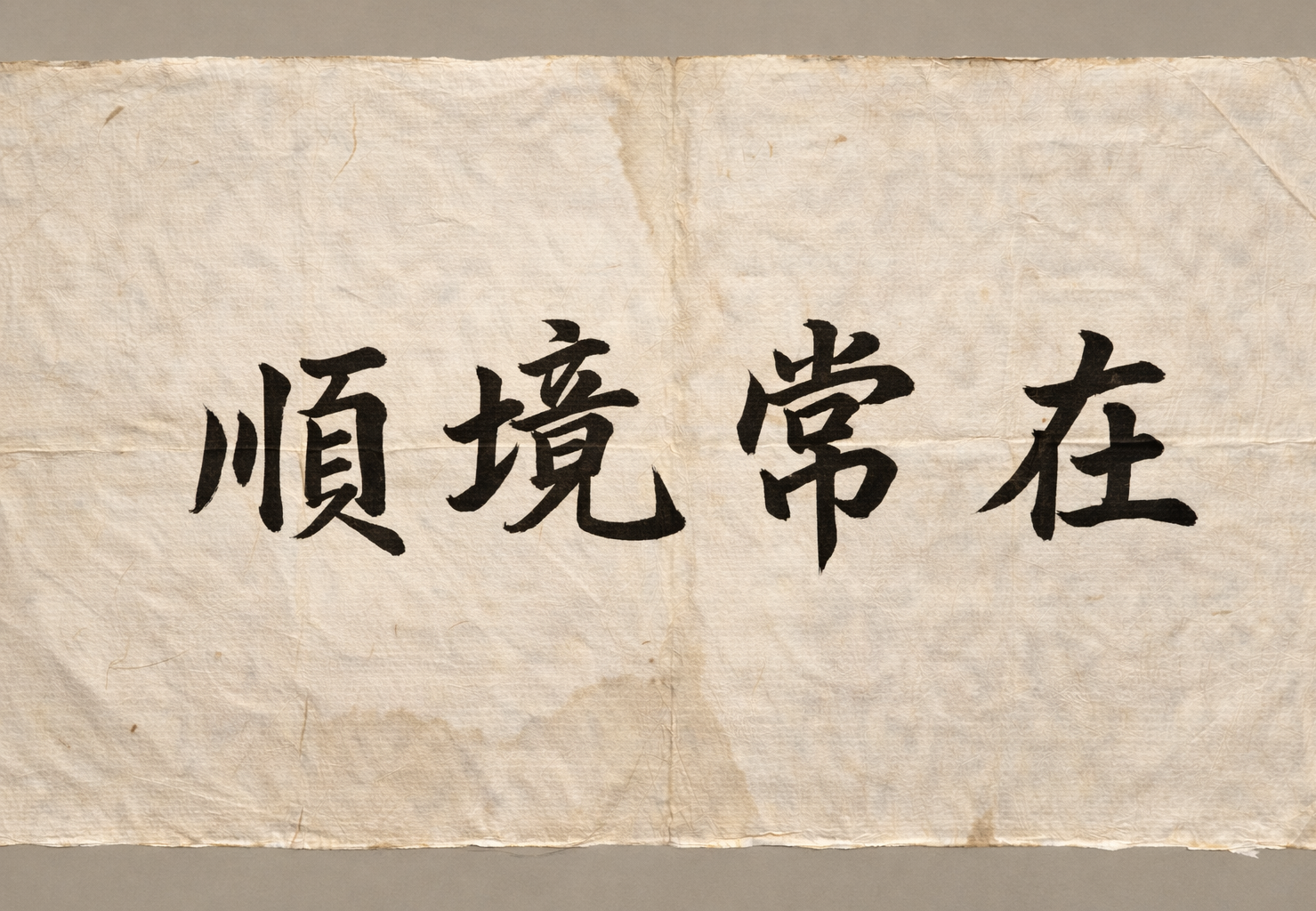
Image Healing: Mandala Stability Guidance 107
Imagine the mandala as a series of layers of a combination lock or an onion. The outermost layers, those patterns that may seem frightening or sharp, are the "disguise" (appearance) of your fears. Don't linger on this layer. Try using your gaze as a key, rotating, delving deeper, peeling away this layer. You'll find that the inner patterns soften, and looking further in, the center is a clear mirror. That initial fear was actually just a guardian existing to protect this center. Thank it, and then let it go.
Traditional mandalas typically feature a harmonious and intricately varied circular structure, symbolizing the wholeness of the universe and the cycle of life. By viewing mandala images, individuals can perceive inner peace and strength, achieving psychological balance.
◉ Gaze at the mandala twice, while taking deep breaths.

Lesson 107: Exploring Symbolism (Guided Drawing)
① Action guidance:Draw a symbolic image that frightens you; it doesn't have to be real, just draw the "feeling".
② Action guidance:Draw a soft shape next to it, symbolizing the need behind the fear.
③ Action guidance:Connecting the two with a line symbolizes "I am beginning to understand you".
Please log in before submitting your drawings and feelings.
○ 107. Symbolic Fear: Journaling Guidance Suggestions
① What am I afraid of lately? What does it symbolize?
② What unexpressed emotions might be hidden behind this fear?
③ If fear could speak, what would it want me to see?
④ What is a "gentle approach" that I would be willing to take?
Please log in to use.
Fear is not the enemy, but the messenger.
When you learn to listen, you can truly begin to heal.