

Lesson 108: Fear Projection in Relationships
Duration:70 minutes
Topic Introduction:
In relationships, we are often not afraid of "the other person," but rather afraid of the image we project into our own minds.
Past wounds, fears from old relationships, and unexpressed needs can all be mistaken for "reality" in new relationships.
This lesson will guide you to understand what fear projection is, why it is particularly strong in intimate and social relationships, and how to shift your attention from "fantastical threats" back to "the real present moment."
○ Common forms of fear projection in relationships
- Projecting people from the past onto people in the present:Old hurts are carried over into new interactions, making you feel threatened by harmless behavior.
- Projecting one's own self-evaluation onto others:Your worry that others will dislike you is actually a sign that you are being too hard on yourself.
- Treating imagination as reality:The other person's silence, busyness, or changes in expression can be misinterpreted as rejection or dissatisfaction.
Lesson 108: Fear Projection in Relationships (Click to listen to the reading, view the content)
In close or significant relationships, fear often doesn't stem directly from the other person's behavior, but rather from unprocessed inner experiences projected onto the relationship. Fear projection refers to unconsciously projecting past hurts, expectations, or unmet needs onto others. Thus, a single word, expression, or even silence from the other person can be interpreted as a threat or rejection. Psychologically, projection is an energy-saving mechanism; the brain tends to quickly interpret the present using old templates to avoid re-exposure. For example, someone who has been neglected may be highly vigilant in a relationship, extremely sensitive to indifference, and even a brief distraction from the other person will trigger a defensive posture. The core of fear projection isn't about judging right or wrong, but about distinguishing the present from the past. The first step in practice is to be aware that when strong emotions arise, ask yourself if this is a real feeling or a familiar old sensation. The second step is to take the feeling back to yourself, acknowledging that you are currently feeling fear or unease instead of immediately pointing to what the other person did wrong. The third step is to learn to delay the reaction, allowing the body time to stabilize before deciding whether communication is necessary when emotions are running high. Fear projection often creates a cycle in relationships: the more afraid and defensive you are, the more confused the other person becomes, the greater the distance grows, and ultimately, the initial fear is validated. The key to breaking the cycle lies in your willingness to take some responsibility for caring for your own emotions. Understanding projection doesn't deny the influence of others, but rather allows you to stop being completely dominated by past experiences. When you can distinguish between what is present and what is projective, the tension in the relationship will significantly decrease. Fearing projection doesn't mean you have a problem; it means you've tried very hard to protect yourself. Now you are learning to connect in a way that is more in line with the present moment.
▲ AI Interaction: What do you think "others" think of you?
Tell the AI a situation where you've recently felt stressed in your relationship.
AI will help you distinguish between reality and projection.
You can also explore: "Do these ideas come from the present or from the past?"“
Fear in relationships often puts the body into a state of alert.
Let music help you shift your focus from "what the other person might be thinking" back to "my current breathing and feelings".
○ Eastern Healing Tea - Longjing Green Tea
Recommended drinks:Longjing tea
Recommended reasons:It is refreshing and calming, making it suitable for drinking when emotions are projected onto you, allowing your attention to return to the clear present moment.
practice:Brew gently with 80℃ water, and let the aroma of the tea remind you: "I am facing reality, not fantasy."
○ Stable Dietary Therapy - Red Date and Millet Nourishing Porridge (ID108)
When dealing with emotional projections and inner fluctuations in relationships, the body needs a nourishing yet non-irritating food to stabilize inner security. The mild sweetness of red dates helps alleviate emotional tension, while glutinous rice supports the stable rhythms of the digestive and nervous systems. This nourishing porridge is suitable for consumption after reflecting on relationships or experiencing emotional ups and downs, helping the body return to a state of being cared for and accepted. It symbolizes finding peace within oneself in relationships before reconnecting with others.
Stabilize relationship emotions
Recovery Projection
Open Recipe
◉ Stable Dietary Therapy - Red Date and Millet Nourishing Porridge (ID 108)
Red date and millet porridge is a classic, soothing porridge that is gentle and mild. The millet, after being cooked for a while, naturally releases its delicate oils, resulting in a soft texture that is gentle on the stomach. The red dates slowly cook in the porridge, releasing a mild sweet aroma and tender flesh, giving the whole bowl a feeling of "slowly settling down." It's suitable for when you're feeling slightly weak, have unstable sleep, or are prone to mood swings; a bowl of this gentle, nourishing porridge helps you slowly regain your balance.
Warm and nourishing stomach Natural sweet aroma Gentle soothing
I. Recommended Dietary Therapy and Reasons
Recommended dishes:Red Date and Millet Nourishing Porridge (ID 108)
Recommended reasons: Millet is often considered a digestive-friendly grain in various diets, and when cooked into porridge, it provides a gentle, soothing feeling in the stomach. Red dates, with their mild sweetness and soft texture, enhance the porridge's enjoyment and satisfaction, making it easier to "eat a good meal." The porridge is very simple to season, relying mainly on the aroma and sweetness of the millet and red dates themselves, making it suitable as a gentle start to the morning or a light meal to replace a heavy dinner.
2. Recipe and Method
Recipe (1–2 servings):
- Xiaomi 40–50 g
- 4-6 red dates (remove the pits and cut in half or slices for better flavor release)
- 650–800 ml of water (adjust to your preferred consistency)
- A small amount of rock sugar (optional, for a slight sweetening effect).
- 30–50 ml of milk or plant-based milk (optional, to enhance smoothness)
- A pinch of salt (optional, for a slight flavor enhancement)
practice:
- Rinse the millet gently with water 1-2 times; there is no need to scrub vigorously, so as to retain some of the rice oil.
- Wash the red dates, remove the pits, and cut them in half or into slices. Set aside.
- Put millet, red dates and water into a pot, bring to a boil over high heat, then simmer over low heat.
- Keep the heat on a low simmer throughout the process, stirring gently from time to time to prevent sticking to the bottom. Cook for about 25–30 minutes, until the millet grains have bloomed and the porridge has become smooth and thick.
- Depending on personal preference, a small amount of rock sugar and a pinch of salt can be added to make the sweetness more mellow and the overall flavor more rounded.
- For a smoother texture, add a small amount of milk or plant-based milk before turning off the heat, stir well, and heat slightly. There is no need to boil for a long time.
- Pour into a bowl and let it cool slightly until it's warm but not scalding before enjoying.
3. Small rituals for body and mind
When cooking porridge, you can deliberately avoid using your phone and simply stand by the pot, stirring occasionally and listening to the gentle bubbling of the porridge. Treat it as a short "quiet practice time" for the day.
When ladling porridge into a bowl, pay attention to the temperature of the bowl and the flow of the porridge. Slow down your movements as much as possible and remind yourself: this is not a task to rush, but a moment of care that you deliberately set aside for yourself.
When you take your first sip, you can say to yourself, "I allow myself to recover slowly." This will not only nourish your body but also soothe your mind.
4. Dietary Therapy Experience Record
- Record the time of drinking (morning, afternoon, before bed) and your current physical sensations (fatigue, emptiness, tension, hunger, etc.).
- Observe changes in stomach comfort, the range of warmth, and mental state within 30–60 minutes after drinking porridge.
- If consumed for several consecutive days during a recovery period or a period of high stress, the subjective effects on sleep quality, mood swings, and physical strength can be recorded.
V. Instructional Videos (approximately 3–5 minutes)
◉ Video Title:Red Date and Millet Nourishing Porridge: A gentle and comforting daily porridge for those recovering from illness.
6. Precautions
- If you need to control the sugar content, you can reduce the amount of red dates or stop adding rock sugar altogether, and only retain the sweetness of the red dates themselves.
- For those with blood sugar issues, it is recommended to adjust the amount and frequency of consumption of millet and red dates under the guidance of a nutritionist or doctor.
- For those with very sensitive stomachs, it is advisable to increase the amount of water and extend the cooking time to make the porridge thinner and easier to digest.
hint:This recipe is for daily nourishment and comfort purposes only and is not a substitute for any medical diagnosis or treatment. If you have a chronic illness or special dietary restrictions, please follow your professional medical advice.
○ · Chinese Calligraphy · Running Script · Lesson 108 Writing Practice
The topic of this lesson:Fear projection in relationships—others are a mirror of yourself
In-depth analysis:
In psychology, "projection" refers to projecting our own fears or shadows onto others. When you feel rejected, it's actually your fear of not being worthy of love.
Running script is very particular“"Looking around"”and“"echo"”.
The two components of a character are like two people in a relationship.
If the radical on the left is written too aggressively (overly defensively), the main body on the right will be squeezed and deformed.
Practicing the left-right structure of running script is practicing the balance of relationships: I do not encroach on your space, but I am connected to you in spirit. When you restrain the fiery strokes, the conflict on the paper disappears.
Writing Instructions:
Key exercises in this lesson“"A relationship of yielding and concession"”.
When writing characters with a left-right structure, the left radical (representing oneself) should give way to the right radical (representing others), allowing it more room to expand.
At the same time, the beginning of the stroke on the right should echo the ending of the stroke on the left.
This is called "the brush breaks but the meaning continues".
If you feel awkward writing a certain character, take a look: Is any stroke too long and hurting the side?
The process of correcting brushstrokes is the process of retracting projections and correcting relationships.
Written words:
Peace of mind and fearlessness
Motivational words:
The world you see is a projection of your own heart. Polish the mirror of your heart, and you will find that there are no monsters outside, only sentient beings just like you.
Writing Tips:
When writing the character "镜" (jìng), the metal radical should be written slenderly and restrained to make room for the "竟" (jìng) radical on the right; the "竟" radical on the right should be extended and generous to accommodate the left side. The two are close together, but do not interfere with each other; this is the best relationship.
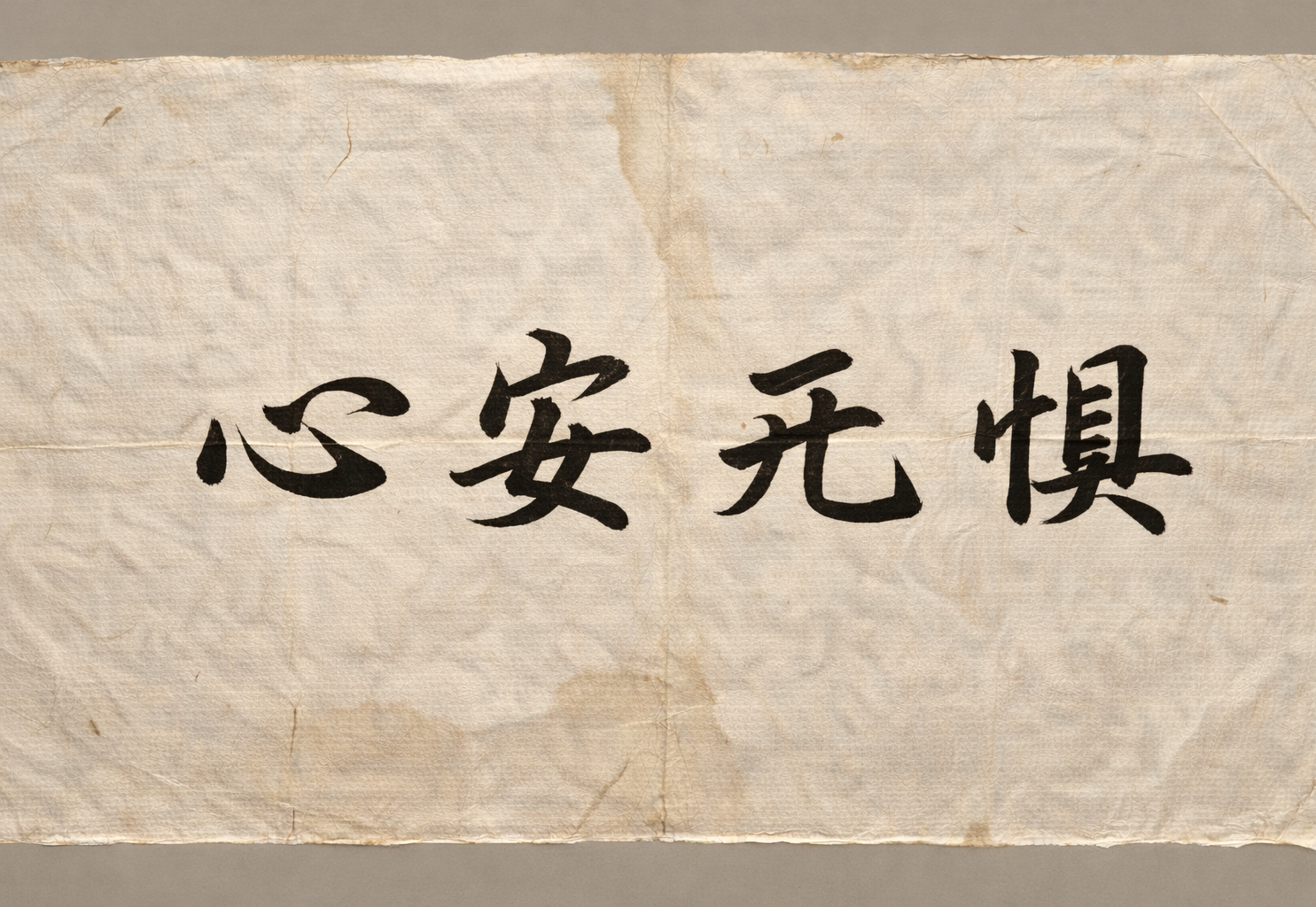
Image Healing: Mandala Stability Guidance 108
Please gaze upon this perfectly symmetrical mandala. Imagine it as a circular magic mirror. When you look at the pattern on the left, you'll see an identical pattern responding on the right. If you frown at it, your reflection will also frown; if you relax at it, your reflection will also relax. Take a deep breath and realize that those "external images" that frighten you actually originate from this "projection source"—the center. Embrace the center, and the illusions on the outer ring will soften.
Traditional mandalas typically feature a harmonious and intricately varied circular structure, symbolizing the wholeness of the universe and the cycle of life. By viewing mandala images, individuals can perceive inner peace and strength, achieving psychological balance.
◉ Gaze at the mandala twice, while taking deep breaths.

Lesson 108: Projective Recognition Exercises (Guided Drawing)
① Action guidance:Draw a vague shape to symbolize your fearful imagination about relationships.
② Action guidance:Draw a clear and simple shape on the other side, symbolizing your reality.
③ Action guidance:Connecting the two with a soft line symbolizes "I begin to distinguish between projection and reality".
Please log in before submitting your drawings and feelings.
○ 108. Relationship Projection: Log Guidance Suggestions
① What did I misunderstand about my partner in the most recent relationship?
② Is this idea more realistic, or does it come from the past?
③ If I pause for 10 seconds, what is a more realistic explanation that I can find?
④ What is one action I am willing to practice today that "returns to reality"?
Please log in to use.
Projection is not a mistake, but a story that has not yet been understood.
When you return to reality, you will no longer be led astray by the past.