

Lesson 114: Sensory Tracking in Body-Oriented Therapy“
Duration:70 minutes
Topic Introduction:
In the healing of anxiety and fear, "Somatic Tracking" is a very gentle, non-confrontational, and non-repressive body-oriented technique.
It encourages you to pay attention to your body's sensations with an "observer's mindset": tightness, soreness, throbbing, numbness, heat, cold, tension, emptiness...
It's not about making it disappear, but about practicing "I can be with this feeling."
This lesson will guide you on how to use your body as a starting point to reduce excessive panic reactions and rebuild internal homeostasis.
What is sensory tracking? Why is it effective?
- Non-judgmental observation:It's not about explaining or controlling; it's simply describing the sensations that are happening in the body.
- Making the nervous system "visible":When bodily sensations are perceived, the brain switches from "defense mode" to "regulation mode".
- Reduce physiological fears:When you stop fighting your feelings, your sympathetic nervous system stops amplifying danger signals.
Lesson 114: Sensory Tracking in Body-Directed Therapy (Click to listen to the reading and view the content)
Sensation tracking in body-oriented therapy is a core exercise that shifts attention from mental analysis back to bodily experience. Many people, in moments of fear or anxiety, habitually dwell on causes, solutions, or outcomes, neglecting the fact that the body itself truly bears the emotional burden. The goal of sensation tracking is not to eliminate discomfort, but to learn to follow the sensations your body is experiencing in a stable and non-judgmental way. From a neurological perspective, when you can consistently be aware of sensations without rushing to escape, the overactivation of the sympathetic nervous system will gradually be regulated, and the parasympathetic nervous system will begin to participate in balance. The first step in the practice is to choose a relatively safe entry point. You can start with neutral sensations, such as the rise and fall of your breath, the weight of your feet on the ground, or the sensation of your back against the chair. The second step is to describe rather than interpret. You only need to mentally mark the temperature, tension, flow, and throbbing without judging good or bad or searching for meaning. The third step is to track the changes. Sensations are not static; they move, intensify, weaken, or transform. As you follow these changes, the body will naturally complete the release process. It is important to understand that sensation tracking does not require you to remain in an intense area. If you experience overload, you can always return to a more stable area. This is self-regulation, not escape. In the long run, sensory tracking helps you rebuild trust in your body's signals, allowing fear to be understood as energy shifts rather than misinterpreted as danger warnings. Many fears persist because sensations are interrupted or frozen, not because they are too intense. As you learn to accompany your sensations in their natural rhythms, your nervous system gradually regains its resilience. Sensory tracking is not a technique but an attitude; it invites you to slow down and listen to what your body is saying. When the body is truly heard, fear often dissipates naturally.
▲ AI Interaction: What is the most obvious feeling in your body right now?
Is it tightness? Is it warmth? Is it throbbing? Is it a blockage? Or is it some indescribable feeling?
Describe it, no solution is needed.
AI will help you enter "observer mode".
Feeling tracking requires a steady rhythm. Soft music can help you move from the mental to the physical level.
Let the melody accompany you as you linger, observe, and slowly approach the subtle movements of your body.
○ Eastern Healing Tea - Pu-erh Ripe Tea
Recommended drinks:Pu-erh ripe tea
Recommended reasons:Gentle, calm, and slow are the symbols of healing that "starts from the body," helping to stay grounded when tracking bodily sensations.
practice:Quickly awaken the tea leaves with hot water at 90–95℃, then steep for a short time. When drinking, feel the warmth of the tea spreading across your chest.
○ Stable Dietary Therapy: Lotus Seed and Red Date Heart-Nourishing Porridge (ID114)
After body awareness and sensory tracking exercises, the body needs a gentle and nourishing treatment. The soothing properties of lotus seeds help calm the mind, while the sweetness of red dates relieves tension and fatigue. Millet provides stable and continuous energy support. This heart-nourishing porridge is suitable for consumption after practice, helping the body smoothly return from a state of awareness. It symbolizes the gentle care one gives oneself after listening to the body.
Support awareness
Gentle recycling
Open Recipe
◉ Stable Dietary Therapy: Lotus Seed and Red Date Heart-Nourishing Porridge (ID 114)
Lotus seed and red date heart-nourishing porridge is a daily tonic porridge with "calming the mind, nourishing blood, and gentleness" as its main themes. Lotus seeds calm the mind and soothe the nerves, making them suitable for those who overthink or whose minds can't stop racing before bed; red dates are known for replenishing qi and blood, providing gentle support for those who are chronically fatigued, depressed, or have poor sleep; and the rice porridge itself establishes a stable "foundation" for the spleen and stomach. When these three ingredients are cooked together into a porridge, the color is elegant, the aroma is mild, and it is neither too sweet nor too complex, making it suitable as an evening snack or the first bowl of porridge after a slow morning awakening.
Nourishes blood and calms the mind Harmonize complexion Gentle stomach protection
I. Recommended Dietary Therapy and Reasons
Recommended dishes:Lotus Seed and Red Date Heart-Nourishing Porridge (ID 114)
Recommended reasons: When you have too many worries, sleep lightly, and wake up feeling "empty inside but physically exhausted," it often means that both your mind and body are under long-term strain. Lotus seeds can help calm a scattered mind, while red dates nourish qi and blood, improving complexion and overall well-being. Unlike ordinary white porridge, this heart-nourishing porridge doesn't focus on filling you up, but rather on using a gentle, sweet taste to remind your body, "I still deserve to be taken care of," soothing both your heart and stomach.
2. Recipe and Method
Recipe (1–2 servings):
- 40–50 g of rice (washed)
- 20–25 g of lotus seeds (soak in advance; removing the core can reduce bitterness).
- Use 5-7 pitted red dates (cut them into small pieces to release their flavor more easily).
- 550–650 ml of water (adjust amount slightly depending on consistency)
- A small amount of rock sugar (optional, for a slightly sweet flavor).
- A pinch of salt (optional, to make the overall sweetness more rounded).
practice:
- Soak lotus seeds for about 1 hour beforehand, and remove the lotus heart (the bitter core) according to personal preference to reduce bitterness and dryness.
- Wash and pit the red dates, and cut them into small pieces to release their sweetness.
- After washing the rice, soak it for about 10 minutes to make it softer and smoother in the end.
- Put water, rice, lotus seeds and red dates into a pot, bring to a boil over high heat, then reduce to low heat and simmer for 30-35 minutes, stirring occasionally to prevent sticking.
- Once the rice grains have opened up and the porridge has thickened, add a small amount of rock sugar to taste, or a pinch of salt to balance the flavor.
- After turning off the heat, let it sit for 3–5 minutes to allow the porridge to naturally become thicker and smoother.
- Served warm in a bowl, it's a suitable evening snack to soothe the mind, or a comforting alternative to a main meal when feeling tired.
3. Small rituals for body and mind
When cooking porridge, you can deliberately slow down your movements and treat the rhythm of stirring as "a breathing rate you set for yourself," allowing the rhythm of your hands to slow down along with your mind.
The moment you smell the aroma of red dates, you can quietly tell yourself, "I see how hard I've worked today." Let this bowl of porridge be a response to your efforts.
When drinking porridge, there's no need to rush to finish it. Try to linger for a second or two with each sip, feeling the warmth slowly spreading across your chest, as if a hand is gently supporting you from inside your body.
4. Dietary Therapy Experience Record
- Record the time of drinking (e.g., after dinner, 1-2 hours before bedtime, during afternoon rest) and your current mood (tense, sad, empty, confused, etc.).
- Observe the changes in physical sensations 30–60 minutes after drinking: such as body warmth, heart rate, chest tightness, drowsiness, and relaxation.
- If consumed at the same time for several consecutive days or weeks, changes in sleep quality, morning alertness, and intensity of daytime mood fluctuations can be recorded.
V. Instructional Videos (approximately 3–5 minutes)
◉ Video Title:Lotus seed and red date heart-nourishing porridge – a gentle and calming dish for a weary mind.
6. Precautions
- People with high blood sugar should reduce or eliminate the addition of rock sugar, and can use plain or a very small amount of sugar substitute instead.
- For those with particularly weak spleen and stomach, the cooking time can be appropriately extended to make the rice and lotus seeds softer and reduce the digestive burden.
- If you have severe insomnia, depression, or heart rhythm problems, this porridge is only for daily supplementary care and cannot replace professional evaluation and treatment.
hint:This porridge recipe is for daily heart health reference only and does not constitute medical advice. If you have a chronic illness or are currently taking medication, please consult your doctor or nutritionist before making any adjustments.
○ Seal Carving Practice Suggestions • Lesson 114: "Sensory Tracking" in Body-Oriented Therapy“
In this lesson, we'll transform the carving knife into a "detector" for our bodies. Anxiety and pain often make us want to escape our bodies, but "sensory tracking" requires us to gently bring our attention back inside, observing bodily sensations (tightness, tingling, warmth) like we observe the weather. The "knife sensation" during seal carving is the best simulation of this "confirmation of existence through contact."
- Introduction to the characteristics of seal carving:
Exercises for this lesson“"Fine Zhuwen"”(Iron Wire Seal Script). This style features fine, strong, and fluid lines, requiring extremely steady and continuous knife work. It cannot rely on explosive power, but rather on continuous "awareness." This is similar to sensory tracking: you need to maintain a constant, uninterrupted focus on your internal body, but you cannot use excessive force. - Written words (seal text):
Auspicious Talisman Appreciation - Psychological Intention:
When we experience physical symptoms caused by anxiety (such as chest tightness or stomach pain), our first reaction is usually, "This feeling is dangerous." Inscribing "Vipassana" is practicing a new mode of response: the hardness (feeling) of this stone (body) is right here; I'm simply touching it with a knife (consciousness), understanding it, and it won't hurt me. - Knife skills:
practise“"Long-handled sword"”Push the carving knife out at a fixed angle, and don't rush to pull it back. Let the blade glide along the stone surface for a considerable distance. During this extended process, you will feel the resistance of the stone constantly changing.Please think of this "resistance felt in the hand" as "discomfort in the body"—don't stop, don't avoid it, push along this resistance, and you will find that it will eventually become a smooth line. - Emotional transformation:
The focus shifts from "fearful judgment of sensation" (Why is it still hurting?) to "curious pursuit of sensation" (Oh, there's a hard lump here on the stone, how interesting!). When your carving knife learns to dance with the hardness of the stone, your heart also learns to coexist with the anxieties of your body.
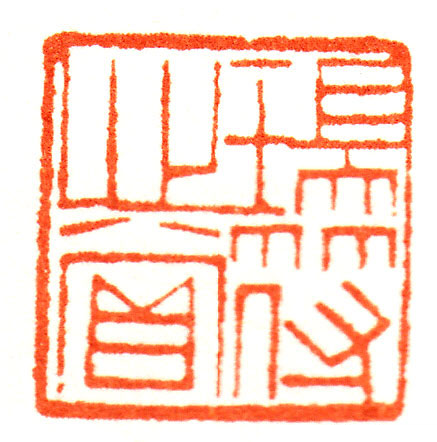
Image Healing: Mandala Stability Guidance 114
Imagine this mandala as a high-precision "body radar" or "sonar screen." The center is your consciousness, emanating halos that gently sweep across your entire body. When the halos pass over your chest, abdomen, or shoulders, if you experience any discomfort (like a red dot on the radar), do not try to eliminate it. Simply watch the red dot flicker within the mandala's patterns. Watch the halos pass through it and continue to expand outwards. You will discover that the red dot is merely a small piece of data on a vast, harmonious screen.
Traditional mandalas typically feature a harmonious and intricately varied circular structure, symbolizing the wholeness of the universe and the cycle of life. By viewing mandala images, individuals can perceive inner peace and strength, achieving psychological balance.
◉ Gaze at the mandala twice, while taking deep breaths.

Lesson 114: Body Sensory Tracking & Drawing Guidance
① Action guidance:Use lines to represent the "flow direction" of bodily sensations (upward, downward, inward, outward).
② Action guidance:Use color to express the "intensity" of feeling (light, heavy, piercing, dull), without drawing body parts.
③ Action guidance:Write a word next to the image: What is my body trying to tell me right now?
Please log in before submitting your drawings and feelings.
○ 114. Sensation Tracking & Log-Guided Suggestions
① What is the most noticeable physical sensation you experience today? What is its location, temperature, and shape?
② During the tracking process, did I go from feeling "nervous" to "curious"?
③ Which feeling makes me want to escape the most? Is it milder than I imagined?
④ After practicing, did I experience any slight changes in my breathing or chest?
Please log in to use.
Your body is never against you; it just wants you to hear it. Sensory tracking is about re-establishing that gentle connection.