

Lesson 120: Returning to Life – Making Healing a Natural Part
Duration:70 minutes
Topic Introduction:
After multiple stages of exposure exercises, emotional regulation, and self-exploration, you may discover:
“I’m much more stable than before, but can I bring that back to real life?”
True healing is not about completing exercises, but about integrating those exercises into your life.
In conversations, in relationships, at work, and in solitude.
This course will help you transform healing from a "method" into a "habit," and from a "practice" into a "lifestyle."
How can healing become a part of daily life?
- Turning technology into instinct:Breathing, pausing, and self-talk are no longer "tools," but rather support that appears automatically.
- Transform exposure into natural contact:Without being deliberate or forceful, simply extend the boundaries a little bit naturally in life.
- Treat recurrence as a checkpoint:It's not a failure, but rather a reminder from your mind and body that "fine-tuning is needed."
Lesson 120: Returning to Life—Making Healing a Natural Part, Click to listen to the reading and view the content.
When you reach this stage, healing is no longer just a topic that needs to be repeatedly mentioned, but begins to return to its original place—it's part of life itself. True return to life isn't about ending it, but about stopping putting yourself in repair mode. Many people, after long-term practice, unconsciously continue to examine every emotional fluctuation from a healing perspective, as if life is merely an object to be observed and managed. But at this point, what you need to learn isn't more refined regulation, but allowing yourself to live naturally. Once healing is internalized, it no longer needs to be frequently mentioned, just as breathing doesn't need constant monitoring. Psychologically, when you stop constantly self-examining, your nervous system truly relaxes and enters a state of trust. Returning to life doesn't mean ignoring fear, but rather knowing how to cope when fear arises without needing repeated confirmation. You can refocus your attention on interests, relationships, actions, and creation, allowing the results of healing to naturally manifest through life. The first step is to reduce rituals; don't set a grand opening for every practice, allowing regulation to happen naturally. The second step is to expand your identity; you're no longer just someone undergoing healing; you're also a friend, creator, and participant—your roles in life will become vibrant again. The third step is to trust your learned abilities; when you stop frequently testing them, they will actually become more stable. What needs to be understood is that being natural doesn't equate to laissez-faire, but rather a deep integration; you've made the method instinctive. Healing ultimately isn't about constantly looking inward, but about stepping outward again. The moment you can laugh out loud, immerse yourself in life, and forget about analysis is itself the deepest healing. You no longer need to ask yourself if you're good enough because you're already living.
▲ AI Interaction: What parts of your life would you like to make easier?
Healing will not turn you into a "non-anxious person".
It will make you "someone who can keep going even when anxious".
What changes do you want to make feel natural? We can work together to set small, everyday steps.
Choose music that is rhythmic but not overly stimulating, so that your body remembers, "I am in motion, and I am living."
Music can remind you that stability is not stillness, but continuous and gentle movement.
○ Eastern Healing Tea: Oolong Osmanthus Tea
Recommended reasons:The smoothness of oolong tea and the delicate fragrance of osmanthus symbolize "returning to life," making it perfect for a small ritual to enjoy a cup during everyday moments.
practice:Brewed with 90℃ water, the osmanthus and tea aromas are balanced, and a cup in the morning or afternoon can help calm the mind.
○ Warming Soup - Lotus Root Flavored Soup (ID120)
When experiencing emotional distress, chills, or chest tightness, a gentle, slow-acting, and non-stimulating soup is ideal for gradually restoring a sense of security. The sweet and tender texture of lotus root soothes the emptiness in the stomach and chest, helping to alleviate weakness and anxiety following tension. Its fragrant aroma naturally slows breathing, preventing thoughts from constantly seeking confirmation. This soup is suitable for repeated consumption at night, during recovery, or on days when emotions are low and a sense of warmth is needed, allowing the body to re-establish a stable internal rhythm in the warmth. It symbolizes self-care without forcing oneself: first warm the body and mind, then slowly restore trust.
Open Recipe
◉ Warming Soup Recipe: Lotus Root Flavored Soup (ID 120)
Lotus root soup is a warm soup with a natural sweetness and a gentle taste. The lotus root, after cooking, is soft and slightly crunchy, while the broth is clear yet subtly sweet. Paired with a small amount of carrot, ginger slices, or vegetable broth, the whole soup exudes a calming and soothing atmosphere. This is a perfect dish for a light dinner, an afternoon warm soup, or a comforting meal during times of emotional fatigue; the first sip will warm both your heart and stomach.
Sweet and mellow Stomach-friendly Naturally Warming Soup
I. Recommended Dietary Therapy and Reasons
Recommended dishes:Lotus Root Flavored Heartwarming Soup (ID 51)
Recommended reasons: Lotus root contains natural sweetness and rich fiber, providing a gentle feeling of fullness without burdening the stomach; at the same time, the aroma released during simmering has a calming effect. Paired with a few slices of ginger, carrots, and vegetable broth, the soup is clear and light, making it more suitable for drinking when you are physically and mentally tired, have a weak appetite, or need to warm up.
2. Recipe and Method
Recipe (1–2 servings):
- 180–220 g lotus root (peeled and cut into thick slices or chunks)
- 40–60 g of carrots (sliced)
- 2-3 slices of ginger
- 600–750 ml of vegetable broth or water
- a pinch of salt
- A pinch of white pepper (optional)
- A small amount of chopped green onions (optional, for garnish)
practice:
- Peel the lotus root and cut it into chunks. If you are worried about oxidation, you can soak it in water for a while. Slice the carrot and prepare the ginger slices.
- Pour vegetable broth or water into a pot, add ginger slices, and bring to a boil over high heat.
- Add lotus root chunks and carrot slices, and simmer over medium-low heat for 20–30 minutes, until the lotus root is soft and tender but not falling apart.
- Add a little salt and white pepper to taste to make the flavor milder.
- After serving, you can sprinkle a small amount of chopped green onions on top as a garnish, or you can leave it plain to preserve its original sweet flavor.
- It is recommended to enjoy it while it's hot, so that the aroma and natural sweetness of the lotus root can slowly unfold in your mouth.
3. Small rituals for body and mind
When cutting lotus root, observe its porous structure, which is like breathing in a rhythm, allowing your mind to gradually calm down.
Listening to the gentle bubbling sound while the soup is simmering allows me to pause for a moment in this simple process, without rushing back to the flow of my thoughts.
After taking the first sip of soup, you can gently tell yourself, "I deserve to be comforted, and I deserve to slow down."“
4. Dietary Therapy Experience Record
- Record the drinking time and your physical and mental state (fatigue, tension, poor appetite, etc.).
- Observe whether the feeling of warmth and calmness increases after drinking the soup.
- When consumed several times consecutively, sleep patterns, stomach comfort, and mood changes can be recorded.
V. Instructional Videos (approximately 3–5 minutes)
◉ Video Title:Lotus Root Flavored Soup for Warmth - A bowl of naturally sweet and gentle warm soup
6. Precautions
- Lotus root is high in fiber, so those with sensitive stomachs can cook it longer to make it softer, more glutinous, and easier to digest.
- If you have a cold constitution, you can increase the amount of ginger slices to make the soup more warming.
- If you need a low-sodium diet, simply reduce the amount of salt and keep the original flavor of the ingredients.
hint:This soup recipe is for daily warming and dietary conditioning purposes only and does not replace professional medical advice.
○ Suggestions for Chinese Calligraphy and Seal Carving Practice - Lesson 120: Returning to Life
This lesson's seal carving practice no longer revolves around repair or confrontation, but rather around "integration." When healing truly occurs, it will naturally appear on the paper of life, like a seal, requiring no repeated stamping yet always visible. Seal carving reminds us that true stability is not something deliberately maintained, but rather something that has become the underlying foundation.
- Introduction to the characteristics of seal carving:
Returning to a natural state corresponds to the concept of "natural seal formation" in seal carving. When the carving technique matures, the seal surface becomes less hesitant, and the lines develop their own rhythm. This symbolizes that you no longer need to repeatedly prove your stability. - Written words (seal text):
A calm mind and a vibrant spirit - Psychological Intention:
Writing "peace everywhere" is a reminder that peace is not a specific state but can arise naturally in any situation. - Knife skills:
Practice "following the natural flow of the knife." Not forcibly correcting the knife but letting it follow the stone's natural movement symbolizes adapting to life rather than controlling it. - Emotional transformation:
Transform the obsession with "Am I already healed?" into the sense of security that "I am living my life".
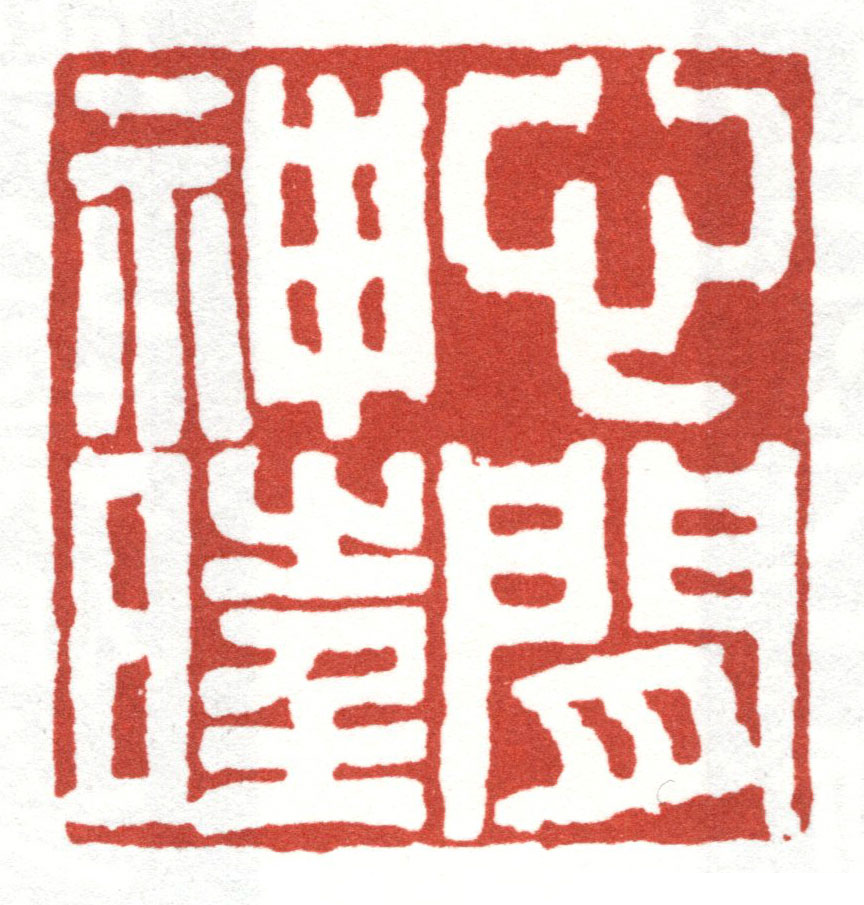
Image Healing: Mandala Stability Guidance 120
Please observe a mandala image with an open structure that allows for breathing space. It is no longer a series of protective layers but rather extends outwards. Let your gaze wander naturally; there's no need to return to the center.
This time, instead of practicing stability, practice freedom. Feel the movement of your gaze as if you're stepping back into life without any pre-planned route.
Mandalas don't need to be understood; they are simply companions. When you can forget about the practice itself while observing it, it means that tranquility has become a natural part of you.
The mandala in this lesson is mainly open in structure, symbolizing the "return to the world" after healing is completed.
◉ One gaze is sufficient; repetition is unnecessary.

Lesson 120: Life Healing - Art Guidance
① Action guidance:Draw a stable center point to symbolize the foundation of your recovery.
② Action guidance:The surrounding area incorporates everyday colors (blue, green, orange) to symbolize the flow of the world.
③ Action guidance:The thin line connecting the center and the outer circle symbolizes that "healing has been integrated into life".
Please log in before submitting your drawings and feelings.
○ 120. Returning to Life: Journaling Guidance Suggestions
① What moments today made me feel that "life is going smoothly"?
② In which situations did I naturally apply the skills I had learned in the past?
③ What detail in my life reminds me that I am different from the past?
④ What is a small and light "life healing exercise" that I would like to join tomorrow?
Please log in to use.
The end point of healing is not perfection, but returning to life with ease and moving forward with a new rhythm.