

Lesson 121: Understanding the Nature of Panic Disorder
Duration:70 minutes
Topic Introduction:
The core characteristic of panic disorder is not "being afraid of something," but rather the fear of "suddenly losing control of one's body."
Rapid heartbeat, shortness of breath, chest tightness, sweating, trembling, dizziness...
These symptoms often come on quickly, intensely, and without warning, leading many people to believe they are "about to faint" or "about to die."
This lesson will help you understand that panic attacks are not life-threatening, but rather an "acute over-alarm" of the nervous system.
What is the core nature of panic disorder?
- The body reacts first, then the brain interprets:Panic attacks are not created by the mind, but rather by the body suddenly entering an extreme alarm mode.
- “"Secondary fear" worsens symptoms:Fearing a physical reaction can intensify that reaction, creating a vicious cycle.
- The panic was essentially a false alarm, not a sign of danger.The body misinterprets "temporary tension" as "major threat".
Lesson 121: Understanding the Nature of Panic Disorder, Click to listen to the reading, View the content
Many people who have experienced panic attacks share a common question: why does the body suddenly lose control when there is no real danger? Rapidly increasing heart rate, difficulty breathing, dizziness, a sense of impending death, and intense fear all occur simultaneously, making one feel as if they are collapsing. To understand the nature of panic disorder, it's crucial to first understand that this isn't a serious physical problem, but rather that the brain's "alarm system" has been mistakenly activated. From a neurological perspective, a panic attack is a highly activated survival response. The amygdala misinterprets internal signals as external threats, rapidly activating the "fight or flight" system. Increased adrenaline, a faster heart rate, and shallower breathing—these responses are inherently life-saving, but they create intense discomfort even when there is no real danger. What's truly distressing is often not these physiological changes, but the interpretation of them—"Am I going to faint?" "Will I lose control?" "Is this irreversible?" The core of panic disorder is not fear itself, but the secondary fear of bodily sensations. After a severe panic attack, the brain begins to highly monitor every subtle change in the body. Any change in heart rate, shortness of breath, or slight dizziness can be rapidly amplified and trigger alarms again. This cycle gradually makes one fear "recurrence," or even fear of fear itself, causing their living space to shrink. It's important to understand that panic attacks don't actually harm your body, nor will they cause you to lose your mind or die. It's a highly uncomfortable but reversible state that usually subsides naturally within ten minutes. What's truly important is breaking the automatic cycle of "feeling—interpreting—panic." When you can recognize that this is a mis-trigger from the nervous system, rather than danger itself, the brain begins to learn new response pathways. Understanding panic disorder doesn't mean you should immediately stop being afraid, but rather helping you establish a new relationship: no longer treating your body as an enemy. By allowing symptoms to exist, reducing catastrophic interpretations, and gradually restoring trust in bodily sensations, the alarm system will slowly become less sensitive. Panic is not proof of your weakness, but rather an overprotective system sending out incorrect signals. When you learn to understand it, rather than fight it, the fear will truly begin to loosen.
▲ AI Interaction: What moment of panic attack are you most afraid of?
Is it a sudden increase in heart rate? Or is it a feeling of being unable to breathe?
What you're afraid of isn't the symptoms themselves, but the uncertainty of whether they'll get worse.
We can work together to break down your body's reactions and make the unknown explainable.
The body after a fright is often like a "frightened animal," tense and difficult to relax.
Choosing music with a slow tempo and stable bass frequencies helps the physiological system return to balance from the sympathetic nervous system.
○ Eastern Healing Tea - Pu-erh Ripe Tea
Recommended reasons:The warmth of ripe Pu-erh tea can help the body gradually warm up and stabilize after a shock, without irritating the stomach or causing heart palpitations.
practice:Brew the tea gently with water at 90–95℃. The tea should not be too strong. Let the warmth linger on your chest for a few seconds and feel your body slowly sink down.
○ Stable Dietary Therapy: Red Date and Oatmeal Porridge (ID121)
Red date and oat porridge is a comforting bowl of porridge with a soft, grainy aroma and natural sweetness. The oats, cooked until soft and mushy, have a smooth and creamy texture, while the red dates release their gentle sweetness and fruity fragrance during slow cooking. This makes the porridge neither too heavy nor too thin, like plain water porridge. Whether you need a steady boost in the morning or a warm bowl to finish the evening, this porridge provides both a sense of fullness and emotional comfort.
Lower vigilance
Restore Body Trust
Open Recipe
◉ Warming and Nourishing Food: Red Date and Oatmeal Porridge (ID 121)
Red date and oat porridge is a comforting bowl of porridge with a soft, grainy aroma and natural sweetness. The oats, cooked until soft and mushy, have a smooth and creamy texture, while the red dates release their gentle sweetness and fruity fragrance during slow cooking. This makes the porridge neither too heavy nor too thin, like plain water porridge. Whether you need a steady boost in the morning or a warm bowl to finish the evening, this porridge provides both a sense of fullness and emotional comfort.
Soft and satisfying Warm-up and comfort Lightly sweet cereal aroma
I. Recommended Dietary Therapy and Reasons
Recommended dishes:Red Date and Oatmeal Porridge (ID 52)
Recommended reasons: Oatmeal contains soluble dietary fiber, which helps prolong the feeling of fullness and stabilize energy release; red dates, when gently simmered, bring a delicate sweetness and fruity aroma, making it suitable for drinking when you are physically and mentally exhausted, feeling down, or needing a little warmth and comfort. Compared to greasy snacks or high-sugar desserts, this porridge is more suitable for the evening or early morning, accompanying the body to slowly recover in a non-irritating and light way.
2. Recipe and Method
Recipe (1–2 servings):
- 30–40 g of instant oatmeal (about 3–4 tablespoons)
- 4-6 red dates (remove the pits to release more flavor)
- 350–400 ml of water or unsweetened plant-based milk (can be partially replaced with cow's milk)
- 1-2 slices of ginger (optional, for warmth)
- A very small amount of salt (optional, for a slight flavor enhancement).
- Add a small amount of honey or brown sugar (optional, adjust according to the overall sweetness).
practice:
- Wash the red dates, remove the pits, and cut them into small pieces or in half to cook them until soft and release their sweetness more quickly.
- Add water or most of the liquid base to a small pot (you don't need to use all plant-based milk or milk initially), add red dates and ginger slices, bring to a boil over high heat, then reduce to low heat and simmer for 8–10 minutes.
- Add the rolled oats while stirring to prevent clumping, and keep it simmering over low heat.
- Continue cooking for 5–8 minutes, allowing the oats to fully absorb the broth and the porridge to thicken slightly. Stir occasionally to prevent sticking to the bottom.
- For a smoother texture, add a small amount of milk or plant-based milk and cook for another 1–2 minutes before turning off the heat.
- Adjust the flavor to your liking: You can add a very small amount of salt to enhance the taste. If you want it sweeter, you can add a small amount of honey (after it has cooled slightly) or brown sugar and stir well.
- Let it sit for 2–3 minutes to allow the porridge to thicken slightly before eating; this will make it softer and more palatable.
3. Small rituals for body and mind
While cooking red dates, you can deliberately slow down your thoughts and focus on the small bubbles and steam rising from the surface of the soup as you smell the slowly emerging sweet aroma.
Stirring oatmeal can be a gentle rhythmic exercise, synchronizing your hand movements with your breathing, reminding yourself that you don't need to exert so much force today.
Before taking a bite, give yourself a short mental statement: "This is not a reward, but the care I deserve." Let this bowl of porridge be a gentle affirmation of yourself.
4. Dietary Therapy Experience Record
- Record the time of consumption (after breakfast, after dinner, 2 hours before bedtime, etc.) and your current physical and mental state.
- Observe the feeling of fullness, stomach comfort, and mood changes (e.g., whether you feel more at ease or whether your anxiety is reduced) 1–2 hours after consumption.
- If you make this porridge a regular daily ritual for several days in a row, you can record your sleep quality, your mental state upon waking up in the morning, and changes in your overall energy levels.
V. Instructional Videos (approximately 3–5 minutes)
◉ Video Title:Red Date and Oatmeal Porridge: A gentle bowl of porridge to finish off or start your day.
6. Precautions
- Red dates have a high sugar content, so if you need to control your blood sugar, you should reduce the amount of red dates and avoid adding extra sugar.
- Oatmeal is rich in fiber, so those with sensitive stomachs can start with a lower amount or cook the porridge thinner.
- If you are sensitive to oats or gluten, choose gluten-free oats and adjust the frequency of consumption with professional advice.
hint:This recipe is for daily dietary guidance and does not replace professional nutritional or medical advice. If you have chronic illnesses or special dietary restrictions, please consult your doctor or nutritionist beforehand.
○ Suggestions for Modern Calligraphy Writing Practice
The topic of this lesson:The "false alarm" mechanism of panic disorder—rewriting body rhythms
In-depth analysis:
At its core, panic disorder often stems from a false alarm in the body. Your body suddenly raises the highest level of alarm without any real danger.
This extreme burst of energy can cause the body to stiffen or lose control instantly.
Modern calligraphy emphasizes "elasticity" and "fluidity," which is a reverse deconstruction of the state of fear and rigidity.
Unlike the strictness of traditional calligraphy, modern calligraphy allows for leaps and continuous strokes in the characters.
In writing, we practice "control amidst loss of control": even when the strokes swing wildly (simulating emotional fluctuations), they eventually land smoothly on the baseline. This trains the brain to believe that no matter how strong the feelings are, I will eventually land safely.
Writing Techniques (Physiological Adjustment Version):
- Continuous Flow:During a panic attack, thoughts are fragmented, and it feels like the world is collapsing. Practice minimizing the number of times you lift your pen, keeping the letters connected in a continuous, unbroken line. This forces the brain into a "linear processing" mode, reconnecting the disrupted sense of time.
- Baseline Grounding:While modern calligraphy features lively characters, their bases are all aligned with an invisible line. When writing each word, focus all your attention on the moment the bottom of the letter touches the paper. Tell yourself, "No matter how chaotic the top may be, your feet are always firmly planted." This is a visual exercise of "grounding."
- Elastic pressure:Fear can cause muscles to tense up to an extreme. When writing downstrokes, deliberately press the pen tip down to feel its rebound. This "press-rebound" physical sensation helps the hand muscles regain elasticity and breaks the "frozen response" caused by fear.
- Wave Breathing:Imagine terror as a wave. As you write, adjust your breathing to match the continuous, undulating lines (drills). Inhale lightly as you write upwards, and exhale heavily as you write downwards. Don't try to stop the waves (suppress your terror), but rather ride them like you're surfing.
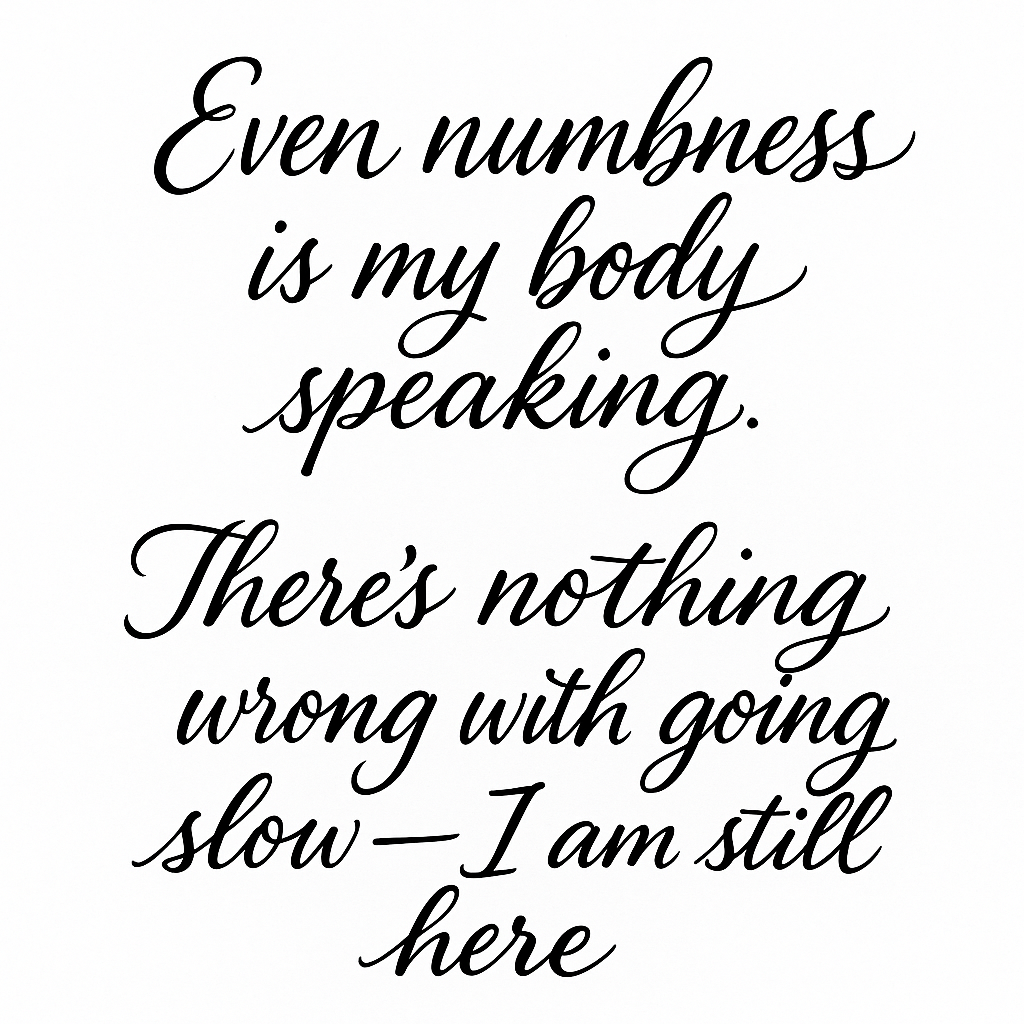
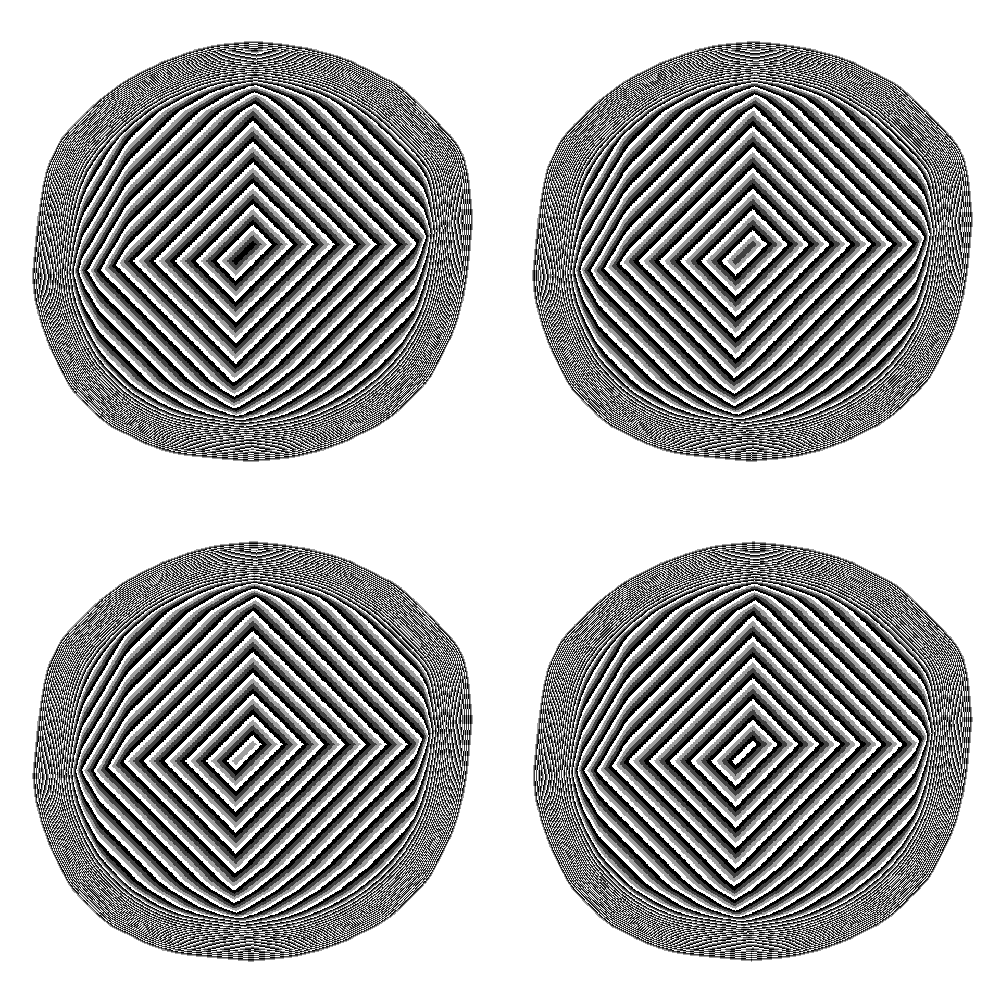
Image Healing: Mandala Stability Guidance 121
Imagine yourself at the absolute center of a mandala, the "eye of the storm." The intricate, swirling, and seemingly chaotic patterns around you represent the physical storm of a panic attack—heart pounding, dizziness, and a feeling of suffocation. But note that the eye of the storm is always calm. You don't need to stop the surrounding storm; you simply need to sit firmly in the center. Observe the outer rings rotating—that's your body releasing excess energy. You are not the storm; you are the eye observing it. The storm will eventually pass, but the center will always remain unscathed.
Traditional mandalas typically feature a harmonious and intricately varied circular structure, symbolizing the wholeness of the universe and the cycle of life. By viewing mandala images, individuals can perceive inner peace and strength, achieving psychological balance.
◉ Gaze at the mandala twice, while taking deep breaths.
○ 121. The Nature of Panic: Journaling Guidance Suggestions
① What was the most unpleasant physical sensation when I first experienced panic?
② What knowledge did I learn today that "panic is not danger"?
③ Are there any exaggerated explanations for past terrifying experiences?
④ Which stabilizing action would I be willing to try next time I feel panicked?
Please log in to use.
Panic is not danger, but a false alarm from the nervous system. When you understand it, you can move from fear to control.