

Lesson 130: Correction Training for Misinterpreting Bodily Sensations
Duration:70 minutes
Topic Introduction:
One of the biggest challenges for people with panic disorder and high anxiety is misinterpreting normal bodily sensations as danger signals.
A rapid heartbeat equals fainting?
Does tightness in the chest mean you're about to stop breathing?
Dizziness = feeling like you're about to lose control?
This lesson will help you learn how to reinterpret bodily signals, transforming your body's perception from "threat" back into "information."
When you understand the true logic of your body, your fears will begin to dissipate.
Why do I mistake bodily sensations for danger? (Core Knowledge)
- Classic Misinterpretations of Fear:A normal, rapid heartbeat is being interpreted as "a heart problem".
- The amplification effect:The more focused you are, the stronger the fear becomes; the stronger the fear, the greater the fear.
- Automatic application of fear tags:Body signals are quickly labeled as "dangerous" or "out of control".
- Triggering old experiences:An unpleasant experience can trigger an automatic warning from the brain in the future.
Lesson 130: Correction Training for Misinterpreting Bodily Sensations (Click to listen to the reading and view the content)
One of the core mechanisms underlying the maintenance of panic and anxiety is the misinterpretation of bodily sensations. A rapid heartbeat is interpreted as a danger signal, changes in breathing are equated with a premonition of loss of control, and dizziness and chest tightness are directly associated with serious consequences. These misinterpretations are not due to a lack of rationality, but rather because the brain automatically employs the most conservative explanatory strategy in a state of high alert. Bodily sensations themselves are neutral, but when they are labeled as threatening, fear is quickly ignited. Correcting bodily sensation misinterpretations is not about ignoring sensations, but about learning to re-assign them more realistic interpretations. The first step is to establish a distance between the sensory vocabulary and the dangerous conclusion. When you perceive discomfort, first describe it in your mind using factual language, such as a rapid heartbeat or chest pressure, instead of jumping directly to the conclusion. This description delays the automatic reaction, giving the system buffer space. The second step is to find alternative explanations. A rapid heartbeat might be due to strenuous exercise or emotional activation, and changes in breathing might be the result of changes in posture or attention. These explanations don't need to be fully accepted; they only need to exist as alternative options. The third step is to correct misreading through experience. When you allow the sensation to exist without taking avoidance or remedial actions, observe whether it changes naturally. In most cases, the body will subside on its own, which is itself the most direct correction of the misreading. The fourth step is to practice delayed reactions—don't rush to confirm or process; give the body a few minutes to let the sensation evolve on its own. Misreading is stubborn because every immediate reaction is recorded by the brain as a necessary behavior. The fifth step is to accumulate new safety evidence. Every time you remain in discomfort without a disaster, the system updates its judgment criteria. It needs to be understood that corrective training is not a one-time event but a repeated learning process. You are not convincing yourself but re-educating your nervous system with experience. As the number of corrections increases, the brain gradually lowers its danger threshold for bodily signals. Bodily sensations are no longer seen as enemies but as ordinary physiological fluctuations. When misreading is loosened, fear also loses its reason for persistence. You are not a victim of your body but are relearning how to correctly interpret its language.
▲ AI Interaction: Which bodily sensation are you most likely to misinterpret?
Heartbeat, breathing, chest tightness, dizziness, or numbness?
Misinterpretation is not your fault; it's the brain's default protective mechanism.
Together, we can create a new "interpretive template" for the body.
Music can help the nervous system switch from "alert mode" to "immersion mode," reducing the monitoring of bodily sensations.
Let the melody gently cover the sounds that are constantly scanning your body in your mind.
○ Eastern Healing Tea - Longjing
Recommended reasons:Its refreshing scent and breathability can help you "shift your focus from your internal body to the external world".
practice:Steep at 85℃ for 2–3 minutes. First, smell the aroma, then sip gently, allowing your breathing to unfold naturally.
○ Stable Nutrition - Whole Wheat Pesto Pasta (ID130)
During the phase of training to correct bodily sensory misinterpretations, the body needs a stable nourishment that doesn't cause drastic fluctuations. Whole wheat pasta provides sustained and gentle energy, releasing the refreshing aroma of pesto to help keep the nervous system alert without over-excitement. This pasta dish is suitable for consumption during a main meal after cognitive and experiential training, allowing the body to gradually build a safe tolerance to sensory changes with a stable energy supply. It symbolizes that the body doesn't need emergency repairs but can function naturally in balance.
Stable energy supply
Restore Body Trust
Open Recipe
◉ Mediterranean-DASH Fusion Diet: Whole Wheat Pasta with Pesto
This dish is based on the high fiber and slow-release energy of whole-wheat pasta, paired with pesto made from basil, olive oil, nuts, and Parmesan cheese, showcasing the typical plant-based fat structure of the Mediterranean diet. Adhering to the low-sodium principles of the DASH diet, this dish is both aromatic and filling, while reducing inflammation. It can be served as a main lunch or a light dinner, helping to maintain stable energy levels and mental clarity.
High in fiber Plant fats Stable energy MIND Diet
I. Recommended Dishes and Reasons
Recommended dishes:Whole wheat pasta with pesto (ID MIND-04)
Recommended reasons:Whole grains provide a stable blood sugar curve, the olive oil and nuts in pesto provide the healthy fats needed by the brain, and the aromatic components and antioxidants in basil help reduce inflammation, making it a representative combination in the MIND Diet.
2. Recipe and Method
Recipe (Serves 2):
- Whole wheat pasta 160g
- 25 g fresh basil leaves
- 2.5–3 tablespoons extra virgin olive oil
- 15 g of lightly roasted pine nuts or walnuts
- 1.5 tablespoons of grated Parmesan cheese (can be reduced)
- Use 1/3 to 1/2 clove of garlic (a small amount is sufficient).
- 1 teaspoon lemon juice
- Black pepper to taste
- Very little sea salt (DASH principle)
practice:
- Bring water to a boil in a pot, add a very small amount of salt, and cook the whole wheat pasta until it is firm (about 8–10 minutes). Drain and set aside.
- Put basil leaves, nuts, Parmesan, garlic, and lemon juice into a food processor, add olive oil, and blend into pesto.
- Depending on the desired consistency, add 1–2 tablespoons of water to adjust the texture of the sauce.
- Pour the pasta into a large bowl, add pesto and mix well to coat the pasta thoroughly with the sauce.
- After plating, sprinkle with a little black pepper and extra chopped basil.
3. Small rituals for body and mind
Take 10 seconds of slow breathing before eating to shift your mind and body from a state of high tension to one of acceptance and nourishment.
Feel the aroma of basil spreading as you chew, and notice your body transitioning from a tense to a relaxed state.
Record your daily carbohydrate intake and observe the duration of satiety and your level of mental focus.
4. Dietary Therapy Experience Record
- Physical sensation (fullness/ease/stomach comfort).
- Emotions (clear/stable/stable energy).
- Record your daily whole grain servings and fat intake.
V. Instructional Videos (approximately 3–5 minutes)
◉ Video Title:Whole wheat pasta with pesto: a combination of stable energy and brain nutrition.
6. Precautions
- If you need to reduce your fat intake, you can reduce the amount of olive oil and increase the ratio of lemon juice and basil.
- Pumpkin seeds can be used as a substitute for nuts for those who are allergic to them.
- Those who need to control their sodium intake can reduce or omit Parmesan cheese altogether.
hint:This dish is suitable as a lunch for high-efficiency studying or on weekdays, helping to maintain stable focus.
○ Suggestions for Modern Calligraphy Writing Practice
The topic of this lesson:Signal repositioning – distinguishing between “physiological noise” and “real alarm”
In-depth analysis:
A common mistake made by people with panic disorder is "overinterpretation." A spasm in the stomach is interpreted as a "serious illness," and numbness in the fingers is interpreted as a "stroke." This misinterpretation amplifies ordinary physiological noises into a red alert. Modern art calligraphy practice is a form of "relabeling" training. Ink smudging, smudges, or uneven lines may occur during writing, which perfectionists will consider "failures." In this lesson, we deliberately create these "imperfections" and practice redefining them as "artistic styles." Through this process, we simulate relabeling "abnormal sensations" in the body as "harmless fluctuations."
Writing Techniques (Physiological Adjustment Version):
- Blot Reframing:Intentionally drop a drop of ink on a piece of paper, or press down hard on the pen tip to create an ink stain. Your first reaction might be, "This is ruined." Stop, and don't change the paper. Try writing around the ink stain, making it part of a letter. Practice saying to the "abnormality," "This isn't a disaster, it's just an accidental pattern."“
- Objective description (Neutral Labeling):When you experience heart palpitations or trembling hands, don't write "terrible" or "help." Try writing down objective physical adjectives such as "fast," "warm," or "shaking." Describe only the facts, not the fear. Use words to strip away the catastrophic imagination attached to your feelings.
- Dry Brush Acceptance Practice:When the ink is almost gone, the lines will appear dry and blotchy. Don't anxiously dip your brush in more ink. Keep writing and feel the rough friction. Tell your body, "This dry feeling is safe; you don't need to be constantly moist and perfect." Accept the temporary discomfort your body experiences.
- Chaos to Order Reorganization:Close your eyes and draw a few random lines. When you open your eyes, look for structures within the random lines and fill in the gaps to form a word or a pattern. This simulates how, when the body feels chaotic, I have the ability to rebuild order from the chaos, rather than being overwhelmed by it.
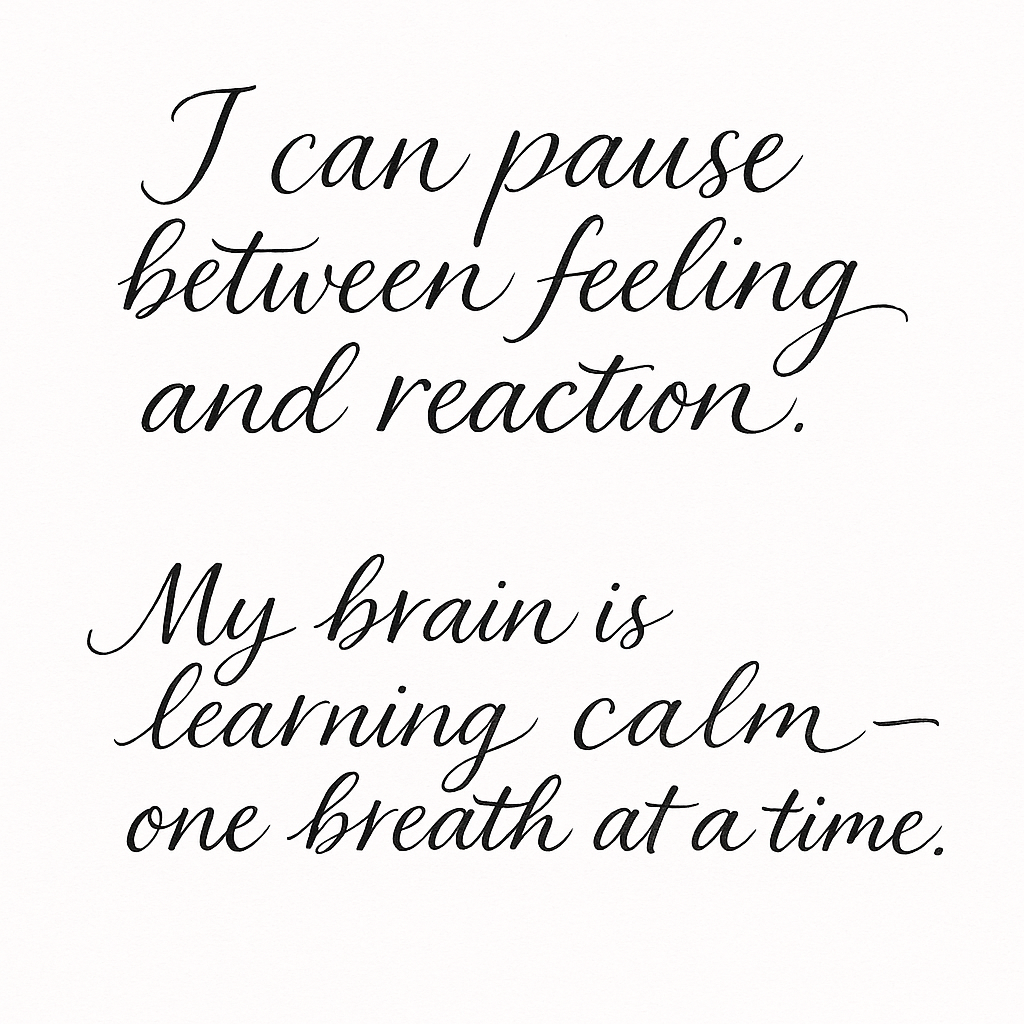
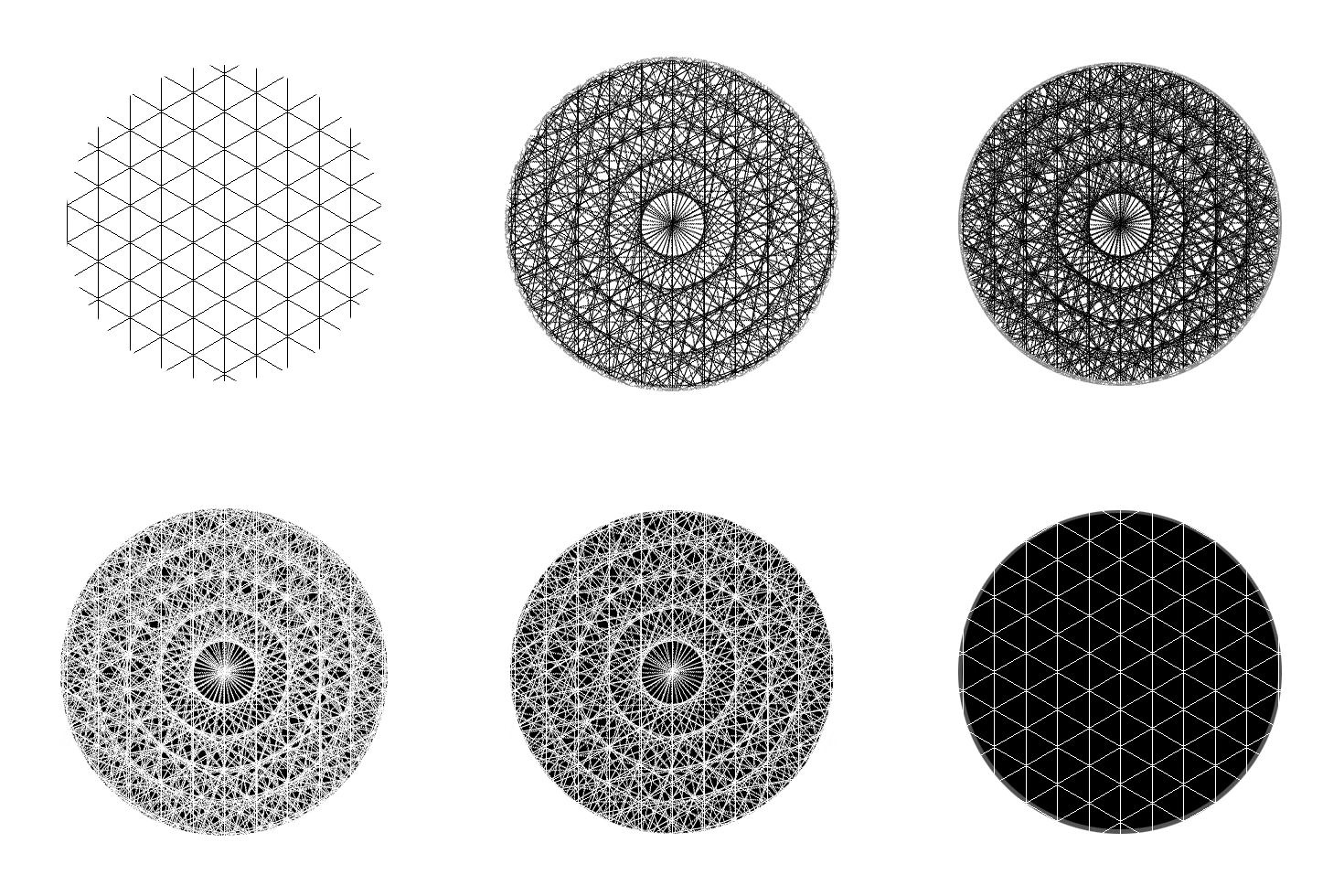
Image Healing: Mandala Stability Guidance 130
Gazing at this mandala, you'll see it incorporates several visual illusions. You might perceive the lines as undulating or the shapes as rotating. But this is merely a misinterpretation by the eye; the image on the paper is actually static. Similarly, those sensations of dizziness or undulation in your body are often illusions or temporary fluctuations in electrical signals from the nervous system. Don't be deceived by your senses; try to see beyond the shifting appearances to the underlying, stable geometric truth. You are safe, even if your senses are lying.
Traditional mandalas typically feature a harmonious and intricately varied circular structure, symbolizing the wholeness of the universe and the cycle of life. By viewing mandala images, individuals can perceive inner peace and strength, achieving psychological balance.
◉ Gaze at the mandala twice, while taking deep breaths.
Lesson 130: Correcting Misunderstandings & Drawing Guidance
① Action guidance:Draw a heavy line that is repeatedly blackened, and then add light, transparent color blocks on the outside to symbolize "new interpretations covering old fears".
② Action guidance:Using two contrasting colors to express "old interpretation vs. new understanding" lets the colors themselves tell you: misinterpretations can be replaced.
③ Action guidance:Adding slowly spreading dotted textures to the image guides the eye from local symptoms to the overall structure.
Please log in before submitting your drawings and feelings.
○ 130. Correction of Body Misinterpretation - Log Guidance Suggestions
① What bodily sensations did I misinterpret today? What is their true physiological explanation?
② At what moment did I realize that "this is just my body working"?
③ Is there a feeling that used to scare me, but I can now face it more calmly?
④ Write a kind note for your body: "I understand you, I will no longer misunderstand you."“
Please log in to use.
The body is not the enemy, but a misunderstood partner. The more you understand it, the more willing it will cooperate with you.