

Lesson 203: Regulating the Impulse of "Adhesive Behavior"
Duration:70 minutes
Topic Introduction:When we overly crave responses and frequent validation of relationships, there's often a hidden "clinging anxiety" mechanism at work. This lesson will help you identify the source of this impulse, learn to stabilize yourself when it arises, and gradually transition from "I need validation" to "I can be myself."
○ Common manifestations of adhesive behavior
- Repeated confirmation:Sending frequent messages, testing relationships, and requesting responses.
- Difficult to wait:Feeling flustered or abandoned if the other party delays responding.
- Oppressive intimacy:Trying to fill the inner insecurity with closeness.
Lesson 203: Regulating the Impulse of Adhesive Behavior (Click to listen to the reading, view the content)
In the process of separation anxiety and relationship repair, many people notice a recurring impulse: clinging behavior. When anxiety arises, you might immediately want to contact someone to get close and confirm their response or to suppress anxiety through companionship. This behavior is effective in the short term but weakens self-sufficiency in the long run. Understanding and regulating clinging impulses doesn't mean becoming indifferent, but rather reducing the excessive regulatory burden on relationships. The first step is to distinguish between needs and impulses. True needs are clear and stable, while clinging impulses are often rapid, recurring, and accompanied by strong thoughts that things will be worse if there is no contact. The second key is delay, not suppression. When the impulse arises, give yourself a short delay, such as ten minutes. During this time, perform a self-soothing action, such as breathing exercises or visual anchoring, to slow down your nervous system. The third key point is alternative pathways. Gradually shift the regulatory pathway that was originally directed towards others inward, such as writing down the message you want to send or releasing tension through physical actions, allowing the brain to learn that there are other outlets. The fourth stage is reviewing the results. When you successfully delay and find that the anxiety naturally subsides, clearly record this experience; it will gradually reduce the credibility of the impulse. The fifth key is clear communication in the relationship. When support is truly needed, choose clear and limited requests instead of repeated confirmations; this preserves companionship while maintaining boundaries. It's important to understand that clinging behavior isn't wrong, but rather the system seeking a safer path. The goal of regulation isn't to eliminate it, but to downgrade it, transforming it from an automatic reaction into a selectable behavior. As you repeatedly perform this regulation, the brain relearns that safety doesn't depend entirely on external factors. True freedom isn't about not needing others, but about not being led by impulses even when needed. When clinging is gently regulated, relationships become easier, and inner harmony deepens.
▲ AI Interaction: Have you ever fallen into the impulse of "relationship attachment"?
The urge to cling is the inner desire for security.
When you feel like holding on to someone too tightly, stop and take a deep breath.
Ask yourself, “How else can I soothe myself?”
Slowly, you will learn to turn dependence into strength rather than a burden.
Click the button below to explore the trigger points of your clinging impulses with AI and practice emotional delay techniques together.
○ Regulate the impulse of "adhesive behavior" · Music guidance
Clinging is our natural tendency to seek safety. Rather than suppressing it, find a gentler way to connect.
Set up a "music buffer" for impulse: listen to the chorus first, and then decide whether to contact the other party.
Observe the tension in your body within the melody, name it, breathe it, and let your grasping hands slowly loosen.
Turn waiting into care: write down the small things you need and can do at the moment, add a short song to the mix, and tick one off when you complete it.
○ Herbal Tea· Ginseng Honey Tea
Recommended drinks:Ginseng Honey Tea
Recommended reasons:Soothes the central nervous system and helps alleviate impulsive reactions caused by relationship anxiety.
practice:Boil 3g of ginseng for 10 minutes, let it cool down, add 1 spoon of honey and drink.
○ Stable Dietary Therapy - Ginseng Glutinous Rice Porridge (ID203)
During the phase of regulating adhesion impulses, the body needs gentle and stable nourishment. Ginseng and glutinous rice porridge provides a foundation with slowly released energy, helping the nervous system return to its fulcrum amidst relationship fluctuations. This nourishing dish is suitable for consumption after completing a delayed practice session or self-soothing to strengthen internal homeostasis.
Self-regulation
Relationship Boundaries
Open Recipe
◉ Chinese Food Therapy: Ginseng and Glutinous Rice Porridge (ID 203)
Ginseng, hailed as the "King of Herbs," possesses the unique ability to "greatly replenish vital energy." When anxiety has exhausted your last ounce of strength, leaving you feeling not just tired, but utterly drained or disoriented, the powerful intervention of ginseng is needed. Combined with the sweet, warm, and sticky properties of glutinous rice, it helps to "stick" the medicinal power of ginseng within the body, warming the spleen and stomach, and calming the mind. This is an emergency dietary therapy that provides a "quick recharge" for both body and mind.
Great tonic Warm the spleen and stomach Calm the mind and stabilize the will
I. Recommended Dietary Therapy and Reasons
Recommended dishes:Ginseng & Sticky Rice Porridge for Calming the Mind
Recommended reasons:
1. Revitalization:For "adrenal fatigue" or neurasthenia caused by long-term high pressure (manifested as fear of cold, spontaneous sweating, and extreme fatigue), ginseng can directly act on the central nervous system and improve the body's adaptability.
2. Relieve palpitations:Many people with anxiety often experience palpitations and skipped heartbeats (panic). Ginseng can "calm the mind and stabilize the spirit," and when combined with the spleen-tonifying effect of glutinous rice, it can fundamentally alleviate this feeling of panic.
3. Warm and nourishing:Glutinous rice is warm in nature and enters the spleen and stomach meridians. It can warm the stomach, which is cramped and cold due to anxiety, providing a thick "wrapping" feeling that makes people feel safe.
2. Recipe and Method
Recipe (1–2 servings):
- Ginseng (sun-dried ginseng or white ginseng) 3–5g (thinly sliced)
- Glutinous rice (sticky rice) 50–80g
- Two jujubes (pitted)
- 800ml of clean water
- (Optional) A little brown sugar (to enhance its warming and nourishing effects)
practice:
- soak:Glutinous rice has a firm texture and needs to be soaked in cold water for 1–2 hours beforehand.
- Processing ginseng:If you buy a whole ginseng root, you need to slice it thinly (the thinner the better, to facilitate the release of medicinal effects). If it is ginseng rootlets, simply wash them.
- First boil (to extract the medicinal properties):Place the ginseng slices and jujubes in a clay pot, add water, bring to a boil over high heat, then reduce to low heat and simmer for 15 minutes. You will smell a faint bitter aroma.
- Cook together:Pour in the soaked glutinous rice. Bring to a boil again over high heat.
- Slow cooking (key):Turn the heat to the lowest setting, partially cover the pot, and simmer for 30–40 minutes. Stir occasionally during this time, as the glutinous rice tends to stick to the bottom of the pot.
- Congee:Cook until the glutinous rice is completely soft and the broth is thick and gelatinous. Turn off the heat and let it sit for 5 minutes.
3. Small rituals for body and mind
After hardship comes happiness:Ginseng has a slightly bitter taste that turns sweet. When tasting it, focus on the changes in this flavor. This is a metaphor for life: after experiencing bitter trials, as long as you retain your vitality, you will eventually see a sweet aftertaste.
Stirring awareness:Glutinous rice porridge is very sticky and needs to be stirred constantly. Think of this repetitive action as a kind of "adhesive" exercise, imagining that you are gluing your broken and scattered attention back together.
4. Dietary Therapy Experience Record
- After drinking the porridge, feel if there is a warm sensation spreading from your chest to your limbs.
- Pay attention to whether the feeling of exhaustion, as if you were about to collapse, has lessened within 2 hours after consumption.
- Record whether the unique aroma of ginseng makes you feel grounded.
V. Instructional Videos (approximately 3–5 minutes)
◉ Video Title:When do you need to take ginseng to replenish your vital energy?
6. Precautions
- Eighteen incompatibilities and nineteen taboos:When eating ginsengNever eat radishes(Radishes deplete qi, which can counteract the qi-tonifying effect of ginseng) andDrink strong tea(Tea counteracts the effects of medicine).
- Do not take if you have a cold or fever:If you have "excessive heat" in your body or symptoms of external pathogenic factors (fever, sore throat, cold), do not take ginseng. Ginseng will "add heat," trapping pathogenic factors inside the body and worsening the condition.
- Use with caution if you have high blood pressure:Some people with hypertension are sensitive to ginseng, which may cause fluctuations in their blood pressure. It is recommended that these individuals consult a doctor or consume only 1-2 grams, and not more.
- Ginseng selection:For daily supplementation, it is recommended to choose "sun-dried ginseng" or "white ginseng," which are milder in nature; "red ginseng" is very hot and is suitable for those with extreme deficiency and cold, but should be used with caution by ordinary people.
hint:Once the ginseng slices in the porridge are cooked until soft, it's best to chew and eat them directly; that's where the essence lies, so don't waste them.
○ Chinese Calligraphy: Clerical Script Writing Practice: Lesson 203
Re-experience the balance between dependence and independence through writing, allowing adjustment to occur through the pen.
Written words:
Free and harmonious
Pre-writing advice:
Before writing, sit quietly for a moment, take three deep breaths to feel the center of your body, and then slowly begin writing in the clerical script.
Writing Tips:
The horizontal strokes of clerical script are expansive, while the vertical strokes are subtle, suitable for expressing a state of unhurriedness and composure. When writing freely, the horizontal strokes are slightly longer, symbolizing a sense of space; when writing with rounded strokes, the strokes converge inward, reminding us that relationships can flow without becoming entangled. Each stroke is an exercise in transforming impulse into choice.
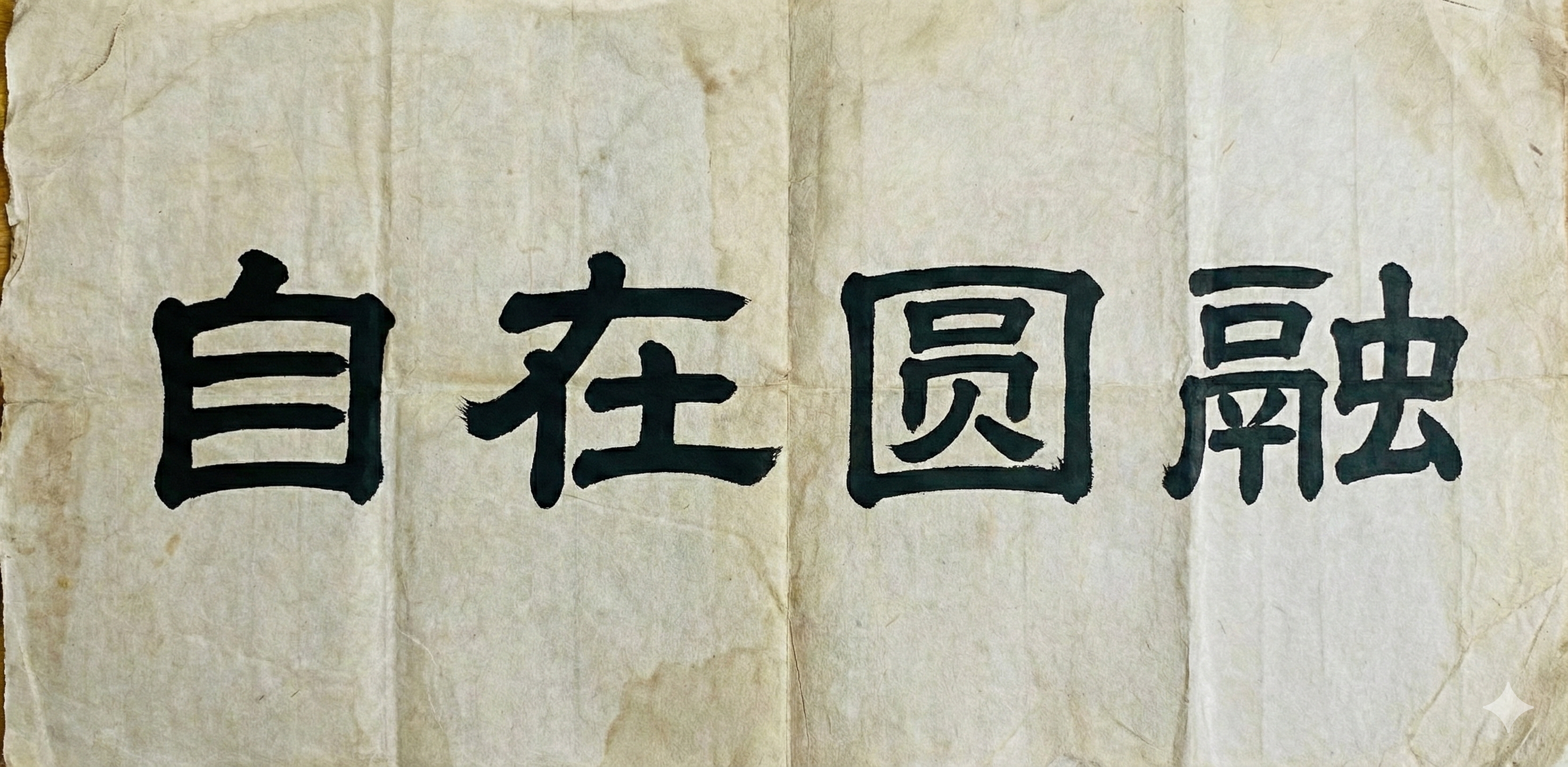
Image Healing: Guided Mandala Viewing - Lesson 203
Choose a mandala with a stable center and soft lines.
Keep your gaze focused on the center and don't let it wander.
When expanding outwards, gently bring it back in.
Mandala drawing is not about drawing something, but about observing. In observing, you practice loosening and returning to the source.
The theme of this lesson's mandala is the self-sustaining ring, symbolizing freedom and harmony in relationships.
◉ One gaze is sufficient; no repetition is required.

Lesson 203: Regulating the Impulse of "Adhesive Behavior"
Objective: To learn to slow down when you want to confirm or seize the moment immediately.
Steps: Draw an "impulse meter" and mark the times when you are most likely to lose control from 0 to 10. Write an alternative behavior next to each scale, such as taking a deep breath or slowing down the response.
Please log in before submitting your drawings and feelings.
○ 33. Impulsive journaling tips for regulating clinging behaviors
① Record a moment today that I want to reaffirm, frequently connect with, or hold onto: What is the trigger? What am I protecting (being loved, seen, responded to)?
② Impulse Thermometer: Current impulsivity is rated 0–10 points. Please first practice “pause for three breaths”, focus on the soles of your feet or the palms of your hands, and then re-rate.
③ Write down “alternative small steps”: change “contact immediately” to “wait 3 minutes and write down what you want to say”; change “follow” to “state your needs and agree on a time.”
④ Experience Collection: What results did the small steps of substitution bring? Did anxiety rise briefly and then subside? Add feasible experiences to your personal "care menu."
⑤ Self-dialogue practice: When I think to myself, “If he/she doesn’t reply, it means he/she doesn’t care,” I tell myself, “Maybe he/she is busy or on the way; my value is not determined by how quickly I reply.”
⑥ Give yourself a gentle reward: After completing a delay or substitution, take a deep breath, stretch, drink warm water, and tell yourself "I am growing."
Please log in to use.
True intimacy is the willingness to be close while remaining free from attachment. May you feel loved even while waiting.