

Lesson 322: Reconstructing a Self-Evaluation System
Duration:70 minutes
Topic Introduction:When we fall into chronic depression, denial, or inner criticism, our self-evaluation system often becomes severely distorted. This lesson will help you re-understand the source of your evaluation and build a stable, gentle, and authentic self-perception structure.
○ Three major structures of self-evaluation
- Externally dependent:Dependence on other people's opinions or social standards can lead to a loss of sense of value once they are separated from them.
- Self-aggressive type:Internalizing negative criticism creates a cycle of self-blame – powerlessness – depression.
- Inner acceptance:A gentle self-evaluation based on real feelings, process value, and direction of efforts.
Lesson 322: Rebuilding Your Self-Evaluation System (Click to listen, read/view content)
In the process of depression and long-term psychological recovery, the self-evaluation system is often the most profoundly impacted. You may find that no matter how much effort you put in, you still habitually negate yourself, successes are ignored, mistakes are magnified, and your sense of value is chronically dependent on results and performance. This is not because you are objectively not good enough, but because your original self-evaluation system has gradually become unbalanced under high pressure and setbacks, turning into an internal mechanism centered on self-criticism. Rebuilding your self-evaluation system is not about learning to praise yourself, but about restoring evaluation to its authenticity and fairness. The first step is to identify how the old system operates. Many people's self-evaluation is not based on the present, but on standards formed in the past, such as the need for continuous high efficiency, emotional stability, and not disappointing others. When the current situation cannot match these standards, the evaluation system automatically judges failure. Recognizing this is the starting point for breaking the automatic negativity. The second step is to shift the evaluation dimension from results to process. Results are often influenced by state, environment, and resources, while process better reflects true input. When you begin to affirm whether you still try in difficulties and whether you still choose to take responsibility for yourself under low energy, your self-evaluation will gradually regain its flexibility. The third step is to introduce "conditional perception" rather than "absolute judgment." Today's performance doesn't define who you are; it's simply today's presentation. When the evaluation system learns to consider conditions and context, internal aggression will gradually decrease. The fourth step is to decouple self-evaluation from value. You don't need to prove your existence through performance. Value isn't a score, but a prerequisite. Remember, a healthy self-evaluation system won't make you perpetually satisfied, but it will allow you to remain on your own side even when you're dissatisfied.
▲ AI Interaction: When was the last time you felt that “you were not good enough”?
Habitual self-criticism can make depression worse.
Try writing down three small things you accomplished today, even if they seem insignificant.
Rephrase “I’m not good enough” to “I’m learning to be kind to myself.”
Make your inner evaluation system fairer and gentler.
Step by step, you will see your efforts and value again.
Click the button below to discuss with AI how to build a more realistic and friendly evaluation system.
○ Rebuilding the self-evaluation system · Music guidance
The sound of criticism is like the cacophony of drums, often masking the real you.
Choose a piece of warm string music and use it as a "bridge of thoughts": let the self-blame slowly pass by your ears.
Replace "I'm not good enough" with "I'm learning to be kind to myself." Sing along quietly three times.
List three small, demonstrable improvements for today and let the melody string them together.
Slowly, the evaluation will change from criticism to recognition and acceptance.
○ Herbal Healing Tea
Recommended drinks:Licorice tea
Recommended reasons:It harmonizes the five internal organs, moisturizes the stomach, and helps relieve inner tension and chronic critical anxiety.
usage:3g of licorice, brew with hot water for 5 minutes. It is recommended to drink it in the afternoon or before meditation.
○ Stable Dietary Therapy - Walnut and Black Bean Porridge (ID322)
During the rebuilding of one's self-evaluation system, the body needs robust and stable nourishment. Walnuts replenish brainpower and internal energy, while black beans strengthen the foundation. This porridge is suitable for consumption when self-doubt intensifies or emotions fluctuate, helping the body regain strength in stability, symbolizing that self-evaluation is no longer wavering but gradually taking root.
Value Reconstruction
Stable foundation
Open Recipe
◉ Walnut and Black Bean Porridge
Black beans nourish the kidneys and blood, strengthening the body; walnuts warm and nourish the essence, moisturizing the brain. This dark, moist and fragrant porridge is ideal for those experiencing soreness in the waist and knees, low energy, and those recovering from a period of rest.
Nourishes the kidneys and replenishes essence Strengthen waist and knees Dark and fragrant
1. Recommended porridge and reasons
Recommended porridge:Walnut and Black Bean Porridge (ID 86)
Recommended reasons:It nourishes the kidneys and improves essence, strengthens the waist and knees, and takes into account both taste and satiety.
2. Recipe and Method
Ingredients (Serves 2–3):
- 60 g black beans (soaked)
- 25–30 g walnut kernels (crushed)
- 50 g japonica rice
- 1.2 L of clean water
- 3 red dates (optional)
practice:
- Boil the black beans for 15–20 minutes until the skins are slightly cracked.
- Add rice and walnuts and cook for 25 minutes until soft and sticky.
- Add red dates as needed to enhance the flavor.
3. Small rituals for body and mind
Drink slowly and focus on the aroma of beans and nuts.
Do 1 minute of back stretches after meals.
Record physical strength and waist and knee comfort.
4. Experience Record
- Physical sensation (refreshing/warm/comfortable).
- Throat/eye/hand and foot comfort.
- Record the amount of porridge and the ratio of other staple foods today.
5. Tutorial Video (approximately 3–6 minutes)
◉ Video Title:Walnut and Black Bean Porridge· Wurun Weneng
6. Precautions
- Walnuts are contraindicated for people with nut allergies.
- People with indigestion can boil black beans and eat them in several doses.
- Reduce bean intake during the acute phase of gout.
hint:Diet therapy is daily care and does not replace individualized medical treatment.
○ Chinese Calligraphy - Clerical Script - Lesson 322 Writing Practice Suggestions
Written words:A calm mind brings lasting happiness
In-depth analysis:
The clerical script is known for its steadiness, with thick yet unhurried strokes, making it ideal for the process of rebuilding self-evaluation. Writing with a calm mind brings lasting blessings; it's about practicing restoring a stable and consistent internal evaluation system, rather than being swayed by momentary performance. Through repeated and composed writing, the body learns that stability itself is a long-term blessing.
Key points for writing:
- Horizontal stroke balance:Maintaining consistent pressure on both sides symbolizes fairness in evaluation.
- Restraint in the final stroke:Avoid exaggerated pauses and abrupt changes to reduce the urge to attack oneself.
- Center of gravity:Pay attention to the stability of the character's shape to help it maintain its internal stability.
- Rhythm continuity:Keep your writing flowing smoothly and avoid sudden stops or jumps.
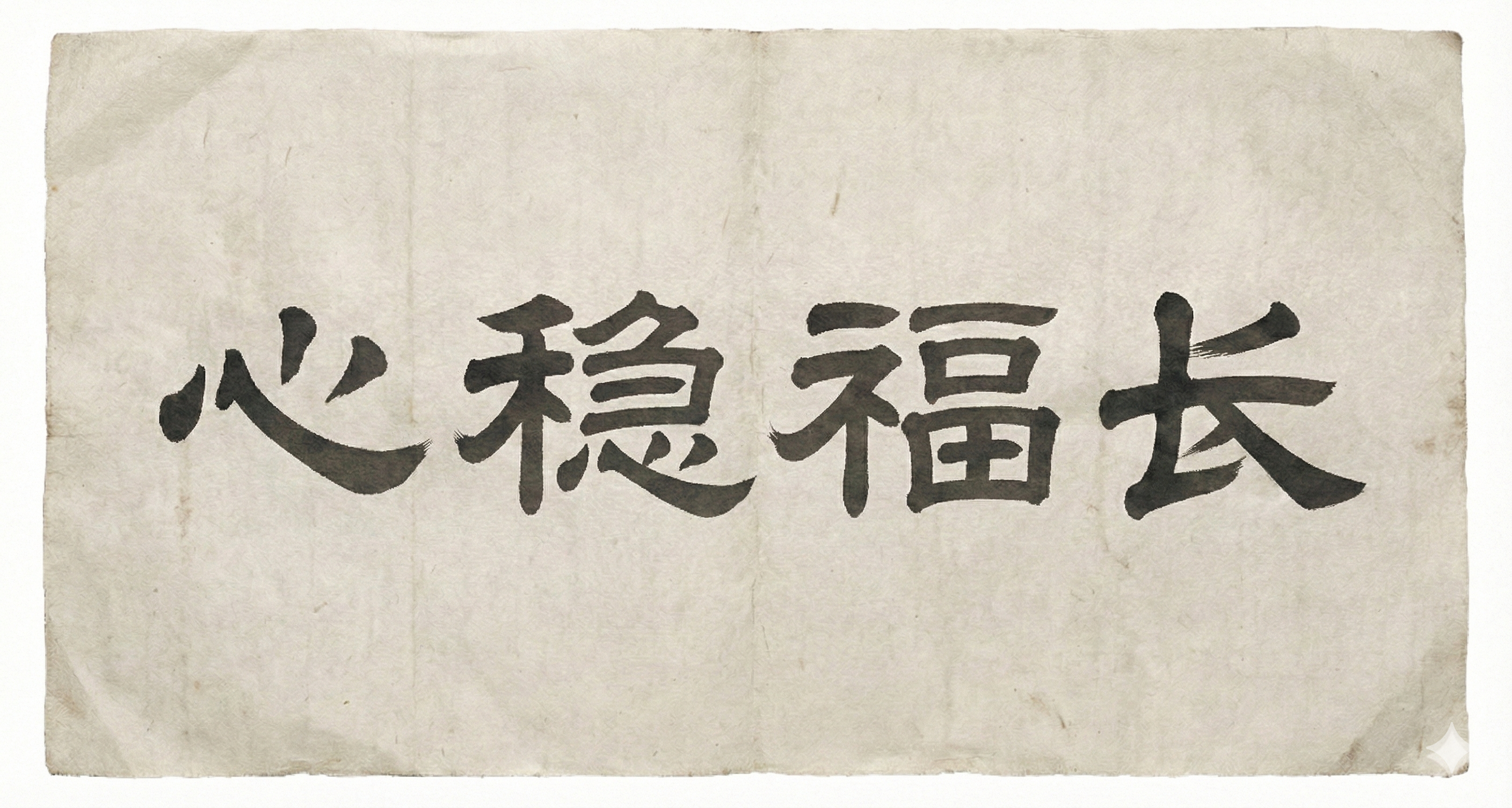
Image Healing: Guided Mandala Viewing 322
Please select a set of mandala images with a balanced structure and clear symmetry to view. First, gaze at the center, then slowly expand your gaze outwards, allowing this sense of balance to help your brain reconstruct an objective view of yourself.
The symmetrical structure of a mandala helps the brain form a fair and stable internal reference, supporting the repair of the self-evaluation system.
◉ Gaze at the mandala twice, coordinating with natural breathing.

Lesson 322: Reconstructing a Self-Evaluation System
Purpose: To make you aware of the harm caused by excessive criticism and comparison, and to learn to view yourself from a balanced and realistic perspective.
Steps: Draw a balance scale. On one side, write down your frequently used negative evaluation words; on the other side, write down overlooked strengths or efforts. When coloring the scale, use soft, warm colors to add weight to one side, symbolizing the return of "self-acceptance." After finishing, silently read the sentence: "I am learning to see my complete self."“
Please log in before submitting your drawings and feelings.
○ 322. Suggestions for Reconstructing a Self-Evaluation System Log
① Write down three moments and sentences that occurred during your self-criticism today. Observe whether the words you used were absolute or personal, and rate the intensity on a scale of 0–10.
② Choose a sentence and rewrite it in a gentler version: "I'm not fast today, but I'm doing it; I'm not perfect, but I'm worth it." Read it three times and feel the change.
③ List "Evidence-Based Facts": Three specific small things I accomplished this week. Let the facts speak for me, not my emotions.
④ Design a “kindness list”: three types of self-support you can do when you feel sleepy, such as a short walk, a warm bath, and ten minutes of tidying up.
⑤ Record three neutral or positive words from other people’s feedback as a new evaluation material library.
⑥ Write a conclusion for today: I prefer to evaluate myself based on the process rather than the speed.
Please log in to use.
You don't need to be a perfect person. As long as you learn to look at yourself gently, you are already rebuilding a true self-evaluation system.