

Lesson 483: The Body Is Protesting Too - How to Recognize Anxiety - Depressive Somatic Reactions
Duration:70 minutes
Topic Introduction:When you say, "I'm tired," "I have a headache," or "I don't want to move," it's not sometimes an illness, but rather your emotions speaking through your body. This course helps you identify how anxiety and depression manifest in your body, and through practice, gradually regain your body's voice.
○ Anxiety-Depression Somatic Response Identification Checklist
- Anxiety-type reactions:Palpitations, bloating, throat tightness, hand tremors, insomnia, and dry mouth.
- Depressive reaction:Fatigue, muscle aches, loss or excess appetite, dizziness, and a feeling of heaviness in the body.
- Cross-type performance:Body stiffness, chest tightness, fatigue and anxiety coexist, and the motor system is underactivated.
▲ AI interaction: Which of your recent physical symptoms actually expresses what emotion?
Your body can speak for your emotions, perhaps through stomach tightness, neck and shoulder pain, or insomnia.
Please write down your three most obvious body signals today and rate them on a scale of 0–10.
Rephrase “I feel terrible” to “My body is reminding me that I need care.”
Choose a gentle response for yourself, like a hot foot soak or deep breathing.
Conclusion: The body is not an enemy, but my most loyal friend.
Click the button below to build your "emotion-body map" with AI and identify the psychological sources behind physical protests.
○ The body is also protesting - How to identify anxiety-depression type physical reactions · Music guide
The body often speaks its own language, whether it's a racing heartbeat or feeling heavy and tired.
Put on some gentle background music and slowly write down the most obvious body signals you feel today.
Change “I feel bad” to “My body is reminding me that I need rest and care.”
Try a soothing exercise, such as gentle stretching, accompanied by music.
Let the melody and movement together become a gentle response.
○ Warm milk drink · Golden milk and coconut oil
Recommended drinks:Golden Milk + Coconut Oil
Recommended reasons:It can relieve gastrointestinal tension, enhance the nourishment of the nervous system, and is suitable for regulating anxious body reactions.
practice:Combine 250ml milk, 1/2 tsp turmeric powder, 1 tsp coconut oil, and honey to taste. Stir and cook over low heat until hot.
○ Milk oatmeal pudding
Simmer oats and milk until thickened, then refrigerate for a pudding-like texture. This smooth and creamy oatmeal is rich in calcium and dietary fiber, and can be flavored with a small amount of honey.
Healing Recipes
/home2/lzxwhemy/public_html/arttao_org/wp-content/uploads/cookbook/niu-nai-yan-mai-bu-ding.html(Please confirm that the following has been uploaded: niu-nai-yan-mai-bu-ding.html)
Mental Healing: Mental Mandala Imagery 23
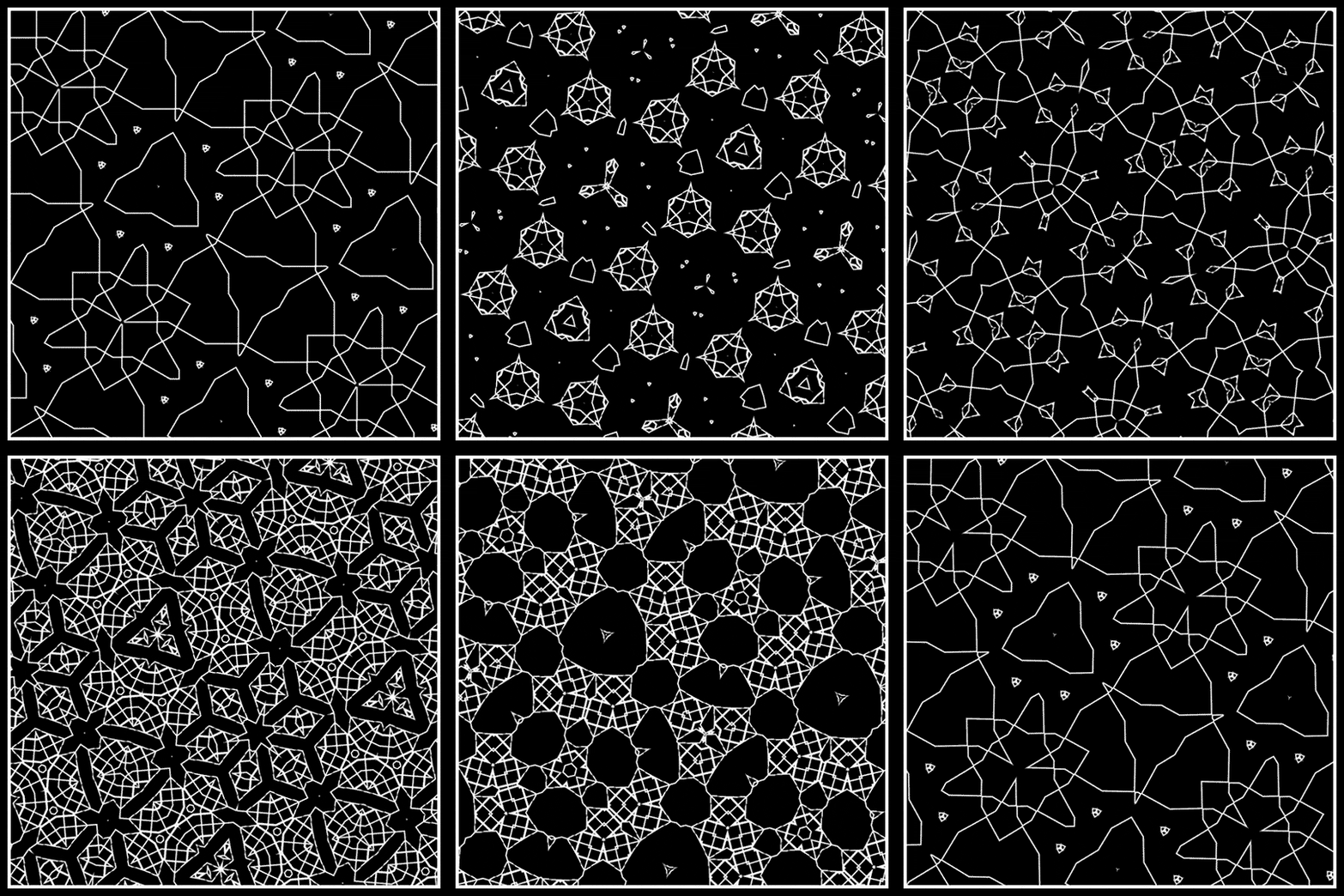
The deep blue of lapis lazuli depicts "soul resonance." Each stroke is a response to a higher consciousness. Feel that unspoken frequency. Resonance reminds you—you have never been alone.
Resonance is the meeting of souls.
Spiritual mandalas are commonly used in religious and spiritual practices, and their patterns and shapes symbolize spiritual growth, awakening, and spiritual connection. By drawing spiritual mandalas, individuals can explore their connection with the universe, divinity, or higher beings, and achieve psychological and spiritual healing.
○ Ancient Roman Script · Western Calligraphy Practice
When you don’t know how to express physical discomfort, just write “I can hear it”.
Suggested sentences for practice:
"My body speaks the truth I forget to say."
"Even my pain is trying to protect me."
Choose a sentence every day and write it next to the mirror or on your pillow before going to bed as the starting point of "body response practice".

Lesson 483: The Body Is Protesting Too—How to Recognize Anxiety-Depression Somatic Reactions
Objective: To help you understand the interaction between mind and body through drawing, and to teach you to listen to your body's signals.
Steps: Draw a body outline and mark the areas of discomfort with different colors: red represents anxiety and tension, and gray represents low energy. After observing the distribution, write next to it: "My body is communicating with me, not betraying me."“
Please log in before submitting your drawings and feelings.
○ 483. The Body Is Protesting Too—How to Recognize Anxiety-Depressive Somatic Reactions: Journal-Guided Suggestions
① Write down the three most obvious physical discomforts you experienced today: headache, stomach tightness, and insomnia.
② Rate the intensity of each symptom on a scale of 0–10 and observe how it relates to your mood.
③ Rephrase self-blame: “I feel terrible” → “My body is reminding me that I need care.”
④ Write down three small actions that can soothe your body, such as stretching, warm water, and soft music.
⑤ Conclusion: The body is a friend, not an enemy. It gently reminds me to slow down.
Please log in to use.
When you ignore your emotions, your body will speak for you. When you start listening, healing begins quietly.